Where to Stay in Ragusa: Ibla vs Superiore, Compared
Ragusa Ibla or Ragusa Superiore? Compare both districts' atmosphere, walkability, parking and day-trip logistics, and learn which suits your kind of stay.
On this page
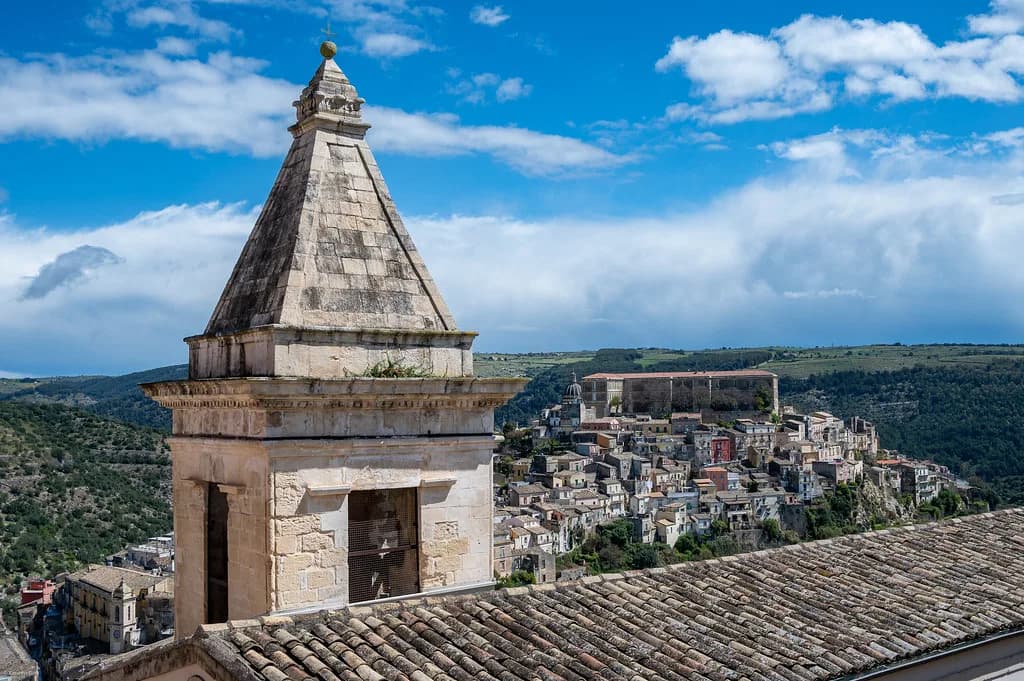
Ragusa is not one city so much as two, parted by a ravine and joined by staircases and a road through the valley. Choosing a bed in Ragusa Ibla or in Ragusa Superiore decides how much you climb, how you arrive with luggage and what you see from your window. One sourced detail to start with: the church of Santa Maria delle Scale, which sits between the two districts, is described by Enjoysicilia as one of the city's older and more interesting churches, and its right aisle still shows Gothic-Catalan arches from before the 1693 earthquake. The stretch of steps beside it is the classic walking link between the halves of town.
Why Ragusa Is Split in Two
The 1693 earthquake destroyed most of medieval Ragusa, and the rebuild divided the population. One group reconstructed on the old rocky spur, creating today's Ragusa Ibla; another moved up onto the plateau, founding Ragusa Superiore. The two halves grew as near-separate towns for a long time and were administratively united only in 1926, according to the TDS guide to the city. That history is why a hotel address matters more here than in most Sicilian cities.
Visit Sicily frames the same duality simply: Ragusa has a modern city and the ancient city of Ibla, its Baroque salon, with the split dating from the 18th-century reconstruction. For visitors the consequence is a genuine choice between two atmospheres rather than two price bands. Ibla holds the dense core that drew the UNESCO listing for the Late Baroque Towns of the Val di Noto, while Superiore is the working administrative city.
Ragusa Ibla in Character
Ibla is a knot of uphill alleys, panoramic stairways and noble palaces piled above a gorge. The centrepiece is the Cathedral of San Giorgio, designed by Rosario Gagliardi, whose facade closes the scene above the steps of its square. The district guide explains how to read the facades and where the viewpoints fall; wandering without a fixed route is part of the point.
At the eastern end, the Giardino Ibleo was established in 1858 and offers palm-lined paths, pools, sculptures and a belvedere over the valley, as the Summer in Italy entry describes. It is a public garden rather than a ticketed attraction, so it makes a sensible midday refuge in warm months. Reading up on the city's quieter corners before you book helps you judge whether that daily proximity is worth the terrain. For wider planning, see Hidden Gems in Ragusa.
Staying in Ibla suits travellers who want evenings among lit church facades and dinner a short walk from the room. The cost is gradient: streets climb, and many lanes end in steps rather than ramps. If you carry a large suitcase or travel with someone who tires on slopes, that charm becomes a daily negotiation.
Ragusa Superiore in Character
Superiore sits on the plateau with wider streets and a more regular layout, closer to the rhythm of shops, offices and schools. Its main monument is the Cathedral of San Giovanni Battista, whose Baroque facade faces Piazza San Giovanni. The cathedral has its own site with parish news and celebrations, which is the reliable place to check feast days rather than relying on old guides, and the visitor guide covers the building itself.
Hotels here sit closer to Corso Italia and the commercial centre, which generally makes errands and parking simpler. You trade the postcard view from the window for flatter walking and easier logistics. Many travellers find this the better base for day trips across the Val di Noto, saving Ibla for a long afternoon and evening rather than every morning.
Walkability and the Santa Maria delle Scale Link
The two districts are connected on foot by the staircase beside Santa Maria delle Scale, the church that kept Gothic-Catalan elements after the earthquake. The descent toward Ibla is scenic; the climb back is the part people underestimate, particularly in summer heat or after a heavy meal. Treat the staircase as both a sight and a route, and plan your return direction accordingly.
There is also a road connection through the valley below. Rather than assume a bus frequency between the levels, check current local transport information on arrival and keep a taxi number as backup for late evenings. A practical rule: book in the district where you want to spend your evenings, not the one you only plan to visit.
Parking, Arrival and Getting Around
Arriving by car, the plateau side of Ragusa is generally the easier place to park and to reach the ring roads, while Ibla's lanes are tight and many addresses sit below street level. Hotels in either district often hold a few spaces, so ask about parking at the time of booking rather than on arrival. The city website has a dedicated section on traffic restrictions for Ragusa Ibla, worth checking before you drive into the historic centre.
Most visitors reach Sicily through Catania Fontanarossa or Comiso airports and then continue by car, bus or pre-booked transfer, as the practical notes in the TDS guide set out. If you would rather not drive the final climb, a private transfer drops you at the door and removes the parking question. Weigh that convenience against the flexibility a car gives you for Modica, Scicli and Noto; the getting-around guide covers arrival in more depth.
What Each District Suits
Couples and photographers tend to gravitate to Ibla, where late light on the limestone and the lit dome after dark do most of the work. Families and travellers with limited mobility usually fare better in Superiore, where pavements are flatter and a car can pull up closer to the entrance. Slow travellers staying several nights often split the difference: Superiore for logistics, long evenings in Ibla.
If your priority is Baroque architecture with minimal climbing, Superiore's cathedral and the surrounding streets give you a substantial visit on level ground. If your priority is atmosphere, accept the stairs and book somewhere central in Ibla so you rarely need to climb back up. Neither choice is wrong; they lead to different holidays.
Accommodation Types You Will Find
Booking.com's city listing shows the spread: restored palazzi and converted convents, boutique townhouses with spa services, and country estates outside the city, alongside simple rooms in the Ibla lanes. Listings in Ibla frequently mention location in the historic centre, while those in Superiore often stress easy parking and convenient access. Some historic buildings have rooms up several flights without a lift, which matters when you are hauling luggage.
For a slower stay, properties in the countryside around Ragusa trade walkability for gardens, pools and easy parking, with the city a short drive away. That works well if you have a car and want to combine Baroque towns with outings to Marina di Ragusa or the coast. It works less well if you envisaged strolling to dinner and back.
Practical Booking Checks Before You Commit
Ask directly about what listings hide: how many steps lead from the street to the room, whether there is a lift, where exactly you park, and whether breakfast is served on site. In Ibla, request written directions to the door, because navigation apps often stop short of pedestrian lanes. Confirm the rate and any city tax with the property rather than trusting a third-party summary that may be out of date.
Churches are generally free to enter as places of worship, but separate ticketed collections and museums set their own arrangements, so check each site rather than assuming one ticket covers a complex. The tourist portal keeps a list of visitable churches and what is currently open, which is more reliable than old blog posts for opening days.
Suggested Splits for Short and Longer Stays
On a two-night visit, pick one base and resist the urge to move: as a suggested plan, two nights in Ibla gives you the evenings, while two nights in Superiore gives you easier arrival and departure. For four or more nights, a two-base approach works: the first nights near the plateau for day trips and the final nights in Ibla for atmosphere. These are editorial suggestions, not official itineraries.
Whichever split you choose, keep one day free of planning for Ibla's alleys, and one for the wider Val di Noto, where Modica, Scicli and Noto are within reach by car. The Thinking Traveller's town guide sketches the appeal of wandering Ibla without a fixed route. The details of what to see in each district are covered in the separate guides linked above.
Match the District to Your Priorities
Choose Ragusa Ibla if you want evenings among lit Baroque facades and accept slopes and stairs as part of the deal. Choose Ragusa Superiore if flatter walking, easier parking and quick departures matter more than a valley view from the window. Travellers with time can do both, using Superiore for logistics and Ibla for the nights you will remember.
Whichever you pick, confirm stairs to the room, parking arrangements and the final rate with the property before you commit, and check current openings and local transport once you arrive. Then let the city's two halves do the rest.
Frequently Asked Questions
Should I stay in Ragusa Ibla or Ragusa Superiore for a first visit?
For a short first visit, Ibla puts the Baroque centre and evening atmosphere within walking distance, while Superiore offers flatter streets, easier parking and simpler day-trip departures. If you have only two nights and want the classic experience, base yourself in Ibla and accept the stairs. If you arrive late, carry heavy bags or plan early starts to Modica and Noto, Superiore is the calmer choice. Either way, confirm the exact location and access details with the property before booking.
Can you walk between Ragusa Ibla and Ragusa Superiore?
Yes. The two districts are linked on foot by a long staircase beside the church of Santa Maria delle Scale, which doubles as a viewpoint over Ibla. The descent is easy, but the climb back up is steep, especially in summer. A road through the valley offers an alternative, and local public transport connects the levels; check current routes and timetables locally, since services change with the season.
Where do visitors park when staying in Ragusa Ibla?
Parking in Ibla is limited because the lanes are narrow and many buildings sit below street level. Some hotels hold a small number of spaces, so ask about parking when you book, and confirm exactly where you should leave the car. The city website carries information on traffic restrictions for the historic centre, worth checking before you drive in. Many travellers park on the Superiore side and walk or take local transport down.
Is Ragusa Ibla suitable for travellers with limited mobility?
Ibla's charm comes with slopes, uneven paving and staircases, so it is harder for anyone who struggles on hills. Superiore is flatter and easier to navigate day to day, and a car or transfer can drop you close to entrances. Individual hotels vary widely, so ask specifically about steps to the room, lifts and the nearest vehicle access point before booking, rather than assuming.
How many days do you need in Ragusa?
Two nights cover the two districts and one long walk through Ibla, which suits a flying visit. Three to four nights let you add a day trip to Modica, Scicli or Noto and still keep an unhurried evening in the historic centre. A full week allows the coast at Marina di Ragusa. These are suggestions, not official itineraries, so adjust to your pace and the season.
Sources
- Comune di Ragusa
- 10 Best Ragusa Hotels, Italy (From VND 1,864,802)
- Church of Santa Maria delle Scale in Ragusa - Sicily
- Complete Tourist Guide to Ragusa and Ragusa Ibla
- Travel Guide to Ragusa, Sicily
- Visit the churches in Ragusa
- Cattedrale San Giovanni Battista - Ragusa
- Ragusa - Page 10 of 17 - Visit Sicily
- Giardino Ibleo, Tourist Attraction in Sicily, Italy
Continue exploring
More guides you'll find useful