Ragusa Superiore Guide: Sights of Ragusa's Upper Town
A slow guide to Ragusa Superiore, from Corso Italia and the San Giovanni Battista cathedral to the palace facades and the stairway down to Ragusa Ibla.
On this page
Ragusa is usually described as a city of two souls, and most travellers devote their time to the lower one. Ragusa Superiore sits on the plateau above, with a rational street grid, shops and offices, while Ragusa Ibla holds the celebrated Baroque ensemble. Treating the upper town as a district in its own right changes the visit.
The division goes back to the 1693 earthquake that devastated the Val di Noto. Part of the population rebuilt on the old site, producing today's Ibla, while another part chose the higher ground, creating Superiore. The two districts lived separately for a long period before being merged, giving the city its unusual double identity.
A suggested half-day is enough for Superiore itself, with more time needed if you also want to explore Ibla. Walking down first and returning later by bus or taxi saves effort. Church interiors need a separate check, because visit openings are published as dated notices rather than fixed year-round rules.
How the 1693 Earthquake Made Two Towns
Before the earthquake, Ragusa was concentrated on the rocky spur that is now Ibla. After the disaster, one group rebuilt in the Baroque style on the original site, keeping the medieval street pattern, while another moved up to the plateau. The result is a city with two centres: a grid above and a maze of alleys, stairs and small squares below.
That history explains why Superiore feels like a working city rather than a stage set. Its streets carry commerce, schools and administration, and several of its palaces and churches form part of the UNESCO-listed heritage. The lower town gets the postcard views, but the upper town shows how Ragusa actually functions.
The geography matters when planning. Superiore stands at roughly 520 metres above sea level, which local guides credit for noticeably cooler air than the coast in summer. In practice, the upper town is a sensible base for walking, shopping and an evening meal after a hot day in Ibla.
Orientation: Corso Italia and Piazza San Giovanni
Corso Italia is the commercial spine of Superiore, a long, mostly straight street lined with shops, cafes and institutional buildings. Walking it end to end gives a quick reading of the district before branching into the side lanes. The Cattedrale di San Giovanni Battista and its square sit close to this axis, making them an easy first stop.
The cathedral is an extravagant example of Sicilian Baroque, rebuilt in its present form in the early eighteenth century, and it appears on the UNESCO listing along with the palazzi nearby. It remains an active parish, so treat the interior as a place of worship rather than a museum room. The parish publishes its own news, Mass information and events, which is the most reliable place to confirm access before a visit. Further visitor details appear in Cattedrale San Giovanni Battista - Ragusa.
For a wider view, the ridge edges above the gorge reward a short detour from the main street when the light is low. The upper town's balconies and facades deserve slow attention, since many carry the wrought-iron masks and figures that recur across the Val di Noto. Carry water and pace yourself: the district is hillier than the grid suggests.
Palaces Along the Upper Town Streets
Several noble palaces cluster near the cathedral and along Corso Italia, and you can see them from the street without booking anything. Palazzo Bertini, known for its carved masks, Palazzo Schininà di Sant'Elia and Palazzo Zacco are all part of the UNESCO-protected heritage. They are private or institutional buildings, so admire the facades and do not assume interiors are open.
A slow loop from Piazza San Giovanni along the side streets takes in these facades along with smaller churches and everyday shops. Some of the most rewarding balconies and doorways sit on lanes whose names you will not remember, which is why wandering beats a checklist here. If you want a structured route, a local guide can stitch the palaces and churches into a coherent walk.
The Stairway Route Between the Two Towns
The classic way down to Ibla is a long staircase that drops through the flank of the gorge, passing the Chiesa di Santa Maria delle Scale. The church is one of the city's oldest, retains traces of pre-earthquake construction and is reached by a demanding flight of steps. Its small terrace is a natural pause for catching your breath.
Published step counts disagree, with sources citing different totals for the main stairways, so plan for effort rather than an exact number. Instead of counting, consider the return leg when you set out: climbing back up in the evening heat is a real decision. A local bus runs between the upper town and the entrance to Ibla, and taxis are an alternative if your knees object.
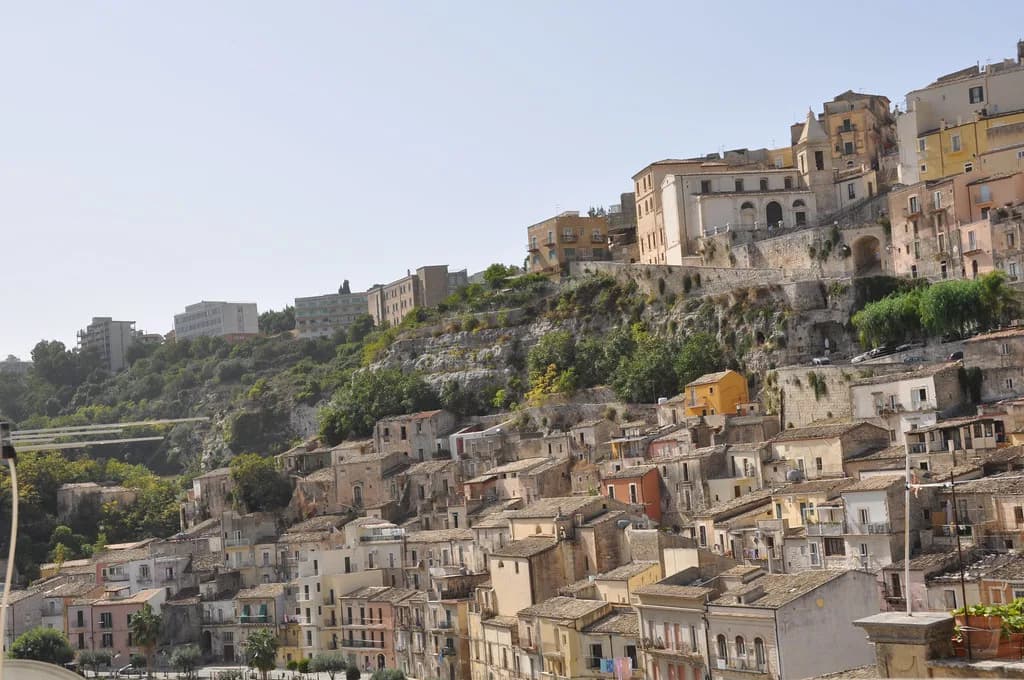
Walking down, you get the best views of Ibla's stacked houses and church domes, especially where lanes fork toward the lower town. The route passes palaces and smaller churches along the way, so it rewards unhurried progress. If you plan to do it after dark, bring a light and keep to the main stairways.
Two Cathedrals, Two Patron Saints
Superiore has San Giovanni Battista and Ibla has San Giorgio, and the pair reflect an old rivalry between the districts. The San Giorgio in the lower town is the Baroque masterpiece by Rosario Gagliardi, its facade and dome dominating the piazza. Seeing both in one day is feasible and gives a sharp sense of how the two halves of the city competed. For wider planning, see Duomo di San Giorgio, Ragusa: Visiting the Baroque Masterpiece.
The Ibla cathedral is the one most visitors photograph, and its piazza is thick with history. Entry to the principal churches is generally free, but opening times vary by season, and the tourism authority publishes visit openings as a dated schedule for specific periods. Check the current notice before planning your day around interiors.
A Half-Day Walking Plan for Superiore
Start at Piazza San Giovanni, which is easy to find and sets the tone for the district. Look at the cathedral exterior first, then walk a loop of the side streets for the Palazzo Bertini and Palazzo Schininà facades before returning to Corso Italia for a coffee. From there, follow the main street and its ridge edges for views over the valley.
Aim for three to four hours if you want a leisurely pace with stops. Add a meal and you can easily fill a morning before descending the stairway toward Ibla in the afternoon. Keep an eye on church visit openings, because the parish updates its own calendar and the tourist authority publishes separate seasonal schedules rather than fixed year-round hours.
If you only have one day in Ragusa, consider starting up top and finishing in Ibla, where the evening atmosphere is strongest. This reverses the usual advice to stay in the lower town, but it works well if you are based in Superiore. Local guides suggest an entire day in Ibla to see everything comfortably, so a single afternoon there will be a taster.
Shopping, Cafes and Everyday Ragusa
Superiore is where the city actually lives: banks, pharmacies, clothing shops and bakeries line the main streets. It is a good place to buy supplies for a picnic or to pick up local specialities such as scaccia ragusana, a stuffed bread from the area. Caffe Italia on the cathedral square is a community gathering spot for a morning pastry or gelato. For wider planning, see Ragusa Local Food Guide: What to Eat and Where.
The pace here is calmer than in the lower town, where visitors concentrate. If you want to see Ragusa without crowds, spend the early morning in Superiore and let Ibla pick up later in the day. The upper town also has a selection of restaurants and trattorias serving the same local dishes, from caponata to pasta alla norma.
Parking and Arriving: Stay and Park Up Top
Driving to Ragusa, the upper town is by far the easier place to park, and local guides recommend it even if you plan to explore Ibla heavily. Superiore has an underground car park near the Cathedral of San Giovanni, plus on-street options. Ibla is tighter and more restricted, with complicated access for vehicles.
If you arrive by bus or train, Superiore has both stations and you can walk into the old centre from there. Buses are generally more frequent and reliable than the train in this part of Sicily, with direct services from Catania and local connections to nearby Baroque towns. Confirm current timetables and fares with the operators before you travel. For wider planning, see Getting Around Ragusa.
Once you have parked or arrived, plan the descent to Ibla as a deliberate outing rather than an accident. A one-way walk down via the stairway and a return by bus or taxi is the most forgiving option. Expect your accommodation host to explain any access rules if you are staying in the lower town.
Day Trips from the Upper Town
Superiore's car parks and station make it a convenient springboard for the Val di Noto. Modica is around twenty minutes away by car and famous for its chocolate, made with a cold process inherited from Spanish-era Sicily. Scicli and Comiso are also within easy reach, each with a distinct character and fewer visitors than Ragusa or Noto.
Donnafugata Castle, about fifteen kilometres from Ragusa, is a 19th-century residence with a large park and a maze. It suits an afternoon rather than a full day, and it combines well with a return through Superiore for dinner. For chocolate lovers, a trip to Modica's Antica Dolceria Bonajuto makes a worthwhile stop, and the town has a small museum as well.
Plan your day trips around your base, not the other way round. If you stay in Superiore, you avoid morning traffic into the old town and return with the car safely parked. Public transport to Modica, Scicli and Noto exists but is less frequent than in northern Italy, so check the current AST or Tumino routes and times in advance.
Where to Look Beyond Superiore
The Giardino Ibleo in the lower town is the oldest of Ragusa's four gardens, established in 1858 and containing three churches along with views over the valley. It is a natural extension of a walk down from Superiore. The garden is listed among FAI's places of the heart, a designation that signals how much Italians value it.
If you want a quieter Ragusa, the smaller churches and lanes of the upper town hold less-visited corners. The city's UNESCO heritage includes eighteen protected buildings, most of them in Ibla but several in Superiore, so the upper town is not a sideshow. Wander without a fixed route and let the architecture surprise you.
Plan Your Visit
Ragusa Superiore deserves more than a quick transit. Its grid makes orientation easy, its palaces and cathedral repay an unhurried morning, and its practical advantages as a base outweigh the lack of postcard views. Walk it first, then descend to Ibla when the light softens.
Before you travel, check church visit schedules directly on the parish or tourist office pages, since openings are published as dated seasonal notices rather than fixed year-round hours. Confirm bus times and parking arrangements through official sources, and treat step counts with caution because published figures differ.
Frequently Asked Questions
Is Ragusa Superiore worth visiting, or should I only see Ibla?
Superiore is worth a morning or afternoon, especially if you want to understand how Ragusa works as a city rather than just a tourist stage. It has its own UNESCO-listed palaces, the San Giovanni Battista cathedral, a commercial main street and easier parking. It also makes a practical base for exploring Ibla and the nearby Baroque towns.
How long does it take to walk from Ragusa Superiore down to Ragusa Ibla?
The descent along the stairways takes most people between twenty and forty minutes, depending on pace and stops at churches such as Santa Maria delle Scale. The climb back up is the demanding part and may take twice as long. Alternatively, use the local bus or a taxi if you would rather save your legs.
How many steps are there between Ragusa Superiore and Ibla?
Published counts vary widely, with different sources citing different totals for the main stairways. Rather than plan around a precise number, prepare for a steep descent and a long climb back. Bring water and take breaks at the church of Santa Maria delle Scale.
Where should I park when visiting Ragusa?
Local guides recommend parking in Ragusa Superiore even if you plan to spend most of your time in Ibla, because the upper town has more options, including an underground garage near the cathedral. Confirm current parking rules and any access restrictions with your accommodation before arriving.
What is the difference between Ragusa Superiore and Ragusa Ibla?
Superiore is the grid-planned upper town on the plateau, with wider streets, shops and administration, rebuilt after the 1693 earthquake. Ibla is the historic lower town, a maze of stairs and Baroque churches clinging to the ridge. They were separate centres for centuries before being merged in the twentieth century.
Can I see San Giovanni Battista and San Giorgio in one day?
Yes, the two cathedrals are about a twenty-minute walk apart if you take the stairway, though the climb is significant. Visit San Giovanni Battista in the morning while the upper town is livelier, then descend to San Giorgio and Ibla for the afternoon. Check both churches' visiting schedules in advance, since they vary by season.
Sources
Continue exploring
More guides you'll find useful