Day Trips from Trapani: Erice, Segesta and Mozia Planning Guide
Plan day trips from Trapani to Erice, Segesta and Mozia. Compare a hill town, a Greek temple and an island, and know what to confirm with operators first.
On this page
Trapani works as a base because three very different excursions sit within its orbit: Erice, the medieval hill town above the city; Segesta, with its Greek temple and theatre in the countryside; and Mozia, the Phoenician island reached by boat. The temptation is to cram all three into a short stay, which usually means rushing the hill town and arriving at the archaeology tired and overheated. Choosing one trip well, and adding a low-effort detour nearby, tends to produce a better day.
This is a planning guide, not a timetable. Cable car schedules and fares, ferry crossings to Mozia, park opening hours and admission prices change with the season and are not fixed here; confirm each with its operator before you commit a day to it. What follows focuses on matching a site to your energy, the heat and the time you actually have, and on avoiding false assumptions such as a single ticket covering every corner of a complex.
A Decision Framework: Match the Site to Your Day
Erice suits a half day or a gentle evening of wandering: narrow streets, churches and long views, with the caveat that not every interior is free or open when you arrive. Segesta demands a proper block of time because the temple and the rock-cut theatre sit in an archaeological park and should not be squeezed between other stops. Mozia needs a boat crossing, so it rewards travellers who accept that the journey is part of the day rather than a detail.
Heat tolerance is the honest tie-breaker in western Sicily. Uphill walking on a hill town and open-ground archaeology in the countryside both feel very different at midday in summer than in spring or autumn. If you travel in the hot months, put the more exposed site in the morning and keep the afternoon for shade, a long lunch and something close to town. If your legs are tired, pick the shorter experience rather than the more famous one.
Erice: The Medieval Hill Town Above Trapani
Erice is a medieval town in Trapani province, and the cable car is the customary way up from the city, run by a municipal company listed among the town's services. What the town's official site does not publish in a stable, quotable form is a fare table, a full operating calendar or a live service status, so treat those as things to verify rather than facts to assume. Check the operator's own page the day before you go, and again on the morning.
The official town portal is also where local notices appear, and those notices can matter to a visitor: road works, civic events and seasonal initiatives are announced there rather than in guidebooks. Read the news section before travelling, especially if your plan depends on a lift or a particular road. If the cable car is out of service, that changes the shape of the day rather than cancelling it, so have a fallback plan for wandering Trapani instead.
Once you are up, Erice is best treated as a place to walk rather than a checklist. Churches, small museums and viewpoints are separate places with separate rules, and some charge for entry while others do not; the town's own site describes a museum, the Museo Cordici, as a distinct attraction. Assume nothing is included with anything else, and carry a little cash in case a small interior asks for an entrance fee.
Erice on Foot: Streets, Churches and Views
The pleasure of Erice lies in the streets themselves: stone lanes, sudden views toward the sea and the Egadi, and a pace that rewards slow wandering. As a suggested duration, allow about half a day on foot if you want to walk the lanes properly, sit somewhere with a view and look inside at least one or two interiors. That is a planning suggestion, not an official estimate, and it assumes you are not racing back down for a fixed appointment.
Do not assume every church door will be open or free. Some interiors in Sicily are ticketed separately from the church itself, and some open only around services. If a particular building is the reason you came, ask at the tourist office or check the town's own pages before climbing, and accept that a closed door is a normal outcome rather than a failure of planning. The views and the lanes do not require a ticket.
The Salt Pans and Via del Sale: A Low-Effort Detour
The salt pans between Trapani and Paceco make a realistic half-day detour that pairs well with a hill-town morning rather than replacing a third major site. The landscape of shallow basins, windmills and birdlife rewards slow travel, and the flat terrain is easy on tired legs. Birdwatchers note spring and autumn as the most interesting migration windows, while summer is when traditional salt harvesting can be seen; these are seasonal patterns rather than fixed dates.
The Maria Stella mill houses the reserve's visitor centre and a salt museum, and other complexes along the salt route include a mill, museum and restaurant. One practical caution from visitors: the walk from Trapani toward the Nubia salt museum follows a main road and is long and unsightly on foot, so a car or a short taxi is a better use of the day. Treat museum opening hours and any guided tour times as things to confirm directly with the operators.
Segesta: The Temple and the Theatre
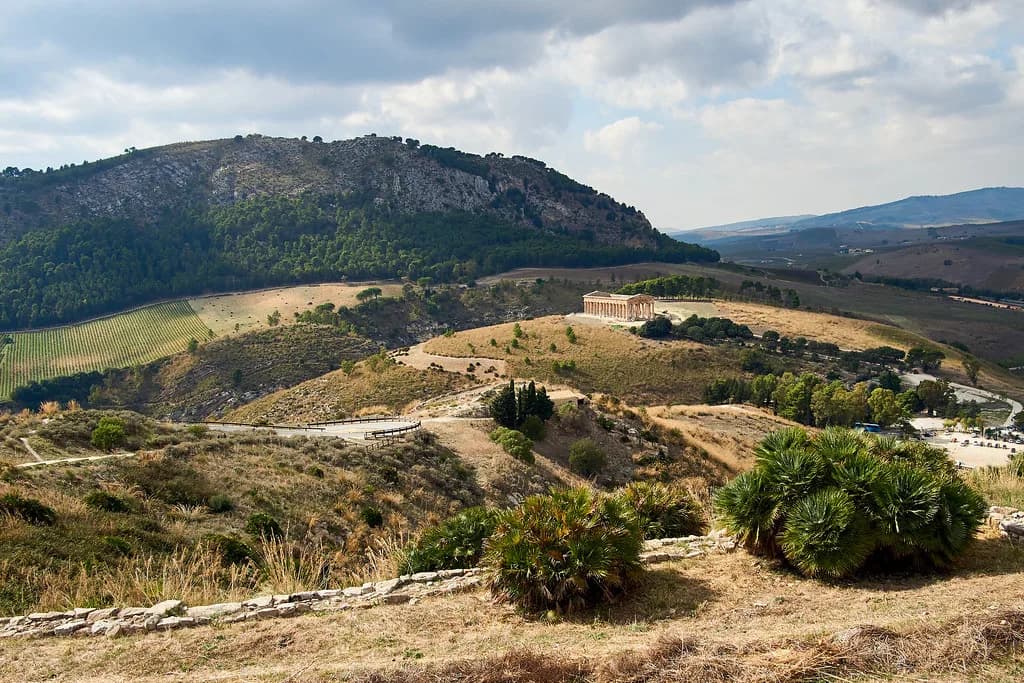
Segesta's Greek temple and rock-cut theatre sit in an archaeological park in the countryside, and the two are far enough apart that a visit takes real time. Because the site is open ground with slopes, the theatre visit asks more of your legs and your tolerance for sun than the temple does. Plan Segesta as its own time block rather than a stop sandwiched between Erice and the coast, and check the park's official opening hours and ticket arrangements before travelling.
One planning assumption worth discarding: a ticket or a park pass rarely covers everything you might want to see in a day, and separate sites in western Sicily are run separately. Decide in advance which single site matters most to you, and let the rest of the day flex around it. If you are relying on public transport, confirm the current service with the operator rather than trusting an old timetable you found online. For wider planning, see Getting to and Around Trapani.
Mozia: The Phoenician Island
Mozia is a small island in the lagoon off the coast, reached by boat, and it offers a different kind of day: flat ground, Phoenician remains and a sense of separation from the mainland. The crossing itself is the thing to verify, because ferry times and tickets are set by the operator and change with the season. Ask about the return crossing when you buy your outbound ticket, so you are not stranded at the end of the afternoon.
Whether Mozia is worth the trip depends on your appetite for archaeology and your tolerance for logistics. It suits travellers who enjoy a quiet, low-key site and a boat ride, and it suits families who want somewhere flat to walk. It is less suitable if you only have one spare day and want guaranteed variety, in which case Erice or Segesta is a safer bet. Confirm the island's current visiting arrangements with the operator before you commit.
Transport Reality Check
It is tempting to promise you a bus number or a journey time, and it would be wrong. Bus and train services toward Segesta and Mozia are operated by specific companies whose timetables change, and the honest advice is to check with the operator directly for your dates. For the cable car to Erice, the town's own site points to the operator's page rather than publishing a schedule, which is where you should look. For anything involving a boat, confirm the crossing before you leave your accommodation.
Within Trapani itself, transport is less of a puzzle. The municipality publishes its local public transport timetables and links to the cable car operator among its services, and the historic centre is compact enough to walk. Streets such as Corso Vittorio Emanuele are the spine of the evening passeggiata, and many visitors find they need no vehicle at all unless they are heading out to the salt pans or the archaeological sites.
Practical Sequencing: Which Pairings Work
Erice plus the salt pans is a sensible pairing: a morning uphill, an afternoon on the flat, and a sunset over the basins on the way back. Erice plus Segesta in one day is possible in a car but usually means short-changing both, and it leaves no room for the midday heat or a proper lunch. Mozia pairs naturally with a lazy morning in Trapani's historic centre rather than with another archaeological park.
Respect Sicilian rhythms. Many restaurants close between lunch and the evening, so a late-afternoon arrival at a hill town or a park can leave you hungry. Plan a proper lunch where you are, then move, and keep the evening for the city. In shoulder seasons the light is better and the walking easier; in high summer, start early and treat the middle of the day as downtime rather than travel time.
A Day-Before Checklist
The evening before, confirm five things: the cable car's current operating status if you are going to Erice; the archaeological park's opening hours and ticket arrangements if you are going to Segesta; the boat crossing times and return options if you are going to Mozia; the weather, because exposed sites are miserable in the wrong conditions; and your lunch plan, so no one is stranded at three in the afternoon. Write down the operator's phone number rather than relying on a search when you are on a hill.
Build in slack. A single missed crossing or a late start can undo a tightly scheduled day, and western Sicily rewards those who leave room for a second coffee and an unplanned detour. If you only have a few days, see how this fits a broader itinerary with Trapani in three days: schedule the big trip early in your stay, so a weather day can be swapped without losing everything.
Plan Your Visit
Trapani's advantage as a base is that you do not have to choose between sea, mountain and antiquity; you simply have to choose a sensible order. Pick one major excursion, add a low-effort detour nearby, and verify the moving parts, especially lifts, boats and park hours, with the people who run them. The result is a day that feels unhurried rather than a race between three postcards.
Frequently Asked Questions
How long do you need in Erice?
As a suggested duration, allow about half a day on foot if you want to walk the lanes, enjoy a view and look inside an interior or two. It is a planning suggestion rather than an official estimate, and it assumes you are not rushing back down for a fixed appointment. Add more time if you plan a long lunch.
How do I go from Trapani to Erice?
The customary route is the cable car up from Trapani, operated by a company listed among the town's services. Fares, operating hours and current service status are not published in a stable form, so check the operator's own page before you travel rather than relying on an old timetable.
Is Mozia worth a day trip from Trapani?
It is a good choice if you enjoy flat archaeological sites, a boat crossing and a quieter pace. It is a weaker choice if you have only one spare day and want guaranteed variety, in which case Erice or Segesta is safer. Confirm current boat times and visiting arrangements with the operator before committing.
Can you visit Erice and Segesta in one day?
It is possible by car, but it usually means short-changing both sites and leaving no room for the midday heat or a proper lunch. Segesta rewards its own time block, and Erice is best walked slowly. Pairing either with the salt pans or a lazy morning in Trapani is more realistic.
What should I check before taking the cable car to Erice?
Check the current operating status, the day's hours and the fare with the operator, and do it on the morning you plan to travel rather than weeks in advance. Check local notices for road works or civic events too, and have a fallback plan in Trapani in case the lift is not running.
Do the salt pans make a good half-day detour from Trapani?
Yes, especially paired with an Erice morning. The terrain is flat, the landscape of basins and windmills rewards slow travel, and the Maria Stella mill houses a visitor centre and salt museum. Confirm museum hours and tour times directly, and note that the walk toward the Nubia museum follows a long main road, so a car is more comfortable.
Sources
Continue exploring
More guides you'll find useful