Trapani in Three Days: A Practical Slow-Travel Itinerary
Three days in Trapani: one walkable old-town day, one salt-pan excursion and one big day trip to Erice, Segesta or the Egadi Islands, with logistics.
On this page
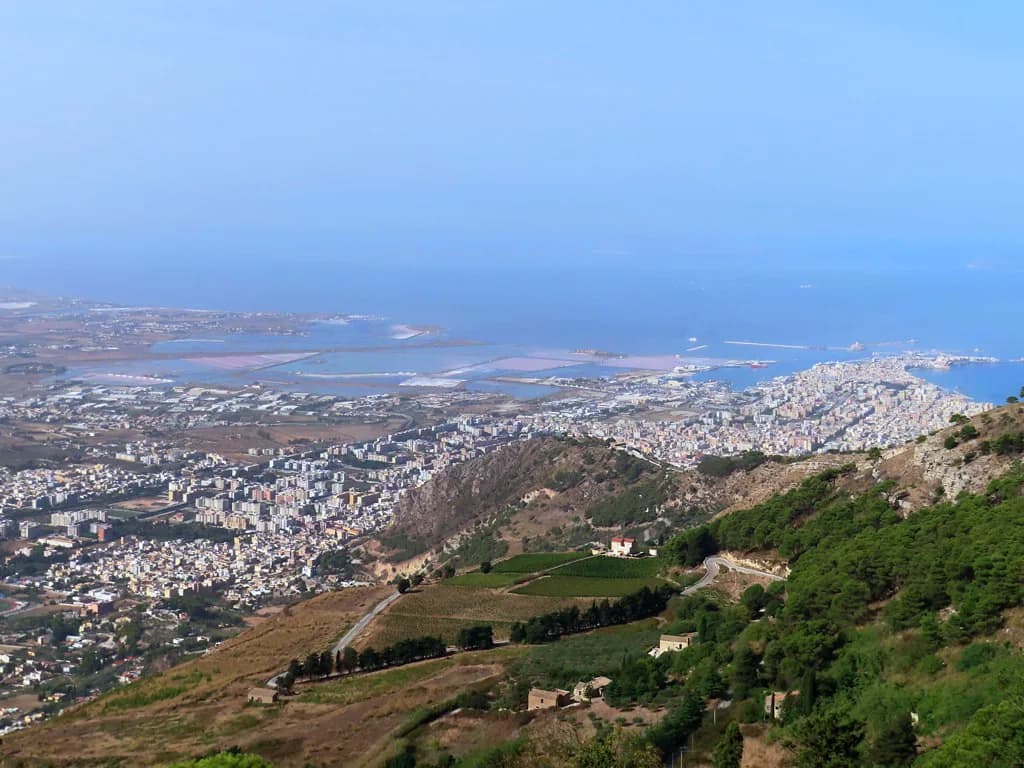
Trapani is a compact port city on a narrow peninsula, and its old town asks nothing of you but walking. Almost everything a short visitor wants — the cathedral, the seafront promenade, the fish market, the defensive wall — sits within a flat, walkable centre. What surrounds the city is a different matter: the salt pans, Erice, Segesta and the Egadi Islands are spread across western Sicily and reward planning rather than improvisation.
A workable three-day shape is one city day, one salt-pan excursion, and exactly one major day trip. That is an editorial suggestion, not anything the city publishes as an official route. The point is simply that squeezing in two day trips usually costs you the old town, which is the part of Trapani most travellers underestimate.
The plan below assumes you are on foot in the centre and, for the salt pans and inland options, either driving or booking transport deliberately. Ferries to the islands leave from the port, so an island day needs no car at all. If three days feels tight, a two days: itinerary version narrows the same logic to a single excursion.
Why Three Days Suits Trapani
Trapani rewards a slower pace than its surroundings. The city has churches and a handful of museums, but its appeal is mainly in strolling: pastel palazzi in various states of repair, laundry on balconies and winding lanes, according to Trip Unlocked's city guide. Evening is when the main street fills and people-watching becomes the activity.
The surrounding region is the opposite: spread out and poorly served by public transport. A Sicily-focused travel guide is blunt that seeing Erice, Segesta, the salt pans and San Vito lo Capo properly requires a car. Three days lets you keep one day for walking and still have room for a car-based or ferry-based excursion.
The one official source worth keeping at hand is the town hall site, which is the place to check for local notices and civic information rather than itinerary endorsements. Nothing about this plan comes from the Comune, and no timetable, fare or opening time should be assumed from it. Treat it as a verification stop before you travel.
Day 1: The Old Town on Foot
Start with the morning in the historic centre, where the streets between the cathedral and the port do the work for you. The Cattedrale di San Lorenzo sits among the palazzi on the main street, which makes it hard to take in from outside; inside it is decorated with light blue detail. Trip Unlocked reports that entry to this cathedral is free, while several other churches charge a small amount to enter.
Spend the middle of the day walking rather than queueing for sights, because the city centre needs no transport at all. A historic centre self-guided walk is a good way to string together the lanes, balconies and small coral shops without committing to paid interiors. Keep the pace low: shops close in the afternoon across Sicily, so browse before lunch.
Late afternoon belongs to the Mura di Tramontana, the surviving stretch of Trapani's old defensive wall that you can walk on top of. It runs from the fish market down to the city beach, and the walk is best timed for the hour before sunset. Continue on the wide promenade out to the Torre di Ligny, a defensive observation tower with an archaeological museum inside.
Do not plan the Torre di Ligny museum around published hours; Trip Unlocked warns that the listed times cannot be relied on, so treat this as an exterior visit with the museum as a bonus if it happens to be open. For sunset, check the actual sunset time that day and claim a seat on the old city wall half an hour earlier. In summer months the source notes occasional classical concerts around sunset near the tower; confirm locally rather than assume.
Day 2: Fish Market, Salt Pans and the Via del Sale
The fish market sets the tempo of day two. Aim to be at the Mercato del Pesce early, because the morning is when boats dock and fishermen sell the catch straight from the boat, according to Trip Unlocked. The market gets going from around six and is busiest near nine; the indoor hall exists but is described as far less atmospheric than the quayside.
After breakfast, head south toward the Saline di Trapani e Paceco, the closest salt works to the city. There is a museum there and you can watch salt being produced; this is also where the Via del Sale begins, the salt route running between Trapani and Marsala. Give this half a day rather than a photo stop, since the whole point is seeing how the flats and windmills change with the light.
Sunset is the reason many people come, and it deserves the scheduling. The Sicily guide recommends arriving an hour before sunset and staying through the golden hour, when the shallow water shifts through pink, gold and copper with the windmills silhouetted. If you visit the salt pans at midday instead, expect flatter light and a shorter visit.
The trade-off is what you give up in town. Choosing the salt pans means less time for the Museo Regionale Agostino Pepoli and its coral work, ceramics and the Misteri statues used in the Good Friday procession, which the same guide treats as the city's main museum. If museums matter more to you than landscapes, flip the order: town in the morning, then drive south in the afternoon.
Day 3, Option A: Erice by Cable Car
Erice is the least complicated big excursion, because the funivia connects it to Trapani and takes about ten minutes, climbing to a medieval hilltop town at roughly 750 metres. The Sicily guide calls the cable-car ascent more dramatic than driving the switchback road. Just note that the lift is described as running most days, not daily, so confirm service before you plan the day around it.
Up top, the lanes are quiet in a way the coast is not, and the castle terrace at Castello di Venere opens toward the Egadi Islands and the salt flats below. Go early if you want clear views before cloud builds. Half a day covers the town comfortably; a full day lets you linger without watching the clock.
Day 3, Option B: Favignana and the Egadi Islands
If you would rather be on water, the Egadi Islands are reached from Trapani's port, with Liberty Lines hydrofoils serving Favignana, Levanzo and Marettimo. The Sicily guide gives crossing times of roughly 30 minutes to Favignana and Levanzo and about 70 minutes to Marettimo, and advises booking ahead in July and August when morning boats fill. Those times are the guide's description; verify current schedules with the operator before relying on them.
Favignana is the obvious first-timer's choice, with the rocky cove at Cala Rossa and water that photographs impossibly well. A rented bicycle or electric bike is the standard way to cover the island in a day. Treat any promise about water clarity or crowd levels as weather-dependent rather than guaranteed.
This option needs no car and no road decisions, which makes it attractive if you are based in the centre without a rental. The cost is flexibility: you are tied to the return sailing, so check the last crossing back before you commit to a late lunch on the island.
Day 3, Option C: Inland and Coastal Drives
With a car, the western Sicily map opens up. Segesta's Doric temple stands alone in an empty valley about 30 minutes from Trapani, and the Sicily guide suggests going in the morning before coach tours arrive. San Vito lo Capo, roughly 40 minutes north, has a crescent of white sand; Scopello, about 30 minutes east, has the old tuna fishery with stone towers rising from the sea.
Marsala, about 25 minutes south, pairs fortified wine cellars with the Museo Lilibeo and its preserved Punic warship. Pick one of these, not three: the distances look short on a map but each stop eats an afternoon once you add parking and a meal. The full Day trips from Trapani: Erice, Segesta and Mozia comparison sets out how each option fits a single day.
Getting Around, and Where to Sleep
On foot covers the peninsula: the old town is compact and flat, with the cathedral, port, market and promenade all walkable. For everything beyond, decide between a rental car collected at Palermo or Trapani Birgi airport and a ferry-based day. The Sicily guide notes that Palermo's airport has far more international connections and suggests the A29 motorway takes roughly an hour to Trapani, with direct coaches from Palermo airport taking around two hours.
For a three-day trip, base yourself in the historic centre rather than out by the beaches. The tight streets between the cathedral and the port put the market, the ferries and the best restaurants within a short walk, which matters when your time is short. The port area is lively in the evening and scenic, but the centre wins on convenience.
One logistics note from the city guide: Trapani Birgi airport has a bus into town that runs roughly hourly and takes about 45 minutes. Fares and timetables change, so check the operator's current information rather than trusting any figure you read.
Eating on Trapani Time
Trapani's signature dish is Couscous alla Trapanese, a fish and seafood couscous brought to Sicily centuries ago by Arab traders, and both city guides treat it as the one plate not to skip. Order it once, properly, rather than as a side thought. Restaurants in the centre range from unpretentious trattorias to more refined rooms with serious local wine lists.
The daily rhythm shapes your whole schedule. Trip Unlocked describes lunch running roughly from noon to three, after which restaurants close and reopen around seven in the evening; Sicilians themselves tend to arrive nearer half past eight, after an aperitivo at sunset. Plan sightseeing for the dead afternoon hours and eat later than you might at home.
The same source notes that shops shut in the afternoon across Sicily, with exceptions, and that aperitivo snacks can be generous enough to replace dinner. Build that into day two, when you may be driving back from the salt pans at dusk.
How Many Days Do You Actually Need?
Two days gives you the old town plus a sunset at the salt pans and a half-day in Erice, which is a taste rather than the full picture. Three days adds the island day, and the Sicily guide treats four to five days as the sweet spot once you fold in Segesta, a Marsala tasting or a drive to San Vito lo Capo. Seven or more lets you add Mazara del Vallo or a night on Favignana itself.
Season changes the calculus more than duration does. Spring brings mild temperatures and manageable island crowds; summer is hot and busy, with ferries worth booking well ahead; autumn keeps the sea swimmable and coincides with the salt harvest; winter is quiet, with some coastal restaurants closed. Pick the season first, then the itinerary.
Plan Your Visit
Three days in Trapani works when you resist the urge to collect day trips. Give the city one unhurried day on foot, give the salt pans a proper afternoon and sunset, and give the third day entirely to one excursion — Erice by cable car, Favignana by hydrofoil, or a single inland drive.
Before you go, check the practical details that change: cable-car service days, ferry schedules and the last crossing, and any civic notices published by the Comune di Trapani. Confirm museum hours locally rather than trusting a listing, and book high-season ferries and rooms early.
Frequently Asked Questions
Is three days enough for Trapani?
Yes, if you use them deliberately. One day covers the walkable historic centre, one covers the fish market and the salt pans toward Marsala, and one goes to a single day trip. Trying to add a second excursion usually means rushing the old town, which is the part most visitors underestimate.
Do you need a car in Trapani?
Not for the city. The old town is compact and flat, and the port puts the Egadi ferries within walking distance. You do want a car for the salt pans, Segesta, San Vito lo Capo and Scopello, because public transport around the region is infrequent and spread out.
Should you visit Erice or the Egadi Islands with only one free day?
Choose Erice if you want views, medieval lanes and an easy cable-car ascent from the city. Choose the Egadi Islands if you would rather be on the water and don't mind being tied to ferry times. Erice suits a half day; Favignana fills a full one.
What is the best time of year for a three-day Trapani trip?
Spring and autumn are the most comfortable, with mild temperatures and lighter crowds, and autumn coincides with the salt harvest. Summer is hot and busy, so book ferries and rooms well ahead. Winter is quiet, though some coastal restaurants close.
What should you not miss in Trapani's historic centre?
Walk the Mura di Tramontana before sunset and continue to the Torre di Ligny promenade. Visit the Cattedrale di San Lorenzo, where entry is free per Trip Unlocked, and see the fish market early in the morning. Then eat couscous alla Trapanese at least once.
Sources
Continue exploring
More guides you'll find useful