San Giuliano Beach & Trapani Coast: Lidos and Free Coves
Plan a day on San Giuliano beach or Trapani's free city coves: what each stretch is like, which one has facilities, and when to swim.
On this page
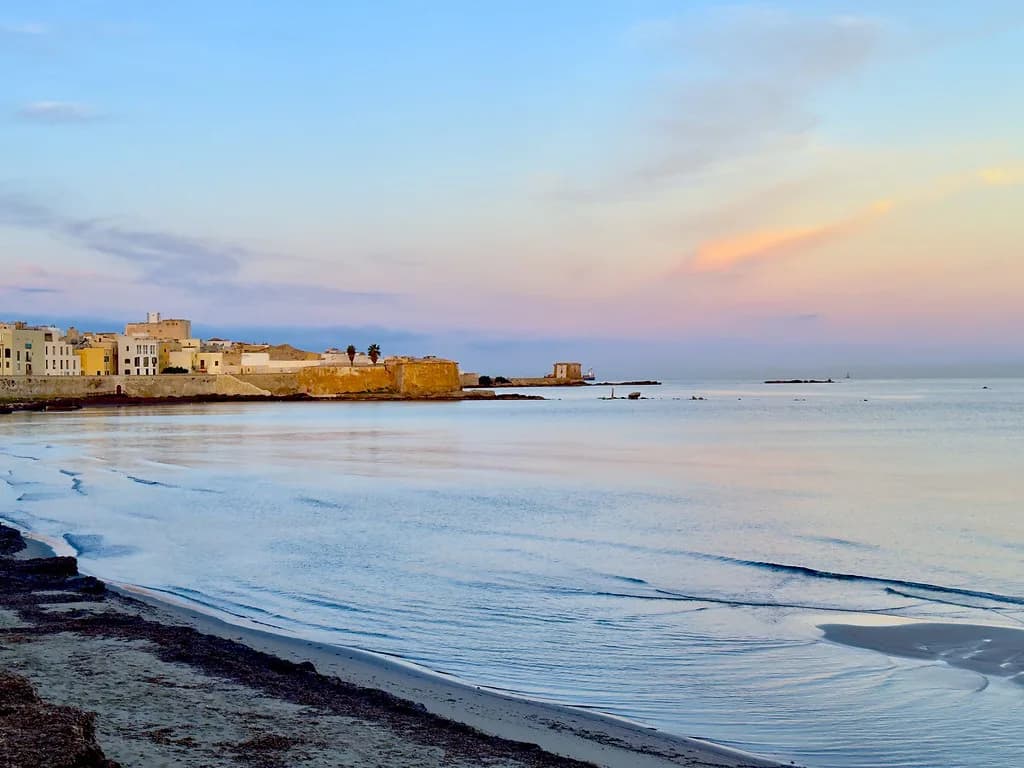
Trapani's coastline gives you two distinct swimming days rather than one uniform beach. San Giuliano is the city's largest beach, a stretch of fine, light sand running for around two kilometres along the edge of town. Within the old town, small coves let you swim within sight of the walls and the fish market square.
The practical question is rarely which patch of sand is prettiest. It is whether you want restaurants and sunbeds within reach, or a free dip with no facilities and a short walk back to the streets. Choosing between those two experiences is the single most useful decision you will make before setting out.
Quick orientation: city beach versus city coves
San Giuliano is the city's main beach and, by length, its largest, running for around two kilometres along the coast. Its sand is fine and light, the water is shallow and clear, and the surrounding area is set up for a comfortable day.
The alternative sits inside the historic centre, where the old town meets the sea. A sandy beach near the former fish market square, the small Porta Ossuna cove beneath the city walls, and the rocky point by the Torre di Ligny tower all put a swim within a short walk of Trapani's streets. These spots are free to enter and have no bathing facilities.
That contrast shapes everything else: what you carry, how long you stay, and whether children or older swimmers will be comfortable. Decide first which of the two you want, then plan the details around it.
San Giuliano beach at a glance
San Giuliano's appeal is straightforward: a broad sweep of fine, light-coloured sand and a seabed that stays shallow a good way out, with water described as crystal clear. Travellers who want a classic beach day without hunting for a quiet cove will find it the obvious starting point.
Because it sits a few kilometres from the centre and is described as the most popular beach in the city, expect company in high season. Its size means you can usually walk far enough along the sand to find breathing room, but the serviced sections closest to the resorts and restaurants are naturally busier.
One thing San Giuliano is not is a wild, unbuilt shore. It is a city beach with development behind it, and part of its value is precisely that: you can combine a swim with lunch, an afternoon nap and an easy return to town rather than committing the whole day to a remote outing.
Facilities, lidos and free stretches
The beach's comfort comes from its services. Restaurants and beach resorts operate along San Giuliano, and at least one resort on the sand offers guests a private bathing area with reserved sunbeds and umbrellas plus bar and restaurant service, included in a stay there. That is a lido arrangement rather than a public facility, so access to those specific sunbeds depends on the operator's terms.
Public stretches of sand remain part of the picture, as they do on most Italian city beaches, but the services cluster around the operated areas. If you want a lounger and shade without organising anything yourself, contact the lido directly rather than assuming you can turn up and pay for a spot. The operator sources here do not publish current sunbed rates, so ask when you enquire instead of budgeting from guesswork.
Practical preparation matters more than on a fully serviced beach. Carry water and sun protection, bring a towel or mat if you plan to sit on the free sand, and keep a card or some cash handy for the cafés and restaurants that line the beach. None of this is complicated; it just changes what you put in your bag.
City coves within walking distance of the centre
Trapani's old town is edged by water, so a swim need not involve leaving the centre at all. The beach by the former Piazza Mercato del Pesce on the northern side is sandy with a shallow seabed, which makes it the easiest of the central options to step into from the street. Further west, Porta Ossuna is a compact cove of sand and rock reached from the old city gate. Further visitor details appear in Trapani Beaches: The Most Beautiful in the City and the Wildest.
Near the Torre di Ligny watchtower, the coastline turns mostly rocky. The reward is the outlook over the city skyline and open sea rather than a soft place to lie down, so treat it as a place for a quick dip and a view rather than an afternoon base.
These coves sit alongside the same streets as the city's churches and lanes, so they fit naturally into a sightseeing day. If you want to combine a swim with the quieter corners of the centre, our guide to the hidden gems in Trapani helps you order the walk so the cove comes last.
Practical caution: free, unserviced and partly rocky
The city coves cost nothing to use and have no facilities at all, which is exactly why they feel different from San Giuliano. There are no sunbeds and no operator-run services on the sand. You take the spot as you find it and carry out everything you bring in.
Footing varies. Porta Ossuna mixes sand with rock, and the Torre di Ligny stretch is mostly rocky, so wear shoes you can walk on wet stone with and step carefully near the water. The fish market beach is the friendliest of the three for families with small children because of its sand and shallow water.
Swim within your own comfort and ability, particularly where the entry is rocky or where you are away from other bathers. The city does not publish a consolidated set of rules for these informal spots, so if you are unsure about conditions on a given day, ask at your accommodation or check the municipal site before heading down.
Lidos versus free access: how to decide
Choose a lido on San Giuliano when comfort is the priority: travelling with young children, wanting shade and a lounger without carrying them, or planning a long day that includes lunch by the water. The trade-off is cost and, in peak season, the company of everyone else who made the same choice.
Choose the free city coves when time is short, when you are already exploring the centre, or when a swim is a pause rather than the main event. You gain flexibility and save money, and you accept rockier entry, no services and a walk back up into the streets afterwards.
A sensible compromise is to use the city coves for an early or late dip and give San Giuliano a full day when you actually want the beach infrastructure. Mixing both across a stay also shows you two genuinely different sides of the same coastline.
Best times to swim, framed by season and wind
Time your swimming by season rather than by the hour. The Sicilian beach season centres on the warmer months, when the water and air are at their most inviting, and outside that window the city coves are better suited to a walk and a view than a swim. Our guide to the best time to visit Trapani for weather and fewer crowds sets out how the months compare. For wider planning, see The Best Time to Visit Trapani for Weather and Fewer Crowds.
Wind is the second factor worth respecting. The wider coast around Trapani is occasionally windy, which can make the sea choppier and the sand less pleasant to sit on. On a breezy day, the town coves may feel more comfortable than the exposed length of San Giuliano, while on a still, hot day the long beach wins.
Within a single day, mornings tend to be calmer and cooler and late afternoons softer in light, which suits both swimming and photography. Treat that as a general rhythm rather than a rule, and let the actual forecast on the day settle the timing.
Heading beyond the city: a wilder contrast
If you have more than a couple of days, the coastline north and west of Trapani offers a different kind of beach. Macari, near San Vito Lo Capo, is a small bay between the Zingaro and Monte Cofano reserves with cafés, restaurants and water sports; Cala dei Turchi combines sand and rock; and Scopello is known for dramatic cliffs framing a bay.
These are separate places, not part of Trapani itself, so treat them as day trips with their own transport planning. The stretch of coast running past Pizzolungo, Bonagia and Lido Valderice towards the Gulf of Cornino and the Monte Cofano reserve gives a sense of how quickly the city's built edge gives way to more rugged shore.
For scenery rather than convenience, Scopello and the reserves are the stronger pick; for an easy family day with services, stay with San Giuliano. If you would rather spend a day on the water than on sand, the Egadi Islands day trip from Trapani: Favignana and Levanzo is the obvious alternative.
Southeast of the city, the coast towards Marsala and Mazara del Vallo mixes rocky headlands with sandy stretches such as Tonnarella, and the salt flats near Marausa sit at the edge of a nature reserve. These are worthwhile when you have a car and want variety beyond the city beaches.
Where to stay if the beach is the point
Basing near San Giuliano suits anyone whose main goal is easy swimming: you can walk to the sand, use the beach restaurants, and return to your room without crossing the city. The compromise is distance from the historic centre and its evening life.
Staying in the historic centre puts the free coves, the fish market, the cathedral and the evening passeggiata on your doorstep, with San Giuliano a short trip away when you want a full beach day. For most first-time visitors this is the more rewarding base, since the beach is only part of what Trapani offers.
Whichever you choose, keep the two plans separate in your head so you pack correctly: towel and shade for the lido day, shoes with grip and no expectations of services for the cove day. That small discipline is what turns a vague beach plan into a good one.
Plan Your Visit
San Giuliano and Trapani's central coves are not competitors so much as two tools for different days. Use the long, serviced beach when you want comfort and a full afternoon by the water; use the free town coves when you want a quick swim between churches, markets and streets.
Check the season and the forecast before committing, ask lido operators directly about sunbeds rather than assuming published rates, and treat the rocky coves with the care their footing demands. With those three habits in place, the coastline is easy to enjoy.
Frequently Asked Questions
Is San Giuliano beach good for families with children?
Yes, it is the more family-friendly of Trapani's options. Its water is shallow and clear over a long, wide stretch of fine sand, and restaurants and beach resorts operate along the beach, so you can eat, find shade and retreat easily. The trade-off is popularity: it is described as the city's most popular beach, so expect company in high season. For a shorter outing, the small sandy beach near the former fish market square in the centre also has a shallow seabed.
Can you swim in Trapani without paying for a beach club?
You can. The coves inside the old city are free to access: the sandy beach near the former fish market square, the small Porta Ossuna cove below the city walls, and the rocky point near the Torre di Ligny tower. They have no bathing facilities, showers or sunbeds, and the footing at Porta Ossuna and Torre di Ligny is partly or mostly rocky, so bring suitable shoes and carry out whatever you bring.
Which beach near Trapani should you choose for scenery rather than convenience?
Look beyond the city. Scopello is known for imposing cliffs framing a bay, Cala dei Turchi mixes sand and rock in a picturesque setting, and Macari sits between the Zingaro and Monte Cofano reserves with a turquoise sea. All are separate places rather than part of Trapani, so they need their own transport planning and a full day. Choose San Giuliano instead if you want services, shallow water and a short trip from town.
How long is San Giuliano beach?
San Giuliano stretches for roughly two kilometres along Trapani's coast, making it the city's largest beach. Its size means you can usually walk away from the busiest serviced sections to find more space, even in high season. The sand is fine and light-coloured and the seabed stays shallow well out from the shore.
Are Trapani's city coves serviced?
No. The central coves are free to enter and have no facilities, so there are no sunbeds, umbrellas or bars run on the sand. The fish market beach is sandy with shallow water, Porta Ossuna mixes sand and rock, and the Torre di Ligny stretch is mostly rocky. Bring water, sun protection and a towel, and plan to change or rinse off back at your accommodation.
Sources
Continue exploring
More guides you'll find useful