Free Things to Do in Trapani: Old Town, Walls & Coast
What actually costs nothing in Trapani: old-town lanes, the Mura di Tramontana sunset walk, city coves and San Giuliano beach, plus what is really paid.
On this page
The best introduction to free Trapani is a fact you can use immediately: the historic centre sits on a peninsula small enough that you can see across it. Walk the old town and you cover a compact grid of lanes opening onto one main street, with Baroque church facades, a bakery and small shops along it. None of that costs anything.
This guide separates free open-air space from paid interiors. Streets, walls, city coves and public beach stretches cost nothing; museums, guided tours and boat trips do. For quieter corners, start with the hidden gems in Trapani, then set your pace.
The Ground Rule: Open Air Is Free, Interiors Usually Are Not
Think of Trapani in two layers. The public layer is streets, the waterfront, the defensive walls, the fish market square and the beaches. The enclosed layer is museum galleries, church interiors that may charge, guided walks and boat excursions. Building your day around the first layer is what keeps costs down.
Some churches and small museums ask for an entrance contribution while others do not, and no single pass covers everything. Check at the door and read the noticeboard rather than assuming. If a paid interior is closed or charging, the free walk outside remains the point of the visit.
Paid options exist alongside the free city: walking tours, food tours and island cruises are all listed by operators, which helps you compare what an organised version would include. You can browse the range of tours and guided activities in Trapani to see how those add-ons are structured, then decide which parts to do on foot for nothing.
Walk the Old Town Peninsula Without Spending a Cent
Trapani's historic centre occupies a tongue of land jutting into the sea, with narrow cobbled lanes opening onto a single busy main street. Walking it costs nothing and takes less time than the map suggests, because the old town is only a handful of blocks wide.
Aimless wandering is the right method here. Side lanes reveal hanging laundry, small artisan workshops and coral jewellers, and the main street, Corso Vittorio Emanuele, is where evening life gathers. If you want structure, fold the peninsula into A Self-Guided Walk Through Trapani's Historic Centre so you cover lanes and sea views in one loop.
Few paid attractions anchor the centre, which is why the city suits slow travellers. Treat the streets as the sight. The wider collection of Trapani Attractions is useful if you later decide to add one paid interior to an otherwise free day.
The Mura di Tramontana: Trapani's Free Sunset Walk
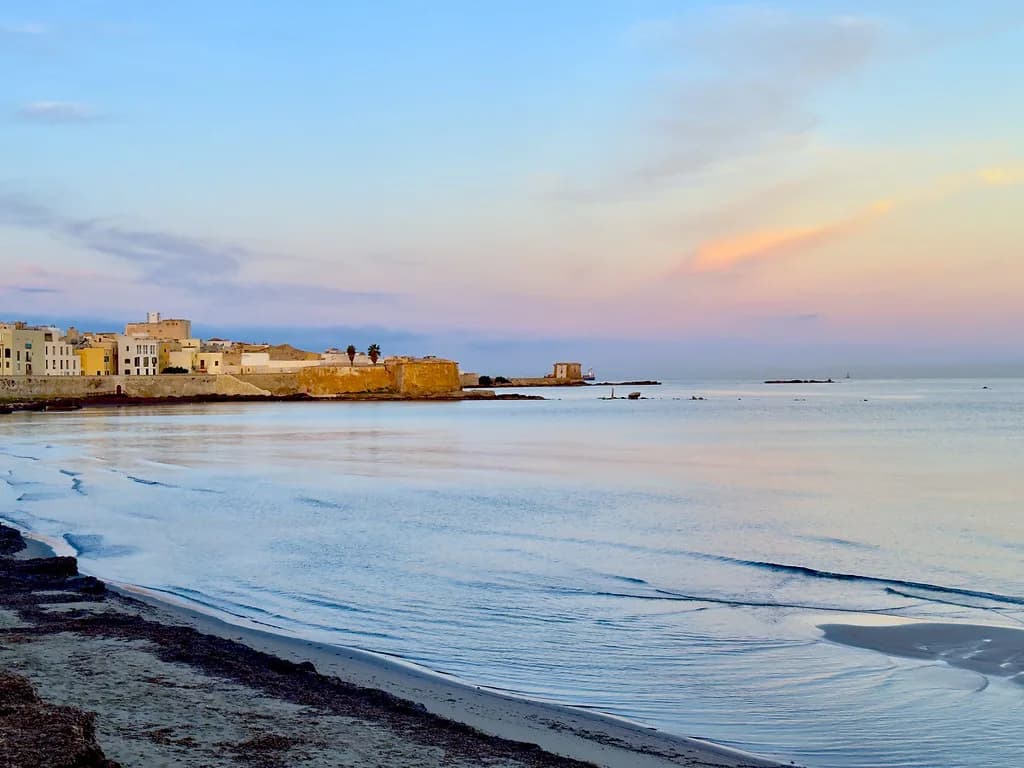
The Mura di Tramontana are the surviving stretch of the city's Spanish-era fortifications on the northern side, roughly a kilometre of elevated walkway along the sea. Walking them is free, and from the path you can drop down to the small beach below. The same defensive system includes the Bastione Conca, built to control the wide stretch of water facing the historic centre.
People gather along this walkway in the evening to watch the light change over the water, which makes it the best free seat in the city. The official tourism description of Trapani's fortifications, city doors, walls and bastions sets out the walkway's extent and how it connects to the beach, so you can trace the route before you go.
Time your walk for the hour before sunset and bring nothing but patience; there is no ticket and no gate. For how the seawall fits into a longer day on foot, the Trapani in One Day format is a sensible way to slot it in.
City Coves: Free Swimming, No Facilities
Trapani's old town meets the sea, so you can swim without leaving the centre. The small sandy beach near the former Piazza Mercato del Pesce sits on the northern coast with a shallow seabed, and further west Porta Ossuna beach hides just beneath the ancient city walls, reached from the old gate. The shoreline below Torre di Ligny is mostly rocky but opens a wide panorama back over the city. All of these city spots are free to access and have no bathing facilities, so go carefully and bring your own water. Related guide: Hidden Gems in Trapani.
That trade-off is the whole point: you save money and time, but you accept rocks, no lifeguards and no sunbed service. Families with small children may prefer the shallow sand near the fish market square side; confident swimmers will enjoy the rocky coves more.
The fish market square itself, Piazza Mercato del Pesce, is free to wander. Its arcaded exedra and fountain follow an 1874 design by the Venetian architect Giambattista Talotti, and the square still hosts cultural events, as the official West of Sicily page explains. For the tower at the peninsula tip, see the Torre di Ligny guide.
San Giuliano Beach: Free Sand, Paid Comforts
San Giuliano is the city's main beach, a long stretch of fine pale sand a short distance from the centre, with shallow clear water that suits families. The public beach is free; sunbeds, umbrellas and restaurant service belong to lidi and hotels. One seaside resort describes its private bathing area on San Giuliano as included for guests, which shows how the paid layer works rather than proving any public charge.
So the choice is simple: bring a towel and use the open sand at no cost, or pay for a lounger and lunch. The Isula Travel guide to beaches in Trapani calls San Giuliano the largest city beach, more than two kilometres long, which helps you judge how far you might walk from the busier end.
Fish Market and Jetty: Early Morning, No Ticket
On the working southern side of the peninsula, fishing boats unload and sell their catch near the jetty, and the market is liveliest early in the morning. Watching the boats and the trade costs nothing, though you should arrive before the day's business fades. The harbour side is also where ferries and hydrofoils leave for the Egadi Islands, so the waterfront doubles as a free place to watch departures.
Pair the jetty with the fish market square for a free morning loop that ends with coffee. It is a working waterfront rather than a polished attraction, so wear shoes you don't mind and keep clear of active unloading.
Beyond the Centre: Ruins, the Lazaretto and a Distant Sea Castle
Walk out along the seawall away from the tourist centre and the shoreline becomes emptier, with abandoned defensive structures and the ruins of an old tuna works along the coast. These are open-air sights you can view for nothing, though they are crumbling and unsupervised, so keep your distance from unstable stone. One traveller's account describes the ruined vats and chapel remnants, and the site's later wartime history.
Further along, the Lazaretto once served as a quarantine station and now houses an organisation connected with navigation; you can walk onto the grounds without paying, but there is little to see inside. Across the water, the small sea castle of Torre Peliade can only be admired from a distance. The Trip Unlocked guide to Trapani's sights describes both, including that the Lazaretto was in use from 1831 to 1885.
The Salt Pans: View the Landscape, Expect to Pay for the Museum
The salt flats south of the city, the Saline di Trapani e Paceco, are a protected reserve where windmills and shallow basins create the landscape people come to photograph. You can see the wider pan landscape for nothing from public roads and viewpoints, but the museums and guided visits inside the reserve sit behind gates and charge admission. The Maria Stella mill houses the reserve's visitor centre and a salt museum.
Be realistic about access. One traveller's attempt to walk from Trapani to the pans involved a long stretch beside a busy highway and ended at a no-trespassing sign, with the path disappearing after a short distance. Take that as a warning about doing it on foot rather than a fixed rule: go by car or bus, and plan around a museum or reserve visit if you want to get among the basins. The Komoot guide to the salt pans area notes that the walk from Trapani to the Nubia salt museum is long and unattractive on foot, and recommends arriving by car.
What Is Genuinely Paid
Everything enclosed tends to carry a cost: salt museum and reserve visits, guided city walks, food tours, boat trips to Favignana and Levanzo, and the cable car up to Erice when it is running. A boat day to the Egadi Islands is a paid excursion with its own schedule, so decide separately whether it belongs in your budget. For island logistics, read the Egadi Islands day trip from Trapani: Favignana and Levanzo before committing.
Erice is the classic paid add-on because of the cable car, but it can also be reached by road; check current operating status before relying on the funivia, since maintenance can suspend it. The Day trips from Trapani: Erice, Segesta and Mozia page helps you weigh those options against a free day in the city.
Two Free Itineraries: Half a Day and a Full Day
For a half day, start at the fish market square and jetty early, walk the old-town lanes to Corso Vittorio Emanuele, then follow the Mura di Tramontana to the Bastione Conca end for the sunset. That sequence costs nothing and covers the peninsula's two seas in a few unhurried hours.
For a full day, add a morning swim at a city cove, a free stretch of San Giuliano beach in the afternoon and the seawall walk in the evening. If you want to drive out to view the salt pans, fold that in before sunset and keep the museum visit optional. Use Trapani in One Day as a framework and strip out whatever carries a ticket.
Practical Notes for a No-Ticket Day
Shops close in the afternoon across much of Sicily, with some exceptions, and restaurants often shut between lunch and dinner, reopening in the evening. Build your walking around those rhythms rather than fighting them. The Trip Unlocked guide to Trapani notes the typical afternoon closures and the later local dinner hour, which is useful for timing a free sunset walk.
The old town is compact and walkable, with cobbles and steps on the seawall, so wear proper shoes. Sun exposure on the walls and beach is strong in summer, and the city coves have no facilities, so carry water and shade. A car is not needed for the free city sights; it only becomes useful for the salt pans and outlying beaches.
The Free Trapani Is the One You Walk Slowly
Trapani's cheapest pleasures are also its best: the peninsula lanes, the seawall at dusk, a swim beneath the old walls and the long sand at San Giuliano. None of it requires a ticket, and none of it needs to be rushed. Plan around the free layer first, then add one paid interior or boat trip only if it genuinely earns its place. For wider planning, see Hidden Gems in Trapani.
Check the official city website for any current notices before you travel, and confirm opening status at the door rather than trusting a listing. With that small amount of verification, a free day in Trapani is easy to assemble and hard to regret. For related planning, see Chiesa del Purgatorio Trapani Guide: Misteri Statues & Baroque Facade.
Frequently Asked Questions
What can you do for free in Trapani?
Walk the old-town lanes and Corso Vittorio Emanuele, follow the Mura di Tramontana seawall at sunset, swim at the small city coves beneath the walls, and use the public stretches of San Giuliano beach. The fish market square and jetty are also free to wander, and you can view the wider salt-pan landscape from public roads without entering the reserve.
Is the Mura di Tramontana walk free?
Yes. The surviving stretch of the city's Spanish-era fortifications is an open, elevated walkway along the sea, and walking it costs nothing. From the path you can reach the beach below, and the Bastione Conca end gives a wide view over the water facing the historic centre.
Can you swim in Trapani city centre for free?
Yes, at the small coves and beaches that meet the old town, including the sandy spot near the former fish market square, Porta Ossuna beach below the walls and the rocky shoreline near Torre di Ligny. These spots have no bathing facilities or lifeguards, so swim with care and bring your own water.
Are the Trapani salt pans free to visit?
The wider pan landscape with its windmills can be viewed from public roads and viewpoints at no cost, but the reserve's museums and guided visits are paid and gated. Getting there on foot is unpleasant and routes can be blocked, so go by car or organised visit and check arrangements in advance.
Is Trapani worth visiting without paying for attractions?
Absolutely. Trapani is a strolling city with relatively few ticketed sights, so the free layer of lanes, walls, waterfront and beaches is the main event rather than a compromise. Adding one paid interior or a boat trip is a choice, not a requirement.
Do you need a car to see Trapani's free sights?
No. The old town, seawall, city coves and San Giuliano beach are all reachable on foot or with local transport. A car only becomes useful for the salt pans and outlying beaches, where public access is easier by road than on foot.
How long do you need for a free walking day in Trapani?
A half day covers the fish market, old-town lanes and the Mura di Tramontana at sunset. A full free day adds a morning swim and an afternoon on San Giuliano beach, with the salt pans as an optional drive out. This is a suggested pace, not an official schedule.
Sources
Continue exploring
More guides you'll find useful