Oltrarno Florence: 10 Essential Things to Know and See
Discover the Oltrarno in Florence with our guide to the best artisan workshops, the Boboli Gardens, Piazza Santo Spirito, and hidden Renaissance gems.
On this page
Oltrarno Florence: 10 Essential Things to Know and See
Oltrarno Florence is the historic district located just across the Arno River from the main tourist crowds.
Many travelers find this area offers a more authentic glimpse into daily life in Tuscany.
You can cross the Ponte Vecchio to find narrow streets filled with local charm and history.
Exploring this neighborhood reveals a side of the city that many visitors often overlook — one of the most rewarding stops in our wider guide to hidden gems in Florence.
Why the Oltrarno is Florence's Best Neighborhood
Locals often refer to this district as Diladdarno, which means the other side of the Arno. The name captures the essential point: everything here sits on the southern bank, physically and culturally separate from the Duomo, Uffizi, and Piazza della Repubblica crowds.
This area maintains a bohemian spirit that contrasts sharply with the busy streets of the historic center. You will find that florence neighborhoods vary greatly, but Oltrarno still feels like a small village where residents do their shopping, walk to school, and argue over football in the street.
The district divides naturally into two sub-quarters: Santo Spirito to the east, centered on its grand basilica and lively piazza, and San Frediano to the west, which has the rougher edges and the most interesting dining. Together they make up one of the most rewarding areas to spend a full day or base yourself for an entire trip.
The Grandeur of Palazzo Pitti and Boboli Gardens
Palazzo Pitti served as the primary residence for the powerful Medici family from 1549 onward. The massive palace is the largest museum complex in Florence, housing several distinct collections including the Palatine Gallery, the royal apartments, the Silver Museum, and the Porcelain Museum. Art lovers should budget at least three hours; the Palatine Gallery alone contains hundreds of works by Raphael, Titian, and Rubens hung salon-style as they would have appeared in a private Renaissance collection.
The Boboli Gardens behind the palace cover roughly 111 acres of sculpted hillside and have been open to the public since 1766. The terrain climbs steeply, so wear comfortable shoes. From the Palazzina del Cavaliere near the top you get sweeping views over Florence, and you can already spot the marble facade of San Miniato al Monte on the adjacent hill. Booking combined Pitti and Boboli tickets online in advance is strongly recommended in 2026, especially from April through October.
Palazzo Pitti tickets range from €16 to €25 depending on which of the five internal museums you include. A combined ticket also covers Boboli Gardens and the Bardini Garden — buy at least 48 hours ahead to skip the queue.
Renaissance Masterpieces in the Brancacci Chapel
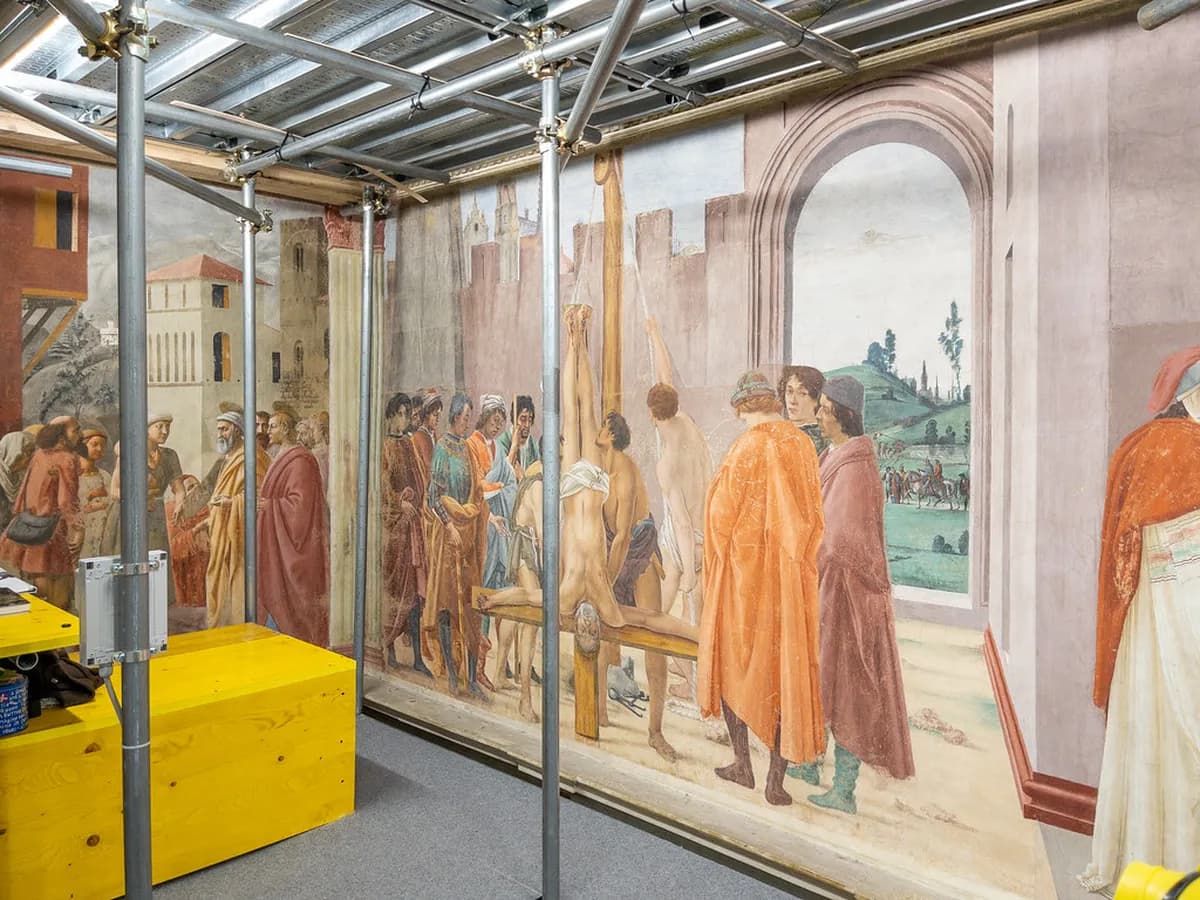
The Brancacci Chapel, inside the Church of Santa Maria del Carmine on Piazza del Carmine, houses some of the most influential frescoes of the early Renaissance. Commissioned in 1425 by the merchant Felice Brancacci, the cycle was painted by Masaccio and Masolino da Panicale and depicts scenes from the life of Saint Peter. Art historians call it the Sistine Chapel of the early Renaissance; the figures show a sense of weight and psychological depth that no one had managed in paint before.
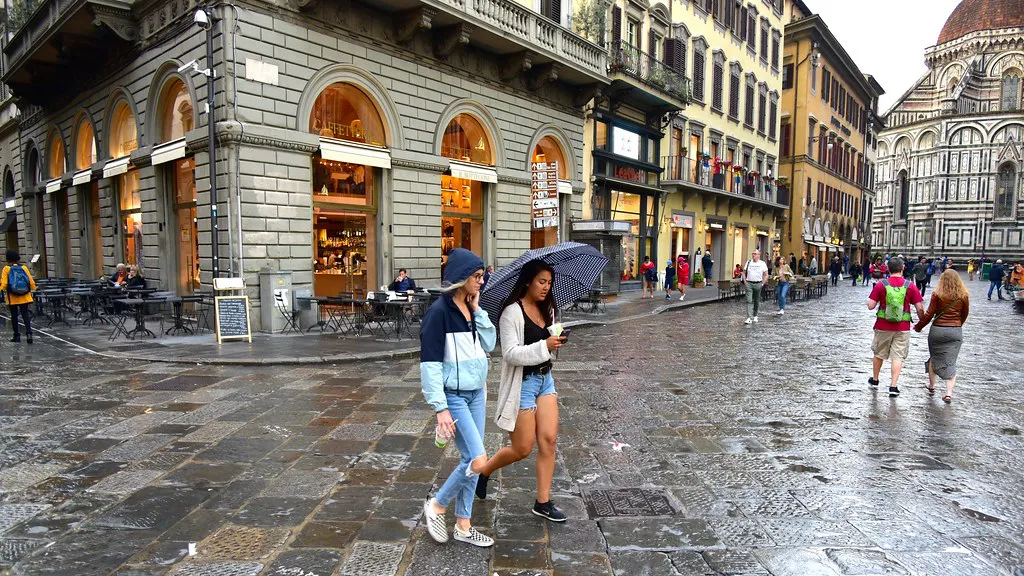
The chapel survived a devastating fire that destroyed most of the church in 1771, which is why the soaring interior around it is now in the Rococo style while the chapel itself preserves its 15th-century character. Filippino Lippi completed the cycle after both original painters left Florence. You should check the Brancacci Chapel website for current ticket availability and opening hours, as entry is capped at small groups and slots fill weeks ahead during high season.
If the chapel is currently under restoration, ask about scaffolding access when you book. At various points during recent years visitors have been able to stand within arm's reach of the frescoes on the work platforms, a rare and extraordinary experience that is not possible in the Uffizi or the Palatine Gallery.
The Hidden Gems of Santa Felicita Church
The Church of Santa Felicita sits just steps from the Ponte Vecchio on Via de' Guicciardini and is one of the oldest religious sites in the city. If the facade looks architecturally awkward, that is because the Vasari Corridor passes directly along its front, and the Medici needed to cut through the building to maintain their elevated private passageway across the city.
Inside, just right of the entrance, is a small chapel designed by Brunelleschi and decorated by Pontormo in the 1520s. His Deposition from the Cross is one of the defining works of Mannerism: the colors are almost hallucinatory, with lime greens, pinks, and pale blues that feel unlike anything else in the city's churches. On the wall opposite, Pontormo's frescoes of the Virgin Mary and the Angel Gabriel complete the scheme. Entry is free, and the chapel is usually quiet even in summer.
Look up above the main entrance and you will see a large gated window. This is the Medici window, the private opening through which the family could observe mass from the Vasari Corridor without ever appearing in public view. It is one of the most revealing details of how the Medici managed their political image in daily religious life.
Piazza Santo Spirito: Markets, Movida, and Local Life
Piazza Santo Spirito serves as the social heart of the neighborhood at every hour of the day. The square dates to the second half of the 1200s and centers on a large octagonal fountain in pietra serena. In the morning, market stalls line the square Monday through Friday selling fresh produce, clothing, and household goods. The second Sunday of each month brings an artisan and handcraft market (closed July and August); the third Sunday hosts the Fierucolina di Santo Spirito, an organic food fair focused on local agricultural products including cheese, honey, and olive oil.
The atmosphere shifts completely after 18:00. This is when the Florentine movida takes over: the cafes and trattorie that ring the piazza fill up, tables spill onto the cobblestones, and the church steps become standing room for an international mix of students, locals, and travelers nursing Negronis and glasses of Chianti. It is one of the few squares in central Florence where the nightlife feels genuinely local rather than staged for tourists. You can find many hidden gem restaurants in florence tucked into the lanes immediately around the square.
The bars and restaurants in the immediate blocks behind the basilica, particularly along Borgo Tegolaio and Via Sant'Agostino, tend to be cheaper and less crowded than those with direct piazza frontage. For wine specifically, the narrow streets northwest of the square are worth exploring independently after dark.
Piazza Santo Spirito's organic food fair (Fierucolina) runs on the third Sunday of each month — but not in July or August. The second Sunday hosts an artisan and handcraft market. Both are free to browse and draw mostly local shoppers.
The Basilica and Cenacolo di Santo Spirito
The Basilica di Santo Spirito was the final masterpiece designed by Filippo Brunelleschi, begun in 1444. Its plain exterior gives nothing away: inside, the nave opens into a space of pure geometric harmony, with thirty-eight side chapels each containing Renaissance altarpieces and sculpture. The unfinished facade was never given decoration, which is why it appears so starkly blank compared to Santa Croce or Santa Maria Novella.
Do not leave without visiting the sacristy, where a wooden crucifix attributed to the young Michelangelo is displayed. He reportedly carved it around 1493 as a gift to the prior of the convent, who had allowed him to study anatomy using cadavers from the monastery hospital — a detail that connects this quiet church to the scientific curiosity that would eventually produce the David.
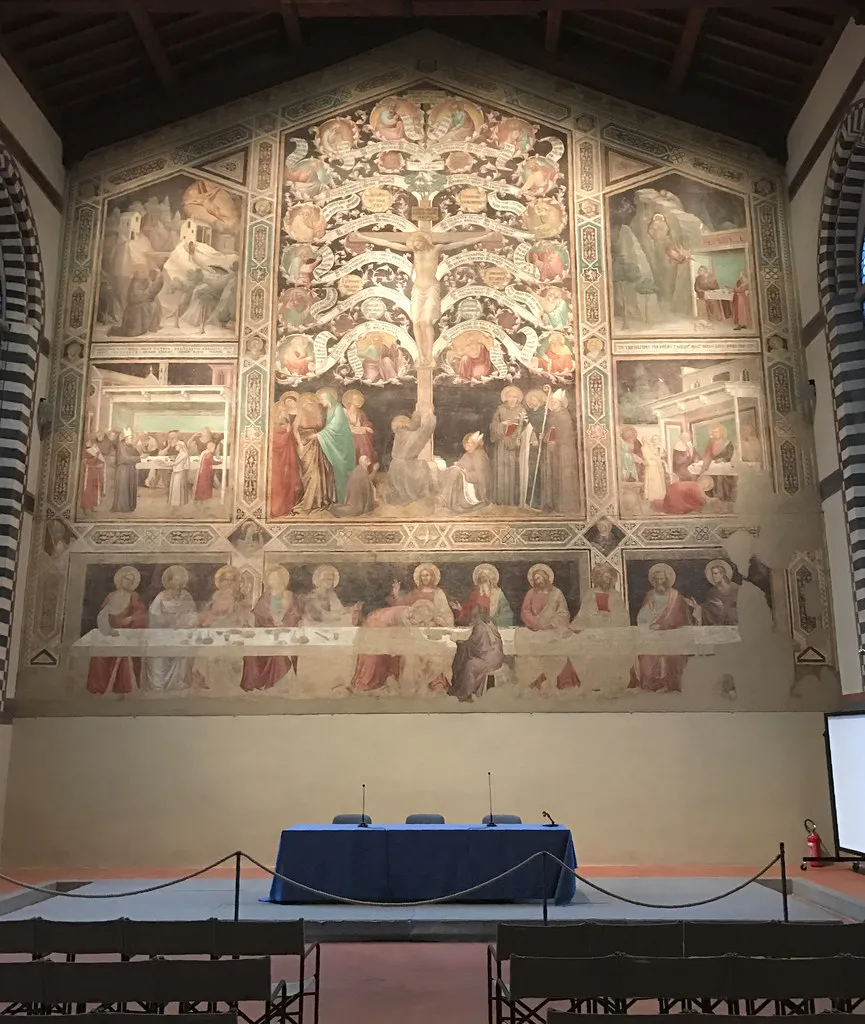
To the left of the church entrance you can enter the Museo della Fondazione Romano to reach the Cenacolo di Santo Spirito. The Cenacolo, a Last Supper fresco by Andrea Orcagna, is displayed in the refectory of the historic Augustinian convent. Much of the fresco has been damaged over the centuries, but the surviving fragments remain significant. The museum is often uncrowded and worth the short visit.
Traditional Artisan Workshops of the Oltrarno
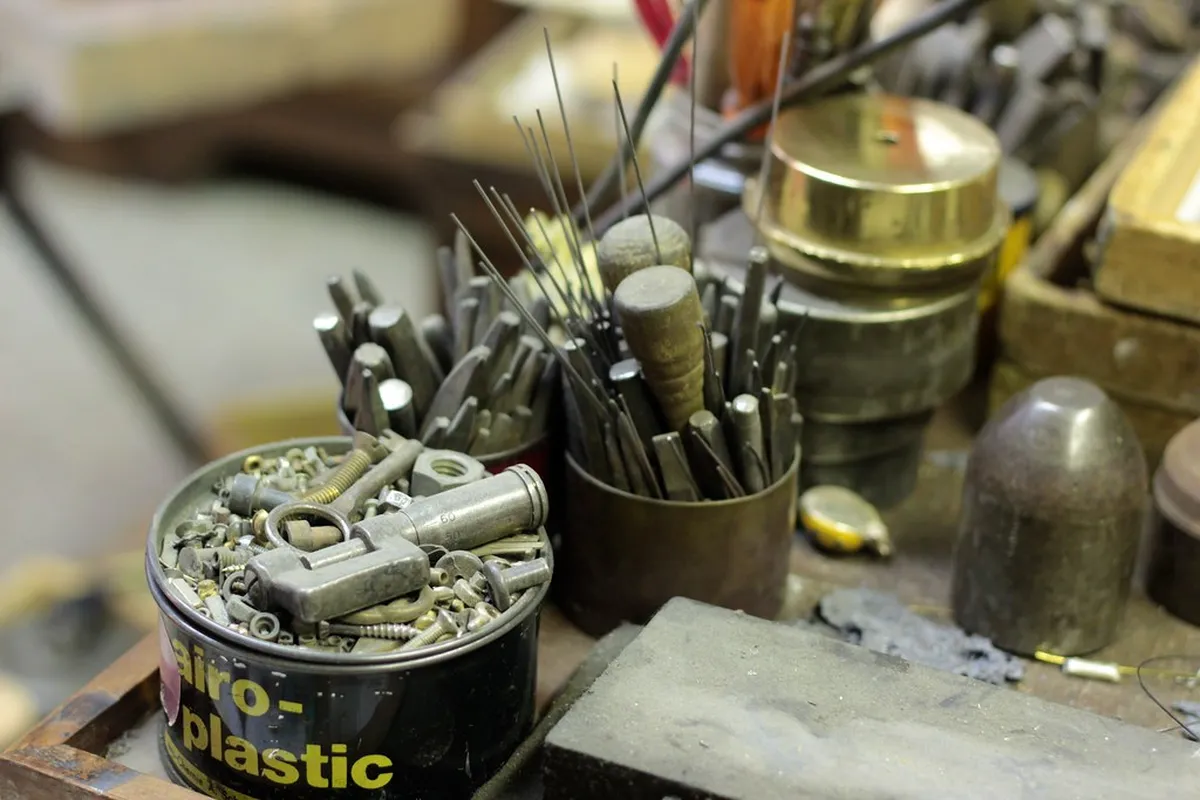
The artisan tradition is the beating heart of the Oltrarno. Skilled craftspeople still produce leather goods, gold-leaf frames, marbled paper, and bookbindings using techniques that have changed little in five centuries. The concentration of workshops along Via Maggio, Via de' Barbadori, and Borgo San Frediano is the highest of any neighborhood in Florence and is one reason the area feels so different from the luxury retail streets north of the river.
Via Maggio in particular rewards slow walking. It is lined with antique dealers and restoration studios where you can watch frame gilders at work through open doors. The Florence Food Studio on nearby streets offers hands-on pasta and Tuscan cooking classes run by local residents, which is a practical way to spend a rainy morning. For leather shopping, Via de' Barbadori connects Piazza Santo Spirito toward the Ponte Vecchio and has several small ateliers selling hand-stitched bags and belts at prices well below the boutiques in the center.
One practical note: many Oltrarno workshops close from approximately 13:00 to 15:30 for the midday break. Plan your artisan browsing for the morning or late afternoon, and use the lunch hours for the Boboli Gardens or a long sit at one of the piazza cafes.
| Attraction / Site | Entry Cost | Opening Hours | Advance Booking |
|---|---|---|---|
| Palazzo Pitti (Palatine Gallery) | €16–€25 | Tue–Sun 08:15–18:50 | Strongly recommended |
| Boboli Gardens | Included with Pitti combo | Daily (seasonal hours) | With Pitti ticket |
| Brancacci Chapel | ~€10 | Mon, Wed–Sat 10:00–17:00; Sun 13:00–17:00 | Required (limited capacity) |
| Basilica di Santo Spirito | Free (sacristy small fee) | Mon–Sat 10:00–13:00, 15:00–18:00 | Not required |
| Church of Santa Felicita | Free | Daily 09:30–12:00, 15:00–18:00 | Not required |
Palazzo Guadagni and Renaissance Architecture
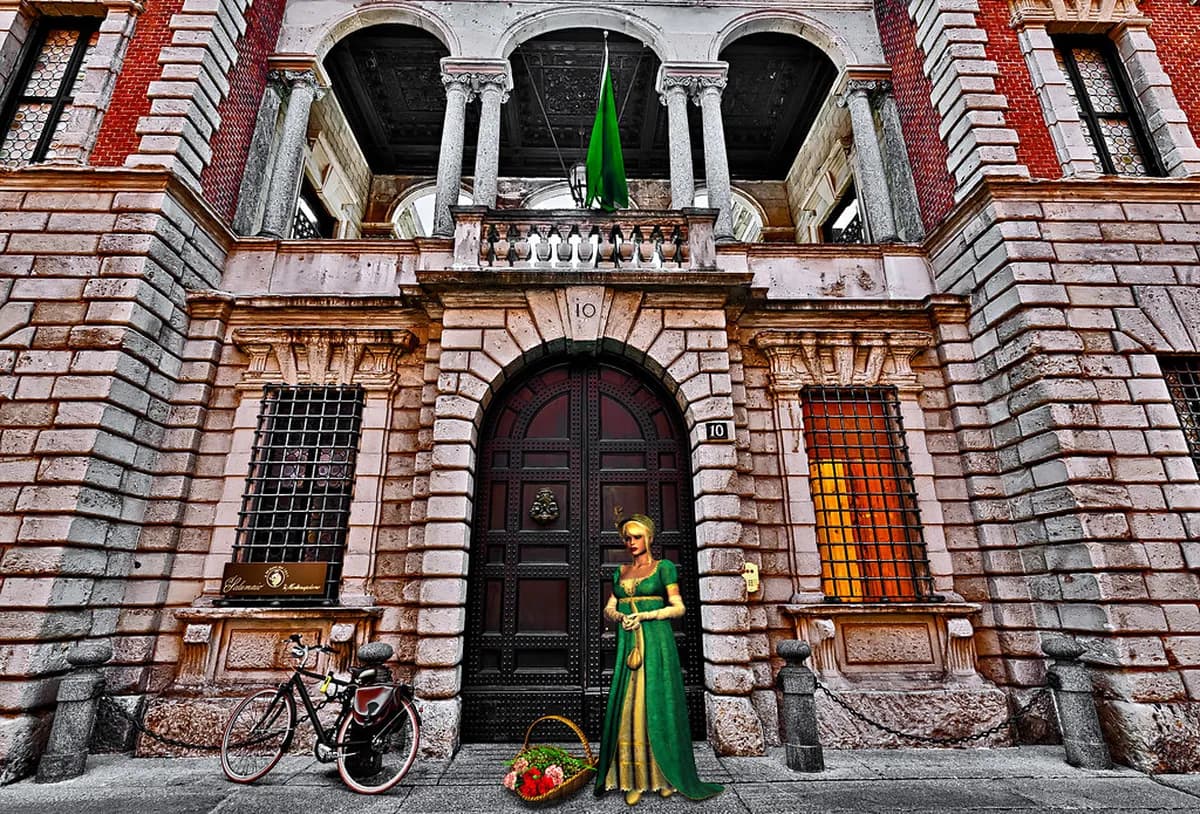
Palazzo Guadagni, also called Palazzo Dei, faces directly onto Piazza Santo Spirito and is one of the finest examples of early 16th-century aristocratic architecture in the city. Its defining feature is the open loggia on the upper floor, a colonnaded gallery that allowed the noble residents to be outdoors without descending to street level — a kind of elevated viewing platform over the piazza below.
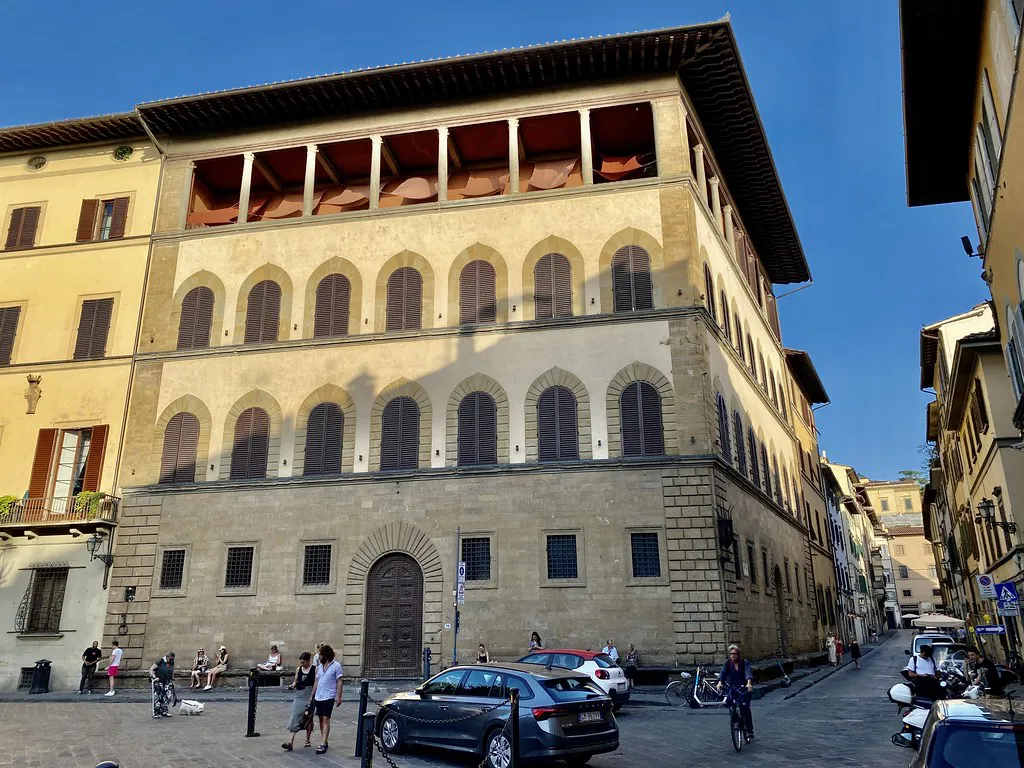
The building helped set the template for Florentine noble housing that other wealthy families across the neighborhood imitated over the following decades. Walking Via Maggio from the piazza toward the Ponte Vecchio, you pass a succession of palazzi of similar ambition, including the Palazzo of Bianca Cappello at number 26, identifiable by its elaborate facade frescoes. Bianca Cappello was first the lover and then the wife of Francesco I de' Medici; both died under mysterious circumstances and a poisoning was long suspected. The building is not open to visitors, but the facade alone is worth a pause.
Panoramic Views from Piazzale Michelangelo and San Miniato
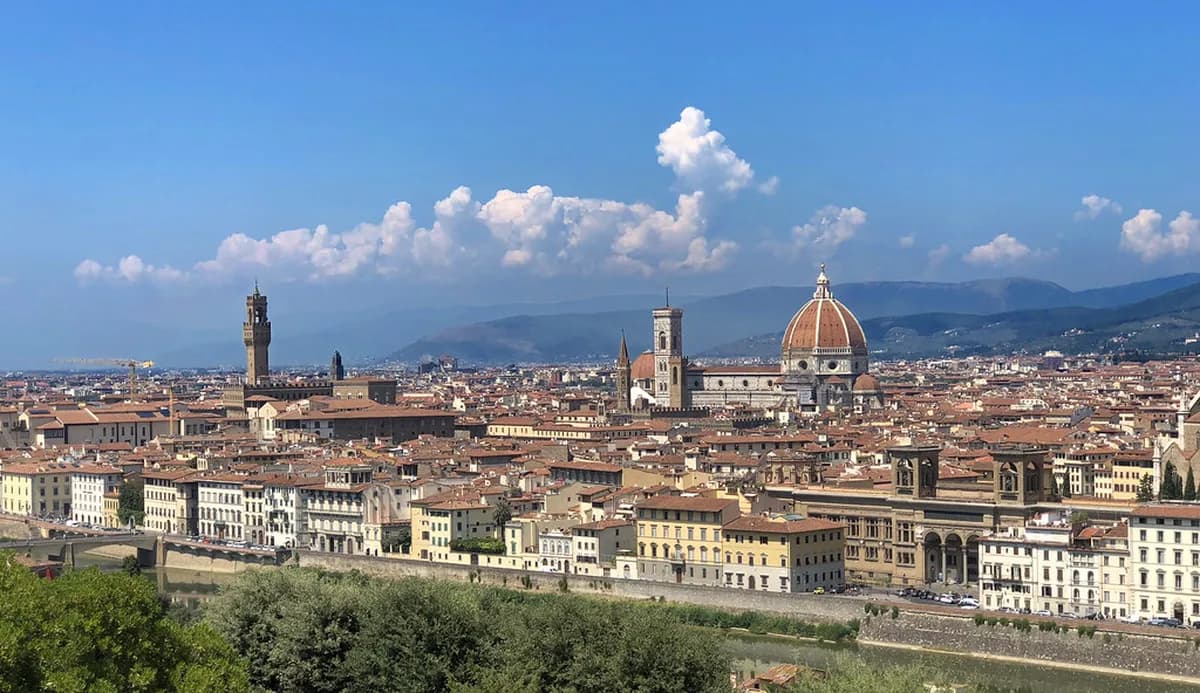
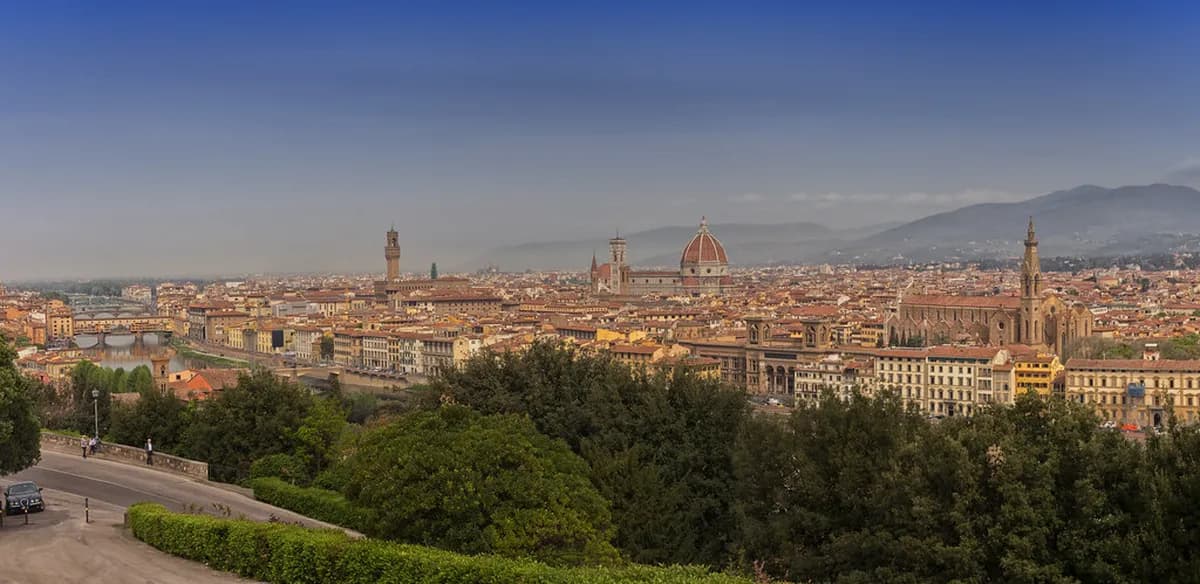
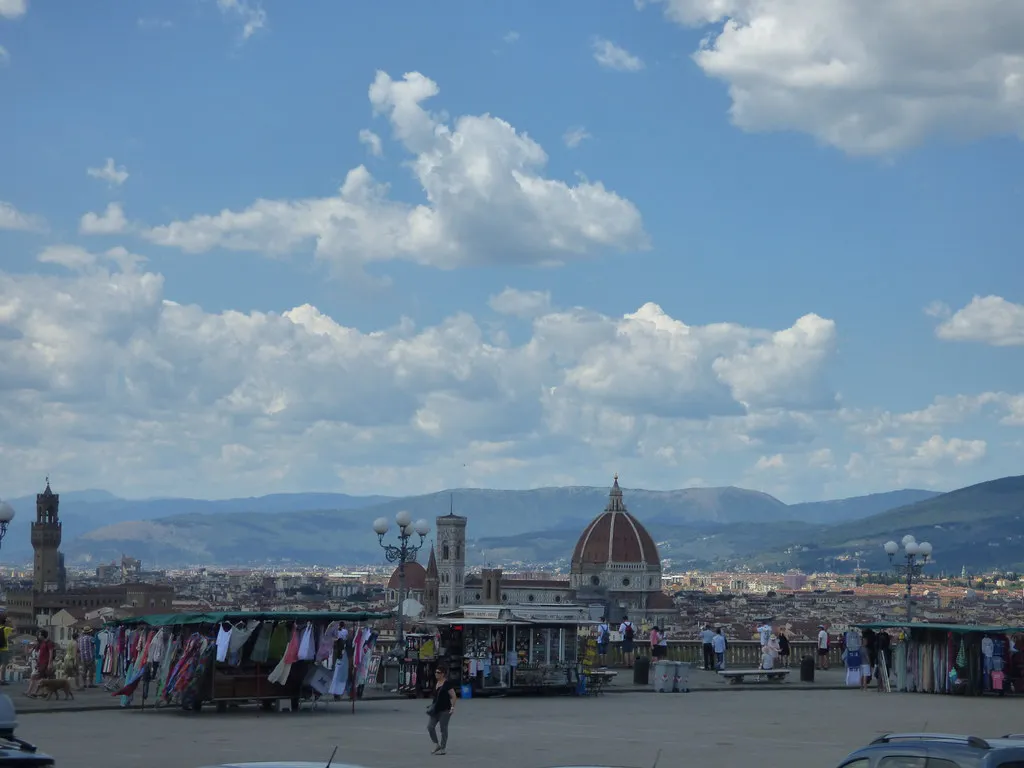
The walk up the hill from the Porta San Niccolò gate leads to the most photographed viewpoint in Florence. Piazzale Michelangelo sits on a broad terrace and provides a panoramic view that takes in the Duomo, the Palazzo Vecchio tower, and the full sweep of the Arno. Arriving at sunset means sharing the space with significant crowds, but the view justifies it. Coming at 08:00 instead gives you the same panorama in near-solitude.
You can follow an oltrarno walk that continues further uphill from the piazzale to San Miniato al Monte. This Romanesque basilica, finished in the 12th century, has a geometric marble facade of green and white that is one of the most beautiful in Italy. The monks hold vespers daily at around 17:30 and the Gregorian chanting in the candlelit nave is one of those experiences that does not appear in any ticketing system — it is simply open and free.
Practical Tips for Exploring the "Other Side" of the Arno
Getting to the Oltrarno is straightforward: walk across the Ponte Vecchio or the Ponte Santa Trinita from the historic center, a journey of about fifteen minutes from the Duomo. The district is entirely walkable and does not require buses or taxis for any of the sites listed in this guide. Comfortable, flat-soled shoes matter because the streets are uneven stone and the walk to Piazzale Michelangelo involves a sustained climb.
Staying in the Oltrarno rather than near the Duomo carries a practical financial benefit that few travel guides emphasize directly. Accommodation on this side of the river — whether apartments or small hotels — typically runs 15 to 25 percent cheaper per night than equivalent rooms in the historic center, while still keeping you within easy walking distance of every major Florentine sight. For a week-long stay, that difference is meaningful. You can also explore the san frediano florence sub-district for some of the best and least expensive local dining options in the city.
Visitors using vacation apartments will find several excellent options within the Oltrarno that put you directly inside the neighborhood's daily rhythm rather than in the tourist hotel corridor near Santa Maria Novella. Book several months ahead for July and August, when the neighborhood has grown considerably more popular with international visitors who have discovered exactly what makes it worth choosing.
Keep exploring the Oltrarno's best dining and cultural spots: Oltrarno restaurants offer some of Florence's most authentic cuisine.
Frequently Asked Questions
Is the Oltrarno neighborhood in Florence worth visiting?
Yes, it is absolutely worth visiting for its authentic atmosphere and artisan history. You can find many best aperitivo in florence spots here that feel far more local than those near the Duomo. It offers a peaceful escape from the main tourist crowds.
What is the best way to get to the Oltrarno from the Duomo?
The best way is to walk across the Ponte Vecchio or the Ponte Santa Trinita. The journey takes about fifteen minutes through the historic center. You will enjoy scenic river views and pass through charming medieval streets along the way.
When are the markets held in Piazza Santo Spirito?
A general market runs every morning from Monday through Saturday. Specialized antique markets occur on the second Sunday of each month. Organic food fairs typically take place on the third Sunday. Check local signs for any seasonal schedule changes.
Do I need to book tickets for the Brancacci Chapel in advance?
Advanced booking is highly recommended because entry is limited to small groups. During the current restoration, visitors can often access the scaffolding to see the frescoes closely. Check the official website for the most accurate reservation details before your trip.
Exploring Oltrarno Florence provides a deeper understanding of the city's rich cultural fabric.
From the grandeur of the Pitti Palace to the quiet charm of artisan workshops, there is something for everyone.
You will leave with memories of a more intimate and authentic Italian experience.
Make sure to cross the river and discover this vibrant neighborhood on your next visit.
Continue exploring
More guides you'll find useful