Catania on a Rainy Day: Indoor Activities and Practical Tips
Plan a wet day in Catania with covered markets, baroque interiors, underground tours and food stops, plus honest advice on what rain ruins and what it doesn't.

On this page
Rain in Catania rarely means sitting in a hotel room. The city is compact, baroque and built for grazing, so a wet day is a good excuse to spend longer over lunch, go underneath the lava-stone streets and treat the fish market as a spectacle rather than a shopping trip. The main adjustment is expectation: cloud, mist and volcanic smoke frequently hide Mount Etna even on brighter days, so anything that depends on a view becomes a gamble rather than a plan.
This guide is organised as a loose wet-day route rather than a checklist. It separates free church entry from paid rooftops and ticketed tours, flags which markets are only partly under cover, and explains what to verify yourself, since timetables and admission details change. Treat every figure here as a lead to confirm at the door or with the operator.
Why Catania's Rain Problem Is Different
Catania has few big indoor attraction blocks in its historic centre compared with, say, a northern European city. What it does have is a dense run of churches, palaces, covered market stalls and food businesses, so a wet day works best as a series of short hops rather than one long museum visit. The dark lava-stone paving is famously slick when wet, which makes the hops slower and argues for shoes with grip.
The city's character is also industrial and port-led rather than promenade-led, so there is no sheltered seaside arcade to fall back on. That same working-city feel is the reason a wet day can still feel worthwhile: the market, the food culture and the bar life are year-round activities, not fair-weather extras. Plan around those and rain becomes a background detail rather than the day's theme.
One practical option is to join a guided walking tour early in the day and get your bearings under an umbrella, since a guide removes the standing-around-debating phase that soaks everyone. Booking platforms list a guided walking tour of Catania and a classic baroque walking tour covering the streets, Roman remains and volcano-shaped local history.
Start at the Fish Market Under the Archi della Marina
The fish market fans out beneath the low arches of the Archi della Marina near Piazza Alonzo di Benedetto, and it has operated here since the nineteenth century. It is not an indoor attraction, but the arched structure gives partial cover and the density of stalls and crowds means you rarely stand still in the open. Go early, because the energy and the best of the trade belong to the morning, and once the stalls pack up you are left with polystyrene boxes and wet ground rather than theatre.
Treat the market as a place to watch and then eat, not to shop for a picnic. The blog behind this route suggests grabbing a paper cone of fried seafood from Scirocco, a butcher's-shop conversion overlooking the small piazza where several fishermen are based. If the weather is truly filthy, sit inside at a nearby fish restaurant instead and save the browsing for a shower break.
The trade-off is straightforward: on a dry day you can linger; on a wet day you want maybe twenty minutes of movement before finding cover. Check vendor arrangements on the day rather than trusting a published schedule, and remember that many businesses keep seasonal or weather-dependent rhythms. Cap a market visit at a suggested half hour and let a café end it. For a wider set of wet-weather ideas beyond this route, our guide to the hidden gems in Catania is a useful companion.
Churches and Terraces: What the Rain Actually Spoils
The Chiesa della Badia di Sant'Agata, just behind the cathedral, is the city's classic viewpoint: a narrow stone stairway leads to a terrace and then more spirals to the dome, with 360-degree views back over Catania and towards Mount Etna. That is precisely the sort of plan that rain destroys, because cloud, mist and volcanic smoke frequently hide the mountain even on brighter days. The rooftop is a paid climb whereas the church itself is the free part, so treat the climb as a separate, optional purchase.
The blog behind this route reports that a rooftop ticket was purchased at the door and that visiting hours were split between mornings and later afternoons, with afternoons closed on Mondays. Those details come from a travel blog rather than the church, and prices change, so verify them at the entrance before committing, especially on a wet day when the view may be worthless anyway. The point is to budget for a paid terrace separately from free entry.
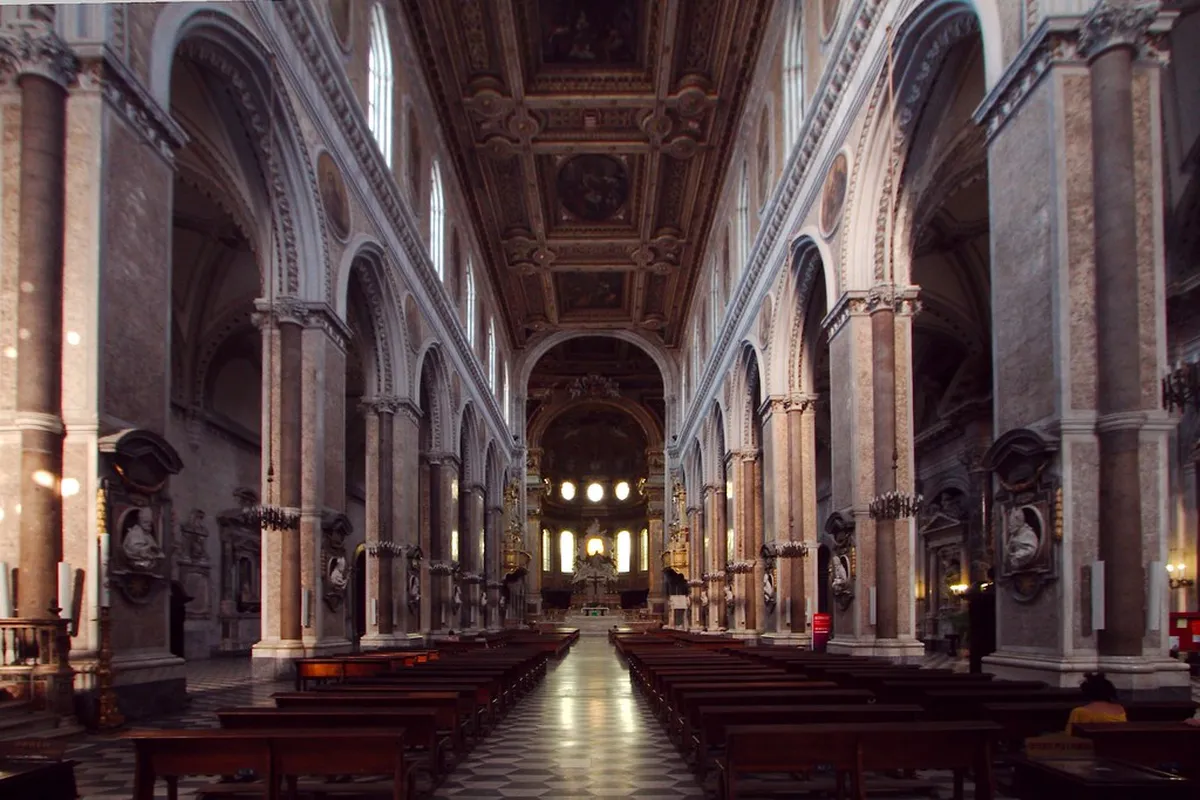
Piazza del Duomo is the heart of old Catania and the place you will cross repeatedly. It holds the cathedral, the badia and the black lava elephant fountain known as Liotru, built in the 1730s and used as a meeting point ever since. On a wet day, use the square as a transit point between covered stops rather than a destination, and duck into the cathedral for shelter and scale.
If the roof is lost to cloud, the Museo Diocesano in the same square offers views towards Etna and along Via Etnea in better conditions, though it is not a substitute for the dome. A coffee in a nearby bar costs less than a gamble on the weather. Photo-based guides to the city rarely show the grey version, so arrive willing to abandon the plan.
Sicilian Baroque Interiors and How to Budget for Them
Catania's UNESCO-listed baroque is built from sharp bricks of blackened lava stone, and much of its appeal is exterior detail: portals, balconies and the chessboard contrast of dark stone and pale plaster. That means a wet day asks you to go inside rather than admire facades, and the city's churches reward that. Set a simple rule: free church entry when you need shelter, paid interiors and rooftops only when you actually want the collection or the view.
The Monastery and Church of San Nicolò l'Arena is the obvious large interior to spend time in, and it sits within reach of the centre's main streets. Pair it with a short indoor stop rather than trying to string together four churches in the rain, because wet shoes and cold stone wear you down faster than the map suggests. The city's bigger sights need more than a passing glance.
If the rain settles in, a museum gives you a guaranteed dry hour with no weather gamble. The Museo Civico Castello Ursino: Visitor Guide explains what the collection and the castle itself offer, and it works well as a mid-afternoon anchor before an early dinner. Similarly, the Teatro Romano di Catania: Visitor Guide covers the excavated Roman theatre, an open-air site, so save it for a dry window rather than a downpour.
For the baroque streets themselves, the Via Crociferi guide is worth reading before you set out, since that street's churches and palazzi are best understood on foot between showers rather than in a single dash.
Underground Catania: The Genuinely Weather-Proof Option
The single best rain-proof activity in the city is going below it. The underground Catania guided tour explores Roman ruins, underground waterways and the way Mount Etna has shaped the city above, and it is listed among the bookable indoor activities on the Musement platform. Because it is beneath the streets, the weather becomes irrelevant, which is more than can be said for almost anything else on this list.
Book ahead if your wet day is fixed, since underground tours run in small groups and a rainy forecast pushes demand towards exactly this kind of option. Listings show departure times, language options and cancellation terms, so read those before paying rather than assuming a walk-up place. Prices shown by booking platforms are quotes for a given slot, not guaranteed fares, so compare against the operator's own page.
Ticketed Indoor Experiences Worth Pre-Booking
Beyond the underground, booking platforms list small, indoor-friendly experiences that suit a wet afternoon: a guided visit with an audioguide at St Benedict's Church, part of a former enclosed convent and an example of late baroque architecture, and a range of cooking classes and wine tastings. These are ticketed products with their own schedules, so the platform listing is the place to check availability rather than a city tourism office.
Food-based experiences are the smartest use of a washout because they fill a few hours and end with a meal already handled. Listings include a cooking class on the slopes of Etna using local ingredients, a lunch-and-tasting format at a Cesarina's home in Catania, and several Etna wine tastings, including one at a vineyard with a tasting room in central Catania. For a broader view of the city's sights to slot around them, browse Catania Attractions.
Keep a simple booking rule: pay only for what the weather cannot cancel. A cellar, a kitchen and a tasting room are safe bets; a summit hike, a terrace and a boat trip are not. If your only wet day coincides with a booked outdoor tour, check the cancellation window before the deadline rather than hoping for a break in the clouds.
These listings change often, and prices vary by date, group size and language, so treat the figure on screen as a quote for that slot rather than a fixed rate. The municipal website is a portal for city information rather than a reliable events or attraction directory, so it will not tell you whether a specific tour is running in the rain.
Eat Your Way Through the Rain
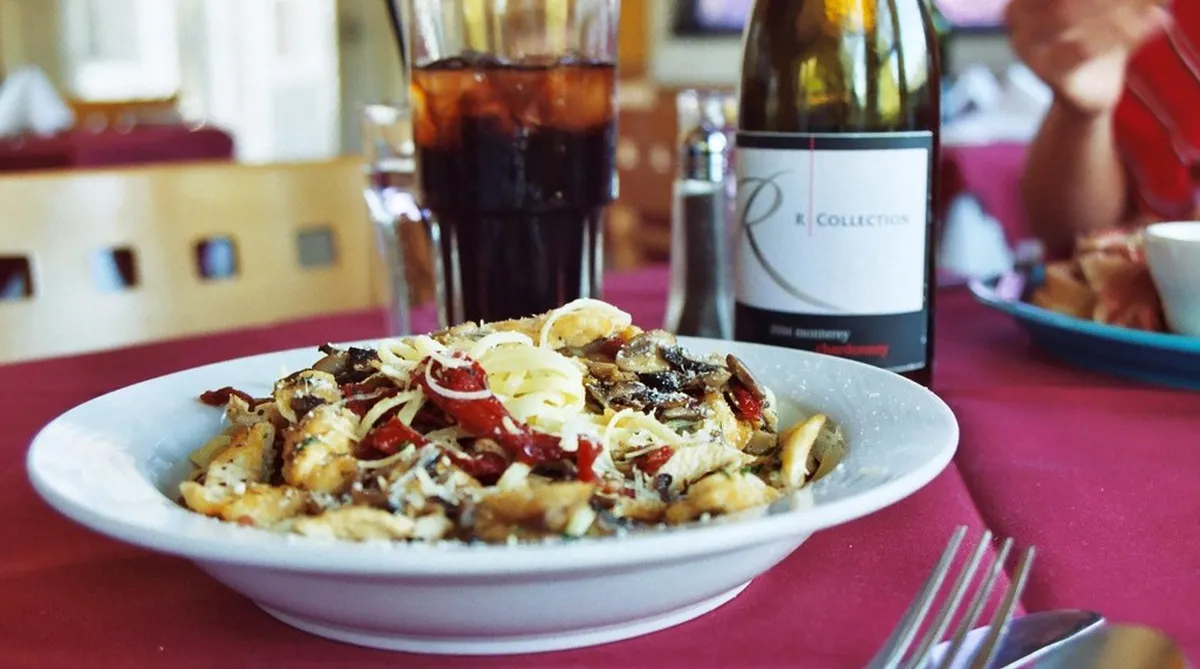
Pasta alla Norma belongs to Catania in a way that is worth taking seriously: the dish of fried aubergine, tomato, basil and ricotta salata is tied to the city and its Bellini associations. The blog recommends Nuova Trattoria del Forestiero for a traditional version, where the aubergine is sliced lengthways and covered generously with ricotta salata, and it also flags that the carbonara is the weaker order. That is exactly the sort of long, warm lunch a wet day is made for.
Order pasta alla catanese too if you see it: a breadcrumb and anchovy-based dish that the blog names as a signature of the city and less familiar to visitors. Both are filling, which matters when the afternoon plan is a museum or a cellar rather than a walk. Restaurants change their hours and closing days, so check the door or call ahead on a wet day when many places fill early with people escaping the rain; our local food guide collects more names to check.
Around Nuova Trattoria del Forestiero, in the San Berillo district, there is street art and a small square used for drinks as part of a community regeneration project. It is a good bridge between lunch and an evening bar, and the area is flat and close enough to cross quickly when the rain eases. Save the exposed wandering for a dry spell.
Covered Market Browsing at Fera 'o Luni
The Fera 'o Luni, also called the Monday fair, spreads around Piazza Carlo Alberto di Savoia and is the opposite of an indoor market: stalls buckle under produce and clothing, and the ground turns to a wet mess quickly. Some of the sprawl sits under cover and some does not, so expect a partly sheltered browse rather than a dry shopping arcade. The blog is candid that the precise schedule is uncertain, with some days bigger than others, and advises arriving in the morning or early afternoon because things wind down after about one or two.
Realistic expectations matter here. A wet morning thins the crowd and speeds up the haggling, but it also means puddles, tarpaulins and less of the communal theatre that makes the market worth visiting. Go for the atmosphere with a short list in mind, and do not plan a long loop of open-air browsing on a heavy-rain day. Verify the day's activity by asking at your accommodation or simply walking past before committing the morning.
The fish market near Piazza Alonzo di Benedetto is open in the mornings whatever the forecast; if the flea market is a washout, shift to the covered food stops instead and keep the rest for a brighter slot. The city rewards that flexibility because so much of its appeal is in eating, drinking and short indoor stops rather than ticketed sights. A self-guided route with named stops can be adapted to showers.
Via Gemmellaro and San Berillo: An Afternoon-to-Evening Plan
When the sky stays grey, shift the day's weight to the evening. Via Gemmellaro and the surrounding lanes hold small bars and restaurants suited to a slow afternoon that turns into dinner, and the area is compact enough to move between stops in short dashes. The blog describes Vermut as a cheap, student-friendly spot with small plates and local wine, and Frequenzia as a music-focused bar around the corner, while noting that hours should not be assumed.
The San Berillo quarter nearby has a small square and street art tied to a community regeneration project, and it makes a natural pause between lunch and drinks. None of this requires a ticket or a booking, which makes it the most flexible part of a wet-day plan. The trade-off is that a concentrated bar area also means a concentrated crowd later in the evening, so go early if you want a seat.
Another option for the grey hours is to follow the Bellini trail associated with the composer born in the city, since it is a walk between modest sites rather than a single destination. For a structured version with named stops, the Catania Self-Guided Walking Tour: Baroque and Roman Highlights can be split across showers, and you can simply shelter and resume.
How Long You Need and How a Washout Changes It
The blog behind this route recommends two nights as the right amount of time for most travellers to get a good overview of Catania on foot, and it offers that as its own suggestion rather than official guidance. A single washout day inside a two-night stay is manageable if you drop the viewpoint and the open-air sites and lean on food, underground tours and churches. A second wet day is the point at which you should consider moving your base or taking a day trip with its own indoor options.
Push the outdoor priorities to the front of a dry window and keep one flexible indoor plan in reserve. If you have only one day and it rains throughout, accept that the volcano and the terraces are gone and build the day around the market, a long lunch, an underground tour and an early bar. If you are staying longer, use the wet day for the Museo Civico Castello Ursino and the Teatro Romano di Catania in a dry gap, since the theatre is exposed.
Practical Tips: Shoes, Timing and Transport Between Stops
Wear shoes with real grip. The lava-stone paving and the marble around Piazza del Duomo become slippery in rain, and the historic centre's short blocks are more walkable than the distances suggest, so most people can string together market, lunch and a museum on foot. Carry a compact umbrella rather than relying on shop awnings, and keep a dry layer for the underground tour, where the temperature drops.
Time your indoor stops to the heaviest showers and use the lighter spells for moving between them. Book one anchor activity, such as the underground tour or a cooking class, and leave the rest loose. Check cancellation terms and the meeting point the day before, and keep the operator's contact details on your phone rather than in a booking email.
What to skip in heavy rain is easy: the rooftop terraces, the open-air flea market if it is pouring, and anything that depends on seeing Mount Etna. What to keep is the fish market in a light shower, church interiors, a long lunch, the underground and the bar streets. If you are travelling with children, the kids guide has additional indoor-friendly ideas that pair with this plan.
Plan Your Wet Day
Build the day around three anchors: a morning at the fish market if the rain is light, a long pasta lunch, and a booked indoor experience in the afternoon, followed by the bar streets in the evening. That structure uses the city's strengths and avoids the one thing Catania cannot guarantee in rain, which is a view of the volcano. If the weather lifts, swap in the rooftop and the open-air sites without abandoning the rest.
Confirm times, prices and closures directly with churches, tour operators and restaurants rather than relying on any single guide. The municipal website is a city portal, not an event calendar, and booking platforms show listings rather than fixed fares. A little checking before you leave keeps a wet Catania day honest and surprisingly full.
Frequently Asked Questions
Is Catania worth visiting on a rainy day?
Yes, if you stop chasing viewpoints. The fish market, the churches, the underground tour, the long lunches and the bar streets all work in the rain, and the city is compact enough to move between them in short dashes. What you lose is the volcano view and the terraces, which are weather-dependent even on brighter days.
What indoor things can you do in Catania when it rains?
The most reliable are the underground Catania guided tour, church interiors such as San Nicolò l'Arena, the Museo Civico Castello Ursino, and ticketed experiences like cooking classes and wine tastings. Booking platforms list a St Benedict's Church audioguide visit and walking tours as options. Check each operator's schedule rather than assuming a fixed timetable.
Are Catania's markets covered or open-air?
They are partly covered at best. The fish market sits under the arches of the Archi della Marina, which gives some shelter but is not an indoor hall, and the Fera 'o Luni flea market around Piazza Carlo Alberto di Savoia is largely open-air with stalls spilling into the streets. Expect puddles and a faster visit in heavy rain.
Do I need to book indoor tours in advance?
Book the underground tour or a cooking class in advance if your wet day is fixed, because a rainy forecast pushes people towards indoor options and groups are small. Read the cancellation terms before paying and confirm the meeting point the day before. Availability and prices vary by date, so compare the listing with the operator's own page.
What food should you try in Catania on a wet afternoon?
Start with pasta alla Norma, the aubergine, tomato and ricotta salata dish associated with the city, and try pasta alla catanese, a breadcrumb and anchovy pasta. Both are substantial enough to anchor an afternoon. Check opening days directly with the restaurant, since hours change and wet days fill tables early.
How many days do you need in Catania if the weather is bad?
A travel blog suggests two nights for an overview, though that is a traveller recommendation rather than official guidance. One wet day is absorbed easily by markets, food and the underground. Two consecutive washouts are a sign to reorder the plan and use the dry spells for the open-air sites.
Sources
Continue exploring
More guides you'll find useful