Catania Local Food Guide: What to Eat and Where to Try It
A practical Catania food guide to arancini, pasta alla Norma, horse meat, scacciata, cannoli and granita, with tips on the fish market and where to eat.
On this page
Catania's food is easy to recognise once you know the markers. The arancino here is pointed at the top like Mount Etna, while the Palermitan version is round like an orange, and the city's signature pasta is alla Norma, finished with salty ricotta salata.
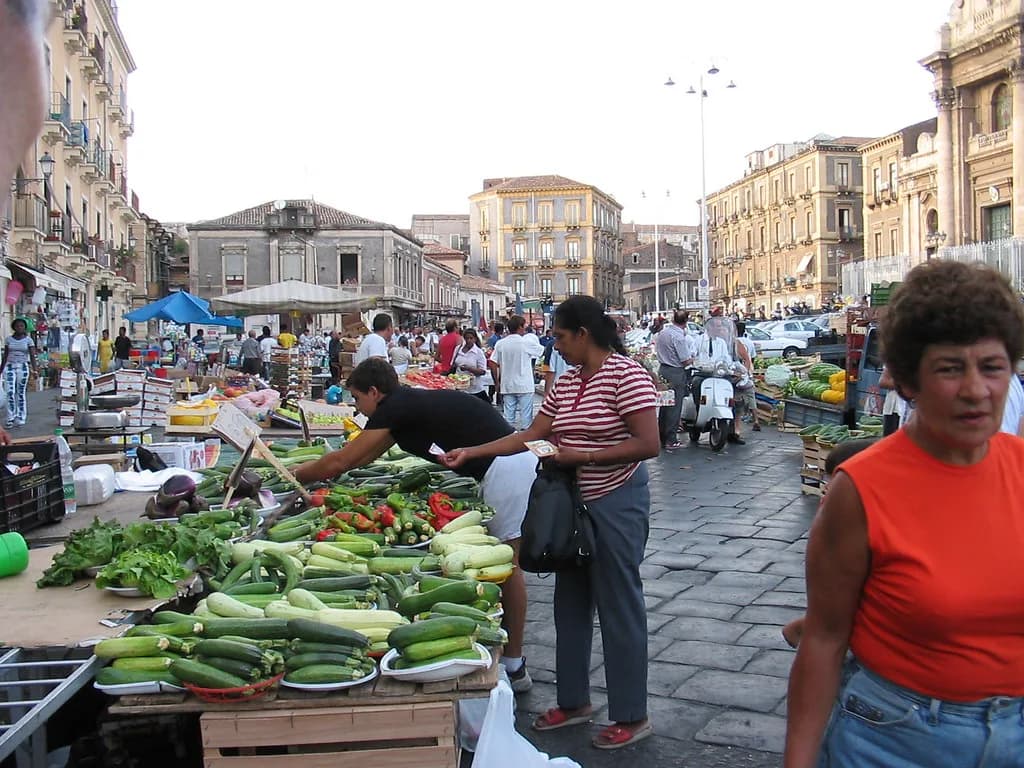
Much of the best eating happens standing up. Rice balls, folded breads, fried seafood cones and pastries are sold from delis, kiosks and market counters, so a food day in Catania is as much about pacing between stops as choosing restaurants.
Use this guide to match each dish to the right setting, understand a few ordering quirks, and decide where to spend a sit-down meal versus a quick snack. Between stops, our hidden gems in Catania covers the squares and side streets worth a detour.
How to Eat Your Way Through Catania
Think in four settings: street stalls and kiosks for one-hand snacks, delis for a mixed plate, market counters for seafood, and trattorias for grilled meat and pasta. A grazing day works best when you keep each stop small and leave room for the next, since arancini and fried fish are filling.
Morning suits the fish market and a granita, midday is good for deli counters and baked snacks, and evening belongs to the grill streets and trattorias. Catania's summer heat is a real factor, so plan the longest walking stretch for early hours and use the afternoon for shaded, slower meals. Our guide to the best time to visit Catania without the crowds explains how the seasons change the pace of the city.
Before you commit to a route, check the practical pages that cover arrivals and city orientation. The official tourism site for Sicily sets out how to reach the island by air, sea, rail and road, which helps you judge whether a car is worth it for a short, food-focused stay.
Savory Classics: Arancini, Pasta alla Norma and Baked Snacks
Arancini are deep-fried rice balls coated in breadcrumbs and filled with anything from meat ragù to spinach and mozzarella or pistachio cream. In Catania look for the conical shape, a small but real difference that locals use to distinguish their version from Palermo's sphere.
Pasta alla Norma is the dish to order when you want a proper sit-down plate: fried aubergine folded into tomato sauce, finished with ricotta salata and basil. It originated in Catania, so it appears widely, but quality depends on how freshly the aubergine is fried and whether the pasta is properly dressed.
For handheld food, look for scacciata, a sheet of bread dough folded and baked around fillings such as greens, olives or sausage, and cipollina, a puff-pastry square packed with stewed onions, tomato, ham and mozzarella. Cartocciata is the smaller calzone-like relative from the Etna area, traditionally stuffed with tomato and mozzarella but often sold with ham, spinach or aubergine. For wider planning, see Catania Street Food Guide.
The Meat Side: Horse Meat, Cipollata and the Grill Streets
Horse meat is a genuine part of Catania's food culture rather than a stunt. It is lean and iron-rich, served most often as a burger patty or as meatballs with a charred outside and a pink centre, and it appears on many local menus.
One ordering note matters: in Italy a burger usually means the meat patty alone, not a bun with toppings. If you want bread, ask for a panino, and if you only want a taste, order a single meatball rather than a full portion.
Cipollata is a different dish from cipollina and worth knowing before you point at a menu: it is streaky bacon wrapped tightly around spring onions and grilled until the fat renders. It belongs to the same barbecue tradition as the grilled meat served along Via Plebiscito, where one account describes the local habit as arrusti e mangia, roast and eat.
A restaurant such as Trattoria del Cavaliere, described in the same visitor account as a grill house where you order items individually, suits anyone who wants to try cipollata or a horse meatball without committing to a full plate. Treat that description as one traveller's impression rather than an official endorsement, and check current menus and hours yourself before going.
Seafood Around La Pescheria
The fish market, known as La Pescheria, is the loud, wet heart of Catania's seafood culture, with swordfish, sardines, anchovies and shellfish laid out close to the stalls. Even if you are not cooking, walking through it explains why the city's fried seafood is so good. Our Pescheria di Catania: Market Visitor Guide covers the layout and what to expect on a market morning.
One traveller's blog reports the market running every morning except Sunday, roughly from early morning until early afternoon, with a longer Saturday. Schedules at working markets can shift with season and supply, so confirm on the day rather than building a tight itinerary around those hours. Further visitor details appear in Catania's Street Food Delights: The Ultimate Guide.
Around the market, the practical order is a paper cone of fried seafood, eaten standing and seasoned simply with oil and salt. Venues named in that same account include Scirocco Sicilian Fish Lab on the market square and Mm!! trattoria, which serves seafood-focused street food with a menu that changes daily.
Sweet Catania: Minne di Sant'Agata, Cannoli, Zeppole and Granita
Minne di Sant'Agata are small ricotta and chocolate-chip cakes encased in icing sugar and topped with a cherry, named after the city's patron saint. They are a Catania speciality tied to the February festival of Sant'Agata, and pastry shops sell them around the city.
Cannoli are everywhere in Sicily, but the Catania approach is worth noting: crisp fried shells filled to order with ricotta, then topped with pistachio, chocolate or candied fruit. Miniature versions exist for anyone who wants a taste without spoiling the next meal.
Zeppole di riso are rice fritters made with milk and orange zest and coated in honey, credited in local tradition to the nuns of Catania's Benedictine monastery in the sixteenth century. They were once prepared for the Feast of St Joseph on 19 March, but are now sold year-round in pastry shops.
Granita is the breakfast habit to adopt. Sicilians order a coffee or fruit granita with a brioche and dip the bread into the ice, a combination that makes far more sense on a hot Catania morning than a heavy sit-down meal. Lemon is the classic choice.
Drinks and Small Bites: Selz and Street Olives
Selz is the city's summer refresher: freshly squeezed lemon juice, seltzer and a pinch of salt, sold from kiosks around Sicily. It is cheap, sharp and exactly what you want between fried snacks, and kiosk owners in Catania will often ask whether you have tried it yet.
Olives are an easy street bite near the fish market, where stalls sell portions dressed with aubergine and whole garlic cloves. Buy a small portion, eat it slowly and use it as a pause between the heavier fried courses rather than as a starter before a big lunch.
Where to Try It: Named Venues and Honest Caveats
A useful shortlist from one dated visitor blog includes Sicilia Street Food, a deli on a busy central street with arancini, fried seafood, cannoli and pane e panelle; the two market-area seafood spots mentioned above; and Trattoria del Cavaliere for grilled meat. None of these is an official recommendation, and any single account reflects one person's tastes and one moment in time.
Use the names as search terms rather than as a fixed route. Check recent reviews and the venue's own channels for current hours, then decide whether a place still fits your plan; small kitchens change hands, close for holidays and adjust menus often.
If you want a guided introduction instead, food tours operate in Catania and can compress several tastings into a few hours, which suits a short stay. Book only through operators with clear terms and current listings, and verify the meeting point and inclusions before paying.
Practical Decisions: Budget, Portions and Building a Grazing Route
Street food is the budget-friendly option in Catania, with arancini, scacciata and fried seafood cones designed to be eaten on the go. Prices vary by venue and season, so check the board or ask before ordering rather than relying on older figures you may have read.
Portions of fried food are heavier than they look. Share a cone of fried seafood or split a cartocciata so you can still manage a pasta plate later, and keep the sit-down meal for the evening when the grill streets fill up.
A workable one-day grazing route starts with granita and brioche, moves through the fish market and a seafood cone, pauses with olives and selz, then takes an arancino or cipollina mid-afternoon before a trattoria dinner of pasta alla Norma and grilled meat. If you would rather structure the day around sights, our Catania Attractions hub pairs well with these stops.
If you plan a second, slower day, our self-guided walk of Catania threads the centre together without a guide, leaving time for a long lunch. For a broader sense of how Sicilian food fits into the island's tourism landscape, the regional tourism site lists food and local produce among its themes.
Plan Your Catania Food Day
Catania rewards appetite and a little flexibility. Start with the dishes that define the city, the pointed arancino, pasta alla Norma, fried seafood by the market, horse meat from the grill and a granita at breakfast, and let the route follow your hunger rather than a rigid list.
Confirm practical details before you go: market days and hours can shift, venue schedules change, and prices should be checked on site. Use the city's official pages and the regional tourism site for orientation, and treat any single traveller's list as a starting point rather than a guarantee.
Frequently Asked Questions
What food is Catania known for?
Catania is known for its pointed arancini, pasta alla Norma, horse meat served as burgers or meatballs, cipollata and grilled meat, baked snacks such as scacciata and cipollina, and seafood around the fish market. On the sweet side, look for minne di Sant'Agata, cannoli, zeppole di riso and granita with brioche.
Where can I try traditional Catania street food?
Street food is sold from delis, kiosks and market counters rather than a single district. The area around the fish market is a natural starting point for fried seafood, while central delis cover arancini, scacciata and cannoli. Check current hours and recent reviews before travelling to a specific venue, since small kitchens change schedules often.
What is the difference between a Catania arancino and a Palermo arancina?
The shape is the giveaway: the Catania arancino is pointed at the top, said to resemble Mount Etna, while the Palermitan arancina is round like an orange. Fillings vary in both cities, from meat ragù to spinach and mozzarella or pistachio cream, so the shape is a better guide than the name.
Is horse meat really eaten in Catania?
Yes, it is a normal part of local food culture rather than a novelty. It is lean and iron-rich, usually served as a burger patty or meatballs with a charred exterior, and it appears on many menus. Remember that an Italian burger is typically just the meat patty, so ask for a panino if you want bread.
What is there to eat around Catania's fish market?
Expect paper cones of fried seafood such as anchovies, calamari and white fish, along with seafood-focused street food from counters near the market square. Choose boneless portions if picking around bones is a hassle, and check the day's offerings rather than assuming a fixed menu.
What sweets should I try in Catania?
Prioritise minne di Sant'Agata, the ricotta and chocolate-chip cakes tied to the city's patron saint, then cannoli filled to order and zeppole di riso with their monastic origin. For breakfast, order a lemon or coffee granita with brioche and dip the bread into the ice.
Sources
Continue exploring
More guides you'll find useful