Pescheria di Catania: A Practical Visitor Guide to the Fish Market
Plan a visit to Catania's Pescheria fish market: why mornings and Sunday matter, how the stalls are laid out, and where to eat the morning's catch nearby.
On this page
The Pescheria, called A' Piscaria in Catanese dialect, spreads through a lower square and narrow lanes just behind the cathedral in Catania. Fish comes first, but produce, cheese and dried goods fill the edges, and the whole place is still where restaurants and households shop rather than a reconstruction for visitors.
That working character shapes everything about a visit: the wet stone floors, the fast-moving crates of ice, the shouted prices in dialect, and the fact that the market winds down well before afternoon. Plan around those rhythms and a short stop becomes the most memorable part of a Catania morning.
What the Pescheria Actually Is
La Pescheria is Catania's open-air fish, fruit and vegetable market, set in a small piazza below street level next to the Amenano Fountain. The fish and seafood counters form the core, with produce, butchers and cheese, and spices and dried goods arranged around and behind them.
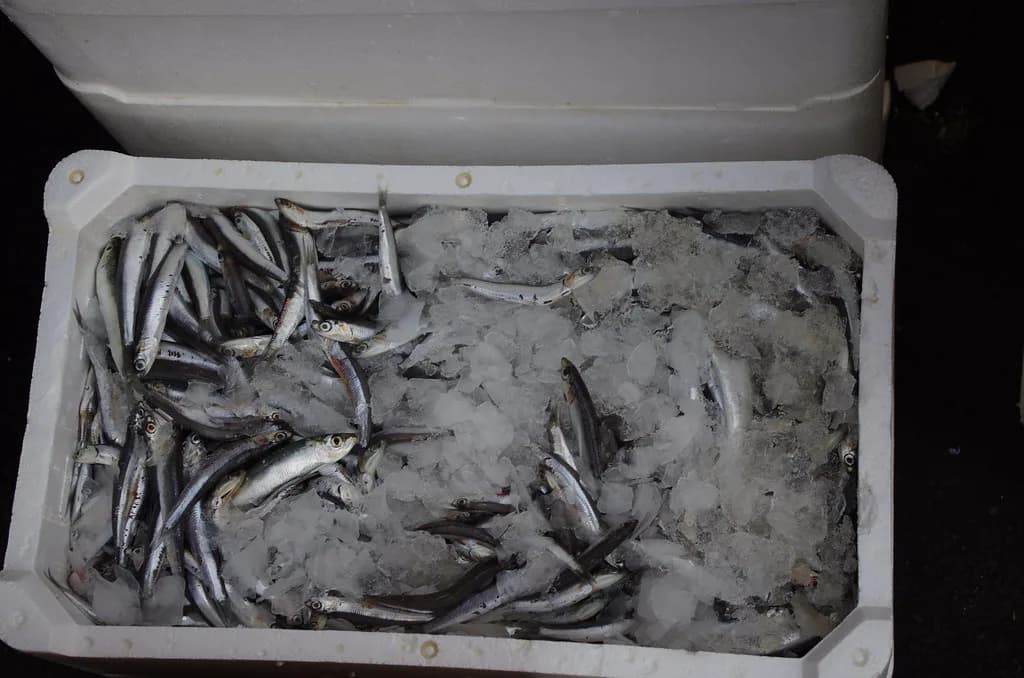
Expect swordfish split along the bone, sides of tuna cut to order, baskets of sea urchins in season, trays of small anchovies and eels in shallow tubs. Further back, the colour shifts to blood oranges, wild fennel, artichokes and tomatoes, while the cheese row carries pecorino, fresh ricotta and provola dei Nebrodi.
The setting is anchored by the Aragonese gate of Porta Carlo V and by the underground Amenano river, which surfaces at the fountain above. The fishmongers' sung price-call, l'abbanniata, is part of the performance, and it continues whether or not anyone is watching.
This is a functional market rather than a food hall, so expect noise, occasional bracing smells and uneven footing. If you want the wider picture of what sits around it, the city's hidden gems in Catania include underground Roman baths and a fountain-fed bar beneath the same square.
When to Go: Mornings, Monday to Saturday
One guide describes the market running Monday to Saturday from around 7am to 2pm, with peak activity between 9 and 11am and most fish stalls packing up by about 1:30pm, and it is closed all day on Sunday. Treat those hours as a reliable planning guide rather than an official timetable.
The first hour is the wholesale and locals' window, with vans and trolleys still moving through the alleys: vivid, but cramped. The 9 to 11am stretch gives the best balance of full stalls and walkable space, while after 11am the lanes quieten but the freshest fish has gone.
Another guide puts it more simply: arrive before 10am, Monday through Saturday, because the market starts near dawn and much of it packs up by early afternoon. Arriving at 2pm expecting an active market is a common and avoidable mistake.
Holiday and summer schedules can thin out or shift, so if your visit falls on a national holiday or in late July and August, check locally rather than assuming a full market. The city website is a starting point for civic notices, but the market has no dedicated booking page to consult.
Why Sunday Fails, and What to Do Instead
The Pescheria is closed every Sunday, all year, with no exception for tourist season. That surprises visitors who expect a Mediterranean fish market to peak on Sunday morning, and it is the single most common planning error.
If Sunday is your only Catania morning, the empty piazza is still photogenic at 9am, with the fountain and gate framing a 15-minute walk. Shift the market visit to Monday morning instead if you can: the start of the week is calmer than Saturday and the fish is fresh after the boats return.
The other big Catania market, Fera 'o Luni at Piazza Carlo Alberto, also skips Sunday despite its name, which refers to an older site rather than a single day. It is the city's general flea, clothes and household-goods market, with a smaller food section worth a browse.
Three Ways In, and Which Suits You
From Piazza del Duomo, stand with your back to the cathedral, walk towards the Amenano Fountain in the south-west corner and take the stairs dropping below street level. This is the photogenic entry, and the most disorienting at peak time because the staircase narrows and trolleys come up against you.
A calmer option is the historic gate: walk south along Via Garibaldi for a block, turn left into Via Pardo and pass the surviving fragment of Porta Carlo V. Locals shopping rather than touring tend to use this side, landing straight in the fish section without the staircase scrum.
The third entrance on Via Garibaldi past Porta Uzeda is the early-morning delivery route, busy with trucks until about 8:30am. Skip it before 9am unless you specifically want to watch unloading.
Piazza del Duomo itself deserves more than a transit pass, since the elephant fountain and cathedral sit two minutes from the market edge. The Piazza del Duomo and Cattedrale di Sant'Agata: Visitor Guide covers what is free to see outside and what needs a ticket.
How Buying Works: Prices, Dialect and Haggling
One guide describes most stalls as cash-only and worth carrying small notes for, and it says prices at La Pescheria are not negotiated, unlike markets in Marrakech or Istanbul. Other accounts say prices are rarely marked and small quantities are agreed by eye, so treat both as practical guidance rather than rules posted anywhere.
Households shop here alongside restaurants, and stalls sell in whatever quantity a customer wants, from a single fillet up. Vendors shout in a Catanese dialect that even Italian speakers from Milan or Rome often cannot follow, so pointing and simple numbers carry you further than fluent phrases.
Do not touch fish or produce without asking, and if you want a smaller piece, ask for a smaller cut rather than a lower per-kilo rate. A vendor opening a sea urchin and handing it over with a slice of bread is the closest thing to a gesture of goodwill.
Buying to cook is realistic: choose fish that looks bright-eyed and firm, and remember that a rental kitchen and a long afternoon of sightseeing are not always compatible. Dried oregano, salted capers or pistachio paste travel better than fresh seafood if you are flying home soon.
Photography and Behaviour in the Lanes
Wide shots and video of stalls, alleys and the general scene are accepted without asking, but close-up portraits of a vendor's face are not. Ask first with a gesture towards the camera, and a small purchase afterwards is the polite move.
Skip flash entirely: light is plentiful at 9am on the east-facing stalls, and flash bothers everyone within several metres. The best light comes between 9 and 10am, when sun reaches down the staircase from Piazza Duomo; after 11am the upper alleys fall into heavy shadow.
Never photograph other people's children, which is the rule that escalates fastest when broken. Beyond cameras, the basic courtesy is to keep moving: idling in the middle of a lane draws visible impatience from vendors hauling crates.
Access, Shoes and What to Carry
The ground is wet by mid-morning, the aisles are narrow, and the pace of vendors moving fish and ice is fast, so closed shoes you can wash beat white trainers. The lower square also stays cool until about 11am, which makes a light jacket useful in shoulder season.
This is not stroller-friendly terrain: narrow lanes, wet stone and a fast-moving crowd of buyers and sellers make it a look-but-don't-linger stop with a pushchair. An older child who can walk and hold a hand generally does fine, and local families do shop here with children.
Carry a reusable bag if you plan to buy more than a couple of items, since thin plastic ones tear, and keep phones and wallets zipped in the densest aisles as you would in any working market. Parking on surrounding streets is almost always taken, so a paid garage near Piazza Duomo is the realistic option by car.
Where to Eat the Catch Afterwards
Small trattorie sit right at the market's edge and cook what their owners bought hours earlier, which makes catch of the day a checkable claim rather than a menu phrase. The market plus a market-edge lunch is really one experience, and rushing off to the next sight undersells the morning.
For a sit-down meal, Osteria Antica Marina sits inside the Pescheria perimeter on Via Pardo and has done since 1968, sourcing from stalls a few metres away. Expect a slow, generous lunch rather than a quick one, and a crudo platter as the obvious order.
At the other end of the spectrum, Scirocco Sicilian Fish Lab on Piazza Alonzo di Benedetto serves fried market fish in paper cones, eaten standing at the counter. It works best straight off the market at lunch, when the fryers and the stalls are both in full swing.
For the wider picture of arancini, granita and pasta alla Norma, the Catania Local Food Guide: What to Eat and Where sets the market meal in context. If you want street snacks rather than a seated lunch, the Catania Street Food Guide: Best Snacks and Where to Find Them covers what to look for near the centre.
Pescheria vs Palermo's Markets
Palermo's Ballarò, Capo and Vucciria mix food and household goods across sprawling neighbourhood streets, while La Pescheria is a fish market first, with produce and other goods around its edges. It is smaller and more specialised, and arguably louder and more theatrical for its size.
The schedule differs too: La Pescheria runs on a tighter, earlier rhythm than Palermo's mixed markets, which stretch further into the day. If you have seen a Sicilian market before, come here for the fish-first focus and the shouting rather than for scale.
Within Catania, Fera 'o Luni at Piazza Carlo Alberto is the everyday counterpoint, selling everything from produce and spices to vintage clothes and tools. It runs in the mornings too and suits anyone who wants the general-goods experience after the fish.
Pairing the Market With a Catania Morning
A sensible sequence is a market visit before 10am, a walk through Piazza Duomo afterwards, then partway up Via Etnea before the heat builds. Via Etnea runs three kilometres in a straight line north from the cathedral square toward Mount Etna, and its first stretch is a Baroque parade of churches and palaces.
If you have a full morning, add the Anfiteatro Romano di Catania on Piazza Stesicoro, where the buried arena sits below street level. The Anfiteatro Romano di Catania: Visitor Guide explains what is visible from the square without a ticket.
Guided food and market tours exist that build the Pescheria into a longer walk with tastings, which removes the guesswork about which stalls and trattorie to trust. They are a convenience rather than a necessity, since the market rewards a slow self-guided loop just as well.
First-Timer Mistakes to Avoid
The first mistake is timing: a leisurely 9am hotel breakfast that puts you at the market closer to 11am still catches activity, but misses the liveliest hour. The second is treating the Pescheria as a photo stop and skipping the market-edge lunch that makes the visit complete.
The third is assuming a single covered hall: the market spreads across small streets and a lower square, so a short exploratory loop beats a fixed path. Walk the fish core first, then the produce, cheese and dried-goods edges, and circle back to whatever caught your eye.
Allow at least 30 minutes for the four zones and more if you plan to buy or eat, because the staircase entry alone can take 10 minutes to clear at 9am. Under 90 minutes in total, the market and lunch together is a rushed calculation.
Plan Your Catania Market Visit
The Pescheria rewards an early alarm and a loose plan: arrive before 10am Monday to Saturday, enter from Porta Carlo V if you want calm, and leave time for a market-edge lunch. If your only morning is Sunday, move the market and use the day for Piazza Duomo instead.
For everything else worth seeing between the market and the volcano, from Roman ruins to rooftop views, the Catania Attractions hub puts the pieces in order. Build the morning around the fish, and the rest of the city follows within walking distance.
Frequently Asked Questions
Is the Catania fish market open on Sunday?
No. La Pescheria is closed every Sunday, all year, so a Sunday morning will not show you the working market. If Sunday is your only day, the empty piazza is still a short, photogenic walk, and you can move the market visit to a weekday morning instead.
What is the best time to visit La Pescheria?
Aim to arrive before 10am on a weekday or Saturday. The market starts near dawn, the trade is at its most active through the mid-morning, and much of it packs up by early afternoon. After 11am the lanes are quieter but the freshest fish has usually gone.
Can you buy fish at the Pescheria to cook yourself?
Yes. Restaurants buy in bulk early, but households shop here too, and stalls sell in whatever quantity you ask for, from a single fillet upwards. Point at what you want and agree the quantity; carrying cash in small notes is the practical option.
Is the Pescheria stroller-friendly?
No. The lanes are narrow, the stone is wet, and vendors move crates and ice quickly, so a pushchair is impractical. An older child who can walk and hold a hand generally manages, and local families do shop here with children.
Do you need Italian to shop at the market?
No, though the dialect shouted between vendors is genuinely hard even for standard Italian speakers to follow. Pointing, simple numbers and a friendly buongiorno are enough for a purchase, and vendors are used to hesitant visitors.
How does the Pescheria compare with Palermo's markets?
La Pescheria is a fish market first, with produce and other goods around its edges, and it runs on a tighter, earlier schedule. Palermo's Ballarò, Capo and Vucciria are larger mixed food-and-goods markets that stretch further into the day.
What should you wear and bring to the fish market?
Wear closed shoes you can wash, since the ground is wet by mid-morning, and add a light layer in shoulder season because the lower square stays cool until about 11am. Bring a reusable bag if you plan to buy, and keep your phone and wallet zipped in busy lanes.
Where can you eat near the market afterwards?
Trattorie sit right at the market's edge and cook what was bought hours earlier, which makes a market-edge lunch the natural continuation of the visit. Osteria Antica Marina is inside the market perimeter, while Scirocco serves fried market fish in cones a couple of minutes away.
Sources
Continue exploring
More guides you'll find useful