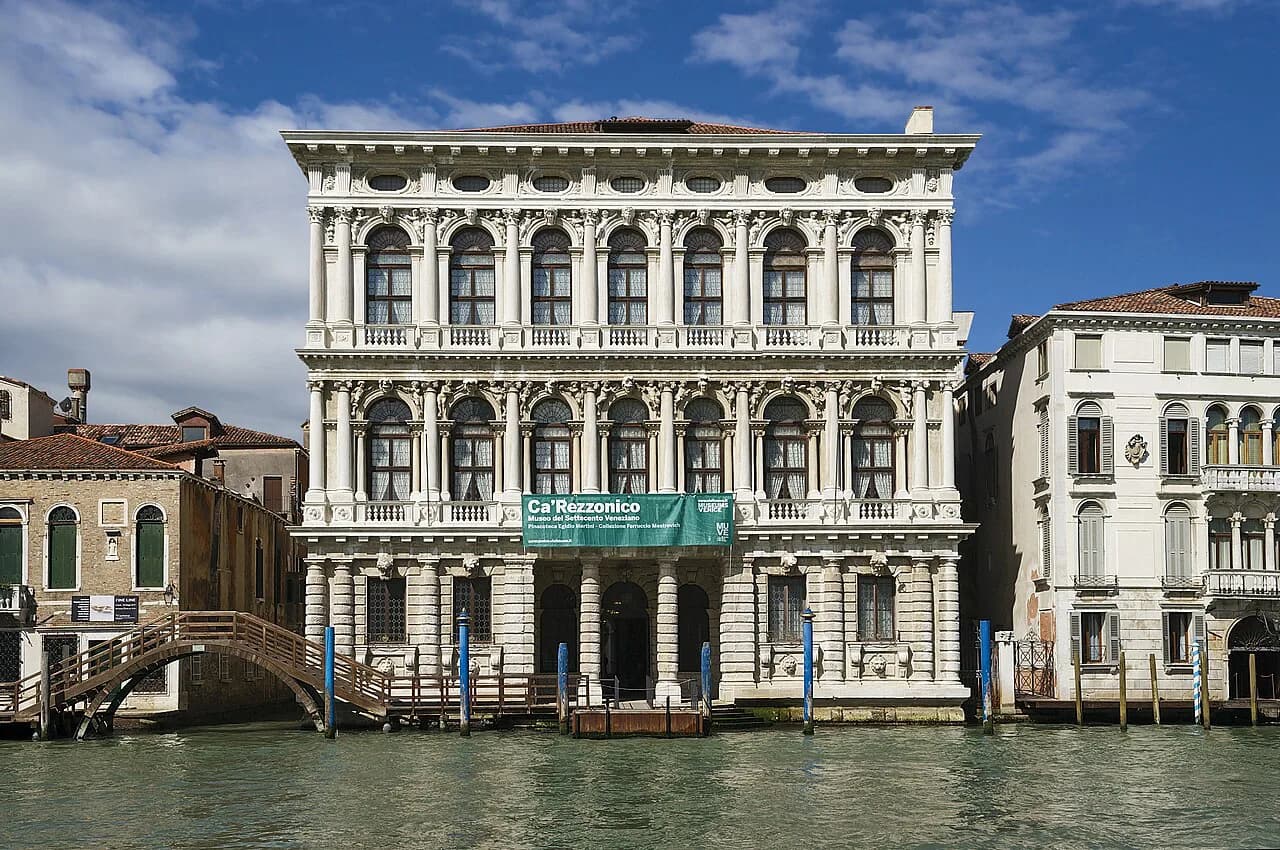
Piazza del Duomo & Cattedrale di Sant'Agata: Catania Visit Guide
Plan a visit to Catania's Piazza del Duomo and Cattedrale di Sant'Agata: the lava-stone square, the Baroque facade, the relic chapel and how long to allow.
On this page
Piazza del Duomo is where most visits to central Catania begin, and the pivot of the square is the lava-stone Elephant Fountain, designed by Giovanni Battista Vaccarini in 1736. Because the square is public and open, it costs nothing to walk through; the cathedral beside it is the part that needs a little planning. A suggested allowance of 45 to 90 minutes covers the square, the fountains and a careful look inside the church, though that figure is our pacing suggestion rather than an official visit length.
The cathedral is dedicated to Sant'Agata, the city's patron saint, and its long life is legible in its fabric: a Norman apse, Aragonese royal burials, a Baroque facade by Vaccarini and later Neoclassical touches all sit within one building. One travel listing notes free entry to the basilica, but opening arrangements at religious sites change, so confirm current access with the cathedral or the diocese before you build a day around it. Bring a little patience for signage, too, since explanations inside Italian churches are not always translated.
Orientation: Where the Square Sits
Piazza del Duomo occupies the southern edge of the historic centre, close to the port, and the city's main streets converge on it, which is why it feels like a crossroads rather than a museum set piece. The cathedral faces the square on its eastern side, the town hall known as Palazzo degli Elefanti stands opposite, and the low gate of Porta Uzeda opens toward the harbour. The Amenano Fountain sits in the south-western corner, so a slow circuit of the square passes all four in a few minutes.
Because everything is tightly packed, you do not need a fixed route: arrive from Via Etnea or from the port side, walk once around the fountain, then approach the cathedral steps. If you are coming from Catania Centrale station, the square is an easy anchor for your first hour in the city before you branch out. Use it to get your bearings rather than to tick off a list.
The Elephant Fountain and the Amenano Water
Locals call the elephant statue Liotru, and it is the city's mascot, carried on coats of arms and football crests alike. The animal is cut from volcanic stone and carries an obelisk bearing hieroglyph-inspired decoration, with a ball and the insignia of Sant'Agata on top; older local belief held that the figure could calm Mount Etna's anger. Stand on the north side in the morning if you want the facade behind it in photographs.
On the other side of the square, the Amenano Fountain marks the one visible point of a river that now runs beneath the streets, sealed over by lava and rebuilt city. Water spills from a marble basin into the dark below, and locals nicknamed it the bedsheet fountain for the way the water sheets down. It is worth looking down as well as up here, because the square's drama is as much underground as overhead.
The Cathedral Facade: A Building in Layers
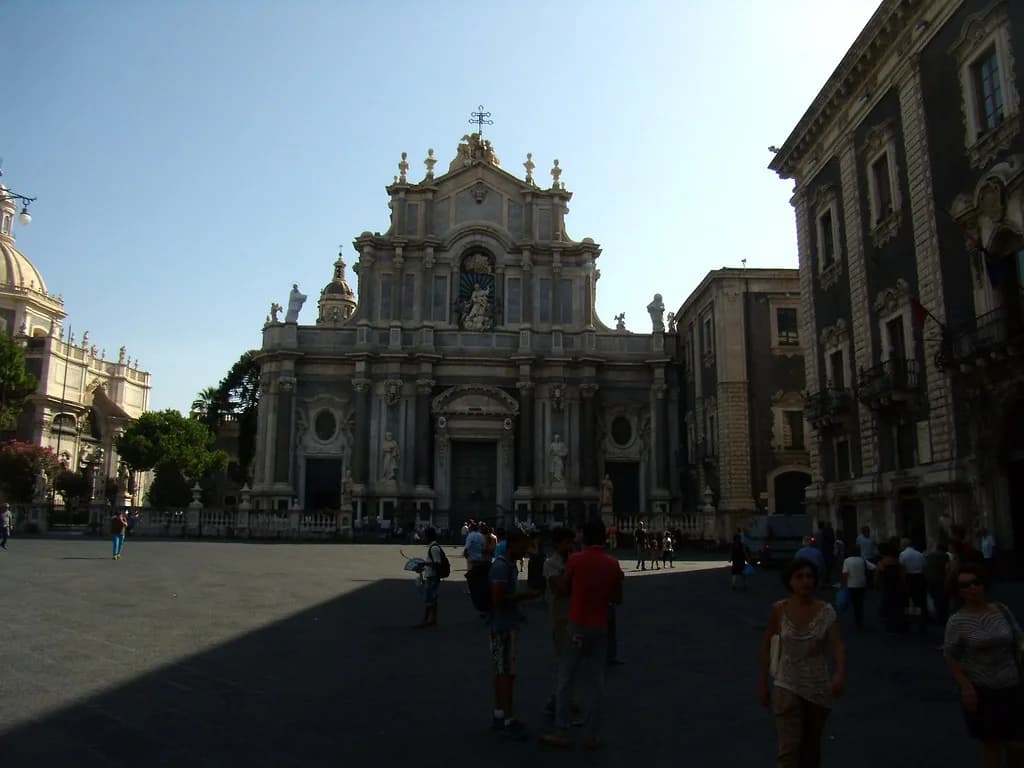
The cathedral has been rebuilt more than once, most decisively after the 1693 earthquake that destroyed much of the Val di Noto, and its architecture openly admits the patchwork. A Norman apse survives from the earlier church, the interior holds the tomb of the composer Vincenzo Bellini and burials of Aragonese royalty, and Vaccarini's main facade, built across the mid-eighteenth century, gives the square its familiar two-tiered front. Read it as a palimpsest rather than a single style, and the building makes far more sense.
The contrast between dark volcanic stone and pale limestone is what gives Catania's Baroque its distinctive look, and the cathedral front is one of the clearest places to see it. Look at how the columns sit against the darker masonry and how the statue of the patron saint crowns the top. This is also the best angle from which to notice how the square's buildings were designed as a coordinated ensemble rather than one-off facades.
Inside: Naves, Tombs and the Relic Chapel
The interior is a three-aisled space divided by pillars, cooler and quieter than the square outside, and it rewards a slower walk than the facade does. The tomb of Vincenzo Bellini is here, and the right transept leads toward the chapel of the Madonna with the tombs of Constance of Aragon and other royals who resided in Catania. Keep your voice low and dress with a church in mind, since this remains an active place of worship rather than a gallery.
The chapel of Sant'Agata, reached through the right apse, holds the saint's relics and part of the cathedral's treasure, and it is the emotional centre of the building for Catanese visitors. Treat it as a place of devotion first: stand back if a service or private prayer is under way. Whether the chapel is open during your visit depends on the church's daily rhythm, so ask on arrival rather than assuming access.
Free Square, Paid Interiors: What to Expect
It helps to separate three layers of a visit here. The square itself is public ground and always free to walk through, the cathedral is a working church that one travel listing describes as free to enter, and separately ticketed sights nearby, such as the diocesan museum and its rooftop, are different propositions with their own admission. Do not assume that one ticket covers the church, the relics and the museum.
Because the cathedral is an active religious site, its opening pattern can shift around services and feast days, and the official city and diocesan websites are the places to check rather than an aggregator listing. If a particular chapel or the treasury matters to your visit, ask at the church door on the day. That small check is the difference between a smooth stop and a disappointment.
How Long to Allow
Our suggested pacing is a 45 to 90 minute stop for the square and cathedral, clearly a recommendation rather than an official figure, with the longer end applying if you read the interior slowly and linger at the fountains. Photographers should add time for the light, which is best on the facade in the morning and softer across the square later in the day. Visitors with limited mobility or a tight schedule can compress the stop to the square alone without missing its main features.
If you want a half day, extend the loop to the fish market behind the square, the pedestrian stretch of Via Etnea and one Roman site. That version needs three to four hours and a little planning around market days. Keep the cathedral as the anchor and build outward from it.
Nearby Pairings Within a Short Walk
Behind the square, down a staircase past the Amenano Fountain, La Pescheria fish market runs Monday to Saturday, roughly from early morning until early afternoon, and closes all day on Sunday, with some stalls taking rolling summer holidays. Plan the market and the cathedral for the same morning rather than a Sunday. It is a working market, so keep bags close and ask before photographing faces.
From the square, Via Etnea runs three kilometres north toward Etna, and its first stretch up to the Quattro Canti crossroads is pedestrian, which makes it an easy continuation on foot. A short way along, the Basilica della Collegiata is one of the street's finest Baroque churches and a natural second stop after the cathedral. If you are tracing the city's older layers, the Teatro Romano lies a little further east on Via Vittorio Emanuele.
Under the Square: The Achillian Baths
Directly beneath Piazza del Duomo lie the Terme Achilliane, a Roman bath complex entered by a staircase near the Amenano Fountain and descending several metres below street level. The vaulted chambers are usually visited on short guided slots rather than freely, so check the day's schedule before you go down. This is the clearest reminder that the Baroque square rests on a much older city.
For a wider set of less obvious stops, including underground rivers, rooftop terraces and quieter corners of the centre, a dedicated guide is useful once you have seen the headline sights. Treat these as extensions of the square rather than replacements for it. They work best on a second morning in Catania.
When the City Is Busiest
The feast of Sant'Agata in early February draws very large crowds into the streets around the cathedral, with processions and devotional groups moving through the centre. Treat that period as one for atmosphere over efficiency: the square can be difficult to cross and the church may be in liturgical use. Current arrangements for feast days are published locally rather than fixed year to year, so check the city and diocesan channels before travelling.
Outside the feast days, weekday mornings are generally calmer for the cathedral interior, while the square fills with visitors and school groups through the middle of the day. If you want the facade without a crowd in front of it, arrive early. If you want the square's street life, come later.
Mistakes to Avoid
The most common one is treating Piazza del Duomo as a photo stop and walking on without entering the cathedral, which is where the building's real interest lies. The second is expecting English explanations throughout: some labels and notices are in Italian, so a short printed background helps. Third, wear shoes with grip, because the lava paving and the steps around the fountains can be slick after rain.
Finally, do not build a Sunday around the fish market behind the square, since it closes that day, and do not assume any single ticket covers the church and the nearby museum. Check before you pay, and check whether the interior is open before you plan your morning around it.
Food is part of the square's story too, from the seafood cooked a few steps from the market stalls to the city's pasta dishes; a food guide helps you choose where to eat after the visit. Plan lunch after the cathedral rather than before, when the light is better and the morning crowds have thinned.
A Suggested Route Through the Centre
Start at the cathedral steps with the Elephant Fountain in front of you, walk the perimeter of the square to the Amenano Fountain and Porta Uzeda, then enter the church for the naves and the relic chapel. Afterwards, descend to the fish market if the day allows, come back up and follow Via Etnea north to the Basilica della Collegiata. Our recommended route is a suggestion for a slow morning, not an official itinerary.
If you have a full day, add the Achillian Baths and one Roman site, and finish on Via Etnea in the evening when the street becomes the city's living room. For other sights in the city, including the amphitheatre at Piazza Stesicoro, use a dedicated attractions guide to plan the order. Keep the square as the beginning rather than the whole visit.
Before You Go
Piazza del Duomo works best as a slow first hour in Catania: the square is free and open, the cathedral adds the depth, and the fountains explain the city's relationship with lava, water and its patron saint. Allow 45 to 90 minutes for the core stop and extend toward the market and Via Etnea if the timing suits.
Check current cathedral opening arrangements and any feast-day changes directly with the diocese or the city before you travel, and treat secondary listings as a starting point only. Confirm on the day whether the relic chapel is accessible, and plan the fish market for a morning other than Sunday.
Frequently Asked Questions
Is entry to Cattedrale di Sant'Agata free?
One travel listing describes free entry to the basilica, but this is an active church whose arrangements can change around services and feast days. Check with the cathedral or the diocese before your visit, and note that nearby ticketed sights such as the diocesan museum are separate. Do not assume one ticket covers everything.
How long should I spend at Piazza del Duomo and the cathedral?
Our suggested allowance is 45 to 90 minutes for the square and cathedral, which is a pacing recommendation rather than an official figure. Add time if you plan to visit the underground Roman baths or the fish market behind the square, and build in extra minutes if you are photographing the facade.
What is the elephant fountain in Piazza del Duomo called?
Locals call it Liotru, and it is the symbol of Catania, appearing on coats of arms and the football club's crest. The lava-stone elephant carries an obelisk with decorative motifs and is topped by a ball and the insignia of Sant'Agata. It was designed by Giovanni Battista Vaccarini in the 1730s.
Can I visit the square without entering the cathedral?
Yes. The square is public ground and free to walk through, so you can see the elephant fountain, the Amenano Fountain and the cathedral's facade without going inside. Entering the church, and any nearby museum or terrace, is a separate decision with its own arrangements.
Is the fish market behind the square open on Sundays?
No. The Pescheria runs Monday to Saturday, roughly from early morning until early afternoon, and closes all day on Sunday. Some stalls also take rolling summer holidays, so the market feels thinner in late summer than in autumn. If a market visit matters to you, plan it for a weekday or Saturday morning.
What else is within a short walk of Piazza del Duomo?
The Achillian Baths lie directly beneath the square, the Pescheria market sits just behind it, and Via Etnea begins here and runs north toward the Quattro Canti and the Basilica della Collegiata. The Teatro Romano is a little further east. Most of these are reachable on foot from the square.
Is the square busy during the Sant'Agata festival?
The feast of Sant'Agata in early February draws very large crowds into the centre, and the cathedral may be in liturgical use during processions. Access arrangements are published locally each year rather than fixed in advance. If you want a quiet visit, choose a weekday morning outside the feast period.
Sources
- Cathedral Square - Piazza del Duomo
- Basilica Cattedrale di Sant'Agata Tickets [2026] - Promos, Prices, Reviews & Opening Hours | Trip.com
- Piazza Duomo and the cathedral | San Placido Inn
- Official event website
- Official event website
- Catania Fish Market (La Pescheria): A 2026 Local Guide
- Via Etnea, Catania: what to see and tips | ZonzoFox
- A Local’s Favorite Things to Do in Catania — Go Ask A Local
- Hidden Gems in Catania: 15 Unusual Places Locals Love
Continue exploring
More guides you'll find useful