Basilica della Collegiata: Catania Visitor Guide
Plan a short stop at the Basilica della Collegiata in Catania: its curved limestone facade, marble interior, and how to fit it into a Via Etnea walk.
On this page
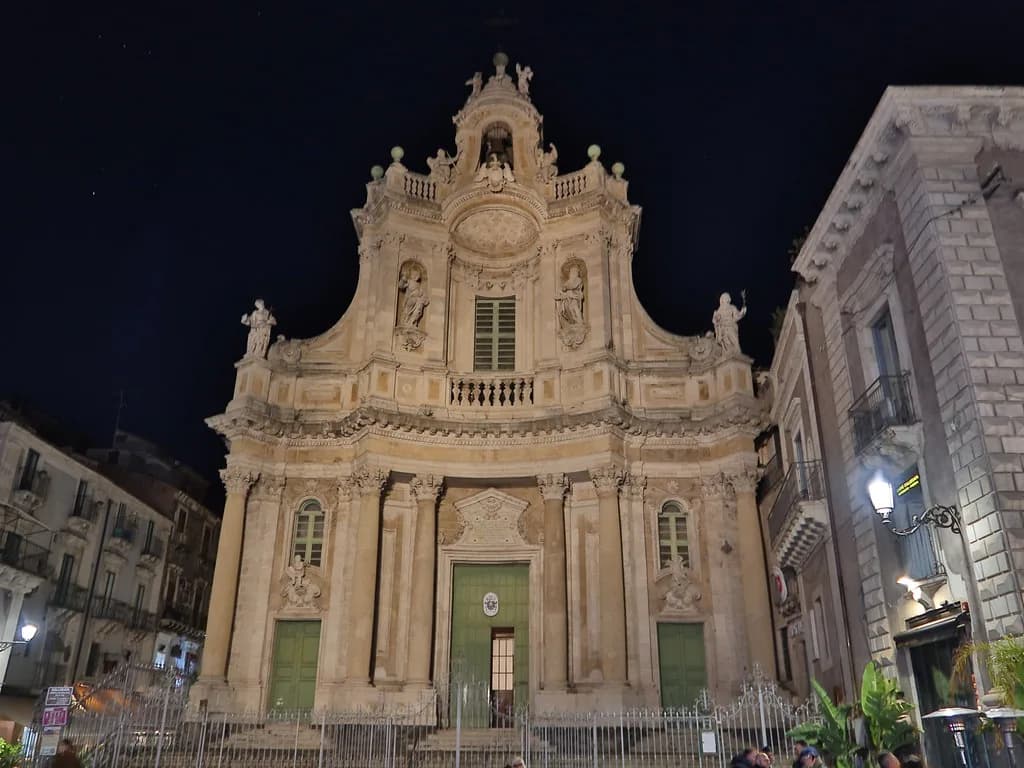
The Basilica della Collegiata sits on Via Etnea just north of Piazza Università, a curved limestone presence on Catania's main northbound street. It is dedicated to Maria Santissima dell'Elemosina and is often described as the city's second church, which makes it an easy add-on to any walk between the cathedral square and the Quattro Canti. What follows is how to read the building rather than just photograph it.
Treat it as a short, focused stop that fits into a longer Baroque route. The ZonzoFox guide to Via Etnea notes that the Basilica della Collegiata is the first in a row of churches lining the street all the way to the Borgo, so it works naturally as the opening note of that sequence. Visitor details: Via Etnea, Catania: what to see and tips | ZonzoFox.
Why the Collegiata Is Worth a Stop on Via Etnea
Many visitors walk Via Etnea for the shopping and the evening passeggiata without looking up at the churches along the first stretch. The Collegiata rewards a closer look because it compresses several centuries of Catania's story into one facade and one nave: a royal chapel, a post-earthquake rebuild, and a rivalry with the cathedral that turned physical more than once. A suggested visit of fifteen to thirty minutes is a reasonable personal guess, not an official timing.
Its position helps. The stretch of Via Etnea from Piazza del Duomo to the Quattro Canti is pedestrian, while from there to Villa Bellini only buses and taxis are allowed, according to the ZonzoFox street guide. That means the Collegiata, set between Piazza Università and the Quattro Canti, falls in the walkable, calmer section where you can stop without traffic noise. Use the Catania Attractions hub to compare it with other sights before committing your afternoon.
Where It Sits Between Piazza Università and the Quattro Canti
Standing on Via Etnea facing north, you pass Piazza dell'Università with the university palace and Palazzo San Giuliano, then reach the Collegiata a little farther on. The ZonzoFox description places it exactly there, as the first of the churches that lines the street. Immediately after come the Quattro Canti and its palaces, so the church anchors a compact, walkable cluster.
If you are building a route around the old centre, start at the Piazza del Duomo and Cattedrale di Sant'Agata and walk north along the lava-paved street, saving the Collegiata for the point where the crowds thin. The hidden gems in Catania guide is useful for filling the side streets around this stretch with quieter stops.
Reading the Facade: Stefano Ittar's Curves, Volutes and Statues
The facade is attributed to the 18th-century Polish architect Stefano Ittar and is described as an example of international late Baroque in Catania. Rather than a flat wall, it moves in curves and countercurves and is crowned by a belfry full of angels and cherubs, so give yourself a moment to step back across the street for the full profile. The word Regia Cappella, Royal Chapel, still stands out on the facade, a reminder that the Aragonese kings used the church privately when the court lived at Castello Ursino, from 1396.
On the second order, between large scroll-shaped volutes, stand statues of Saint Agatha and Saint Apollonia; in the niches of the central loggia are Saint Peter and Saint Paul. Reading the statue programme this way turns the ornament into a narrative rather than decoration.
Inside: Three Aisles, Marble Altars and the Madonna dell'Elemosina Icon
Inside, the church has three aisles, with floors, altars and railings of marble. The focal point is the high altar, where an icon of the Madonna and Child is displayed, a copy in the Byzantine tradition of the Madonna dell'Elemosina. Around it stands the canons' wooden choir with 36 stalls, described as second in importance in Catania only to the cathedral's, so look behind the altar rather than only straight ahead.
The name and the icon are linked by legend: an image of the Madonna displayed on a street corner drew so much devotion that the faithful built a small church with their alms, which over centuries grew into the city's second church. Keep that origin in mind as you look at the copy; it explains why the image matters to the building far more than any single work of art.
Sciuti's 1896 Frescoes on the Vault and Dome
Look up. In 1896 the Catania painter Giuseppe Sciuti frescoed the vault and dome with biblical episodes and figures, running from the Madonna of Mercy to the Assumption and the Evangelists. These are late additions to an interior otherwise shaped by the 18th-century rebuild, and they shift the mood of the space from cool marble to painted colour.
The contrast is worth noting: the facade reads as architecture, the vault as storytelling. If you have limited time, check the high altar first, then find a spot near the centre of the nave where the dome is fully visible. Photography or lighting restrictions are not something the sources describe, so follow whatever signage is posted inside on the day.
The Royal Chapel Story and the Long Rivalry With the Cathedral
The Collegiata's district was once so vast that it escaped the bishop's authority, which sparked a rivalry with the cathedral lasting centuries. It crystallised in Lent of 1801, when a canon of the Collegiata, invited to preach in the cathedral, climbed into the pulpit wearing his chapter's insignia; the cathedral canons dragged him down, reportedly with a gendarme's help, and the king ordered that gendarme held in a cell for a few days. It is the kind of anecdote that makes the two churches legible as competing institutions, not just two Baroque interiors. Further visitor details appear in Basilica della Collegiata | CATANIA.
That history is why the Collegiata should not be treated as a smaller version of the Duomo. Compare them directly by reading the Piazza del Duomo and Cattedrale di Sant'Agata guide before or after this visit, since the cathedral is where the city's Agatha devotion, the silver statue and the annual procession are centred. The Collegiata's own story runs through royalty and chapter politics instead.
The 1693 Rebuild and the Baron of Sigona's Bell Tower Dispute
After the 1693 earthquake the church was turned around to face the new Via Etnea, but the rebuild was contested. A neighbour, the Baron of Sigona, opposed the bell tower on the grounds that the bells disturbed his domestic peace, and he took the case as far as Rome; work reportedly only restarted after his death, in 1769. Standing on the street today, it helps to know that the orientation you see was an engineering and legal argument before it was a view. Further visitor details appear in Basilica della Collegiata | CATANIA.
The cathedral, by contrast, was rebuilt in the 18th century after the same earthquake and is generally dated that way in summaries of Sicilian Baroque. Catania's Baroque streetscape is a UNESCO-listed ensemble within the Val di Noto, so both churches belong to a wider rebuild rather than standing alone as curiosities. The Via Etnea: Shopping and Strolling Guide gives the street context for how these rebuilds reshaped the whole axis.
Fitting It Into a Baroque Walking Route With the Duomo and Via Crociferi
A practical sequence is to start at Piazza del Duomo, walk north up Via Etnea past Piazza Università, stop at the Collegiata, continue to the Quattro Canti, then branch to Via Crociferi for its dense run of Baroque churches. A local guide to Catania describes the Crociferi as a sequence of imposing churches, monasteries and villas with hidden gardens, which makes it a natural second act after the Collegiata's single facade. Related guide: Chiesa di San Benedetto Catania: Visitor Guide to Via Crociferi.
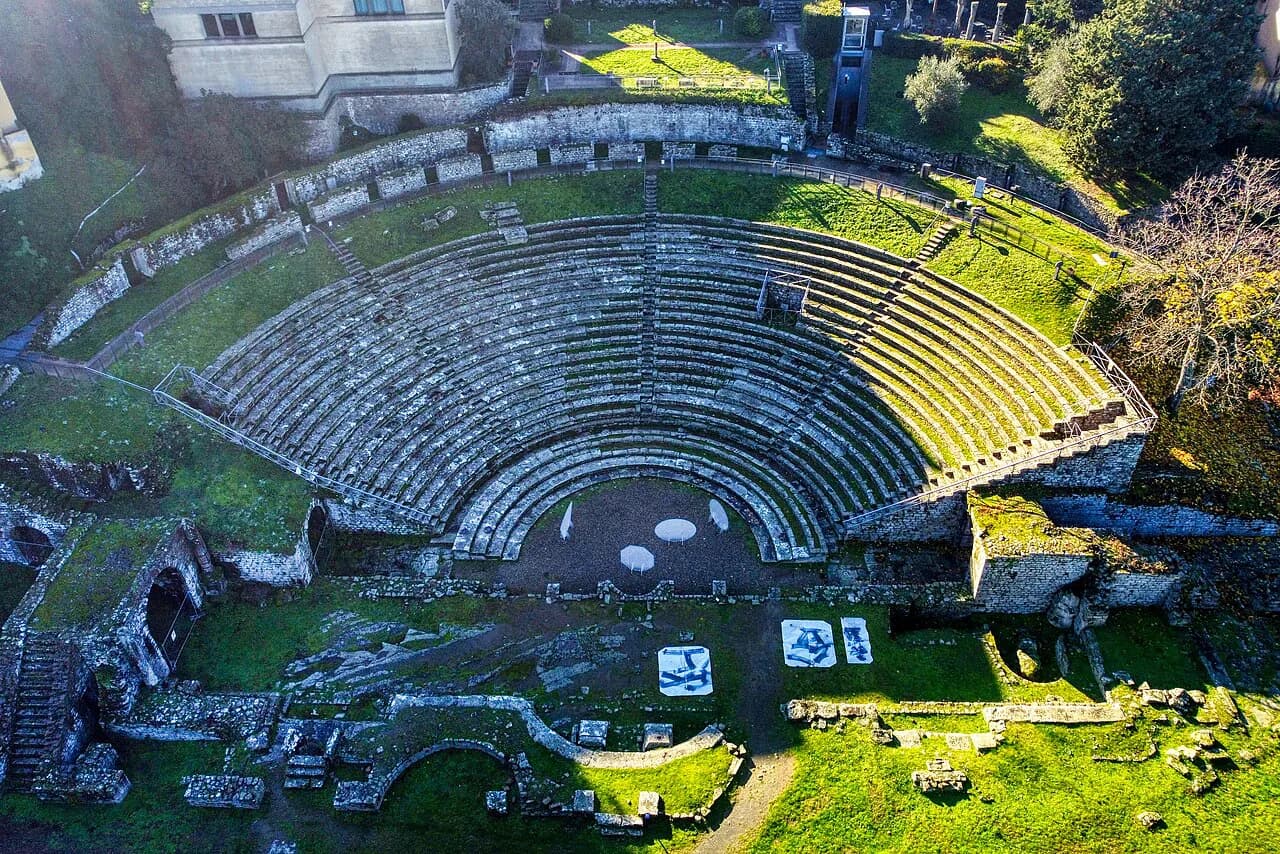
If you want the ancient layer of the city too, the Teatro Romano di Catania sits off Via Vittorio Emanuele and can be added as a separate stop rather than squeezed into the same hour. The Anfiteatro Romano di Catania beneath Piazza Stesicoro is another option for a different day. Keep the church visit short and let the street carry the rest of the walk.
Etiquette and Practical Expectations for a Working Church
This is an active church, not a museum, so dress and behaviour should reflect that even though the sources here do not set out a formal dress code. Keep voices low, avoid blocking the aisle during prayer, and step aside if a service is beginning. Because the sources do not state admission conditions or opening hours, check the parish or diocesan website on the day rather than assuming any schedule.
The Diocese of Catania website is the sensible first stop for current information about the parish and its services. The city's own tourism page carries the artistic description you have just read, and the street-level context comes from the ZonzoFox Via Etnea guide. Do not rely on a blog post for a time-sensitive detail such as a closure. Visitor details: Basilica della Collegiata | CATANIA.
Plan Your Visit
The Collegiata works best as a deliberate pause on a walk, not a destination in itself. Arrive with the facade statues, the Madonna icon and the 1801 pulpit story in mind, and the visit becomes a lesson in how Catania's church institutions competed and rebuilt. Then keep walking north to the Quattro Canti or south to the Duomo.
Confirm current opening arrangements through the diocese before you go, since published sources here do not cover hours, entry or services. Pair the stop with the Piazza del Duomo cathedral visit and a Crociferi stroll, and leave room for the fish market and the street life that make Catania more than its Baroque.
Frequently Asked Questions
What can you see inside the Basilica della Collegiata?
Inside you find three aisles with marble floors, altars and railings, an icon of the Madonna and Child at the high altar, and the canons' wooden choir with 36 stalls. The vault and dome carry frescoes painted by Giuseppe Sciuti in 1896.
Why is it called the Royal Chapel?
The Aragonese kings used the church as a private chapel when the royal court lived at Castello Ursino, and from 1396 it held the title Regia Cappella. The words still appear on the facade today.
How does the Collegiata differ from Catania Cathedral?
The Collegiata is the city's second church, with a facade attributed to Stefano Ittar and a history rooted in a long rivalry with the cathedral over authority. The cathedral holds the city's central Saint Agatha devotion and the silver statue carried in the annual procession.
Where does the Collegiata fit in a Via Etnea walk?
It sits on Via Etnea just north of Piazza Università, the first of the churches that line the street toward the Borgo. Walk it between Piazza del Duomo and the Quattro Canti, then branch to Via Crociferi.
Who painted the frescoes inside?
The Catania painter Giuseppe Sciuti frescoed the vault and dome in 1896 with biblical episodes and figures, including the Madonna of Mercy, the Assumption and the Evangelists.
Are opening hours or entry details available?
Published sources here do not give hours, closing days or entry conditions. Check the Diocese of Catania website or ask at the parish for current arrangements before planning your stop.
Sources
Continue exploring
More guides you'll find useful