Chiesa di San Benedetto Catania: Visitor Guide to Via Crociferi
Plan a visit to Catania's Chiesa di San Benedetto on Via Crociferi: what the audioguide tour covers, ticket tiers, seasonal hours and respectful visitor rules.
On this page
Of all the Baroque churches strung along Via Crociferi, San Benedetto is the one where the street itself becomes part of the monument: an 18th-century archway links the monastery's two wings and frames the view before you reach the door. The complex is still home to a cloistered community, so a visit here follows house rules rather than the free-flow of a museum. This guide covers what the circuit actually contains, what it costs, when it opens and which areas remain off limits.
The operator lays out the essentials plainly: individuals do not need to book, tickets are sold only at the ticket office on Via Teatro Greco, and the visit is self-guided with an audioguide. The full ticket is 6.00 euros, with the audioguide included. That makes San Benedetto an easy addition to a walk through the historic centre, provided you arrive inside the published morning or afternoon window.
Where San Benedetto Sits on Via Crociferi
Via Crociferi runs through the heart of Baroque Catania, and a local guide names San Francesco Borgia, San Benedetto and San Giuliano as the sequence of imposing churches that defines it, along with monasteries and villas such as Villa Cerami. San Benedetto therefore works best as one stop on a short church walk rather than a standalone excursion, since the neighbouring façades are part of the same setting.
The monastery and church stand on the same site, divided by the street but joined overhead. A traveller's account explains that the main abbey, or Badia Maggiore, is on one side and the smaller Badia Minora on the other; the latter now houses MacS, Sicily's museum of contemporary art, which is a separate institution and not part of the San Benedetto visit. Treat the church and monastery as the destination and the arch as the landmark that tells you you have arrived.
For orientation, Via Crociferi lies within the compact historic centre that most travellers cover on foot, a short walk from the cathedral square where the city's Baroque grid begins. If you are building a day around the centre, the broader collection of Catania Attractions is a useful way to see how the churches, markets and Roman sites fit together before you commit to a route.
What the Visit Actually Includes
The operator states that the itinerary takes in four elements: the remains of a Roman house, the 18th-century parlour, the Staircase of Angels that serves as the main entrance to the church, and the church of Saint Benedict itself. Knowing this in advance helps set expectations, because the visit is a passage through the monastery's public-facing rooms rather than a free roam of the complex.
The Roman domus is the archaeological layer beneath the religious one. A traveller's account of the same site describes excavated ruins of a Roman house as the starting point of the tour, before the monastery rooms and church follow. That sequence matters: you begin underground with the ancient city, then climb into the Baroque one.
The parlour is the room where the enclosure becomes legible. It is described as a place of seclusion where nuns met visiting relatives, simply furnished with terracotta floors and a Last Supper painting on the main wall, and it was used as a setting for Franco Zeffirelli's film of Verga's Storia di una capinera. Standing there explains more about cloistered life than any label could.
The Staircase of Angels is a marble entrance stair decorated with angel statues, set between the street door and the church's wooden door. It is the visual highlight for many visitors, so allow time to look at the sculpture rather than treating it as a corridor to the nave. Remember that the audioguide is a web app, so you will need a working data connection on your phone for it to function.
Tickets, Hours and Last Entry
The operator publishes three ticket tiers: a full ticket at 6.00 euros, a reduced rate of 4.00 euros for university students and visitors aged 14 to 18, and a 3.00 euro rate for ages 6 to 14, with the audioguide included in each. Tickets are sold only at the ticket office on Via Teatro Greco, so there is no need to hunt for an online shop, but you should confirm the current figures before travelling.
Opening hours change with the season. From April to October the site runs 10am to 2.30pm with last entry at 1pm, then 2.30pm to 6.30pm with last entry at 6pm; from November to March the morning window starts at 9.30am and ends at 1.30pm with last entry at 1pm, followed by 2.30pm to 6pm with last entry at 5.30pm. Plan around those cut-offs rather than the closing time, because arriving late in a session may mean being turned away.
Two common assumptions are worth correcting. The operator says the museum belongs to the Catania Card circuit, which it describes as currently suspended by the city council, and that no cumulative tickets exist with other Catania sites. It also states that the Ministry of Culture's free first Sunday of the month scheme does not apply, because that initiative covers public rather than private sites.
Who Needs to Book and Who Simply Turns Up
Individual visitors, small groups using the audioguide, and groups already accompanied by a licensed tourist guide do not need a reservation. That is a meaningful convenience in a city where several major sights expect advance booking, and it means San Benedetto can absorb a spontaneous change of plan on a rainy afternoon.
Reservations are required only for school groups and for groups that want a guide supplied by the structure, arranged by phone or email through the contacts the operator lists. If you are travelling with a school party or a larger organised group, sort this out before you leave rather than arriving at the ticket office. Independent travellers with their own licensed guide fall outside the requirement.
Inside the Church: Tuccari and the Nuns' Choir
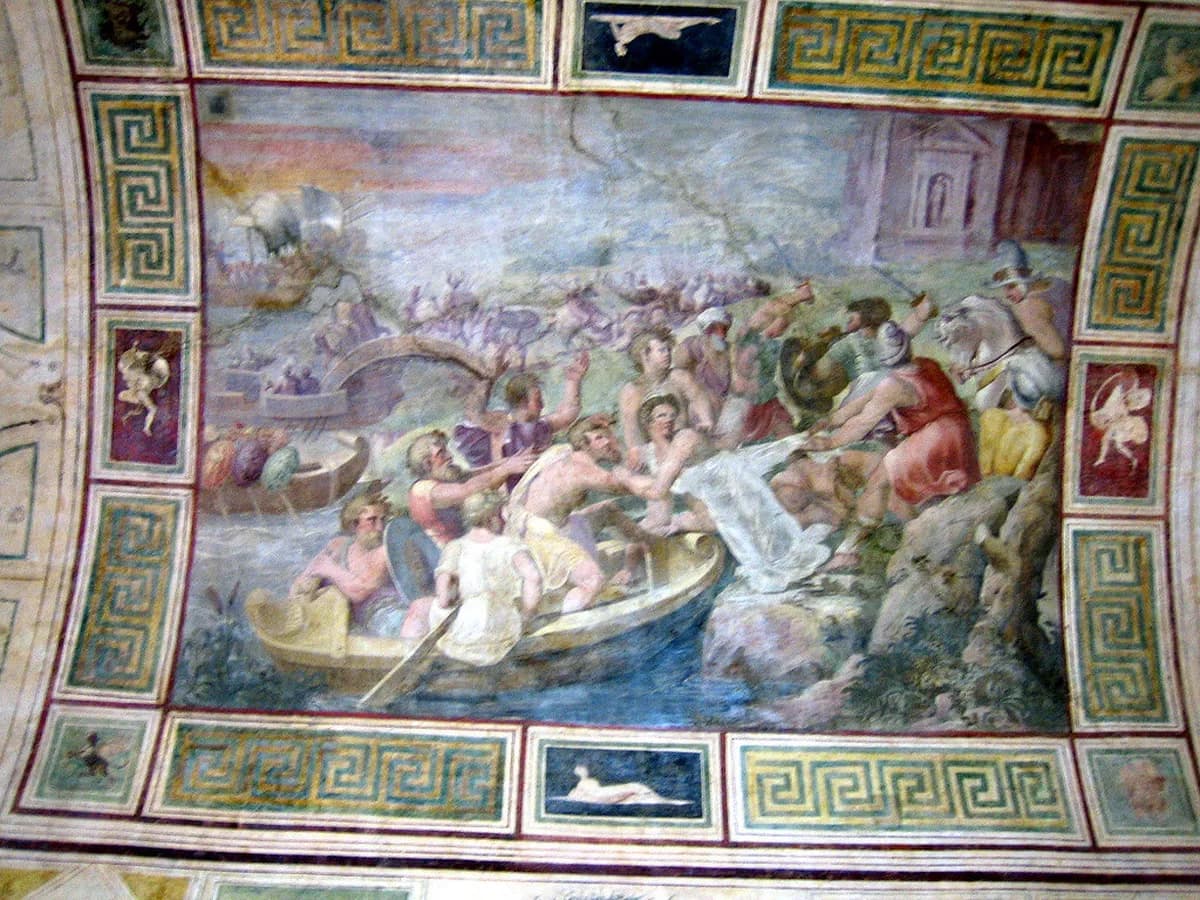
The church was first built in 1334, destroyed in the 1693 earthquake, and rebuilt with the monastery between 1708 and 1763 according to a detailed visitor account. Its single nave holds frescoes by Sebastiano Lo Monaco, Giovanni Tuccari and Matteo Desiderato, and the vault and semi-dome carry Tuccari's scenes of the life of Saint Benedict with six allegories around the Triumph of Saint Benedict.
Tuccari's speed is part of the story: the same account records that he frescoed the church between 1726 and 1729, earning the nickname the lightning of painting. Look for the altar, described as made from a local stone and inlaid with gold and silver, and for the nun's choir of around 1750, designed so that the sisters' voices carried into the church while the singers stayed unseen.
The choir is the detail that ties the art back to the community. A grating that lets sound through but hides the singers is a piece of architecture built around a rule of enclosure, and it makes sense of everything you saw in the parlour. If you want a broader sense of how the city's churches vary, the Basilica della Collegiata is a natural next comparison on the same Baroque circuit.
The Arch You Cannot Cross
The Arco di San Benedetto spans Via Crociferi and unites the two Benedictine buildings. A traveller's account records the legend that it was built in a single night in 1704 to defy a city ordinance against overhead structures, and that it allowed cloistered nuns to cross the street without touching public ground; stand beneath it and look up at the carved lava-stone underside before you go in.
The arch is also a boundary. The operator is explicit that the monastery is still inhabited by the monastic community and that visitors cannot cross the arch or enter the rooms the nuns use daily. Photograph it from the street, look up at the carving, and accept that the passage overhead is not part of the tour.
Etiquette in a Working Monastery
Photography is permitted for personal use, but without flash and without professional equipment such as tripods; commercial use requires written authorisation from the operator. In practice that means phone and handheld camera shots are fine, while a full lighting setup is not, and the no-flash rule protects both the frescoes and the atmosphere of a place of worship.
Animals are not admitted, and the operator asks visitors to respect the enclosure through appropriate behaviour, since the church remains a place of culture and worship rather than a museum gallery. No weddings, baptisms, confirmations or private group Masses are celebrated here. Public Mass is at 7am on weekdays and 9am on holidays, with Mass in English at 11am on Sundays.
Accessibility: What to Expect
The operator is candid that the monastery's architecture does not allow access for visitors with mobility disabilities and that there are no lifts. The staircase, the changes of level and the historic fabric are not adaptable in any simple way, so wheelchair users and anyone who cannot manage stairs should plan accordingly rather than assume a side entrance exists.
For anyone with limited stamina, the honest advice is to treat this as a short but vertical visit and to ask at the ticket office about the route before buying. If step-free access is essential to your day, concentrate on ground-level squares and markets instead and save San Benedetto for a return trip.
Building a Baroque Walk Around San Benedetto
San Benedetto is best paired with the streets immediately around it rather than with a long itinerary. Walk Via Crociferi end to end, noting San Francesco Borgia and San Giuliano, then drop south toward the cathedral square for the city's densest concentration of Baroque set pieces. The Via Crociferi: Baroque Street Guide covers the sequence in detail if you want a structured route.
If you are spending a couple of days in the city, the hidden gems in Catania include the underground Amenano river, the Terme Achilliane beneath the cathedral square and the Byzantine Cappella Bonajuto, several of them within a short walk of Piazza del Duomo. These pair well with a church visit because they show the layers beneath the rebuilt city.
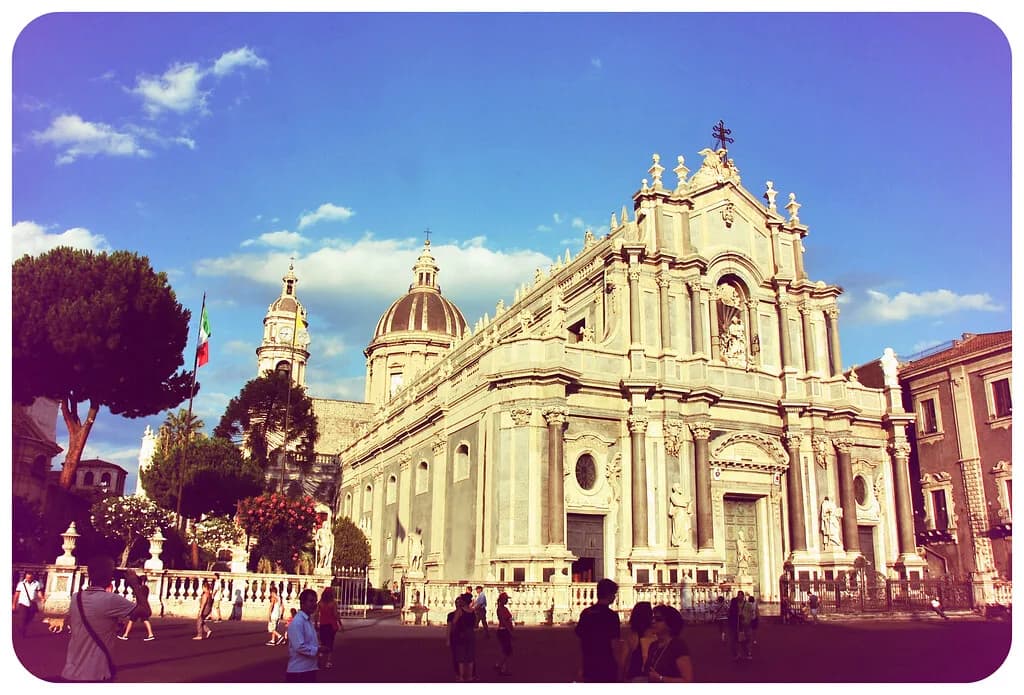
For the classic sights, the Piazza del Duomo and Cattedrale di Sant'Agata: Visitor Guide explains the square's architecture and the elephant fountain, and it makes a logical continuation once you have finished on Via Crociferi. Booking a fixed time at San Benedetto is unnecessary, so you can let the day unfold in either direction.
Common Mistakes to Avoid
The most frequent misunderstandings all concern money. Visitors assume the first Sunday of the month is free, expect a combined ticket with other churches, or plan around a Catania Card discount; the operator addresses each of these and gives a negative answer, describing the card circuit as currently suspended. Budget for the standard ticket and buy it at the office on Via Teatro Greco.
The second set of errors is about time. Because the day is split into two sessions with separate last-entry times, an arrival twenty minutes before closing may not get you in, and the seasonal switch between summer and winter windows catches people out in late March and late October. Check the current hours on the operator's page before you set out, and treat any third-party listing as secondary.
Finally, do not confuse this Catania church with San Benedetto del Tronto, the seaside town in the Marche region, which appears in search results for similar names and has its own promenade, tower and museums. They are unrelated places hundreds of kilometres apart. If you are planning around Catania, the Catania Attractions hub keeps the city's sights in one place.
Plan Your Visit
San Benedetto rewards a modest amount of preparation: check the seasonal hours and last-entry times, bring a charged phone for the audioguide, and arrive with the right ticket money for your age band. The visit itself is short and self-guided, so it slots easily into a morning on Via Crociferi without dominating the day.
What stays with most visitors is not a single object but the arrangement of the whole complex: Roman ruins below, a cloistered parlour at street level, an angel-lined stair, and a nave painted at speed by one man in the 1720s. Remember that the arch overhead belongs to the nuns, not the tour, and that quiet, flash-free behaviour is part of the price of entry.
Frequently Asked Questions
Do you need to book tickets for the Chiesa di San Benedetto in Catania?
No, individual visitors and small groups using the audioguide can turn up without a reservation, as can groups already accompanied by a licensed tourist guide. Reservations are required only for school groups and for groups that want a guide supplied by the monastery, which is arranged by phone or email. Tickets are sold at the ticket office on Via Teatro Greco rather than online.
What does a visit to San Benedetto include?
The route covers the remains of a Roman domus, the 18th-century parlour where nuns received relatives, the marble Staircase of Angels that forms the main entrance to the church, and the church interior with its frescoes by Giovanni Tuccari and others. It does not include the nuns' daily rooms or a crossing of the arch over Via Crociferi.
Can you take photographs inside the church?
Yes, for personal use, but without flash and without professional equipment such as tripods. Commercial photography needs written authorisation from the operator. The no-flash rule protects the frescoes and keeps the atmosphere calm in what is still an active place of worship.
Is the church accessible for wheelchair users?
No. The operator states that the monastery's architecture does not permit access for visitors with mobility disabilities and that there are no lifts. The visit involves stairs and changes of level, including the Staircase of Angels, so anyone with limited mobility should plan an alternative and ask at the ticket office before buying.
Is entry free on the first Sunday of the month?
No. The operator explains that the Ministry of Culture's free first-Sunday scheme applies only to public sites, and this is a private monastery complex. It also states that the Catania Card circuit is currently suspended by the city council and that no cumulative tickets exist with other Catania sites, so plan to pay the standard tier for your age group.
Are weddings or private Masses celebrated at San Benedetto?
No. The operator says weddings, baptisms, confirmations and private Masses for groups are not held in the church. Public Mass is celebrated at 7am on weekdays and 9am on holidays, with Mass in English at 11am on Sundays, so visitors who wish to attend should build their day around those times.
Who painted the frescoes inside the church?
Giovanni Tuccari painted the vault and semi-dome with scenes from the life of Saint Benedict and six allegories surrounding the Triumph of Saint Benedict, work a visitor account dates to 1726 to 1729. Sebastiano Lo Monaco and Matteo Desiderato also contributed frescoes. Look up as well as forward when you enter the nave.
Sources
Continue exploring
More guides you'll find useful