Via Crociferi Catania: Baroque Street Walking Guide
Walk Via Crociferi in Catania: the churches lining the Baroque street, what the street walk costs, and how to time a calm, unhurried stroll.
On this page
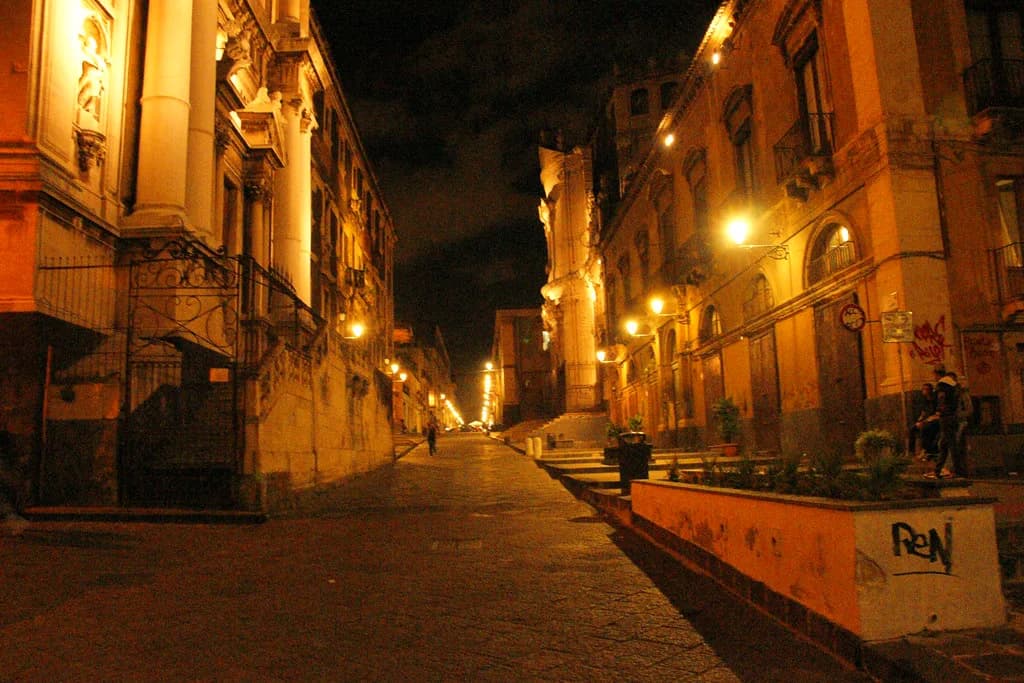
Via Crociferi is the street most travellers picture when they think of Baroque Catania: a short, straight run of eighteenth-century church facades and convents in the heart of the historic centre. You enter it through the St. Benedict arch, erected in 1704 according to a city visitor listing, and the walk itself is the attraction. Set aside the idea of a single monument with one ticket and one door.
One practical detail shapes a good visit: the street is public space, while the interiors along it are separate decisions with their own schedules and admission. Treat the stroll and the church visits as two different activities, budget time for both, and check each interior's published arrangements on the day rather than assuming a uniform opening pattern.
What Via Crociferi Is and Where It Sits
Via Crociferi is a short central street in Catania lined with eighteenth-century churches and convents, and travel sources describe it as a symbol of the city's Baroque architecture. It sits in the historic centre, close enough to Piazza Università to be folded into a city-centre route on foot.
Treat claims about international heritage recognition with care. One commercial guide labels the street a UNESCO World Heritage site, but the more defensible framing is that Via Crociferi belongs to Catania's broader Baroque heritage rather than a single verified street-level inscription. Anyone who wants the precise status should check the official UNESCO and municipal listings directly.
Orientation is simple: the street runs through the dense centre, and its start is marked by the triumphal arch that takes its name from St. Benedict. Because the surrounding blocks hold several major sights, it works best as a spine for a longer walk rather than a destination you arrive at by vehicle and leave again.
The St. Benedict Arch and the Street as Public Space
The arch at the head of the street was erected in 1704, according to a city visitor listing, and it frames the view down the facades in the way a stage set frames a scene. Walking through it costs nothing and takes seconds, but it is the moment the street's character becomes clear. Further visitor details appear in Plan your cultural tour in Sicily: visit the St Benedetto Church.
Strolling Via Crociferi and looking at the exteriors is free, because the roadway and pavements are ordinary public space. What is not free or guaranteed is going inside: the churches along the street are separate institutions, and there is no shared ticket that covers all of them. Plan on admiring several facades and choosing, at most, one or two interiors to enter properly.
That distinction matters more here than on many streets, because the visual payoff is concentrated in the sequence: porticoes, balconies, sculpted stonework and the way the churches sit close together. A slow pass on foot, with stops to look up, is the core experience and requires no booking at all.
The Churches Along the Street
The street's best-known ensemble is the run of churches that includes St. Benedict, San Francesco Borgia, St. Julian and San Camillo. Their value to a walker is cumulative: each contributes a different facade and a different relationship to the street, so the effect builds as you move along rather than peaking at one doorway.
Nearby, San Francesco Borgia presents a linear neoclassical marble facade with two rows of columns, while St. Julian, attributed to Vaccarini's skill and probably built between 1739 and 1751, is often singled out as a highlight of the city's eighteenth-century reconstruction. Descriptions like that come from a city visitor listing and are a prompt for looking closely, not a ranking you have to accept.
Do not assume the churches keep the same hours or that all are open when you pass. Sources do not support a single schedule for the street, and a locked door is common enough that it should not spoil the walk. Check signage at each entrance on the day and fold any open interior into your route as a bonus.
Visiting St. Benedict's Church as a Separate Decision
If you enter one interior, St. Benedict's Church is the strongest candidate for many visitors. Its late-Baroque facade was designed by Alonzo Di Benedetto and enriched by Vaccarini's portal, and behind it a staircase leads to a single nave, so the visit is compact rather than sprawling.
Inside, look for the restored polychrome marble floor, part of the original building and painstakingly reworked after the 1693 earthquake, and the eighteenth-century wooden door depicting scenes from the saint's life. The paintings are the real reward: Giovanni Tuccari's ceiling scenes of the Life of St. Benedict and his Coronation of the Virgin in the apse, plus works attributed to Sebastiano Lo Monaco and Michele Rapisardi on the altar.
Admission tiers, reduced rates and opening days are published on the church's visitor listing, but they are exactly the kind of detail that changes with the season and the operator. Confirm the current ticket prices, opening days and any restrictions on the official listing or by contacting the site before you build your day around a visit, rather than relying on a figure quoted in an older guide.
The Wider St. Benedict Monastery Complex
St. Benedict's Church is one element of a larger historic site, the St. Benedict Monastery complex, and the other parts are worth knowing about before you decide how much time to give it. The itinerary includes a Roman domus found in the basement of the monastery cloister and parts of the monastic rooms, including an eighteenth-century parlor.
The parlor carries literary and film associations: it is described as the setting of Verga's novel Storia di una capinera and of Franco Zeffirelli's adaptation. The church staircase is also listed as publicly accessible for the first time, which makes the complex a more substantial visit than the single nave suggests.
Because these elements sit inside one historic site, it is tempting to assume one ticket covers everything, but the listing does not establish that. Ask at the ticket desk which areas the entry includes and whether the domus or parlor require a separate arrangement, then decide whether the street walk alone is enough for your schedule.
Timing the Stroll
Travel-guide advice for Via Crociferi recommends early morning or late afternoon, when crowds thin and temperatures drop. Treat that as a sensible suggestion rather than an official rule: no source establishes opening restrictions on the street itself, and the benefit is comfort and clearer views of the facades.
Catania's summer heat is the practical constraint, and the street offers limited shade along its length. If you plan to combine the walk with an interior visit, aim to be at the church door near the start or end of the day and confirm the day's opening times in advance; midday is better reserved for a shaded interior or a break.
Practical Orientation and Suggested Duration
As a labelled suggestion rather than an official figure, allow around thirty to forty-five minutes for the street itself at an unhurried pace, and up to an hour more if you enter St. Benedict's Church and read the interior properly. Add time for the monastery complex if you decide to see the domus and parlor as well.
The street connects easily with the rest of the centre. Walking routes commonly approach it from Via Etnea via Piazza Università, and tours of the area pair it with Piazza Duomo, the cathedral and the town hall, so it slots neatly into a half-day route on foot.
For the wider Baroque picture, the Basilica della Collegiata: Visitor Guide makes a natural pairing with Via Crociferi, since both reward close looking at facades and interiors rather than a quick photo stop. Build the walk around two or three such stops and leave room to wander the side streets between them.
Pairing Via Crociferi With Nearby Sights
Because the street sits within the compact historic centre, it pairs naturally with the city's headline squares and churches. Piazza del Duomo and Cattedrale di Sant'Agata: Visitor Guide covers the civic heart of Catania, a short walk away, and provides the context for the reconstruction era that produced Via Crociferi's facades.
For a change of era, the Anfiteatro Romano di Catania: Visitor Guide introduces the Roman layer beneath the Baroque city, a useful contrast to a morning spent among eighteenth-century stonework. Beyond the obvious sights, the hidden gems in Catania guide helps fill the gaps between anchor stops with quieter corners and overlooked details.
Plan Your Visit
Via Crociferi rewards a simple plan: walk the street slowly, enjoy the facades for free, and choose one interior to enter with its opening times confirmed in advance. The St. Benedict arch sets the scene, and the churches along the way supply the detail.
Before you go, check the current opening arrangements and admission for St. Benedict's Church on its official listing, since those details change with the season. Regional information on transport and events is published by the Regione Siciliana, which is the sensible starting point for anything time-sensitive.
Frequently Asked Questions
Is Via Crociferi free to walk?
Yes. The street is ordinary public space, so strolling along it and looking at the church exteriors costs nothing. Going inside the churches is a separate matter, and each interior has its own arrangements and admission, so check the listing for the church you want to visit before you go.
How long does it take to walk Via Crociferi?
As a suggested duration, allow around thirty to forty-five minutes for the street itself at a relaxed pace. Add up to an hour if you enter St. Benedict's Church and read its interior, and more again if you include the wider monastery complex. These are recommendations, not official timings.
Which churches line Via Crociferi?
The best-known group includes St. Benedict, San Francesco Borgia, St. Julian and San Camillo. They are separate institutions, and sources do not show that they share one ticket or one opening schedule, so treat each doorway as its own decision and check locally on the day.
What is the best time of day to stroll Via Crociferi?
Travel guides suggest early morning or late afternoon, when crowds are thinner and temperatures cooler. That is advice rather than an official rule, and it suits a street with limited shade in summer. If you plan an interior visit, confirm the day's opening times before setting out.
Should I visit St. Benedict's Church?
It is the most rewarding interior for many visitors, with Tuccari's ceiling and apse paintings, a restored polychrome marble floor and an eighteenth-century carved wooden door. Admission tiers and opening days are published on its visitor listing, so confirm current details before you build your day around it.
Is Via Crociferi part of Catania's historic centre?
Yes, it lies in the compact historic centre and is easy to reach on foot from Via Etnea and Piazza Università. That makes it straightforward to combine with Piazza Duomo and the cathedral, or with the city's Roman remains, in a single walking route.
Sources
Continue exploring
More guides you'll find useful