Chiesa della Badia di Sant'Agata: A Practical Visitor Guide
Plan a visit to Catania's Badia di Sant'Agata: the Baroque facade, the reported dome climb, hours to verify, and how to pair it with Piazza del Duomo.
On this page
The Badia di Sant'Agata sits on Via Vittorio Emanuele II, 182, in Catania's old town, and a travel listing places Piazza del Duomo about 100 metres from its door. That short distance explains the usual confusion: the Badia and the cathedral share a square, a saint and a crowd, but they are separate buildings with separate entrances and separate histories. This guide stays with the Badia.
The draw beyond the facade is the reported ascent to the terraces and dome, which one travel page describes as open to the public for a 360-degree view over Catania. Treat that as planning information rather than a guarantee: the schedules and any charge come from third-party pages, not from the Diocesi di Catania, so confirm on the day.
A sensible allowance is 20 to 30 minutes for the church at ground level, or 45 to 60 minutes if you climb; this is a suggestion, not an official figure. The Badia fits neatly into a half-day around the piazza rather than repaying a dedicated trip across town.
What and Where the Badia Is
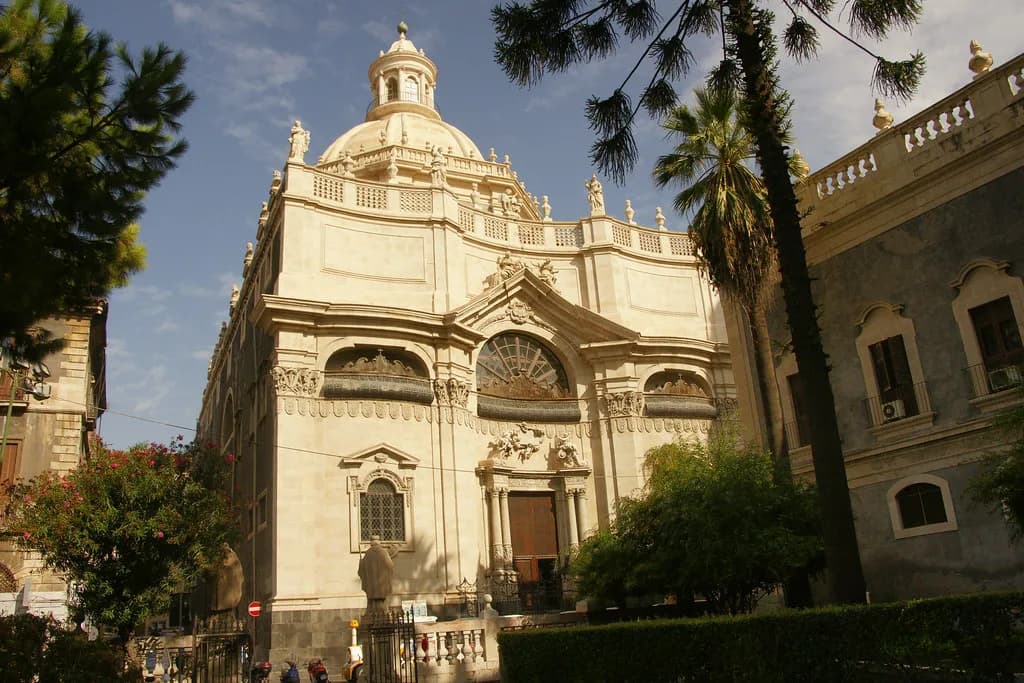
Think of the Badia as its own stop: a Baroque church whose curved facade faces the street and whose dome rises above the rooftops. The cathedral is the much larger basilica on the piazza. A ticket, queue or opening time for one does not automatically apply to the other, and the Badia is the smaller, more contained visit of the two.
The same travel listing places the Fountain of the Elephant about 105 metres away and Villa Bellini roughly 895 metres away, so the Badia sits in a walkable cluster rather than off on its own. If you are comparing sights before settling a day, start with the Catania Attractions hub and slot the Badia in as one chapter of that plan.
The Facade and Interior: What to Look For
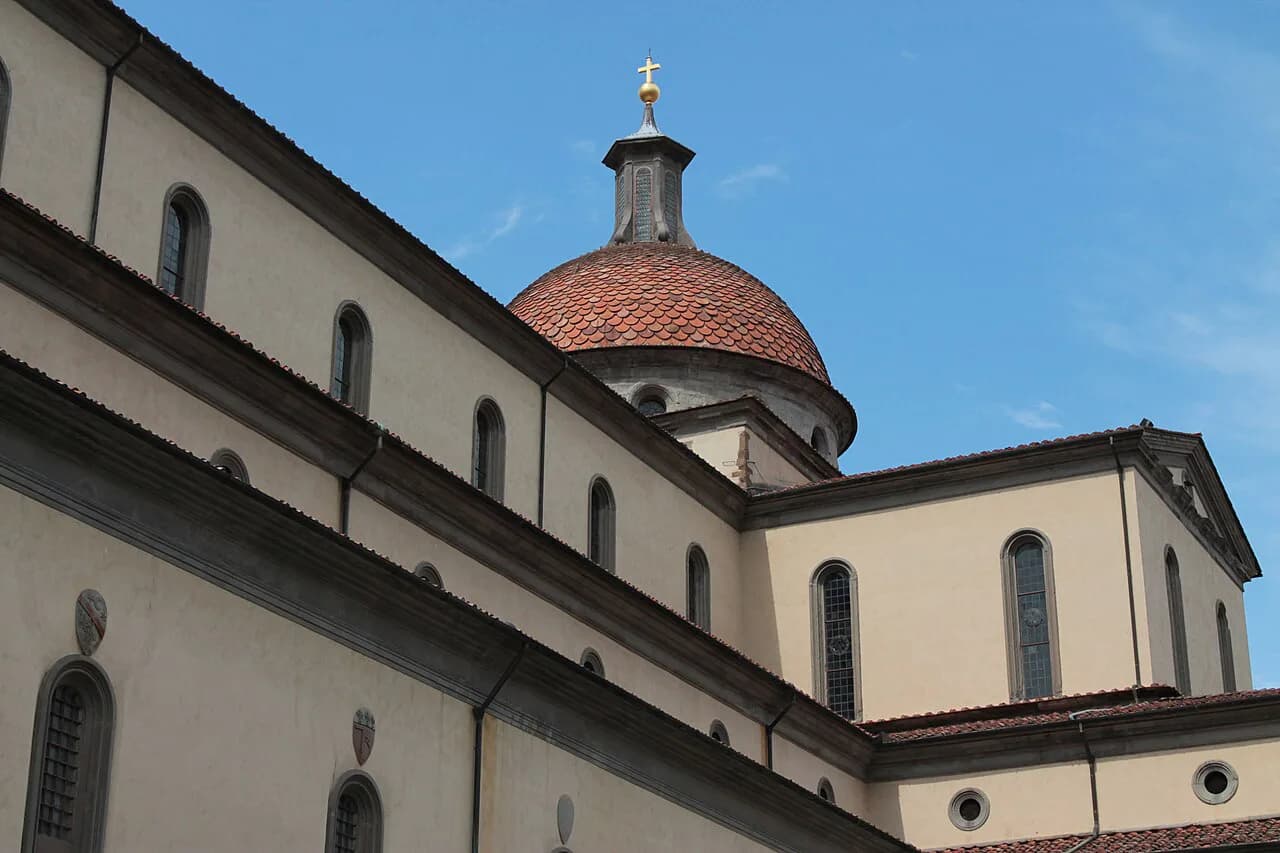
Give the facade time. Travel descriptions note its restless Baroque lines, curved surfaces and carved reliefs, and that rhythm reads best by stepping back across the street rather than standing at the threshold. Watch how the stonework swells and steps between the orders, the effect that defines Sicilian Baroque in this part of town.
The building began as a Benedictine convent church. According to Summer in Italy, the convent was founded for a cloistered order in 1612, the 1693 earthquake destroyed it, and the Sicilian architect Giovan Battista Vaccarini designed the rebuilt Baroque church, drawing comparison with Borromini's Sant'Agnese in Rome. The same page notes that the nuns' gallery let the sisters hear services without being seen.
Do not expect to enter the old convent. That source states that after the religious orders were suppressed in 1866 and the last nun died in 1929, the convent is now separated from the church and not accessible to visitors. What you can see is the church itself, with its dome and delicate twin bell towers above. Further visitor details appear in Cathedral and Badia of Sant'Agata, Church in Sicily, Italy.
Climbing to the Dome and Terrace
The reason to spend more than a few minutes here is the ascent. Summer in Italy describes the terraces and dome as open to the public for a 360-degree panorama over Catania, which is the honest case for going up: it lifts you above the street grid and opens the old town and the landscape beyond.
The same page reports that the cupola is open every day except Monday, with Monday closed. Its non-uniform pattern is a morning window from 9:30 to 12:30 on several days, an added afternoon window on Wednesday to Saturday from 3:30 to 5:30, and a Sunday evening window from 7:00 to 8:30.
Treat that schedule as reported rather than fixed. It is a third-party description, and rooftop access at a working church can vary with season, staffing and liturgical events. Check the Diocesi di Catania before you build a day around the climb, and ask at the door about that day's access.
Hours and Any Dome Fee: Read Them as Reported
Two travel sources give slightly different pictures. The Trip.com listing gives general opening as 9:30–12:30 and 15:00–18:00 for the church, while Summer in Italy provides a more detailed cupola schedule and a short per-person fee for the dome climb. Neither is the operator, and neither guarantees current conditions, so use them to decide when to turn up, then confirm.
On cost, treat the dome climb as a paid extra as reported on one third-party page, not as a current price. Ask at the entrance or check with the diocese before paying, and keep it separate in your mind from the cathedral next door, which a separate travel page describes as free to enter.
A Monday visit is the one to plan around, since the same third-party page reports the cupola closed that day. If Monday is your only window, see the church and square at street level and save the roof for another morning.
How Long to Allow
If you climb, leave about 45 to 60 minutes, a suggested allowance rather than an official one. That covers a slow look at the facade, a circuit of the interior and time on the terraces. For the church alone, 20 to 30 minutes is enough to slip into a morning around the piazza.
The trade-off is time against light. Mid-morning and late afternoon sit inside the windows the travel pages describe, while the middle of the day can be hot on an exposed terrace. In high summer, an early slot and a slower afternoon elsewhere is the more comfortable split.
A Piazza del Duomo Walk That Does Not Duplicate the Cathedral
Start at the Badia, then cross to the cathedral exterior and the Elephant Fountain on the piazza. The same listing places the fountain about 105 metres from the Badia's door, which is a few minutes' walk rather than a separate leg of the day. If you want the cathedral's own interior and history, use the Piazza del Duomo and Cattedrale di Sant'Agata: Visitor Guide so the two visits stay distinct.
From the square, the city's broader Baroque streets reward a wander. Via Crociferi is the natural next chapter, with its churches and staircases lined up along a single route. For more options beyond the obvious square, a hidden gems in Catania guide helps pick a direction without padding the walk with generic stops. For wider planning, see Via Crociferi in Catania.
If you still have energy, Villa Bellini is the green exhale, about 895 metres from the Badia per the same listing. That gives you a half-day shape of church, square and garden without repeating the cathedral's own interior visit.
Practical Etiquette and Planning
This is an active place of worship before it is a viewpoint, so dress and behaviour should match a church rather than a rooftop bar. Keep voices low inside, do not assume the nuns' gallery or convent areas are open, and treat the terrace as a shared space with a short, quiet stay.
Keep ticketing simple in your head: the cathedral's entry and any Badia dome fee are separate matters, and a ticket for one is not evidence of access to the other. For official notices, the Diocesi di Catania is the source to watch.
If you are building a full Catania plan, the Catania Attractions list helps you judge what else deserves a slot. Reserve the Badia for the facade and the reported view, and let the cathedral keep its own separate chapter.
Fit the Badia Into Your Catania Day
The Badia di Sant'Agata works best as a compact, high-reward stop: a Baroque facade to read from the street, a calm interior and a reported climb to a terrace view that the surrounding rooftops justify. Plan it for a morning or late afternoon rather than midday, and keep Monday as your day for the square at ground level.
Because the hours and any dome fee come from third-party pages, confirm them with the Diocesi di Catania or at the entrance before you count on climbing. A little checking protects the one part of the visit you cannot recreate from a guidebook: getting above the old town with the city laid out around you.
Frequently Asked Questions
Is the Badia di Sant'Agata the same as Catania Cathedral?
No. The Badia is a separate Baroque church on Via Vittorio Emanuele II, originally a Benedictine convent church, while the cathedral is the larger basilica on Piazza del Duomo a short walk away. They have different entrances and histories, and access to one does not imply access to the other.
Can you climb the dome of the Badia di Sant'Agata?
Travel sources describe a public climb to the terraces and dome with a wide view over Catania, reportedly closed on Mondays. Because this comes from third-party pages, confirm current access with the Diocesi di Catania or at the door rather than relying on a listing.
How long should I allow for a visit?
A suggested allowance is 20 to 30 minutes for the church interior, or 45 to 60 minutes if you also climb to the terraces. That fits comfortably into a half-day that includes the cathedral exterior, the Elephant Fountain and a walk toward Villa Bellini.
Is there an entry fee?
One third-party page reports a short per-person charge for the dome climb, which should be treated as reported rather than current. Ask at the entrance or check with the Diocesi di Catania, and do not assume a cathedral ticket covers the Badia or vice versa.
What else is within walking distance?
Piazza del Duomo, the cathedral and the Elephant Fountain are a few minutes' walk away, and Villa Bellini is roughly 895 metres away per one listing. Via Crociferi offers a longer Baroque walk for the rest of the morning or afternoon.
Sources
Continue exploring
More guides you'll find useful