One Day in Catania: A Walkable Itinerary for Morning to Night
One day in Catania on foot: a morning fish market, Baroque streets, a Roman theatre, Villa Bellini and late dinner, with honest trade-offs and sourced timing cues.
On this page
Catania is often treated as an airport stop on the way to Taormina or Syracuse, which undersells a compact, walkable historic centre. The core between the fish market and Villa Bellini can be covered on foot, and blog writers who know the city describe one day as enough for the main sights without sprinting. Treat the route below as a sequence of choices rather than a timetable, because the best day here depends on how much church-going, ruins and long lunches you actually want.
One concrete cue worth planning around: a local-written guide says the seafood market is liveliest in the morning and notes it opens at 7:00 AM, though it recommends checking current hours on the official website. That early start shapes everything else. Begin at the market, keep the hot middle of the day loose, and leave the evening for food, since dinners here tend to run late in summer.
Why Catania Rewards a Single Day
Catania is short on blockbuster monuments, so you never face a single must-see queue. The day is built from smaller things instead: a noisy seafood market, lava-stone architecture, a Roman theatre wedged between later buildings, and street food eaten standing up. One guide describes the city as a place where you choose your own adventure rather than trail around obligatory museums, and that framing is useful when planning a short visit.
The trade-off is depth. One day gives you an orientation, not a full understanding of the Greek, Roman and Baroque layers stacked here. A travelling couple who spent longer in the city call one day enough for the main sights but not for the city's character, and that is a fair summary. If you have a second day, spend it on a slower interior, a longer lunch, or a coastal excursion rather than cramming more into the first.
Staying in the historic centre makes this route much easier, because the main sights sit within a short walk of each other. One local writer suggests the area between Piazza Duomo and Piazza Teatro Massimo for livelier, better-lit evenings, and the backstreets around Castello Ursino for quieter nights. Either base removes the need for a car inside the centre.
The Route at a Glance
The shape of the day is simple. Morning belongs to the fish market and Piazza Duomo, the middle of the day to the Roman theatre area and the monastery complex, and the afternoon to Via Crociferi, Villa Bellini and Via Etnea. You then rest before an aperitivo near the castle and dinner around Via Gemmellaro. If you prefer a street-by-street version of the same ground broken into shorter legs, the Catania Self-Guided Walking Tour: Baroque and Roman Highlights is the companion piece.
Decide lunch and dinner before you set out. The Catania Local Food Guide: What to Eat and Where is a practical shortlist of dishes and where to find them, and deciding early saves the indecision that arrives when everyone is hungry. If you would rather be shown the history than assemble it yourself, a guided walk compresses the Duomo, castle and city layers into a couple of hours; one traveller reports tours starting mid-morning, but schedules change, so confirm with the operator rather than assuming a departure time.
Start at the Fish Market
Begin at A' Piscaria, the seafood market just off Piazza Duomo. The morning is the liveliest window, and one local guide suggests sampling sea urchins, mussels and other seafood on offer, some raw and some cooked. Expect noise, ice, shouting and the smell of the sea rather than a curated visitor experience.
Give the market thirty to forty-five minutes unless you plan to eat there, in which case allow longer. The 7:00 AM opening cited by that guide is a useful planning cue, not a guarantee for your date, so check before making it a fixed first stop, particularly in winter. Wandering in is free, and it sets the day's tone better than any museum.
Piazza Duomo and the Cathedral
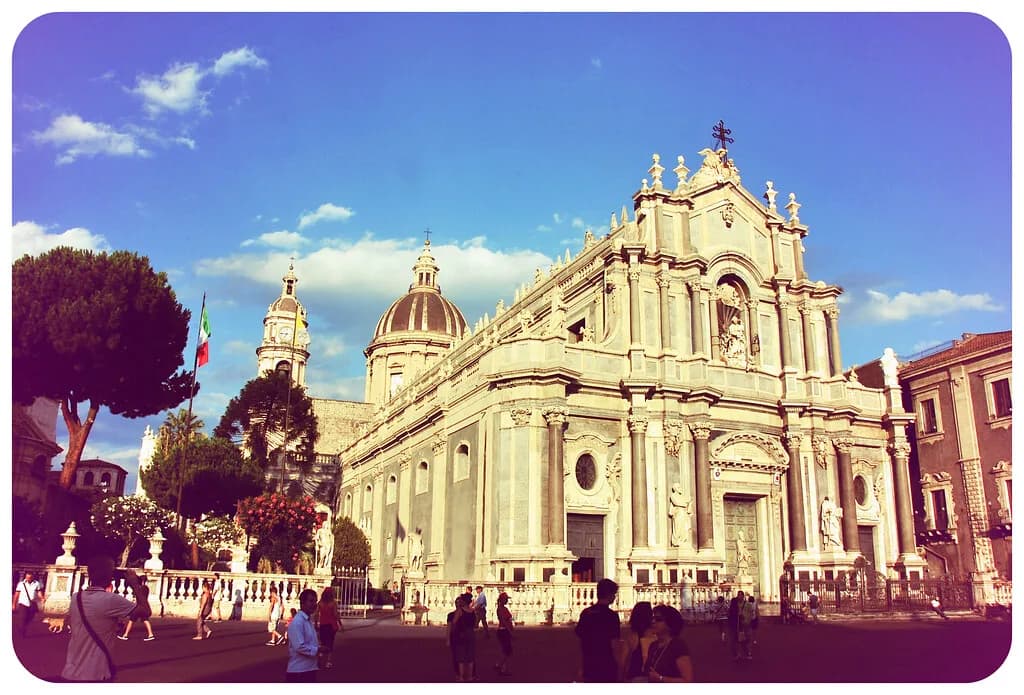
Piazza Duomo is effectively next door to the market. The square holds the Basilica Cattedrale di Sant'Agata, described as built over the ruins of an eleventh-century Norman church, and the Liotru fountain with its lava-stone elephant carrying an obelisk. Inside the cathedral you can see the tomb of the composer Vincenzo Bellini.
Allow twenty to thirty minutes inside and a little more to circle the square and look up at the facades. If you want to know what else in the centre gets skipped, the hidden gems in Catania guide covers corners a one-day route normally passes. Keep the cathedral visit short; ruins, churches and a long walk still lie ahead.
Roman Layers: Theatre and Amphitheatre
Head west along Via Vittorio Emanuele II for about five minutes and you reach the Greek-Roman theatre, which one guide dates to the second century AD and describes as built over an earlier Greek theatre. It is modest, but its setting inside a dense urban block is unusual. Next door is the Terme della Rotonda, a former bath complex with a church built over it and frescoes inside.
Later, Via Etnea brings you to the sunken Roman amphitheatre at Piazza Stesicoro, now surrounded by the modern city. One blogger notes that the Greek-Roman theatre requires a ticket while several other sites do not, and that separation is worth checking at the entrance before you commit. If you have seen larger Roman sites elsewhere in Sicily, pick one of these rather than both.
The Monastery Complex and Its Library
The Monastery of San Nicolò l'Arena, beside the baths, is a large Baroque complex of ornate facades, cloisters and frescoed rooms. A local writer recommends joining one of the guided tours offered through the day, partly because they open areas you cannot see alone, and points to the official website for times. The adjacent Ursino Recupero Library, an active city library, is worth a short visit for its painted ceilings.
This is the strongest argument for taking one guided interior seriously in Catania: the courtyard impresses on its own, but the rooms and their stories need context. Tour times vary, so check when you arrive and adjust the rest of the day around a departure that fits rather than the other way round. The library and church of the same name are separate stops with their own access, so do not assume one ticket covers everything.
Via Crociferi and the Baroque Churches
Via Crociferi is the centre's prettiest street, short but dense with eighteenth-century churches, balconies and staircases. The Chiesa di San Benedetto, with the Scalinata dell'Angelo staircase, is the standout, and San Giuliano is recognisable for its curved facade. One traveller describes the street as a quiet place to wander after lunch, with churches that may or may not be open depending on the day.
Continue to Quattro Canti, the intersection where four Baroque corners meet, and look into the Basilica della Collegiata on the way. This stretch rewards slow walking rather than a checklist, so budget forty-five minutes to an hour including one church interior. If time is short, choose a single interior and spend the saving in Villa Bellini instead.
Villa Bellini, Via Etnea and Teatro Bellini
Villa Bellini is the city's main park, filled with busts of musicians and writers and an obvious place to sit out the hottest part of the afternoon. A traveller who visited in summer describes needing a riposo before a late dinner, and the park is the natural spot for it. From the gardens you can catch a first glimpse of Mount Etna on a clear day, though the view depends entirely on the weather.
From the park, Via Etnea runs mostly pedestrianised back toward Piazza Duomo, passing Piazza Stesicoro and Quattro Canti. Break the walk at Teatro Massimo Bellini, the nineteenth-century opera house; one source mentions daytime guided tours of around forty-five minutes, but schedules change, so ask at the box office on the day. If a performance falls on your date, that is a different evening entirely.
Palazzo Biscari and the Afternoon Window
Palazzo Biscari, south of the theatre, is still occupied by descendants of the family that built it. Guided visits take in a Rococo ballroom, family portraits and a first-century Roman marble floor. One local guide gives visiting hours of 10AM to 1PM and then 4PM to 7PM, with tours of roughly forty-five minutes; those hours are not guaranteed for your date, so confirm before planning the afternoon around them. Further visitor details appear in How to Spend One Day in Catania — Go Ask A Local.
This is the day's main either-or. If you want aristocratic interiors and a guided visit, take the late-afternoon slot and drop a second church. If you would rather keep walking, use the time on Via Crociferi or a rooftop view from Chiesa della Badia di Sant'Agata, which one blogger rates for sunset. Decide before lunch so you are not racing across the centre at four o'clock.
Evening: Aperitivo, Then Via Gemmellaro
Aperitivo starts around 18:30 in Sicily, according to one traveller, who recommends a drink near Castello Ursino as a bridge between sightseeing and dinner. Specific venues and opening days change, so check before setting out. Castello Ursino has had an uncertain visiting status, so treat it as scenery rather than a scheduled stop unless the city confirms it is open.
For dinner, head to Via Gemmellaro, where a younger crowd gathers and restaurants are less oriented to visitors than the squares. One restaurant there is popular enough to queue from early evening, and a blogger advises booking ahead, either in person during the afternoon or online before the trip. If it is full, the surrounding streets have alternatives.
Food Decisions Along the Way
Pasta alla Norma, with tomatoes, aubergines and ricotta salata, is the dish to try at least once, and one traveller singles out a traditional trattoria for it. Market snacking covers the morning, and a long lunch is worth protecting when it is hot. Prices vary by venue and season, so read menus at the door rather than budgeting from older figures online.
Reserve dinner if you plan to eat late, particularly at popular spots, and expect the evening to run long in summer rather than early. For a structured shortlist of dishes, from arancini to minne di Sant'Agata, use the Local Food Guide: What to Eat and Where before you arrive. It saves the indecision that hits when everyone is hungry.
Practical Logistics for the Day
Catania's centre is walkable, and one day covers the main sights comfortably on foot. A hire car is a liability in the historic streets; one blogger reports that parked rental cars can be targeted by thieves, which is anecdotal rather than a rule, so do not leave valuables visible if you drive. The city publishes events and civic notices through its official site, which is worth checking for anything unusual on your date.
On safety, treat advice as experience rather than regulation. One travelling couple felt uneasy near the train station at night and suggests steering around the San Berillo district in the evening, while stressing they felt safe elsewhere day and night. Take ordinary city precautions, stay in busy streets after dark, and browse Catania Attractions before you go to decide which interiors justify a stop.
Adapting the Day for Heat, Rain or a Second Visit
In summer, start earlier, keep the market and cathedral for the morning, and use Villa Bellini or a long lunch during the hottest hours. A riposo is practical rather than indulgent if you want to be out late. In rain, swap the long Baroque walk for the monastery complex and a museum interior, and keep the food stops.
Families will do better with fewer interiors and more time in the park and the market, where children can watch the fishmongers work. If you gain a second day, consider a slow trip toward Aci Trezza and the Cyclops Coast, or a morning on Etna with a guided group. For timing your trip around weather and crowds, Best Time to Visit Catania Without the Crowds is the place to start.
Plan Your Visit
One day in Catania works best when you accept that you will not see everything and choose deliberately instead. Start at the market, take one guided interior seriously, rest in the afternoon, and leave the evening to food and wandering. The city is at its best when you stop counting sights and start noticing streets.
Frequently Asked Questions
Is one day enough in Catania?
One day is enough to see the main sights in the historic centre on foot, according to travellers who have done it. It is not enough to understand the city, so treat the day as an orientation and leave room for a return. A second day, if you have one, is better spent slowly than adding more stops to the first.
What should I not miss in Catania in one day?
Prioritise the morning fish market, Piazza Duomo with its cathedral and elephant fountain, the Via Crociferi Baroque streets, and downtime in Villa Bellini. Add either the Roman theatre area or Palazzo Biscari, not both, if time is tight. Finish with dinner away from the most touristed squares.
Is Catania safe for travelers?
Travellers who visited describe Catania as generally safe, while noting they felt uneasy near the train station at night and suggesting caution around the San Berillo district after dark. Treat this as their experience rather than an official rule, stay in busy streets at night, and use ordinary city precautions.
Should I choose Palermo or Catania?
Palermo has a larger, more established tourist centre and long pedestrian streets, while Catania feels grittier, less discovered and easier to cross on foot in a day. They match each other on food and sights. For a single day, Catania's compact centre works in its favour; for a longer city break, Palermo has more variety.
Do I need to book Catania attractions in advance?
Most churches and squares need no booking, but guided visits to the monastery and Palazzo Biscari run on set schedules you should confirm on the day. Popular restaurants, especially on Via Gemmellaro, fill up in the evening, so reserve earlier in the day or online beforehand.
Sources
Continue exploring
More guides you'll find useful