Castello Ursino Catania: A Practical Visitor Guide
Plan a visit to Castello Ursino in Catania: how the Swabian castle became the city's civic museum, what to see inside, and how much time to allow.
On this page
Castello Ursino rewards a decision made before you arrive: are you here for the fortress, the collection, or both? The building is a 13th-century royal castle that now operates as Catania's civic museum, holding the Biscari family's collections alongside the city's own material. One third-party listing suggests allowing one to three hours, which is an estimate rather than an official duration, and this guide explains how to use that bracket.
Treat the castle as a museum stop rather than a photo pause. Walking the exterior costs nothing and takes minutes, but the interiors and galleries are what justify an hour or more of your day. Because ticket prices and opening hours change, this guide avoids quoting numbers and instead points you to the museum and city websites where the current terms are published.
Quick Orientation: What Castello Ursino Is and Why Stop
Castello Ursino combines two attractions in one address: a medieval royal fortress and a civic museum. A map listing describes it as a 13th-century royal castle turned museum, with displays touching on Sicilian Parliament history, royal artifacts, monastery relics and painted carts. That mix means the visit works for travellers interested in the building's architecture as much as for those chasing archaeological collections.
The practical question is whether to go inside or simply circle the walls. If your time in Catania is short and you have already chosen a museum elsewhere, the exterior is a legitimate stop. If you have a free morning or a rainy afternoon, the museum gives the castle a purpose beyond its silhouette and adds context to the city around it.
Consider it a slow-travel choice rather than a box to tick. The castle is close to the main square and the market quarter, so building it into a walking loop costs little extra effort. Save your energy for the galleries, and leave the shopping streets and viewpoints for later in the day.
The Building: A Castle Landlocked by Lava
The fortress was built by Frederick II of Hohenstaufen, and one travel guide puts construction between 1239 and 1250. That dating comes from a third-party page rather than an official source, so treat it as background colour rather than a precise plaque to quote. What matters for visitors is the shape it left behind: a compact, square-plan castle whose heavy walls still read as military architecture.
The setting looks odd until you know the history. When the castle was raised it stood on a rocky promontory near the sea, and the lava flow of 1669 pushed the coastline back and left the fortress inland. That single event explains why the castle now sits among streets rather than waves, and it reframes the walk around the walls: you are tracing a shoreline that no longer exists.
Architecture-minded visitors should look at the stone itself. Catania is known as the black city for its lava-stone buildings, and the castle's fabric fits that identity. Notice how the dark masonry sits against the paler detailing of later interventions before you step inside, because the galleries will pull your attention to objects.
Where It Is: Piazza Federico di Svevia
The museum's address is Piazza Federico di Svevia in the 95121 Catania area, a location repeated across listings and easy to find in the historic centre. Set your map to that piazza rather than to a street name, since the castle is the landmark the surrounding roads are organised around. Once you arrive, the entrance and ticket arrangements are best confirmed on site or through the official museum website.
Because the castle is within the old town, it slots naturally into a day that already includes the cathedral square and the market area. You do not need a separate taxi or bus journey for it. Wear shoes you can walk in, since the surrounding streets are uneven and the visit is likely to be part of a longer route on foot.
One caution on navigation: some online listings show outdated opening information, including pages marked as closed or with hours to be announced. Do not plan your day around a third-party status flag. Check the museum's own website or the city's site on the day you intend to go.
What's Inside: The Civic Museum and Biscari Collections
Inside, the castle operates as the city's civic museum, and its holdings include the Biscari family's collections. A travel guide notes that the castle houses Prince Biscari's archaeological collection, which Goethe admired during his Sicilian journey. That literary connection gives the objects a narrative thread: you are looking at a collection formed by an eighteenth-century collector whose taste shaped how later travellers saw the city.
Beyond archaeology, the museum covers the city's wider story. A map entry for the site mentions Sicilian Parliament history, royal artifacts, monastery relics and painted carts among the subjects represented. This breadth is useful if you are travelling with companions who have different interests, but it also means the collection is eclectic rather than tightly themed. Read the room labels rather than trying to absorb everything.
A visitor account of the museum highlights a marble sarcophagus decorated with city scenes and floral motifs, alongside Renaissance still lifes and more unexpected items such as early weapons. Such personal impressions are not a catalogue, but they hint at the range on show. Use them as a prompt to look beyond the headline archaeological pieces, because small objects often carry the most local detail.
If you only have an hour, prioritise the archaeological collection and the building's main halls, then leave. If you have longer, linger on the civic-history displays that connect the castle to Catania's parliaments and religious houses. The museum does not require a completist approach, and skipping a wing is a reasonable trade-off when your feet are tired.
How Much Time to Allow
A third-party listing suggests a recommended sightseeing time of one to three hours at the castle. That is an estimate from a travel platform, not an official duration, so treat it as a planning bracket rather than a rule. An hour suits a focused look at the highlights; three hours covers a slower read of the collection with breaks.
Build in buffer time for the surrounding piazza and the walk to and from the entrance. Most visitors pair the museum with other old-town sights, so the castle is rarely the only stop. Decide before you enter whether this is your main museum of the day or a shorter interlude.
How to Check Tickets and Opening Hours
Prices, hours and any booking requirements are exactly the details that change fastest, so confirm them directly. The Museo Civico Castello Ursino publishes its own visitor information, and the Comune di Catania website carries city-level notices that may affect access. Check both before travelling, especially on public holidays or during major local festivals.
If you prefer to call, a ticket inquiry number appears on third-party listings, but phone lines and menus change too. Use the official website first and treat any aggregator page as secondary. That habit protects you from stale prices and from assuming online tickets exist when they may not.
Pairing the Castle With Nearby Catania Sights
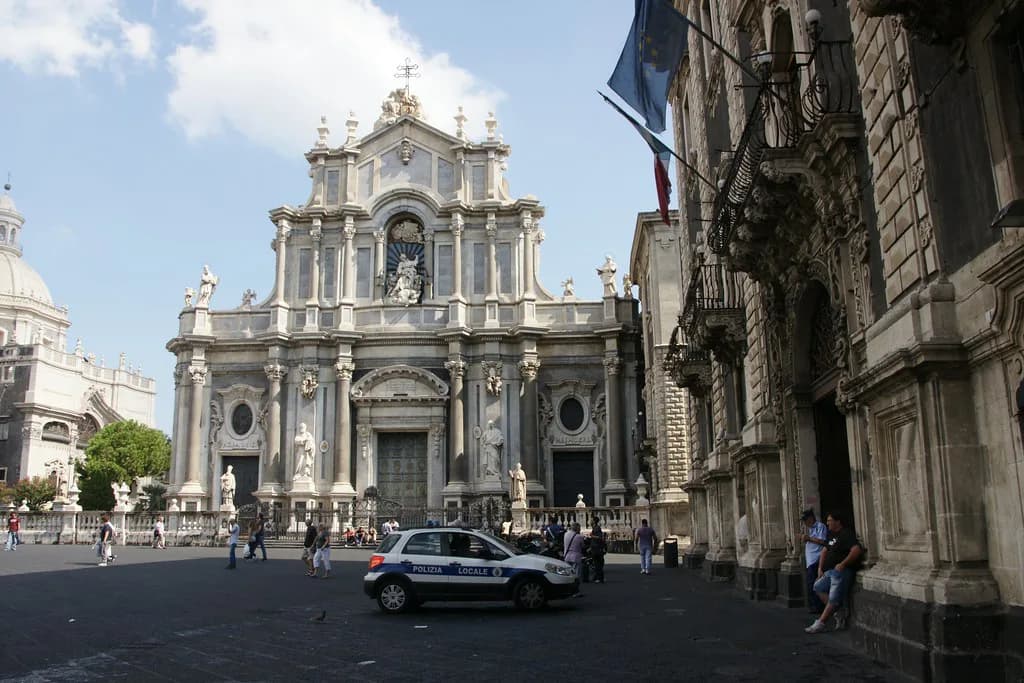
The castle fits neatly into a walking day that starts at the cathedral square. The city's Baroque heart, rebuilt after the 1693 earthquake, centres on Piazza del Duomo, where the elephant fountain and cathedral anchor the scene. From there you can wander north up Via Etnea toward the university and shopping stretch, or take in the hidden gems scattered through the centre before or after the museum.
If Roman remains interest you, the Teatro Romano di Catania and the Anfiteatro Romano di Catania make logical companions to the castle's archaeological collection, though they are separate sites with their own ticket arrangements. Do not assume the castle ticket covers them. Check each site's terms individually when you plan.
For a change of pace, the Basilica della Collegiata on Via Etnea offers a Baroque interior close to the main walking route, and it is easy to add before or after the castle. Check opening times at the door or on the parish's own notices, since church access often differs from museum access.
The fish market, La Pescheria, sits behind the cathedral square and runs Monday to Saturday, roughly from early morning to early afternoon, with Sunday closure reported by a local guide. If you want both the market and the museum in one day, put the market first while stalls are full and save the galleries for after lunch.
Practical Tips: Pacing, Skipping, and Who Will Enjoy It
Anyone with an interest in medieval architecture, archaeology, or the history of Sicilian institutions will get the most from the castle. Families may find the mix of weapons, carts and church relics more engaging than a pure art gallery. Travellers who dislike museums can still enjoy the exterior without buying a ticket.
Skip the attempt to see every display case. Pick two or three themes that interest you, read those labels properly, and move on. That approach leaves energy for the Baroque churches and streets that define Catania, which are spread across the centre and best seen on foot.
For more offbeat corners between museum stops, the city has underground Roman baths, street-art lanes and quiet chapels that many itineraries miss. These work well as short add-ons rather than full destinations, and the hidden gems in Catania guide suggests which fit your remaining hours.
Plan Your Visit
Castello Ursino works best when you decide in advance what you want from it: a fortress exterior, a collection, or both. Confirm the current hours and ticket terms on the museum's official site before you go, then build the visit into a walk that includes the cathedral square and the market. That sequence gives you a coherent half-day without rushing.
Leave room in your plan for the unexpected, whether that is a longer stay in the galleries or a detour into the surrounding lanes. The castle rewards curiosity more than speed, and the city around it rewards walking.
Frequently Asked Questions
Is Castello Ursino worth visiting in Catania?
It is worth it if you want both a medieval building and a museum in one stop. The castle is a Swabian fortress that now holds the city's civic collections, including the Biscari archaeological material. If you only want a photo, the exterior is enough; if you want context on Catania's history, go inside.
What is inside the Museo Civico Castello Ursino?
The museum displays the Biscari collections and material on the city's history, with subjects including Sicilian Parliament history, royal artifacts, monastery relics and painted carts. Visitor accounts also mention a decorated marble sarcophagus and Renaissance paintings. The collection is eclectic rather than focused on a single theme.
How long does it take to visit Castello Ursino?
A travel platform suggests one to three hours, but that is a third-party estimate rather than an official figure. An hour covers the highlights; two to three hours allows a slower read. Add time for the walk to and from the surrounding old town.
Why is Castello Ursino no longer next to the sea?
The castle originally stood on a promontory near the water. The lava flow of 1669 pushed the coastline back and left the fortress inland, which is why it now sits among streets. The change explains the unusual setting visitors notice today.
How do I check current tickets and opening hours for Castello Ursino?
Use the museum's official website or the Comune di Catania site, because prices and hours change and aggregator pages can be stale. Some listings show hours as to be announced or mark the site closed, which is not reliable. Check shortly before your visit, especially on holidays.
What else can I see near Castello Ursino?
The castle is in the historic centre, so Piazza del Duomo, the La Pescheria fish market and the Via Etnea walking route are natural companions. Roman sites such as the Teatro Romano and the Anfiteatro Romano are separate attractions with their own arrangements.
When was Castello Ursino built?
A travel guide dates construction to between 1239 and 1250 under Frederick II of Hohenstaufen. That dating comes from a third-party page rather than an official source, so treat it as background. The castle's military form and later history are the more reliable points to take away.
Do I need to book Castello Ursino tickets in advance?
Booking requirements are not confirmed by the available sources, so check the official museum site before you travel. Do not assume online tickets exist or that walk-in entry is guaranteed. The official site is the place to verify current practice.
Sources
- Museo Civico Castello Ursino
- Catania Museum / Castello Ursino | Erasmus blog Catania, Italy
- Ursino Castle Tickets [2026] - Promos, Prices, Reviews & Opening Hours | Trip.com
- Official event website
- Official event website
- Catania Fish Market (La Pescheria): A 2026 Local Guide
- Via Etnea, Catania: what to see and tips | ZonzoFox
- Cathedral Square - Piazza del Duomo
- A Local’s Favorite Things to Do in Catania — Go Ask A Local
Continue exploring
More guides you'll find useful