10 Best Florence Neighborhoods and Local Planning Tips (2026)
Best Florence neighborhoods to stay in — from Santa Croce's local vibe to Oltrarno's artisan streets. Find your perfect base with our local guide.
On this page
10 Best Florence Neighborhoods and Local Planning Tips (2026)
Your choice of neighborhood in Florence shapes your entire trip. The city is compact enough that you are never more than a forty-minute walk from end to end, yet each district has a personality sharp enough to feel like a separate village. A room in San Giovanni puts you fifty meters from the Duomo and deep in tourist noise. A room in the Oltrarno puts you across the river in a world of artisan workshops, quieter bars, and locals who actually live there.
This guide covers the eight neighborhoods worth considering, explains exactly who each one suits, and flags the one area you should avoid despite what most listicles recommend. All prices reflect 2026 averages and should be confirmed before booking, as spring and autumn rates in particular shift quickly.
Florence Planning Cheatsheet
Florence's historic center, the centro storico, is a UNESCO-listed area that sits tightly on both banks of the Arno River. Every neighborhood worth staying in falls within this boundary. The modern suburbs beyond the SS67 ring road are cheaper but bland and not worth the trade-off in atmosphere or walking distance.
Budget travelers do best in San Marco or the quieter streets behind Santa Maria Novella station, where doubles run EUR 90–160. Mid-range travelers have the most options in Santa Croce and the Oltrarno, typically EUR 150–320. Luxury options cluster along the Lungarno riverfront and in San Giovanni, where suites with Duomo views exceed EUR 500. Book spring and autumn dates at least four months out. Always confirm whether your building has a lift before committing — many historic palazzi do not.
| Neighborhood | Avg. Nightly Rate | Best For | Crowd Level |
|---|---|---|---|
| Santa Croce | €170–€350 | First-timers, aperitivo, local life | Medium |
| Oltrarno (Santo Spirito) | €150–€350 | Repeat visitors, artisan culture | Low–medium |
| Santa Maria Novella | €110–€230 | Rail day trips, value | Low–medium |
| San Marco | €90–€180 | Budget travelers, Accademia | Low |
| San Giovanni | €300–€500+ | Zero-walk to Duomo | Very high |
| Sant'Ambrogio | €130–€220 | Foodies, market culture | Low |
| San Lorenzo | €130–€250 | Central convenience, Mercato Centrale | Medium |
- Best for first-timers: Santa Croce
- Best for repeat visitors: Oltrarno (Santo Spirito sub-zone)
- Best for transport links: Santa Maria Novella
- Best on a budget: San Marco
- Best for foodies: Sant'Ambrogio
- Best for nightlife: Santo Spirito
- Best for market culture: San Lorenzo
- Avoid unless you have no choice: San Giovanni
Overview of Florence's Layout
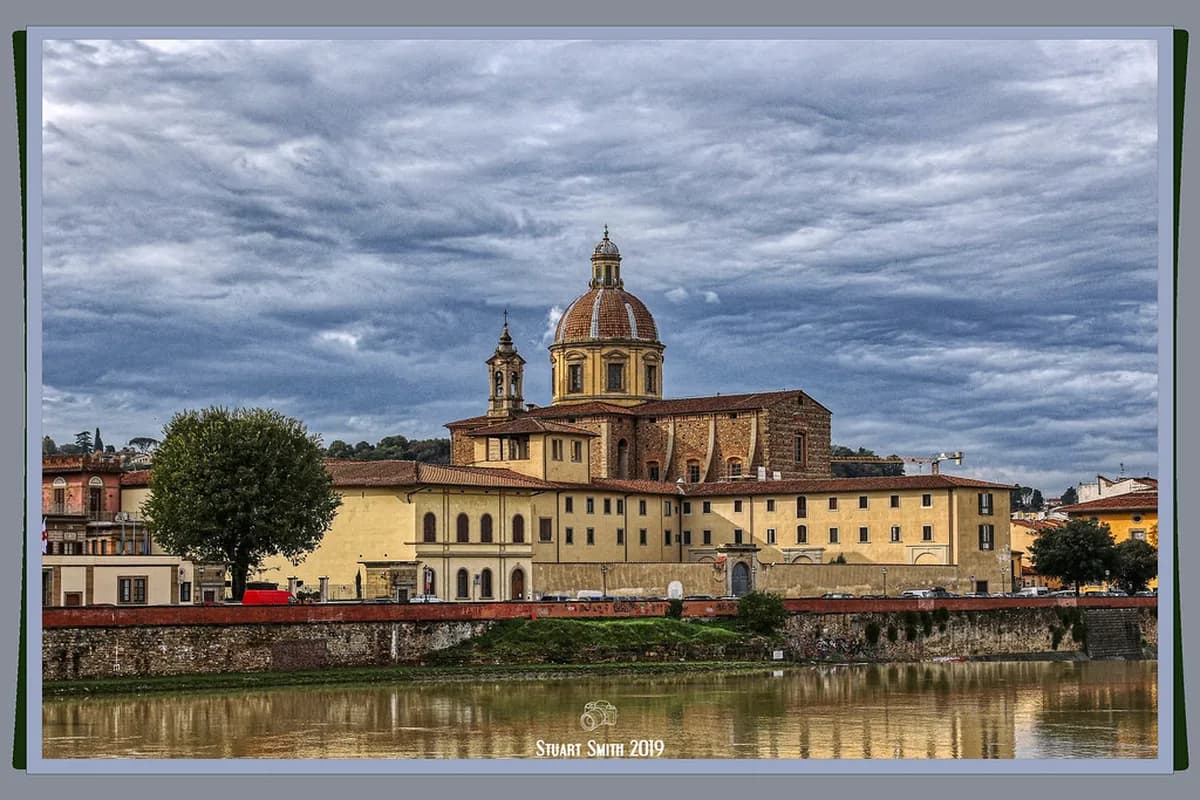
The Arno River bisects the city and is the single most useful piece of orientation information you need. The majority of the famous museums — the Uffizi, the Accademia, the Bargello — sit on the northern bank, as do the Duomo, the Piazza della Repubblica, and the city's main commercial streets. The southern bank, the Oltrarno, contains the Pitti Palace, Boboli Gardens, and a much quieter version of Florentine life.
Four main bridges cross the Arno within the historic center. The most famous, Ponte Vecchio, connects San Giovanni on the north to Santo Spirito on the south and is always walkable. From the Duomo to Ponte Vecchio takes about eight minutes on foot. From Ponte Vecchio to the Pitti Palace takes another six. This is how compact Florence is — your neighborhood choice is really about atmosphere and price, not about access.
A common confusion is that travel articles treat "the historic center" as synonymous with San Giovanni, the neighborhood immediately around the Duomo. That is wrong. The entire centro storico is historic. Whether you stay in Santa Croce, San Marco, or the Oltrarno, you are in the Renaissance core of the city. For more on non-touristy experiences in Florence, the areas just outside the main cluster of museums repay the most attention.
Santa Croce: The Best All-Rounder Base
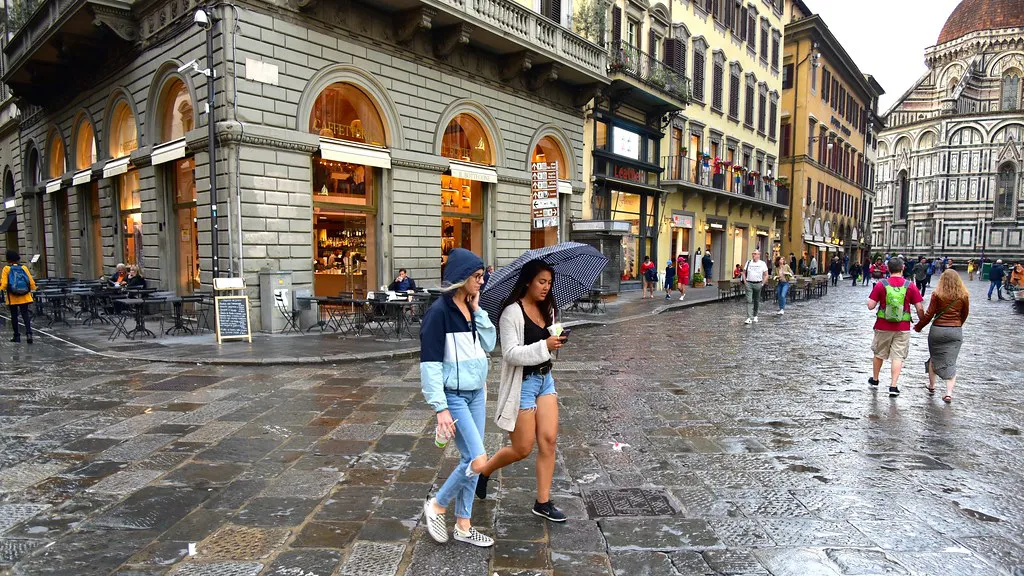
Santa Croce sits on the eastern side of the centro storico and is consistently the most balanced recommendation for first-time visitors. It is central without being suffocating, lively without being purely tourist-facing, and close enough to the Uffizi and Duomo that you can walk to either in under fifteen minutes. Locals still live here in meaningful numbers — upscale families and professionals rather than students — and that keeps the ground-floor economy interesting: good coffee bars, independent wine shops, genuinely excellent trattorias.
In Santa Croce, well-located doubles typically run €170–€350 per night. Book a rear-facing room if you are a light sleeper — the streets near the river get noisy with aperitivo crowds from around 18:00 onwards.
The neighborhood anchors around the Basilica di Santa Croce, which is flanked by a large piazza that becomes the social center of the area from about 18:00 onwards. The streets between the basilica and the river, particularly Via dei Benci, fill with aperitivo crowds every evening. If you want that energy, stay close to the river. If you prefer a quieter night, book closer to the Piazza d'Azeglio or the Sant'Ambrogio market zone in the north of the district.
The leather school inside the basilica complex sells handmade goods at fair prices and is one of the few souvenir options in the city worth the money. The main downside of Santa Croce is cost: well-located doubles typically run EUR 170–350, and the area does get noisy after dinner. Light sleepers should request a rear-facing room.
Oltrarno: Authentic Artisan Atmosphere
The Oltrarno district is the southern bank as a whole, and it has long been the working heart of Florentine craft production. Bookbinders, goldsmiths, picture framers, and furniture restorers still operate out of small street-level workshops, many open to visitors during business hours of roughly 09:00–18:00 on weekdays. The neighborhood is quieter than the north bank, greener, and less dominated by tour groups. It is a better recommendation for repeat visitors or anyone for whom museum-hopping is not the main agenda.
The Oltrarno is not one uniform zone — it is made up of three distinct sub-neighborhoods, and choosing the right one matters more than competitors usually acknowledge. Santo Spirito, between Ponte Vecchio and Porta San Frediano, is the most energetic: Piazza Santo Spirito fills with locals from early evening, the antique market runs on the second Sunday of each month, and bar-hopping is genuinely enjoyable. It is the best choice for travelers who want a bohemian atmosphere with easy access to the main city center sights via Ponte Vecchio. San Niccolò, at the foot of the hill toward Piazzale Michelangelo, is more upscale and gallery-heavy, suits couples looking for a boutique-hotel feel, and sits about twelve minutes on foot from the Uffizi. San Frediano is the westernmost zone, the most genuinely residential, with shops and restaurants aimed at locals rather than visitors — ideal if minimizing tourist crowds is the priority, but it adds a longer walk to the major sights.
Also worth knowing: the buchette del vino, small stone wine windows set into palazzo facades, are found throughout the Oltrarno. Several remain active and serve glasses of local Chianti directly onto the street. These are not tourist installations — they date from the seventeenth century and are a genuinely Florentine detail that no other Italian city has preserved at this scale. Accommodation runs EUR 140–320 for mid-range; the Lungarno riverfront hotels push considerably higher.
Santa Maria Novella: Transport and Value
Santa Maria Novella is the neighborhood built around Florence's main train station of the same name. The area directly adjacent to the station platforms is functional rather than beautiful, and the streets immediately north and west of the tracks are best avoided at night. But the portion of the neighborhood south of the station — toward the Basilica di Santa Maria Novella and the river — is a different story: elegant, walkable, and home to some of the better value-for-money hotels in the center.
The real advantage of this zone is rail convenience. Day trips to Pisa (1 hour), Siena (1.5 hours by bus from nearby Piazza Gramsci, or 1.5 hours by train via Empoli), Lucca (1.5 hours), and Cinque Terre (2–3 hours) all depart from Santa Maria Novella station. If your Florence stay is partly a base for Tuscan exploration, being within five minutes' walk of the platforms makes a real logistical difference. It also happens to put you next to the Officina Profumo-Farmaceutica di Santa Maria Novella, one of the oldest pharmacies in the world (open 10:00–19:30), which is worth a visit regardless of where you're staying.
Hotel rates in this zone average EUR 110–230, meaningfully lower than Santa Croce or San Giovanni. The upscale shopping street Via de' Tornabuoni, with its designer boutiques, runs along the eastern edge of the neighborhood and marks the border with San Giovanni.
San Marco: Quiet and Budget-Friendly
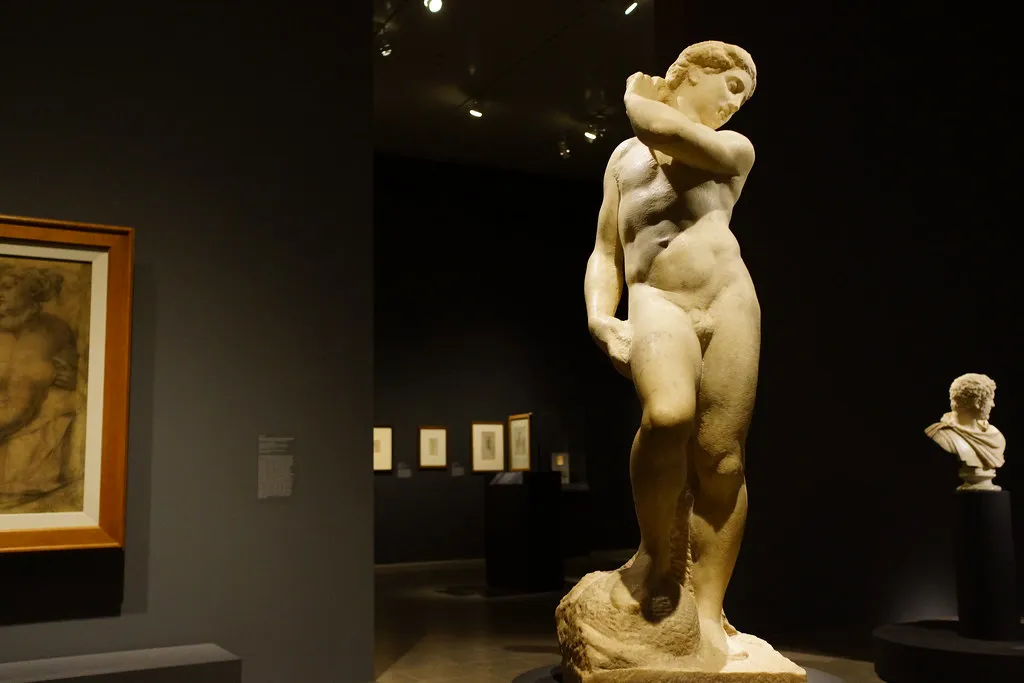
San Marco occupies the northeastern corner of the historic center, immediately north of the Duomo. The Accademia Gallery — home to Michelangelo's David — is here, as is the Museo di San Marco with its Fra Angelico frescoes. The University of Florence's main campus runs through the neighborhood, giving it a more residential and academic atmosphere than the tourist-saturated zones to the south and west.
The streets around the Accademia queue can be chaotic during opening hours, but one block away the neighborhood calms considerably. Piazza della Santissima Annunziata is one of Florence's most elegant squares and sits in San Marco — it is genuinely undervisited relative to its quality. The area toward Piazza della Libertà in the north of the district has good local restaurants with no tourist-menu pricing.
Budget travelers will find the best deals in the center here: doubles at well-reviewed guesthouses start around EUR 90–100, and several B&Bs in the EUR 120–180 range have strong track records. The main drawback is that San Marco is the least architecturally striking of the central neighborhoods and sits slightly further from the river and nightlife. It works best for visitors whose priority is the Accademia and Uffizi rather than evenings out.
San Giovanni: The Tourist Epicenter (And Why to Think Twice)
San Giovanni is the neighborhood that surrounds the Duomo, and it is where most first-time visitors instinctively book. The logic is obvious: the Baptistery, the Cathedral, the Campanile, Piazza della Signoria, and the Uffizi are all here or within a five-minute walk. The architecture is extraordinary. But staying here extracts a real cost in daily experience that the obvious logic tends to obscure.
San Giovanni room rates routinely exceed €450 in peak season and restaurants in the immediate Duomo/Uffizi zone are priced for tourists who will not return. Staying 10 minutes away in Santa Croce or San Frediano provides better value without sacrificing walkability.
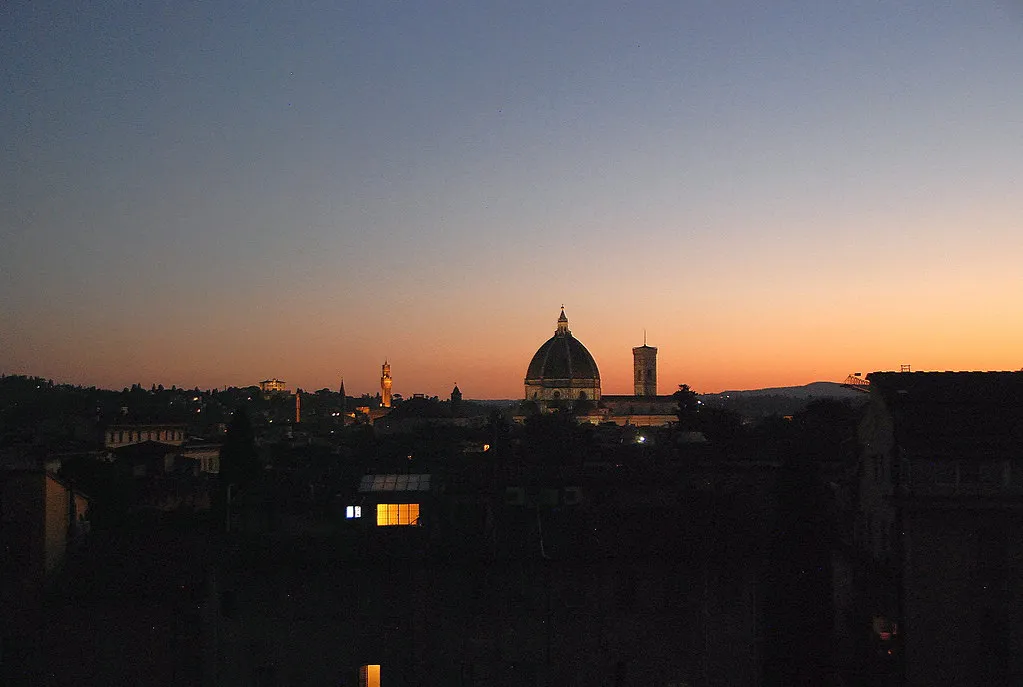
Prices are the highest in the city — rooms with Duomo views routinely exceed EUR 450 in peak season, and budget options are rare. The streets between the major monuments are so dominated by tour groups from 09:00 to 19:00 that moving through them feels like being in a theme park queue. Restaurants in the immediate vicinity of the Piazza del Duomo and the Uffizi are almost universally priced for tourists who are not coming back. Noise at night is also a genuine problem in the pedestrian zones.
None of this means San Giovanni is unusable. It is the best choice if you genuinely want zero walking distance to the Duomo or if accessibility needs make proximity to a specific sight non-negotiable. But for most visitors, staying a ten-minute walk away in Santa Croce or San Frediano provides better sleep, better coffee, and better restaurant value, while keeping every major sight reachable on foot. For more honest local perspectives, Go Ask A Local's Florence neighborhood guide makes the same case in detail.
Sant'Ambrogio: The Local Foodie Secret
Sant'Ambrogio occupies the northern end of the Santa Croce district and functions as a neighborhood within a neighborhood. Its anchor is the Mercato di Sant'Ambrogio, an indoor and outdoor market open daily from 07:00 to 14:00, which sells fresh Tuscan produce, aged cheeses, dried porcini, and good charcuterie at prices aimed at local shoppers rather than tourists. This is the real market experience that many visitors assume the more famous San Lorenzo market provides but does not.
The square and streets around the market hold some of the most consistently good-value restaurants in the centro storico. Lampredotto — a tripe sandwich that is Florence's signature street food — is sold from the market's outdoor stalls and is the single best EUR 4 you can spend in the city. The neighborhood has a quieter, more residential tempo than the rest of Santa Croce: bakeries, a local pharmacy, a hardware shop, regular faces. Accommodation here averages EUR 130–220, and the positioning gives easy walking access to both the river bars and the Accademia. For a deeper look at daily life in the area, the Marissa Klurstein guide to Sant'Ambrogio is worth reading before you arrive.
San Lorenzo: Markets and Central Convenience
San Lorenzo sits immediately northwest of the Duomo and is bisected by two very different market experiences. The outdoor leather and souvenir stalls along Via dell'Ariento and the surrounding streets are aimed entirely at tourists — the quality is variable and the pressure selling can be tiresome. The Mercato Centrale immediately behind them is the opposite: a genuine working food market on the ground floor (open 07:00–14:00 Monday through Saturday), topped by a modern food hall on the upper level that runs until midnight and houses dozens of vendors selling quality Florentine food in a relaxed setting.
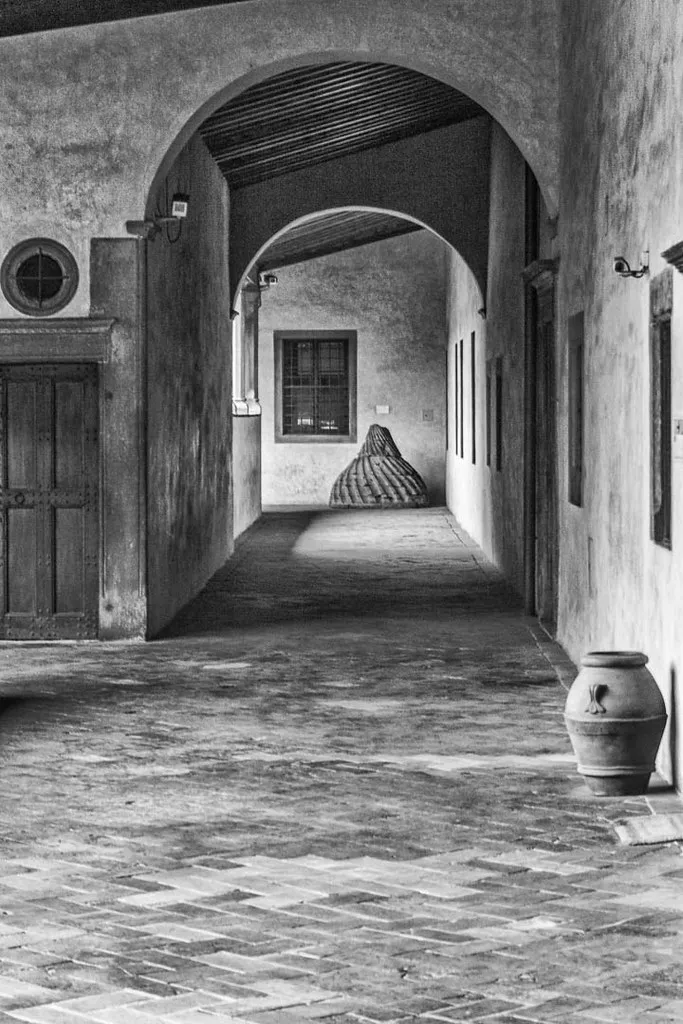
The Basilica di San Lorenzo and the attached Medici Chapels are significant sights that most visitors underestimate — the New Sacristy contains Michelangelo sculptures of comparable quality to his more famous works elsewhere. Staying in San Lorenzo puts you four minutes from the Duomo and five from the train station, making it the most logistically central option in the city. Hotel rates average EUR 130–250, lower than San Giovanni despite the equivalent proximity to sights.
Santo Spirito: The Trendy Nightlife Hub
Santo Spirito is technically a sub-zone of the Oltrarno but merits its own treatment because its character is distinct enough to affect your decision. The neighborhood centers on Piazza Santo Spirito, a large informal square where locals gather on the church steps from 18:00 onwards for aperitivo. The bar scene here is the best aperitivo in Florence for anyone who wants to drink alongside Florentines rather than other tourists. The vibe has been compared to Trastevere in Rome, though it is more compact and, at the moment, less commercialized.
The square hosts an antique market on the second Sunday of each month and an organic food market on the third Sunday. These are not staged for visitors — they draw genuine buyers from across the city. The area is louder at night than other Oltrarno sub-zones, which is either a feature or a problem depending on your priorities. Families and couples who want calm evenings should stay on the east side of Santo Spirito closer to Ponte Vecchio, where the streets are quieter and the access to the Uffizi is more direct. Lodging here ranges from EUR 150–350, though the older building stock means fewer modern amenities than equivalent price points on the north bank.
What Travel Blogs Get Wrong About Florence
The most common error in Florence neighborhood guides is equating "the historic center" with San Giovanni. This conflation implies that staying anywhere else means being outside the Renaissance city, which is simply incorrect. The entire centro storico — Santa Croce, San Marco, Santa Maria Novella, the Oltrarno — is historic. Whether you are next to the Accademia in San Marco or walking the artisan lanes of San Frediano, you are in the same UNESCO-listed urban core as the Duomo.
A second common mistake is recommending Piazzale Michelangelo as a casual evening stroll from the Oltrarno. The climb is steep and takes twenty-five to thirty minutes at a reasonable pace. Taking the number 13 bus from Lungarno Serristori up and walking back down is a much more sensible approach, especially in summer heat.
A third mistake is treating the area around the train station as uniformly gritty or unsafe. The streets immediately north and west of the platforms deserve caution after dark. But the zone between the station and the river — the actual Santa Maria Novella neighborhood — is elegant, walkable, and home to some of the center's best mid-range hotels.
Frequently Asked Questions
Which Florence neighborhood is best for first-time visitors?
Santa Croce is the best all-rounder for first-timers because it balances central access with a lively local atmosphere. It is within walking distance of the Duomo but offers better dining and nightlife options than the immediate tourist center.
Is it better to stay north or south of the Arno River?
Stay north if you want to be steps away from the major museums and high-end shopping. Choose the south bank, or Oltrarno, if you prefer a quieter, more artisan-focused vibe with fewer crowds and more authentic workshops.
What is the most affordable area to stay in Florence?
San Marco and the area surrounding the Santa Maria Novella train station offer the best budget options. These neighborhoods provide a wide range of hostels and simple guest houses while remaining close to the city's main attractions.
Choosing between the various Florence neighborhoods ultimately depends on whether you value convenience, authenticity, or budget. The city's small size ensures that you are never truly far from the action, regardless of where you choose to sleep. I always suggest venturing across the river at least once to experience the slower pace of the Oltrarno.
Remember that the best part of Florence is often found in the unplanned moments between the famous sights. Take the time to wander without a map and discover your own favorite corner of this timeless Renaissance city. For more planning help, check out this guide from Marissa Klurstein - Sant'Ambrogio Guide for a deep dive into local life.
Continue exploring
More guides you'll find useful