Granada Neighborhoods Guide: Albaicín, Sacromonte, Realejo, and Beyond (2026)
A 2026 granada neighborhoods guide comparing Albaicín, Sacromonte, Realejo, Centro, and Zaidín for vibe, noise level, and accessibility.
On this page
Granada Neighborhoods Guide: Where to Stay and Explore in 2026
Last updated July 2026, this granada neighborhoods guide breaks down Granada's distinct barrios so you can decide where to base yourself, eat, and wander. Moorish, Jewish, and Christian layers of history sit within a compact center, though terrain varies sharply, from flat, commercial Centro to the cobbled climbs of the Albaicín and Sacromonte. Five neighborhoods anchor most visits: Albaicín, Sacromonte, Realejo, Centro and Sagrario, and Zaidín and La Chana.
How to Use This Granada Neighborhoods Guide
Granada's center layers Moorish, Jewish, and Christian history within a compact area, but the flat map hides real differences in terrain and character from block to block. Each section below covers the same four criteria: atmosphere, who the district suits best, walking or bus connectivity to the center, and typical noise level. Verticality is the biggest practical factor to plan around, since the Albaicín and Sacromonte both require sustained uphill walking that Centro, the Realejo, and Zaidín mostly avoid. This guide pairs with our broader roundup of lesser-known corners of Granada for readers who want to go beyond these five districts.
- Albaicín: Moorish history and hillside viewpoints, best for first-timers comfortable with hills
- Sacromonte: cave houses and flamenco, best for a focused half-day or evening visit
- Realejo: street art and tapas bars, best for a local residential base close to the center
- Centro and Sagrario: landmark sightseeing, best for minimal walking and easy access
- Zaidín and La Chana: free-tapas culture and lower prices, best for budget travelers
Albaicín: Granada's Moorish Hillside
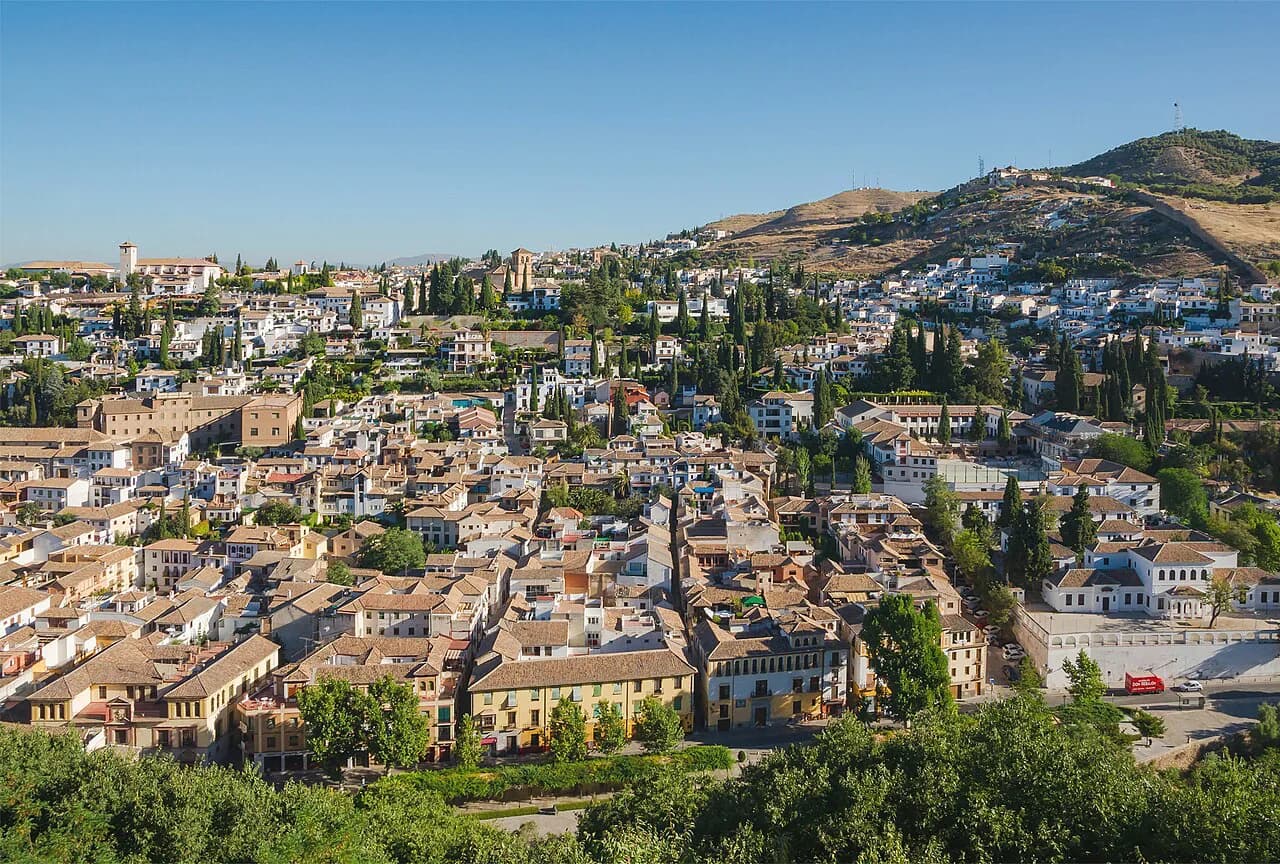
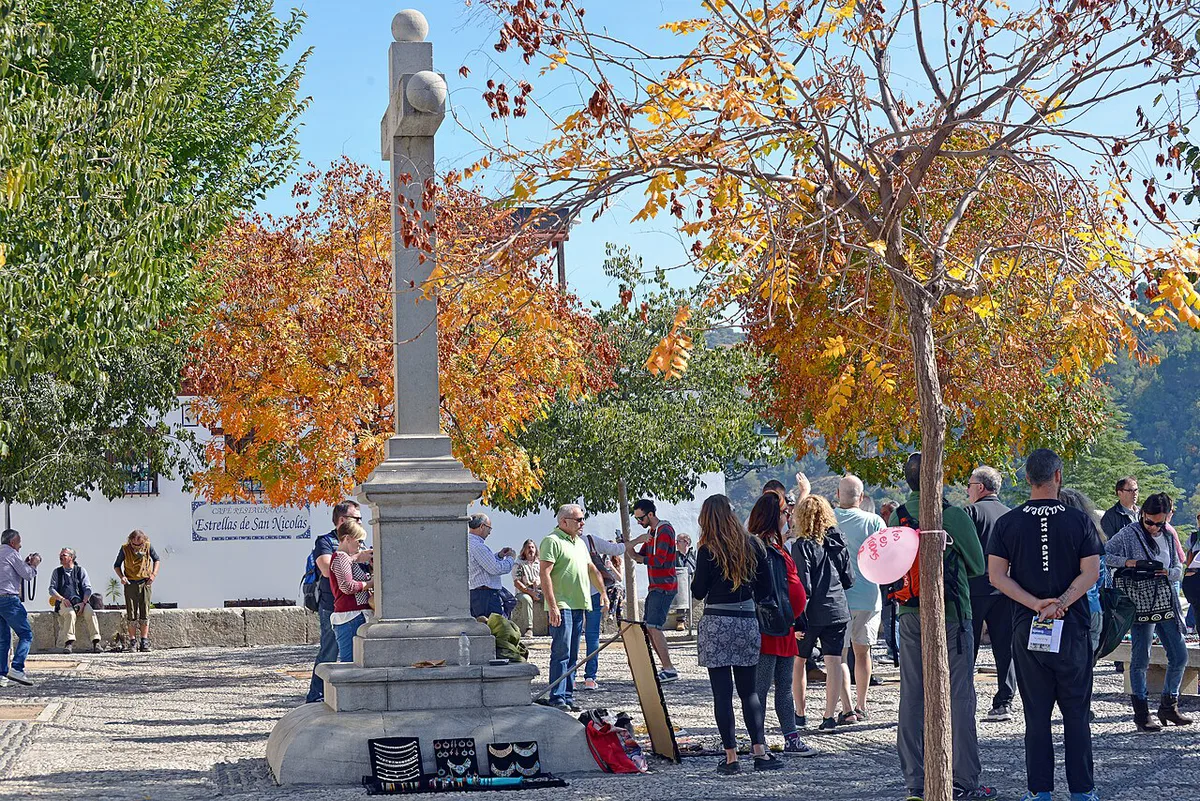
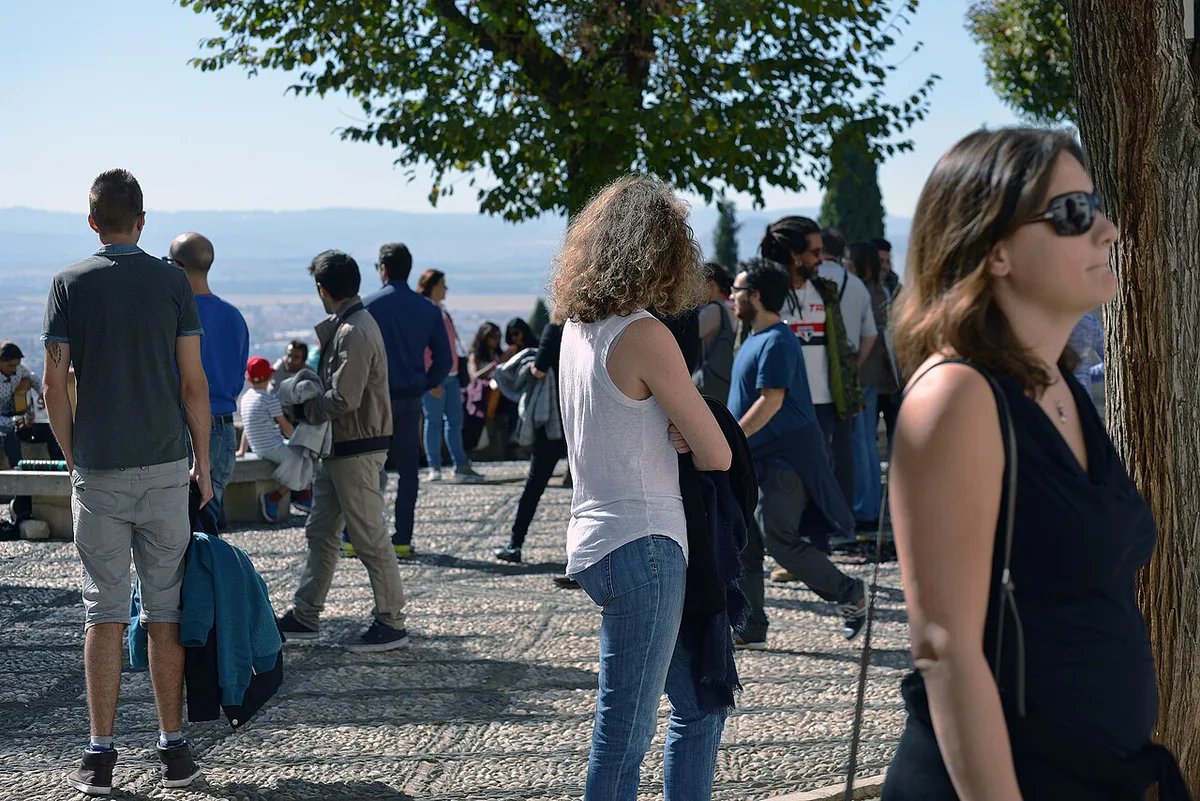
The Albaicín climbs the hillside directly opposite the Alhambra, filled with narrow, winding alleys, jasmine-scented squares, and white-washed houses. Its two best-known viewpoints, the Mirador de San Nicolás and the Mirador de San Cristóbal, anchor most walking routes through the district. Near the base of the hill, the El Bañuelo bathhouse preserves one of the city's Moorish-era hammams. Cobblestones make rolling luggage difficult. The lanes stay steep throughout, and the main viewpoints draw crowds around sunset. Noise generally fades the higher you climb, dropping from traffic near the base to quiet lanes after dark. Reaching the district usually means a sustained uphill walk from the center, since most streets are too narrow and steep for regular bus routes. The Albaicín suits first-time visitors chasing Moorish history and travelers comfortable with stairs and hills, but it works less well for anyone with mobility limitations, heavy luggage, or a stroller. For a fuller street-by-street breakdown, see the Albaicín neighborhood guide.
Sacromonte: Cave Houses and Flamenco Roots
Sacromonte sits on the hillside next to the Albaicín, known for cave houses cut directly into the rock. The district is considered the birthplace of Zambra, a flamenco style traditionally performed inside these caves. A handful of cave museums document local heritage and daily life, and count among Granada's under-the-radar spots. Dining options thin out compared with the center, and the return walk after dark takes more planning than in flatter districts. Connectivity relies mainly on the C-line minibuses covered later in this guide, since the walk from the center is long and steep. Noise levels stay low outside the cave-flamenco venues, making Sacromonte one of the quieter districts after early evening. It suits travelers most interested in flamenco, cave-house history, and sunset views over the Albaicín and Alhambra, and less those wanting late-night dining choices within walking distance. For flamenco shows, cave-house details, and walking routes, see the Sacromonte neighborhood guide.
Realejo: The Old Jewish Quarter's Tapas Scene
The Realejo was Granada's historic Jewish quarter, and today it mixes street art with a residential, local feel. Murals by the artist El Niño de las Pinturas cover several building facades, making a self-guided mural walk one of the city's unusual things to do. The Carmen de los Mártires gardens and the square at Campo del Príncipe both sit within the district. Terrain here mixes flat stretches with short, steep climbs, milder than the sustained ascent into the Albaicín. The area feels less touristy than the historic center while staying within easy walking distance of it. Noise stays moderate: busy around tapas bars in the evening, quieter on residential side streets. Realejo suits travelers who want a local, residential base without giving up central access, plus visitors focused on street art and neighborhood tapas bars. Tapas bars cluster around Campo del Príncipe. For the full district map, see the Realejo neighborhood guide.
Centro and Sagrario: The Cathedral District
Centro and Sagrario form Granada's flat, commercial core, built around the Cathedral and the Royal Chapel. The Alcaicería market sits near both landmarks, lined with narrow shopping lanes. Wandering the Alcaicería's lanes and viewing the Cathedral's exterior cost nothing, and both rank among Granada's no-cost activities. Streets here stay level, making this the most wheelchair- and stroller-accessible district in the city. Connectivity is the simplest of any district covered here, since most major sights sit within a short, flat walk of each other. That same convenience brings dense foot traffic by day and noise near the main squares after dark, especially around bars and restaurants. Chain stores now sit alongside centuries-old facades, a trade-off for the district's central location. Centro suits first-time visitors who want to minimize walking distance to major landmarks, and travelers who prioritize easy access over a quieter, more local atmosphere.
Zaidín and La Chana: Local Tapas and Budget Stays
Zaidín and La Chana sit outside the historic core, both built up mostly in the decades after the Spanish Civil War as residential neighborhoods. Locals point to Zaidín's bars for Granada's most generous free tapas, where a single drink order often comes with a substantial plate of food. That tradition, combined with lower accommodation prices than the center, makes the district a favorite among budget travelers and readers chasing off-the-beaten-path picks. Flat streets and a short bus ride from the center make Zaidín easy to reach without tackling any of the Albaicín's hills. Noise stays low to moderate, concentrated around tapas bars rather than tourist landmarks. Connectivity depends on city buses rather than walking, since the district sits well beyond comfortable walking range of the historic core. Zaidín and La Chana suit budget-focused travelers, repeat visitors, and anyone prioritizing a resident-level look at the city over proximity to the Alhambra. For a bar-by-bar breakdown, see the Zaidín neighborhood guide.
Zaidín's bars deliver Granada's most generous free-tapa culture, where a single drink comes with a substantial plate—a distinction that sets Granada apart from Seville and Madrid, where tapas typically cost extra.
Getting Between Granada's Neighborhoods
Granada's historic center is compact enough to cross largely on foot, but the Albaicín and Sacromonte add real elevation that flat-city visitors may not expect. Local C-line minibuses link these hillside districts to the rest of the city and run frequently through the day. As of 2026, fares generally load onto the reloadable Credibús card rather than single paper tickets, so confirm current fares and routes before boarding. Travelers splitting a stay between a hillside district and Centro often find a short bus ride more comfortable than a repeated uphill walk.
Visitors bound for Albaicín's San Nicolás and San Cristóbal viewpoints or Sacromonte's cave houses must use C-line minibuses, as 2026 fares require the Credibús card—regular buses can't access these steep hillside districts.
- C31 and C32 minibuses: among the routes that climb into the Albaicín and Sacromonte hillsides
- Additional C-line routes: reach other elevated districts around the city
- Credibús card: the rechargeable fare system used on Granada's city buses
- Walking: workable for Centro, Realejo's lower streets, and Zaidín, but not recommended uphill with luggage
When to Visit and Where to Eat Across Granada
Timing affects how crowded the Albaicín's viewpoints and the Alhambra approach roads feel. For a season-by-season breakdown, see when to visit with fewer crowds. Across every district, ordering a drink at a bar typically comes with a free tapa. That custom sets Granada apart from cities like Seville and Madrid, where tapas are usually ordered and paid for separately. Expect the free tapa to scale roughly with your drink order, though the bar chooses the dish, not the customer. Realejo and Zaidín built strong tapas-bar reputations, while Centro mixes tourist-facing restaurants with long-standing local kitchens. For dish-by-dish recommendations, see the local food scene guide. For specific addresses by neighborhood, see the local restaurant picks guide.
Extending Your Stay: Day Trips and Beyond
Granada's five core districts do not cover everything worth a half-day or full-day trip. The Cartuja Monastery sits beyond the historic center and makes a manageable add-on for travelers with an extra few hours. The surrounding region offers additional day-trip options for longer stays. For a full rundown, see day trips from Granada. Extending a stay by even one extra day gives enough time to add either the monastery or a nearby day trip without rushing the five core neighborhoods covered above.
Which Granada Neighborhood Fits Your Trip
The table below summarizes each district's strengths, noise level, and accessibility, based on the vibe and terrain details covered above.
| Neighborhood | Best For | Noise Level | Accessibility |
|---|---|---|---|
| Albaicín | First-timers wanting Moorish history and viewpoints | Moderate to high near viewpoints, quiet higher up | Steep, cobbled; not stroller- or wheelchair-friendly |
| Sacromonte | Flamenco shows and cave-house history | Low outside flamenco venues | Steep, remote; relies on C-line buses |
| Realejo | Street art, tapas bars, a residential feel | Moderate, busier near tapas bars | Mixed flat and steep streets, central |
| Centro and Sagrario | First-time sightseeing, landmark architecture | High, especially at night | Flat; the most accessible district |
| Zaidín and La Chana | Budget travelers, free-tapas culture | Low to moderate | Flat, short bus ride from center |
- Most itineraries combine at least two districts: a hillside stay or visit for Moorish history, paired with time in Centro or the Realejo for practical convenience
- Match the trade-offs above to your fitness level, luggage, and appetite for stairs before booking accommodation
Albaicín’s Tetería Culture
Lower Albaicín has a distinct North African-influenced tea-house scene that differs from Realejo’s tapas bars and street art. The main cluster occupies Calle Calderería Nueva, often called the street of the teterías, between Calle Elvira and the hillside lanes.
Traditional teterías serve teas flavored with mint, cinnamon, cardamom, or orange blossom. Many also offer Moroccan pastries, savory dishes, and low seating beneath carved lamps. The atmosphere is busiest during the late afternoon and evening, when the narrow street fills with diners and shoppers.
This area is easier to reach than upper Albaicín. Approach from Calle Elvira to avoid a long climb, although Calderería Nueva still has a noticeable slope and uneven paving. The shops can feel crowded, so travelers using wheelchairs or strollers may prefer nearby Plaza Nueva.
For a quieter break, continue uphill toward Placeta de San Gregorio or Plaza de San Miguel Bajo. These squares provide more space and a calmer neighborhood atmosphere beyond the busiest commercial lane.
Further reading: Granada on Wikivoyage · Granada on Wikipedia
Frequently Asked Questions
Which neighborhood is best for staying near the Alhambra?
The Albaicín sits on the hillside directly opposite the Alhambra, making it the closest of the five core districts in terms of sightline and short-hop access. The trade-off is elevation: expect a sustained uphill walk or a C-line minibus ride from the center, plus cobblestone streets that are hard on wheeled luggage.
Is Granada walkable, or do you need public transport?
Centro, the Realejo, and Zaidín are flat enough to cover on foot for most travelers. The Albaicín and Sacromonte add real elevation, and C-line minibuses exist specifically to connect those hillside districts to the rest of the city. Plan for a mix of walking and short bus rides rather than assuming the whole city is flat.
Where can you find the best free tapas in Granada?
Zaidín and La Chana have the strongest local reputation for generous free tapas, where ordering a drink typically comes with a substantial plate of food. This differs from cities like Seville or Madrid, where tapas are usually ordered and paid for on their own. Realejo also has a strong tapas-bar scene closer to the center.
Is the Albaicín safe at night?
The Albaicín's main viewpoints and connecting lanes see steady foot traffic into the evening, particularly around sunset. Side alleys away from the main routes get quieter and darker after dark. Stick to well-traveled streets, watch your footing on the cobblestones, and use the same general precautions you would in any historic quarter with narrow, unevenly lit lanes.
Are the Albaicín and Sacromonte accessible with a stroller or wheelchair?
Generally, no. Both districts rely on steep, cobbled lanes and uneven stone steps that are difficult even with a light daypack, let alone a stroller or wheelchair. Centro, Sagrario, and most of Zaidín stay flat and are far easier options for travelers who need level ground.
How many neighborhoods should a first Granada visit try to cover?
Most first-time visitors comfortably cover the Albaicín, Centro and Sagrario, and the Realejo in two to three days, since all three sit close enough together to combine on foot with occasional bus rides. Sacromonte and Zaidín work well as a half-day extension or a second visit, since both sit farther from the historic core.
Continue exploring
More guides you'll find useful