Foz do Douro Porto: The Ultimate Coastal Neighborhood Guide
Discover Foz do Douro, Porto's most elegant district. Our guide covers the historic Linha 1 tram, the best Atlantic beaches, luxury boutiques, and top-rated dining.
On this page
Foz do Douro Porto: The Ultimate Coastal Neighborhood Guide
Foz do Douro sits at the western edge of Porto where the river finally surrenders to the Atlantic Ocean. This upscale district feels entirely different from the busy tile-covered streets of the historic centre. Visitors often arrive expecting a beach suburb and leave surprised by how much the area rewards a full day. The contrast between crashing Atlantic waves and the calm Douro estuary is the defining sensation of the whole neighbourhood.
Exploring the Porto neighborhoods guide shows how Foz stands apart from every other district in the city. It is simultaneously the most prestigious residential address in Porto and one of its most photogenic corners. The lighthouse, the neo-classical pergola, the cobbled old village, and the seafront promenade all sit within comfortable walking distance of each other. Our guide covers every essential stop plus a few details that most visitors never hear about.
What is Foz do Douro? (The Meeting of River and Sea)
The name means exactly what it says: foz is the Portuguese word for river mouth. The Douro, which begins in the mountains of Castile and winds 900 km through the Iberian Peninsula, ends its journey here. On calm days the boundary between brown river water and grey-green Atlantic swells is visible from the jetty. On stormy days the two bodies of water collide in a spectacular display of spray and foam that locals gather to watch.
The district divides naturally into two very different zones. Along the waterfront you find wide promenades, beach clubs, and the grand Atlantic-facing architecture that locals call the Foz Nova. Tucked a few blocks inland is Foz Velha, the original fishing village with narrow streets, low whitewashed houses, and hand-painted tile facades that have barely changed since the 19th century. Most visitors see only the seafront; the old village is where the real character lives.
Discover secret spots in Porto by heading straight into Foz Velha before you walk the promenade. The lanes around Largo da Igreja are quiet, full of hydrangea-covered walls, and almost entirely free of tourists. Residents here are fishermen's descendants who have watched the neighbourhood become one of Portugal's most expensive postcodes without losing the village feel at street level.
How to Get to Foz do Douro from Porto
The Linha 1 tram is the most scenic option and runs from the Infante stop near Cais da Ribeira all the way to the Passeio Alegre terminus. The ride takes about 25 to 35 minutes and costs €6 for a single journey. What no tram guide will tell you is that the queue has no formal line. Families with strollers and tour groups regularly push to the front, and first-time visitors frequently miss the first car and wait 20 minutes for the next. If you are on a schedule, take a different option and save the tram for a relaxed afternoon when you don't mind the wait.
Bus 500 follows essentially the same riverbank route and is significantly more reliable. The double-decker service runs frequently from São Bento and the upper deck offers views that rival the tram at a fraction of the price. An Uber or taxi from the city centre costs roughly €7 to €10 and takes 10 to 15 minutes. For groups of three or more, the taxi is often the most cost-effective and least stressful choice.
A less-discussed option is arriving by private boat from Ribeira. Several operators run yacht and catamaran cruises that finish at the river mouth near Foz, letting you see the Porto skyline recede as you approach the Atlantic. It turns transit into an experience. Walking is possible in about an hour along the riverside path if the weather is good, and cycling is excellent — rental shops near São Francisco church charge around €12 for a full day.
- Linha 1 tram from Infante stop — scenic, 25–35 minutes, €6, often crowded in summer
- Bus 500 from São Bento — frequent, upper-deck views, standard fare, less crowded than the tram
- Uber or taxi — 10–15 minutes, €7–10, best for groups or anyone on a tight schedule
- Private boat cruise from Ribeira — premium experience, turns the journey into a highlight
- Bicycle — roughly €12/day from Ribeira rental shops, flat riverside path all the way to Foz
Must-See Attractions: Lighthouses, Forts, and Gardens
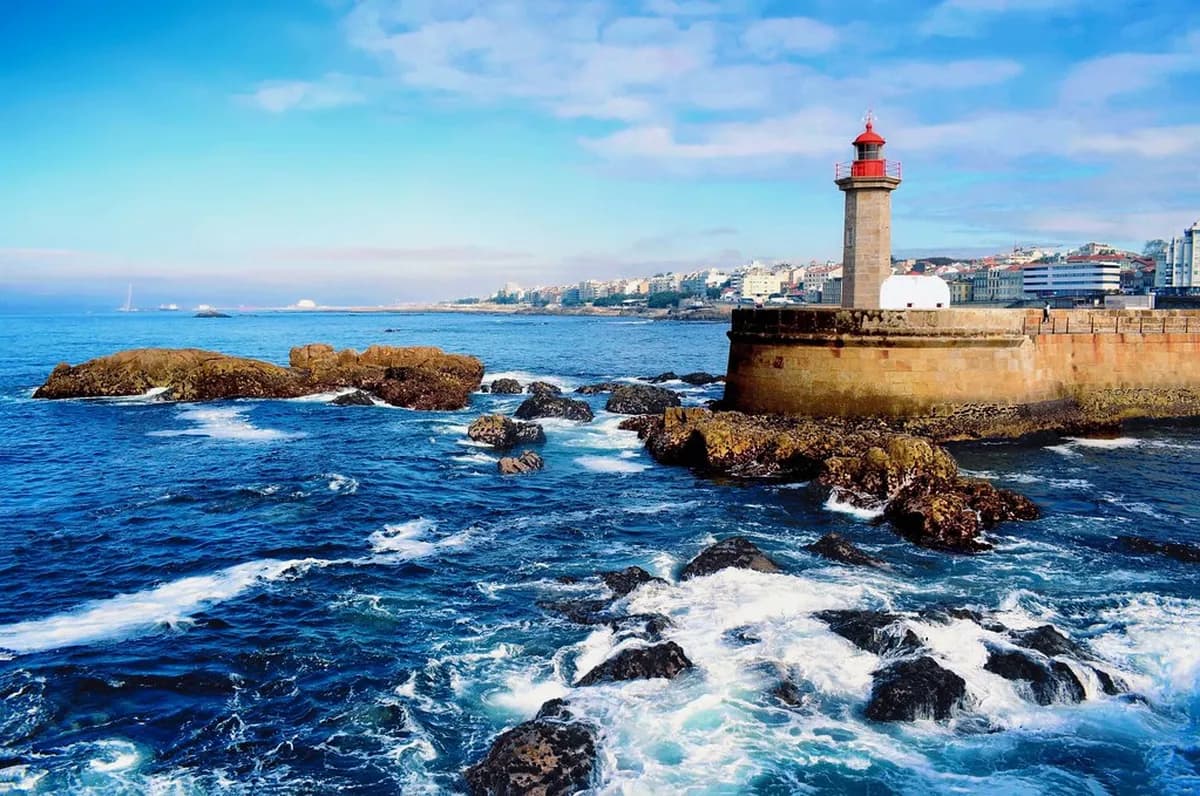
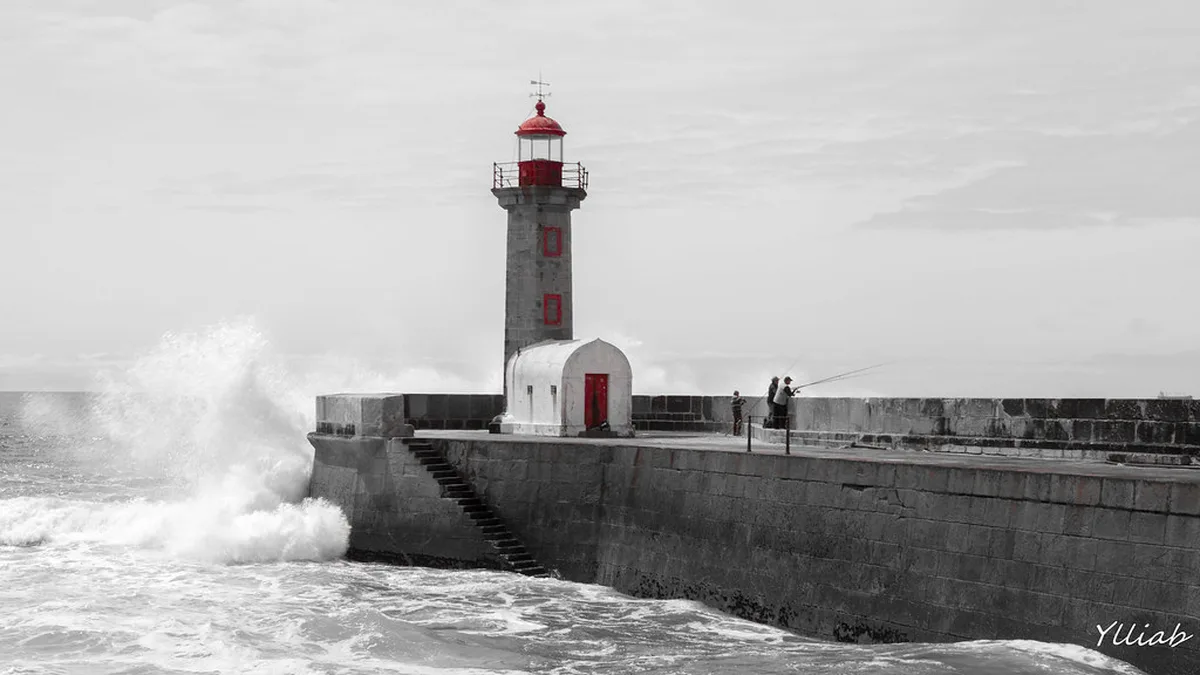
The Felgueiras Lighthouse is the defining image of Foz. Built from granite in 1886 and standing 17 metres tall, it was featured on the cover of National Geographic and decommissioned in 2009. The stone jetty leading out to it is open to the public, but the police regularly close the walkway when Atlantic swells are running — which happens more often than most guides admit. Come on a calm morning and the walk out is exhilarating. Come on a windy afternoon and you may only see it from shore, which is still impressive.
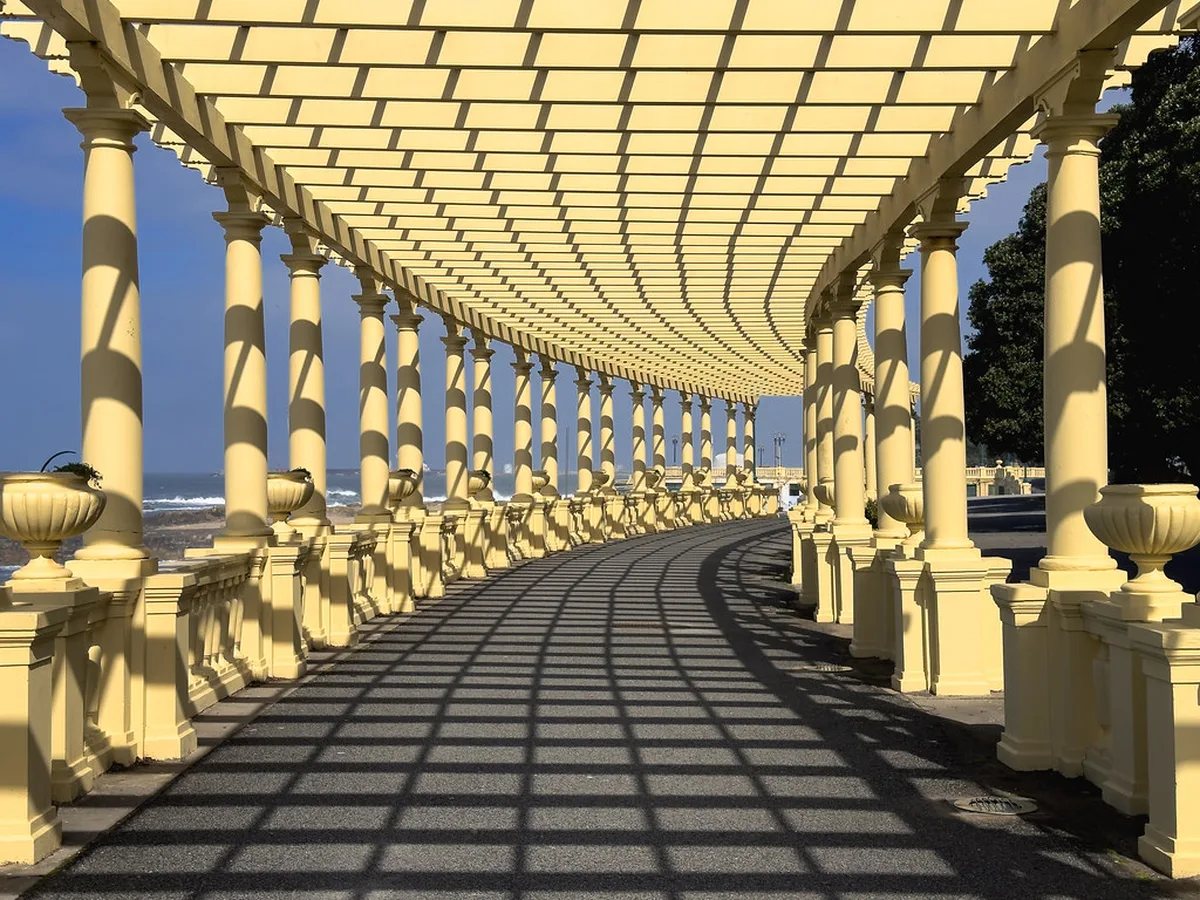
The Pergola da Foz is the second landmark you should not miss. Built around 1930 along Avenida do Brasil, this neo-classical colonnade was conceived by architect António Enes Baganha as part of a wider effort to beautify the seafront promenade. Local architectural historians note that Baganha drew direct inspiration from the Promenade des Anglais in Nice — the long, shaded walkway by the sea is the same idea transposed to a Portuguese scale. It is one of the best spots in Porto for golden-hour photography.
Passeio Alegre Garden sits right at the tram terminus and makes a natural starting point for any visit. The 19th-century park has towering palms, a classic Art Nouveau kiosk, and a small mini-golf course that families use on weekend afternoons. A short walk from there brings you to the Fortaleza de São João da Foz, a 16th-century fort built to defend the river mouth from pirates and invading fleets. The fort still stands largely intact and the views back towards the city from the battlements are excellent.
The Best Beaches and Coastal Promenades
Foz do Douro's beaches carry the Blue Flag certification, which means the water quality and environmental management are independently verified each season. Praia das Pastoras sits closest to the lighthouse and is sheltered on two sides by the old stone breakwaters, which block the worst of the Atlantic wind. This makes it the warmest and most comfortable spot for sunbathing on an otherwise breezy day. It is also the closest beach to the Jardim do Passeio Alegre and ideal for families with children.
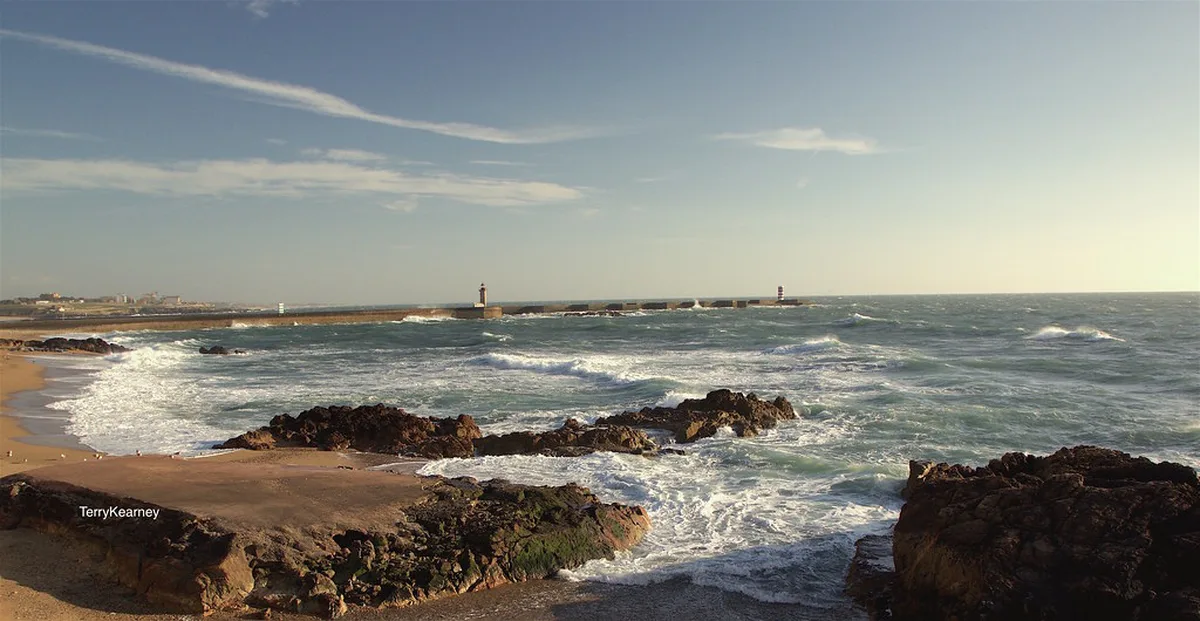
Praia dos Ingleses stretches further south along the promenade and is the most social of the local beaches. The bar and restaurant of the same name hangs out over the rocks on a wooden terrace, and sitting there with a porto tónico as the waves break below is one of those genuinely memorable Porto experiences. Praia da Luz is further along and better suited to sunset drinks than full-day beaching — the restaurant terrace faces almost due west, making it the best seat in Foz when the sun drops to the horizon.
The flat promenade connecting all these beaches is excellent for running and cycling in the early morning before the crowds arrive. There are also places to visit in Porto for free along this entire stretch — every beach, every lighthouse view, and the entire Pergola walk cost nothing. The water temperature rarely climbs above 18°C even in August, so most people wade and sunbathe rather than swim seriously. Always check the coloured flag before entering the water; red flags go up frequently here because of the undertow.
Water temperature rarely exceeds 18°C, so most visitors wade or sunbathe rather than swim. Always check the safety flags before entering — red flags indicate strong undertows and closures are common. Bring a light jacket regardless of season; the Atlantic breeze makes late afternoons surprisingly cold.
Mercado da Foz and the Local Market Scene
The Mercado da Foz opened in 1944 and was originally the place where smallholders from the surrounding farmland sold their produce to the neighbourhood. Today it houses about 32 stalls including fishmongers, greengrocers, a bakery, and a handful of small restaurants. It is not a tourist attraction in the formal sense — it is simply where Foz residents buy their food — which is precisely what makes it worth visiting. Arrive before 11:00 for the best selection of fresh fish and the most authentic atmosphere.
On the second and fourth Saturday of each month, the Mercado da Alegria sets up directly on the seafront. This outdoor market runs from 10:00 to 19:00 and is one of the most local experiences available in Foz. Stalls sell cured meats and cheese, second-hand clothing, spices, ceramics, handmade wooden items, and sourdough bread from a stall called Farina. It sits right across from the ocean, so strong wind days are not ideal, but on a clear Saturday morning it gives you the full flavour of Foz as a living neighbourhood rather than a sightseeing stop.
Mercado da Alegria runs on the second and fourth Saturday of each month from 10:00–19:00 directly on the waterfront. Arrive before 11:00 at Mercado da Foz (open daily) for the best fresh fish selection and most authentic atmosphere among residents. Plan your visit around a Saturday if possible — the outdoor market is one of Foz's most local experiences.
Dining in Foz: Historic Cafés and Gastronomic Delights
Cafeína has been the benchmark for upscale dining in Foz for over twenty years. The menu is Mediterranean-influenced, the room is intimate and candlelit, and getting a table on a Friday or Saturday evening requires booking at least a week in advance. It suits couples or small groups who want a long, unhurried dinner. The wine list leans heavily towards northern Portuguese producers, which matches the cuisine well.
Terra takes a more modern approach to Portuguese cooking in a setting that feels like a covered garden. The kitchen uses seasonal produce from local suppliers and the portions are generous. It is better suited to a relaxed lunch than a late dinner and the mid-range pricing makes it accessible without feeling budget. Praia da Luz on the beachfront terrace is the third point of the Foz dining triangle — the food is simpler but the Atlantic view from the terrace is unmatched, and the sunset timing is almost perfect.
Tavi is the historic pastry shop that has been operating since 1935, and its seafront terrace is one of the best places in Porto to eat a traditional Portuguese breakfast. Order a bolo de bolacha or a queque de ameixa with a galão and watch the ships come and go. A Bolacheira, a few blocks inland, specialises in handmade biscuits and cupcakes at very reasonable prices — a cupcake and coffee combination costs around €3. Both are unmissable if you have even a passing interest in Portuguese pastry culture.
- Cafeína — intimate, Mediterranean, premium pricing, book ahead for weekend dinners
- Terra — modern Portuguese, garden setting, generous portions, mid-range pricing
- Praia da Luz — seafood and snacks, beachfront terrace, best table in Foz at sunset
- Tavi — historic pastry shop since 1935, seafront terrace, traditional Portuguese breakfast
- A Bolacheira — handmade biscuits and cupcakes, cupcake + coffee from €3, best visited mid-afternoon before stock runs out
Luxury Shopping and Exclusive Boutiques
Foz is Porto's wealthiest residential district and the shopping reflects that. The boutiques along and around Avenida do Brasil are independent, curated, and entirely unlike the chain-store experience on Rua de Santa Catarina. Browsing here on a weekday afternoon is relaxed and unhurried — staff have time to talk, and many pieces are locally designed rather than imported.
Latitid is the standout address for women's swimwear and resort wear. The aesthetic is sophisticated coastal — quality fabrics, understated cuts, and prices that reflect the craftsmanship. Piupiuchick, nearby, has built an international following for its children's clothing. The brand is Portuguese, the designs are unconventional and colourful, and it has been stocked in concept stores across Europe. Parents travelling with children who have an interest in distinctive fashion will find it genuinely worth a stop.
TGV Interiores is worth noting for anyone interested in home design — it carries Portuguese ceramics, textiles, and furniture that make more interesting souvenirs than the standard tile replicas sold in the city centre. Walking the full length of Avenida do Brasil also reveals niche perfumeries and small art galleries that operate without much online presence. The best finds in Foz shopping come from wandering rather than planning.
Practical Tips: When to Visit and Where to Stay
The best months to visit Foz are May, June, and September. Temperatures sit between 18°C and 24°C, the Atlantic is calmer than in winter, and the beaches are busy without being unbearable. July and August bring the full summer crowds and higher restaurant prices. Winter visits are worth it for the dramatic wave photography — storms regularly send spray ten metres over the Felgueiras jetty — but the beach cafés operate reduced hours and some close entirely in January and February.
Most travellers are better served by staying in central Porto and making a day trip to Foz. The commute is easy and staying in the centre keeps you close to the historic city's evening life. If you want to base yourself in Foz for the coastal atmosphere, the quieter nights and ocean morning views are genuinely special. Budget at least half a day for the area; a full day if you plan to eat lunch and dinner here. Check the best time to visit Porto without crowds for a broader seasonal breakdown before booking.
Always carry a light jacket regardless of the season. The Atlantic breeze drops the felt temperature significantly once the sun passes the buildings in the late afternoon, and sitting on a seafront terrace can go from warm to cold in twenty minutes. The Felgueiras walkway closes without warning on windy days, so build flexibility into your plans rather than treating it as a guaranteed activity. Arriving early — before 10:00 — gets you the market, the lighthouse walk, and the tram all before the tour groups arrive.
Frequently Asked Questions
Is Foz do Douro worth visiting during a short trip?
Yes, Foz do Douro is definitely worth visiting for its unique coastal atmosphere and luxury feel. It offers a refreshing break from the busy city center and beautiful Atlantic views. You can easily see the main highlights in a half-day trip from Ribeira.
How long does it take to get from Ribeira to Foz?
The journey typically takes about 20 to 35 minutes depending on your choice of transport. The historic tram is the slowest but most scenic option for visitors. Taking an Uber or taxi is much faster and usually takes around 15 minutes.
Are the beaches in Foz good for swimming?
The beaches are beautiful but the Atlantic water is often very cold and the waves can be strong. Most people visit for sunbathing, walking, or enjoying the beach clubs rather than swimming. Always check the safety flags before entering the water at any local beach.
Where can I find hidden gems in this district?
You can find secret spots in Porto by wandering through the narrow lanes of Foz Velha. This historic village area is full of quiet squares and traditional houses. It feels much more authentic than the modern promenade along the oceanfront.
Foz do Douro remains one of the most rewarding half-days you can spend in northern Portugal. The lighthouse, the pergola, the old village lanes, the market on a Saturday morning, and the sunset from a seafront terrace all add up to something distinctly more local than the typical Porto sightseeing circuit. Plan your visit around a Saturday if you can — the Mercado da Alegria alone is worth timing the trip for.
The neighbourhood captures something the city centre cannot: the full drama of the Atlantic at the edge of a city that has always faced the sea. Whether you come for the history, the food, or simply to stand at the lighthouse and feel the spray, Foz do Douro rewards anyone who makes the short journey west. Come early, bring a jacket, and stay for the sunset.
To keep exploring Porto's riverside districts, pair this with our guide to the Ribeira waterfront and the quiet streets of Miragaia just upriver.
Continue exploring
More guides you'll find useful