Hidden Gems in Genoa: Underrated Places Worth Your Time
Hidden gems in Genoa, from Staglieno's sculpture to the caruggi and Nervi's seafront walk, with practical notes for planning a slower visit.
On this page
Genoa, or Genova to Italians, is a port city that many travelers skip on the way to Cinque Terre, yet its dense old town, coastal villages and hill viewpoints reward slower exploration. One travel blog puts the coastal walk along Corso Italia toward Boccadasse at about 2.1 miles, which makes it a realistic half-day outing rather than a quick detour. This guide covers the lesser-known and quieter corners worth your time, sending you to detailed guides where a full visit deserves more space.
The places below mix free experiences, such as the caruggi lanes and the Corso Italia promenade, with paid interiors like palace museums and the cathedral treasury. That distinction matters if you are budgeting, because a day of walking and a day of museum tickets feel very different. Treat the suggestions as a menu rather than a checklist, and verify current opening hours or ticket rules with each site before you build a day around it.
Cimitero Monumentale di Staglieno: Sculpture on a Hill
Staglieno is a monumental cemetery rather than a conventional sight, and one travel guide describes it as an open-air collection of sculptures, statues and porticoes created in the 1800s. Its hillside position means a walk uphill is part of the visit, so allow more time and energy than a quick photo stop would need. Approach it as an art and history visit, not a novelty detour, and check the cemetery's own information for current access before you go.
Wear comfortable shoes and plan a deliberate loop rather than treating Staglieno as something to squeeze between two central sights. If your day is tight, save it for the next visit, and use the Genoa attractions hub to compare it with other sights before committing.
Boccadasse and the Corso Italia Seafront
Boccadasse is a former fishing village with pastel buildings, a small beach and gelaterie, and one blog suggests it can easily fill half a day. Walking there along the Corso Italia coastline takes about 2.1 miles from the center, while a short bus ride is faster but skips the seafront. If you want the walk, start early enough that you still have energy for lunch and a wander.
Bus routes toward Boccadasse exist, but published details differ between guides, so confirm the current line and stop with a local transit app rather than relying on a remembered number. A half-day here pairs well with a relaxed morning elsewhere in the city, and the beach makes it a sensible choice for warmer afternoons.
Passeggiata Anita Garibaldi at Nervi
The Passeggiata Anita Garibaldi in Nervi is a narrow pedestrian promenade with coastal views, and one blog suggests it as a place to watch the sunset or enjoy a clear day with a gelato in hand. It sits beyond Boccadasse, so the two can be combined or treated as separate outings depending on how much walking you want. The nearby Parchi di Nervi add gardens and paths if you want to extend the visit.
Nervi feels like a different pace from the old town, which makes it useful when you need a break from dense streets. Check how you will return before you settle in for sunset, since the promenade is not in the center and a late walk back is longer than it looks on a map.
Hill Viewpoints: Spianata di Castelletto and Porta Soprana
Spianata di Castelletto is a hilltop viewpoint inside the city, reachable by a historic lift that one guide says has operated since 1910, or by climbing a long set of steps. The same source names the Belvedere Luigi Montaldo as the place for city views, which makes this a good late-afternoon stop when the light softens. The lift is charming but not essential, so choose the climb if you want the exercise.
Porta Soprana is an ancient city gate that the same guide says you can climb for free, which makes it a rare no-ticket viewpoint in the center. It was part of the city's defensive walls and pairs naturally with a walk through the surrounding lanes. Neither viewpoint needs a formal tour, but check access if you are visiting outside normal daylight hours.
The Caruggi: Genoa's Narrow Old-Town Lanes
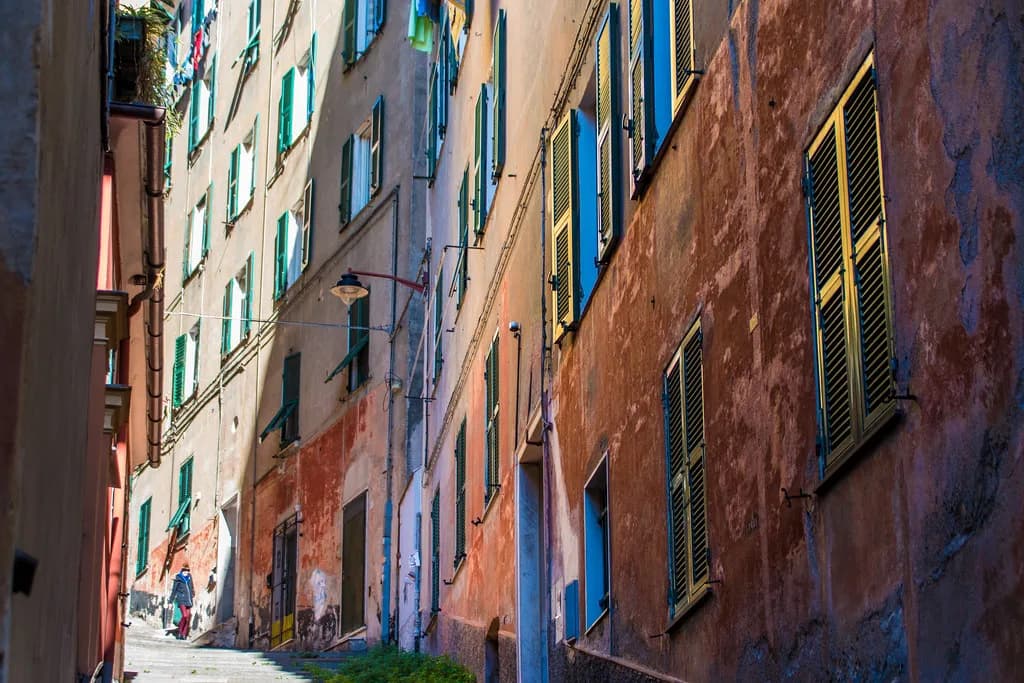
Genoa's caruggi are the winding lanes of the historic center, and one guide describes the old town as a dense maze of narrow streets with artisan workshops and traditional eateries. Getting slightly lost is part of the experience, but keep a rough sense of direction so you can find your way back to a landmark such as Piazza de Ferrari. The lanes are free to wander, and they reward attention to details like shop signs, shutters and small churches. Further visitor details appear in Genova: Italy's Hidden Gem Named Among Lonely Planet's Top Destinations for 2025.
One blog notes petty crime can be a concern in busy areas and on public transport, which is a sensible reminder to keep valuables close in crowded lanes. That is a traveler's caution rather than official guidance, so use normal city awareness and avoid deserted alleys late at night. The caruggi fit naturally into a city walk and pair well with a focaccia stop.
Via Garibaldi and the Rolli Palaces: Street Versus Interiors
Via Garibaldi, part of the Strade Nuove, is lined with 16th-century palaces that form a UNESCO-listed noble district, and one guide counts 42 grand residences across Via Garibaldi and Via Balbi. The streetscape itself is free, so you can walk the facades and courtyards without buying a ticket. Palace museums such as Palazzo Bianco, Palazzo Rosso and Palazzo Tursi are the paid add-on if you want art collections and interiors.
Treat this as a street-level UNESCO walk first and decide on palace interiors once you see the day's energy and queues. If you are short on time, the facades and the atmosphere of the street give a strong sense of Genoa's wealth without committing to a full museum visit. For a structured order of stops, see the Genoa 2 day itinerary.
Free Squares and Everyday Stops
Piazza de Ferrari is Genoa's main square, with an ornate fountain at its center, and one guide treats it as a natural starting point for exploring the old town. The Cattedrale di San Lorenzo is a short walk away, recognizable by its striped marble facade, and one blog notes an unexploded World War II bomb inside as a curiosity. Both are free to view from outside, while the cathedral treasury is a separate paid collection.
For a food break, the Mercato Orientale is recommended by one source for fresh produce and pesto, and focaccia is the easy everyday snack across the city. A simple lunch of focaccia or pesto keeps costs modest; one blogger's pesto price is an older example rather than a current menu price.
Practical Planning: Walking, Budgets and Passes
Genoa is a walking city, but its elevation matters: funiculars, public lifts and trams help you reach hilltop districts without a long climb. One guide suggests a daily budget in a moderate range for food and transport and notes public transport tickets are inexpensive, but treat those figures as blog estimates and check current fares locally. Comfortable shoes and a flexible plan are more useful than a rigid schedule.
A city museum or transport pass can be worth considering if you plan several paid interiors and frequent rides, but one source's claim about a city pass covering free transport and museum access is a suggestion to verify rather than a guarantee. Compare the pass price against the individual tickets you actually want. If rain interrupts your plan, covered walks and transport become the priority.
Day Trips Versus Staying Local
Portofino and Cinque Terre are the famous day trips from Genoa, but the city's own coastal corners, Boccadasse and Nervi, offer a change of scenery without a long transfer. One blog describes Boccadasse as having a Cinque Terre atmosphere without leaving the city, which makes it a sensible substitute when you want a slower day. If you do leave Genoa, check train times and return options for the day you travel rather than relying on a guide's old timetable.
For a longer stay, balance one day trip with local wandering so you are not spending all your time in transit. The city's neighborhoods and seafront are rewarding enough that a day spent locally is rarely wasted; a Genoa 1 day itinerary helps when you have only a short window.
Plan Your Visit
A slower Genoa works best when you mix one paid interior with plenty of free streetscape, viewpoints and seafront. Start with a central walk through the caruggi and Via Garibaldi, then choose either Boccadasse or Nervi for a coastal half-day. Confirm opening hours, transport and ticket details with official sources before you go.
More Genoa guides
- A Balanced 2-Day Genoa Itinerary
- A Rainy Day in Genoa
- A Realistic 3-Day Genoa Itinerary With One Coastal Excursion
- Genoa Day Trips Guide
- Genoa in One Day
- Genoa Neighborhoods Guide
- Genoa Old Town Walking Route
- Genoa Viewpoints and Towers
- Genoa with Kids
- Getting Around Genoa
- Palazzi dei Rolli UNESCO System Guide
- The Best Time to Visit Genoa and Avoid the Crowds
- What to Eat in Genoa
- Acquario di Genova Visitor Guide
- Castello D'Albertis Museum of World Cultures
- Cimitero Monumentale di Staglieno
- Lanterna di Genova Visitor Guide
- Mercato Orientale Genova
- Palazzo Ducale in Genoa
- Palazzo Reale Genova Visitor Guide
- Palazzo Rosso Genoa
- Piazza De Ferrari and Teatro Carlo Felice
- Porto Antico Waterfront Walk
- Santa Maria di Castello
- Spianata di Castelletto
- Via Garibaldi and Strada Nuova
- Visiting Genoa's Cattedrale di San Lorenzo
- Visiting the Galata Museo del Mare and the Nazario Sauro Submarine
Frequently Asked Questions
Is Genoa worth visiting for its quieter corners?
Yes, if you like dense historic streets, coastal walks and food. Genoa rewards walkers with free lanes, palaces and viewpoints, and the coastal villages of Boccadasse and Nervi add a slower day by the sea.
How many days in Genoa do I need to see the lesser-known sights?
Two days let you cover the old town, a palace interior and one coastal walk without rushing. Add a third day if you want a day trip or a longer museum visit.
What can I do in Genoa in one day?
Focus on Piazza de Ferrari, the caruggi and Via Garibaldi in the morning, then choose either the Corso Italia walk to Boccadasse or the Nervi promenade for the afternoon. Keep one paid interior as an option rather than a requirement.
Are Boccadasse and Nervi both worth a visit?
They offer different experiences: Boccadasse is a compact former fishing village with a small beach, while Nervi has a longer promenade and nearby parks. Pick one for a relaxed outing or combine them if you have a full day.
Sources
Continue exploring
More guides you'll find useful