
Spianata Castelletto Visitor Guide: Views Over Genoa
Plan a walk to Spianata di Castelletto in Genoa: the two uphill routes, the lift near Piazza Portello, views over the old town, and a sensible loop down.
On this page
Spianata di Castelletto is a belvedere on the hill that rises directly behind Genoa's historic centre, and it is one of the easiest panoramic detours to add to a day around Strada Nuova. The climb is short but worthwhile: the terrace sits close enough to the townscape that you can still pick out individual buildings rather than looking down on a blur. This guide covers how to reach it, what the view actually offers and how to fit it into a half-day.
Plan the outing as a compact loop rather than a standalone attraction. The terrace rewards a pause of a few minutes, then the lanes on the way up and the descent on a different street are half the point. If you are building a wider itinerary around the city, the Genoa Attractions hub collects guides to the sights that pair naturally with this one.
Where Spianata di Castelletto Sits
The terrace occupies the top of Castelletto, a low but central hill in Genoa that overlooks the historic centre and the port below. Because it is not especially high, the buildings and streets remain legible from the top, which gives the view a different character from a distant panorama. It also means the walk up is manageable for most visitors who are comfortable on stepped lanes.
The position matters when you plan your day: the hill rises directly behind the Via Garibaldi axis, so Castelletto can be slotted between a museum visit and a wander through the Centro Storico. Rather than a separate excursion, treat it as the high point of a walk that begins in the city's oldest quarters. Our Genoa neighborhoods guide explains how the historic centre relates to the surrounding districts if you want to extend the route.
Getting Up on Foot from Strada Nuova
The most rewarding approach starts on Salita San Francesco, just off Strada Nuova, the street also known as Via Garibaldi. After a few turns the lane merges into the Salita alla Spianata, which leads up towards the terrace. The ascent is on foot through residential lanes, so wear shoes that cope with steps and uneven paving rather than smooth soles.
This is the route to choose if you want the climb to feel like part of the sightseeing. The lanes pass close to ornate apartment buildings and small gardens, giving a sense of how the city climbs its own hills. Easy Hiker describes the walk up as one of the best parts of the outing and recommends it over the mechanical alternative. You can read the full account of the ascent in their Castelletto walk guide.
The Lift Near Piazza Portello
If the climb does not appeal, a public lift connects the lower city near Piazza Portello with the top of the hill. Easy Hiker notes that the elevator can take visitors up from that square, which makes the viewpoint reachable without the stepped lanes. It is a useful fallback on a hot afternoon or for anyone travelling with luggage or limited stamina.
Fares, operating hours and step-free access are not confirmed by the sources used for this guide, and the local operator has not published those details here. Check with the city's tourism office or the transport operator before you rely on the lift, and do not assume it runs late into the evening or on every day of the week.
Choosing Between the Walk and the Lift
The trade-off is straightforward: the lift saves effort and time, while the footpath delivers the lanes, the tucked-away corners and the small viewpoints that the climb provides. Taking the lift in both directions gets you the panorama but skips the texture of the hill. A sensible compromise is to walk up and ride down, or the reverse, depending on the heat and how much you still want to see.
One practical consideration is that the walk up is short but steep in places, so it is not a casual stroll in the middle of a summer afternoon. Early morning or later in the day is generally more comfortable for the ascent. The Evendo guide to Spianata di Castelletto is one third-party overview you can consult for additional orientation, though its route suggestions should be treated as general advice rather than confirmed directions.
What You See from the Terrace
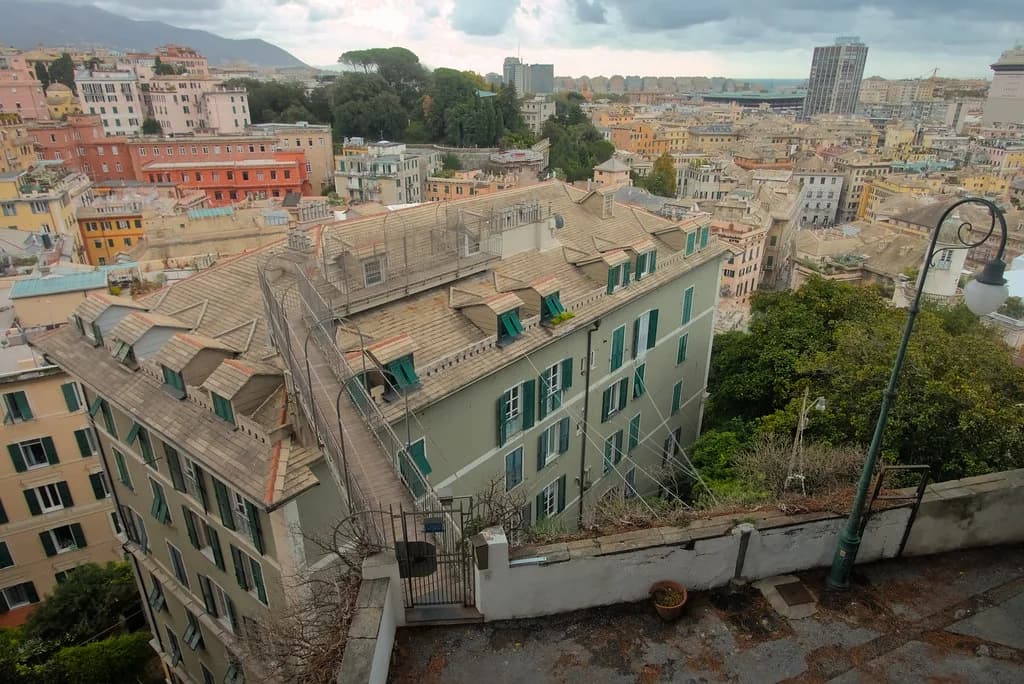
The top of the hill is open on all sides, so the experience is not a single fixed panorama but a series of views that change as you walk around the terrace. To the south the old town and the harbour spread out below; the buildings stay close enough to identify rather than dissolving into a distant grid. Because the hill is central, much of what you see is within a short radius of where you are standing.
Different sides of the terrace give different characters to the view: one direction offers a sweeping overview, while others frame the houses and gardens on the slopes of the hill itself. That variation is why it rewards a slow circuit rather than a quick photo from the first railing. Genoa's official tourism site describes the city as an amphitheatre around its gulf, which helps explain why a modest hill produces such a broad outlook.
How Light and Direction Change the View
The time of day matters as much as the route. In the softer light of early morning or late afternoon, the contrast between the buildings, the slopes and the water is easier to read, and the terrace is more comfortable to linger on. Middle-of-the-day summer visits can be bright and hot, with less definition in the view.
Try to walk a full circuit before settling on a spot, since the direction you face changes the composition entirely. One side may give you the city's rooftops, another the hills behind, and a third the detail of the slope closest to you. A short visit becomes much richer if you give yourself time to compare the angles rather than choosing the first view you meet.
Coming Down a Different Way
Avoid retracing your steps by descending on the opposite side of the hill. Easy Hiker suggests the Salita di San Gerolamo on the eastern flank as an alternative route back into the city, which turns the outing into a loop rather than an out-and-back climb. The descent passes the same mix of grand apartment blocks and more everyday residential streets.
This is also a good moment to link the terrace to a walking plan for the lower city. Our Genoa old town walking route picks up the thread once you are back down among the caruggi, so you can continue without doubling back. Keep an eye on the lanes you choose, since the network is dense and not every turning leads where you expect.
A Suggested Outing of Under Two Hours
As an editorial suggestion rather than official guidance, allow about an hour and a half to two hours for the climb, the terrace and a different descent. That window leaves room for photographs, a short pause at the top and a little wandering on the way. It does not include time spent in the museums or palaces lower down.
Easy Hiker describes the round trip as taking under two hours in total, which aligns with that suggestion for a reasonably brisk visitor. If you stop often, take the lift both ways or combine the walk with a museum visit, budget more generously. The point is to treat the terrace as a half-day element rather than a five-minute stop.
Pairing Castelletto with Strada Nuova and the Rolli Palaces
Because the footpath begins just off Strada Nuova, the terrace combines naturally with a visit to the Palazzi dei Rolli, the Renaissance and Baroque residences that line Via Garibaldi. The city tourism board showcases several of these palaces, including Palazzo Rosso, Palazzo Bianco and Palazzo Reale, as individual sights along the same axis. Pairing one palace interior with the hilltop view gives the day both architecture and outlook.
Start with the palace or the climb depending on the time of day and the light, then use the other as a counterweight. A morning palace visit followed by a late-afternoon ascent, for example, avoids the brightest hours on the terrace. The Genoa Attractions collection lists further sights if you want to build a fuller day around this pairing.
Practical Notes to Verify Before You Go
The terrace's current opening status and the operating hours of nearby cafes have not been confirmed in the sources used here, and the lift's fares and timetable were not published in those pages. Check those details locally before you set out, especially outside the main visitor season. The city's official tourism site is the best starting point for confirming access and current conditions.
Public transport information for Genoa is published by the local operator, so consult the operator's site rather than relying on outdated route descriptions. If you plan to use buses or the metro to reach the lower city, confirm the current services directly. Allow a margin in your schedule in case a service is running differently from what you expected.
Common Mistakes to Avoid
The most common error is treating Spianata di Castelletto as a quick photo stop and missing the lanes on the way up. The climb is where much of the charm lies, especially the contrast between grand facades and ordinary residential streets. Give the terrace a slow circuit and save time for the descent as well.
Another pitfall is assuming the lift resolves every access question; step-free access and operating hours are not confirmed in the sources used here, so check before relying on it. Likewise, do not treat the view as a fixed set of named landmarks; it changes with direction and light. Plan for discovery rather than ticking off a list.
Plan Your Visit
Spianata di Castelletto works best as part of a walking day through Genoa's historic centre, paired with Strada Nuova and one of the Rolli palaces. Choose the footpath from Salita San Francesco if you want the full experience, or the lift near Piazza Portello if effort is the deciding factor. Either way, descend by a different route and allow more time than you think you need.
Before you go, confirm the lift's operating arrangements and the terrace's current status through official local sources, since these details change. Then set aside a relaxed couple of hours and let the hill do the rest.
Frequently Asked Questions
How do you get up to Spianata di Castelletto in Genoa?
You can walk up from near Strada Nuova, starting on Salita San Francesco and continuing onto Salita alla Spianata, which leads to the terrace. Alternatively, a public lift connects the lower city near Piazza Portello with the top of the hill. The walk is short but stepped in places, so wear suitable shoes.
Is there a lift to Castelletto and where does it leave from?
Yes, a lift serves the hill from near Piazza Portello according to Easy Hiker's account. Fares, operating hours, closure days and step-free access are not confirmed in the sources used here, so verify those details with the local operator before relying on the lift.
How long does a visit to Spianata di Castelletto take?
As an editorial suggestion, allow roughly an hour and a half to two hours for the climb, the terrace and a different descent. Easy Hiker describes the round trip as taking under two hours in total. Neither figure is official guidance, and stopping for photographs or cafes will add time.
What can you see from the Castelletto terrace?
The terrace is open on all sides, so the view changes as you walk around it. Because the hill is central and not very high, the old town and port remain close enough to read rather than appearing as a distant grid. Different sides frame the rooftops, the harbour and the gardens on the slope itself.
When is the best time of day to visit Spianata di Castelletto?
Softer light in the early morning or late afternoon generally makes the townscape easier to read and the terrace more comfortable, especially in summer. Midday can be bright and hot. This is advice rather than an official recommendation, so check the weather and your own schedule.
Can you walk down a different way from Castelletto?
Yes. Easy Hiker suggests descending via the Salita di San Gerolamo on the eastern side of the hill instead of retracing the ascent. That turns the outing into a loop and shows you a different mix of streets and buildings on the way back into the city.
Sources
Continue exploring
More guides you'll find useful





