
Via Garibaldi (Strada Nuova) Genoa: Palaces & Museums Guide
Walk Via Garibaldi in Genoa, tell Palazzo Rosso, Bianco and Doria-Tursi apart, and learn where free street views end and ticketed museum interiors begin.
On this page
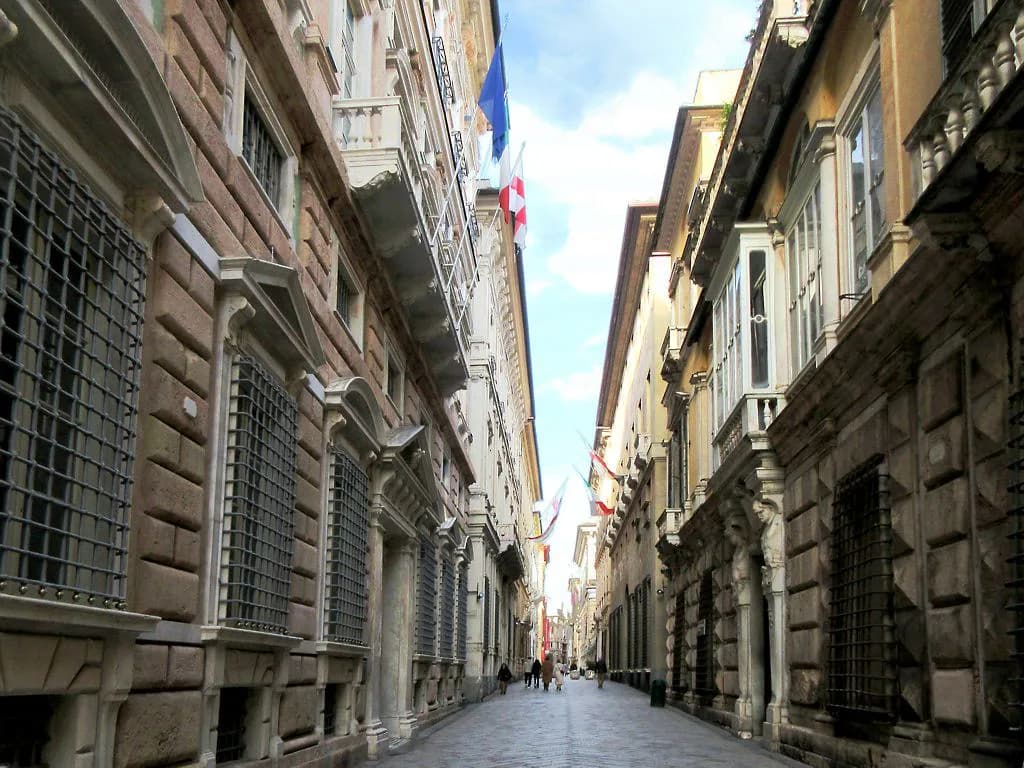
Via Garibaldi is a sixteenth-century street running through Genoa's historic centre, and most visitors meet it first under its older name, Strada Nuova. Its palaces belong to the Palazzi dei Rolli, recognised by UNESCO, and three of them now hold the Musei di Strada Nuova collections: Palazzo Rosso, Palazzo Bianco and Palazzo Doria-Tursi. The street itself and the museums inside it are two different experiences with two different sets of rules.
One practical detail worth knowing before you arrive: the street is a public thoroughfare, so walking it and reading the façades costs nothing, while entering the palace museums requires a ticket arranged through the official museum system. Check the Musei di Genova site for current admission, hours and any timed-entry rules rather than relying on older figures quoted elsewhere. For context on how this street fits the wider UNESCO listing, the Palazzi dei Rolli UNESCO system guide and Rolli Days explains the system across the historic centre and the once-a-year opening event.
What and Where Via Garibaldi Is
Via Garibaldi sits inside Genoa's historic centre, stretching through the dense fabric of the old city rather than standing apart as a museum quarter. The street was laid out in the sixteenth century as Strada Nuova, and its palaces were admired across Europe as early as the 1600s, thanks in part to Pieter Paul Rubens. That reputation is why the name Strada Nuova still appears on maps and in guidebooks alongside the modern Via Garibaldi.
The buildings along it form part of the Palazzi dei Rolli, a UNESCO World Heritage listing shared across the historic centre rather than confined to one address. They also house Strada Nuova's museums, the trio of Palazzo Rosso, Palazzo Bianco and Palazzo Doria-Tursi. Because the palaces are still woven into a working city, you will pass doorways, offices and residential entrances as well as museum ticket desks.
The Rolli System Explained Briefly
The Rolli were official lists of private residences designated to host distinguished guests of the Republic of Genoa, classified by the rank of visitor each palace could accommodate. This was an administrative system, not a decorative one: private homes were drafted into public service, and the lists were maintained and consultable by the Republic. Understanding this helps explain why the palaces vary so much in layout, since some needed vast formal courtyards for official receptions while others favoured more intimate suites of salons.
The families behind these residences, among them the Doria, Spinola, Grimaldi and Brignole Sale, built with maritime wealth and used art and architecture as a political language. Entrance halls, monumental staircases and painted reception rooms were designed to be read by visiting dignitaries. Once you know that, a walk down the street becomes a study in how a merchant republic staged its diplomacy in stone and fresco.
Street Exteriors Versus Museum Interiors
Walking Via Garibaldi and admiring the façades is one experience; entering the Musei di Strada Nuova collections is a separate, ticketed one. The street gives you gateways, stucco detail, balconies and the sequence of family ambitions, all visible without a reservation. The interiors, by contrast, hold the paintings, furnishings, marble and objects that tell you how those families lived and what they collected.
Do not assume a single ticket opens every palace, or that the City Hall sections of Palazzo Doria-Tursi follow the same access rules as the museum rooms. The VisitGenoa city tourism site sets out the city's museum offering and its tickets and cards pages, while the civic museum system publishes the actual conditions for each site. Confirm scope before you buy, especially if you only want one collection.
If your interest is architecture rather than art, the street alone can carry a full visit, and you can add one interior to see how a façade translates into a courtyard and staircase. If your interest is paintings, budget your time for the museums and treat the street as the approach. Keeping that split clear prevents the common frustration of arriving expecting free entry to galleries.
Palazzo Rosso, Palazzo Bianco and Palazzo Doria-Tursi Compared
Palazzo Rosso, also known as Palazzo Brignole Sale, is an art museum built around private collections, with works from the Genoese and Italian schools and paintings by artists including Van Dyck and Guercino. For a deeper look at this one building, the Palazzo Rosso Genova visitor guide covers its character and collection in more detail. Visitor details: Palazzi dei Rolli: Discover Genoa's Merchant Palaces.
Palazzo Bianco, the Palazzo di Luca Grimaldi, is the other half of the classic Strada Nuova art pairing, showing Italian and European masters. Where Rosso is often associated with Genoese and Baroque holdings, Bianco broadens the frame to a European register. Treat them as complementary rather than competing stops, and decide from the collection descriptions which one matches your interests if time is short.
Palazzo Doria-Tursi is the outlier of the three, because it also serves as Genoa's City Hall. Parts of the building are civic rather than museum space, which is why its access can differ from the other two palaces. Plan it as a museum stop only after checking what is open to visitors on the day, and expect an experience that mixes institutional use with historic interiors.
Pick Your Entry Point
Arriving from the port side, you approach the palaces from the direction of the harbour and climb into the old city, which frames the street as part of Genoa's maritime identity. Arriving from Piazza delle Vigne and the old town, you enter from the denser medieval fabric and meet Strada Nuova as a deliberate sixteenth-century intervention. Neither approach is wrong; choose based on where you are starting and what contrast you want to feel first.
The stretch of Via Garibaldi near Piazza delle Vigne also connects to walking routes that continue into the old town, so it works well as a hinge between the medieval centre and the palace street. If you are building a longer day, a Genoa 2 day itinerary can help you decide how much of the centre to combine with the palaces. The street rewards a slow pass rather than a rushed photo stop.
A Suggested Walking Order and Time Budget
Start at one end of Via Garibaldi, walk the full length once without stopping for interiors, then return to the palace you most want to enter. This two-pass method lets you see the whole sequence and compare façades before committing to a ticket. It also means you are not choosing your museum based on whichever doorway you happened to reach first.
As an editorial suggestion rather than an official figure, allow roughly forty-five to ninety minutes for the street alone, and add a separate block of two to four hours if you plan to visit more than one of the Strada Nuova museums. The blog source describes a combined Palazzo Rosso, Palazzo Bianco and Palazzo Doria-Tursi itinerary in that range, but treat it as a planning estimate. Actual time depends on exhibitions and your own pace.
Late morning on a weekday is the slot the same source suggests, and it suits photography on the façades before the light hardens. Marble floors and shallow-stepped staircases inside the palaces reward comfortable shoes. Carry your own water and do not count on finding a bench at the moment you want one. Further visitor details appear in Palazzi dei Rolli: Discover Genoa's Merchant Palaces.
Optional Extensions Nearby
Palazzo Reale on Via Balbi extends the palace story beyond Strada Nuova, adding a former royal residence with gardens and lavish apartments to the merchant palaces you have just seen. The comparison is instructive: merchant-family display on one street, royal splendour on another. Check current admission and entry rules with the official museum system before adding it to your day. For wider planning, see Palazzo Reale Genova visitor guide.
Palazzo Spinola di Pellicceria, near Salita di Santa Caterina, is a civic and historic museum known for ornate salons and an inner courtyard. Its location pulls you deeper into the old town's alleyways, which is a different pleasure from the wide formality of Via Garibaldi. Confirm hours and access on the day rather than relying on published summaries.
If you want to step away from palaces entirely, the Cimitero Monumentale di Staglieno is an open-air museum of sculpture and shaded avenues that offers a striking change of register. It is a cemetery, so visit with the decorum that implies. Pair it with a palace morning rather than trying to fit both into a single rushed afternoon.
Practical Pre-Visit Checks
Before you go, open the Musei di Genova site to confirm which palaces are open, what each ticket covers and whether any timed entry applies. The official museum system is the authority on conditions; third-party guides may quote outdated figures. If a specific collection is your reason for visiting, check that it is on display rather than in storage or on loan.
VisitGenoa publishes the city's events calendar, which matters because palaces occasionally host concerts, temporary exhibitions and cultural programmes that can affect access. A palace that is open one week may have rooms closed for an event the next. Cross-check the events listing against the museum site if your dates are fixed.
Accessibility varies across these historic buildings, with narrow staircases and uneven floors in some interiors and adapted routes or alternative access at others. Ask staff directly about step-free entry and lift availability rather than assuming, and check before booking if mobility is a concern.
Which Visitor Are You?
With limited time, walk the street end to end and enter just one palace, choosing Palazzo Rosso or Palazzo Bianco for art and Palazzo Doria-Tursi if you want the civic dimension. Art-focused visitors should give the museums the larger share of the day and treat the street as the connective tissue between them. Architecture-focused visitors can spend the whole visit outside, reading courtyards and staircases from the public street.
Whichever you choose, verify current tickets, opening hours and event closures on the official Musei di Genova and VisitGenoa pages shortly before you travel. Those two sources will always beat a printed guide or an older web summary. Then give the street the time it deserves, because Strada Nuova is not a backdrop to the museums but a designed statement in its own right.
Frequently Asked Questions
Is Via Garibaldi free to walk?
Yes. Via Garibaldi is a public street in Genoa's historic centre, so walking it and looking at the palace façades costs nothing and needs no booking. Entering the Musei di Strada Nuova collections inside Palazzo Rosso, Palazzo Bianco or Palazzo Doria-Tursi is a separate, ticketed experience. Check the official museum site for current conditions.
Which palaces on Via Garibaldi house the Musei di Strada Nuova?
The Strada Nuova museum group comprises Palazzo Rosso, Palazzo Bianco and Palazzo Doria-Tursi. They sit along the same street but are distinct buildings with different collections and, in the case of Doria-Tursi, a dual civic role as City Hall. Do not assume one ticket automatically covers every interior; confirm scope with the official museum system before buying.
What is the difference between Palazzo Rosso, Palazzo Bianco and Palazzo Doria-Tursi?
Palazzo Rosso is known for private collections and Genoese and Italian schools, including works by Van Dyck and Guercino. Palazzo Bianco broadens the picture with Italian and European masters. Palazzo Doria-Tursi also serves as Genoa's City Hall, so parts of it are civic rather than museum space, and access can differ from the other two.
Why are the Palazzi dei Rolli UNESCO listed?
The Rolli were official lists of private palaces designated to host distinguished guests of the Republic of Genoa, classified by the rank of visitor each could accommodate. That system turned private homes into instruments of public diplomacy and shaped the architecture, from formal courtyards to intimate salons. UNESCO recognition followed in 2006, according to VisitGenoa's Rolli pages.
How long does it take to walk Via Garibaldi and visit the museums?
As an editorial suggestion, allow roughly forty-five to ninety minutes for the street alone, and a separate two to four hours if you plan to enter more than one of the Strada Nuova museums. These are planning estimates, not official figures. Actual timing depends on temporary exhibitions and your own pace.
Can you see the palaces without buying a museum ticket?
You can see the exteriors, façades, gateways and the street sequence without a ticket. You cannot see the collections, furnishings or painted interiors without one. If architecture is your main interest, the public street alone can carry a satisfying visit; if art is, plan for the museums.
Where should you start a walk along Strada Nuova?
Start from the port side to approach the palaces from Genoa's maritime edge, or from Piazza delle Vigne and the old town to meet Strada Nuova as a contrast to the medieval street pattern. Either way, walk the full length once before choosing an interior, so the comparison is made on the whole street rather than the first doorway.
Sources
Continue exploring
More guides you'll find useful





