
Palazzo Reale Genova Visitor Guide: What to See Inside
Plan a visit to Palazzo Reale in Genoa: the piano nobile rooms, Van Dyck paintings, terraces and garden, what a ticket covers, and how long to allow.
On this page
Palazzo Reale sits on Via Balbi, a short walk from Genoa's Principe station and the start of one of the city's great palace streets. It is not a single-period royal residence but a state-owned museum that layers a seventeenth-century aristocratic house, an eighteenth-century Baroque refurbishment and a nineteenth-century Savoy court on top of each other. That mix is the reason to visit carefully rather than breeze through the state rooms.
This guide walks through the rooms of the piano nobile, separates the Durazzo-era interiors from the Savoy additions, names the paintings worth seeking out and flags the outdoor elements that are easy to miss. Prices and combined-ticket scope are not fixed in anything published here, so the final section explains exactly where to confirm them. If you are choosing between sights, start from the broader set of Genoa Attractions before committing a half-day.
Quick Orientation: Via Balbi and a National Museum
The palace occupies a monumental stretch of Via Balbi, the seventeenth-century artery that links the station area to the historic centre. Its full historic name is Palazzo Balbi – Durazzo, and the building now houses the Galleria di Palazzo Reale museum as well as Liguria's department for artistic, historic and archaeological heritage. Plan to arrive on foot or by public transport rather than by car, since the street is dense with traffic and palaces.
Because the building is state property with a museum inside, think of your visit as two overlapping experiences: a walk through furnished aristocratic apartments and a small gallery visit. Source material describes the museum as occupying the piano nobile, so the core of your time will be spent one floor up. Wear shoes you can stand in for a while, as the route through the rooms is continuous.
The Building's Three Lives: Balbi, Durazzo, Savoy
The Balbi family built the palace in the seventeenth century to designs attributed to Pier Francesco Cantone. In 1677 it passed to Eugenio Durazzo, who reworked it into an imposing Baroque residence in the Roman manner, and that transformation explains the grand staircases, mirrors and frescoed ceilings you see today. Keeping this first layer in mind helps you distinguish original structure from later decoration.
In 1824 the palace came into the hands of the House of Savoy, who made it their Genoese residence; the name Palazzo Reale dates from that period. That royal chapter added nineteenth-century furniture and ceremonial rooms on top of the Durazzo interiors. Reading the building as a sequence rather than a single style turns a pleasant palace walk into a lesson in how Genoese families and later rulers signalled status.
What to See on the Piano Nobile: The Durazzo Rooms
Several rooms preserve their eighteenth-century character from the Durazzo era, including the Galleria degli Specchi, or Hall of Mirrors, the Sala di Valerio Castello, named for the artist who frescoed it, and the Galleria della Cappella. These are the spaces where the Baroque decorative programme is most legible. Look up: ceilings and wall surfaces carry much of the effect, and floor-level labels rarely point them out.
Because the palace is described as a museum presented room by room, the displays mix fixed decoration with movable furnishings. Slow down in the frescoed rooms instead of treating them as a corridor to the throne room, and give yourself permission to skip a room if a group is moving through. The Genoa 1 day itinerary is a useful frame if you need to cap this visit at a fixed slot within a packed day.
The Savoy Rooms: Throne Room, Presence Chamber and Ballroom
The Savoy period is concentrated in rooms such as the Sala del Trono, the Sala delle Udienze and the Salone da Ballo, furnished and decorated in the nineteenth century. Comparing these with the Durazzo rooms makes the shift from Baroque display to court ceremony obvious: seating, thresholds and hierarchy of access all change. Use the throne room and ballroom as your comparison points rather than as isolated highlights.
If you are short on time, choose one layer and follow it through. A visitor focused on the Baroque can move briskly through the Savoy rooms, while someone interested in the Risorgimento-era court can reverse that priority. Either way, the sequence is small enough that you will not miss whole wings by making this choice.
Art Highlights: The Two Van Dyck Paintings
Among the works on display, two seventeenth-century paintings by the Flemish artist Van Dyck deserve specific attention: a Portrait of a Lady and a Crucifix. They are the anchors of the collection for most visitors, so note their names before you go and look for them deliberately. The surrounding display blends paintings, sculpture and furnishings, which means a picture can be easy to walk past.
Read the room-by-room display as a household rather than a gallery wall. Paintings were hung to complement furniture, mirrors and stucco work, and the palace's own presentation follows that logic. If you want a broader museum context across the city, the Musei di Genova site lists the wider civic museum network, including collections that sit outside the palace itself.
Outside the Apartments: Terraces, Garden and Risseu Mosaics
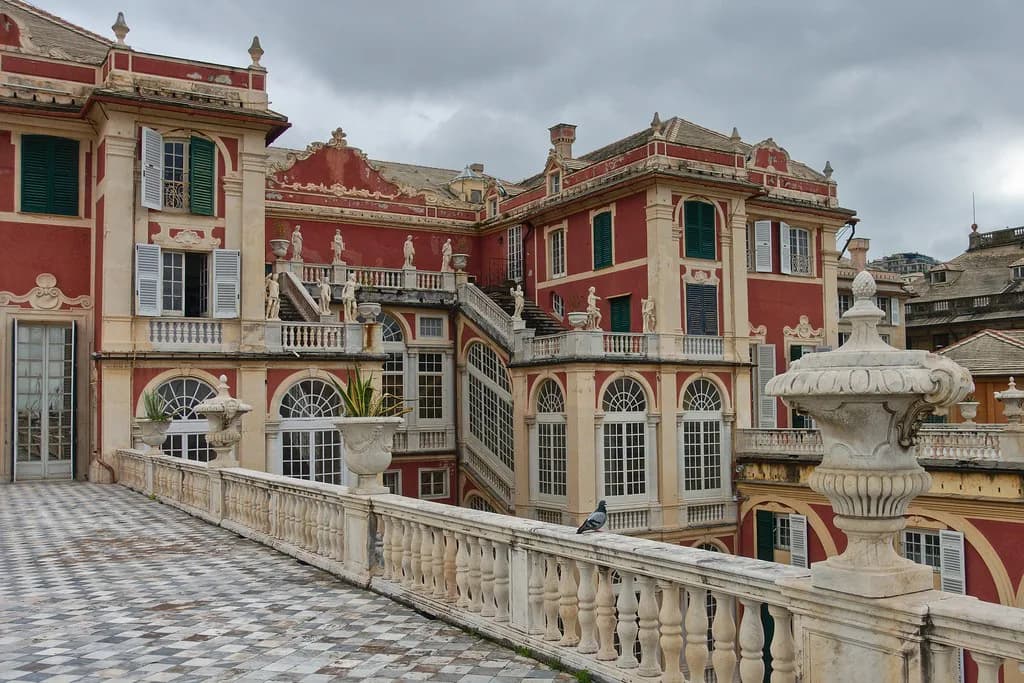
Beyond the interiors, the palace has terraces and a garden filled with vegetation and exotic plants, and the inner courtyard preserves risseu pebble mosaics of the kind found across Liguria. These outdoor elements are the most commonly skipped part of a visit because they sit outside the numbered room route. Check whether they are accessible on the day you visit before building them into your plan.
The risseu courtyard is worth a deliberate detour because the decorative paving is easy to overlook from standing height. If the weather is poor, prioritise the interiors and treat the garden as a bonus. If you enjoy quieter outdoor corners of the city, the hidden gems in Genoa guide offers further low-key stops to pair with a palace morning.
Practical Planning: Confirm Hours and Ticket Scope Before You Go
No operator timetable is reproduced here, and third-party travel listings should not be treated as the rule for opening times or closures. Before travelling, check the palace's own site and the city museum pages for current hours and any notices about which spaces are open. This matters most if you are building a tight day around one timed entry, because a single change can affect your whole plan.
Ticket prices and whether a ticket covers other museums are also things to verify directly rather than assume, since published rates change and combined offers vary. The Visitgenoa page for the palace directs readers to the organisation's website for prices and schedules, which is the right place to start. Buy or reserve nothing until you have read those pages for the date you intend to travel.
How Long to Allow, and How to Pace the Visit
As a suggestion rather than an official figure, allow around one and a half to two hours for the apartments plus a short garden pause. Add time if you like to read every label or sketch, and cut it if you mainly want the Van Dyck paintings and the main state rooms. The visit is indoor and continuous, so a break before or after is easier than one in the middle.
Pacing matters more than duration here: the rooms reward a slower first half and a quicker second pass once you recognise the pattern of decoration. If you tend to tire after an hour, see the Durazzo rooms first and leave the ballroom until last. Keep an eye on the clock if you have a timed slot elsewhere, and leave a buffer for the walk back to the station.
Fitting Palazzo Reale Into a Via Balbi Day
Via Balbi and the surrounding streets hold enough palaces, churches and museums to fill a day without leaving the area. Pair Palazzo Reale with a short walk through the historic centre rather than stacking three interiors back to back, since frescoed rooms start to blur when visited in quick succession. The city's downloadable brochures include walking tours of the historic centre and a city map, which help you sequence the streets on foot.
If you want one contrasting stop after the palace, Mercato Orientale Genova is the obvious change of register: food, noise and produce after formal salons. Alternatively, climb to Spianata di Castelletto for a rooftop view that resets your sense of the city's shape before you head back down. Both are simple additions that do not require a second ticket decision.
If You Want a Quieter Historical Stop
Travellers who enjoy sculpture and open-air settings sometimes combine a palace visit with a cemetery that functions as a museum of nineteenth-century funerary art. The Cimitero Monumentale di Staglieno is described by the city's tourism brochures as an open-air museum, and it gives a very different reading of the same era that shapes the Savoy rooms. It is a substantial detour, so treat it as a half-day in its own right rather than a quick add-on.
Plan Your Visit
Palazzo Reale rewards a visitor who arrives knowing that the building is a layered residence turned museum, not a single royal interior. Check the official pages for hours and ticket scope, then give the piano nobile enough time to notice the shift from Durazzo mirrors and frescoes to Savoy throne and ballroom. Finish outside with the terraces, garden and pebble courtyard if they are open on the day.
Build the rest of your day around walking rather than transport, since Via Balbi puts the station, the historic centre and several museums within reach. If you need a wider shortlist first, browse the Genoa Attractions hub and pick two or three sights rather than trying to cover the city in one pass.
Frequently Asked Questions
Is Palazzo Reale in Genoa worth visiting?
It is worth visiting if you want furnished historic interiors rather than a conventional gallery. The palace combines eighteenth-century Durazzo rooms, such as the Hall of Mirrors, with nineteenth-century Savoy state rooms including the throne room and ballroom, plus two Van Dyck paintings and outdoor terraces and a garden. Visitors who prefer Old Master painting alone may find the collection small, so read the room list before deciding.
What can you see inside the royal apartments?
The piano nobile holds the Galleria degli Specchi, the Sala di Valerio Castello, the Galleria della Cappella, the Sala del Trono, the Sala delle Udienze and the Salone da Ballo, among other spaces. Displayed within them are paintings, sculpture and period furnishings, including Van Dyck's Portrait of a Lady and Crucifix. Outside the apartments, look for the terraces, the garden and the risseu pebble mosaics in the inner courtyard.
How long does a visit to Palazzo Reale take?
As a personal suggestion rather than an official recommendation, plan around one and a half to two hours for the apartments and a brief garden stop. Add time if you read labels closely or want to compare the Durazzo and Savoy rooms in detail. Anyone with a fixed timed entry elsewhere should leave a buffer for the walk along Via Balbi.
When is Palazzo Reale open?
Opening hours are not fixed in this guide, and third-party listings should not be treated as the rule. Check the palace's own website and the city museum pages for current hours, closure notices and which spaces are open on your date before you travel. Do this close to your visit, since schedules can change seasonally.
Does the ticket include the garden and terraces?
The published sources do not establish current ticket scope, so confirm on the operator's site whether the garden, terraces and courtyard are included or reached separately. The Visitgenoa page for the palace points readers to the organisation's website for prices and schedules. Do not assume one ticket covers other Genoa museums either.
Which Van Dyck paintings are in Palazzo Reale?
Two seventeenth-century works by Van Dyck are specifically noted in the palace's own description: a Portrait of a Lady and a Crucifix. They sit within a mixed display of paintings, sculpture and furnishings, so look for them deliberately rather than expecting a separate picture gallery. Ask staff on arrival if a room is closed during your visit.
Can I see Palazzo Reale and other Genoa sights in one day?
Yes, if you limit yourself to one or two other stops. Palazzo Reale sits on Via Balbi near the station, so you can walk into the historic centre afterwards, or pair it with a market visit for a change of pace. Avoid stacking several palace or museum interiors back to back, as the rooms start to blur.
Sources
Continue exploring
More guides you'll find useful





