Staglieno Cemetery Guide: Sculpture and Sectors in Genoa
Plan a visit to Staglieno, Genoa's monumental cemetery: sculpture highlights, lettered sectors, guided tours, weather closures and how to get there from the centre.
On this page
The Cimitero Monumentale di Staglieno is easy to misjudge from a map: it reads as a municipal burial ground on the northern edge of Genoa, and it is exactly that. It is also a hillside of marble porticoes, family chapels and portrait sculpture that the city's own tourism pages treat as a cultural sight rather than a footnote.
The cemetery opened officially to the public on 1 January 1851, according to the site's own history page, and it has been accumulating monuments ever since. Plan on treating it as a museum in the open air where burial services still take place, not as a monument you can tour in the abstract.
One widely shared visitor account suggests the main galleries can be covered in under two hours, but that is an informal recommendation rather than an official figure. Allow more if you want the upper wooded sections, and build in a weather check the day before you go.
What Staglieno Is: A Cemetery That Doubles as a Museum
Opened in 1851 while still largely unfinished, Staglieno became Genoa's main burial place and, over time, a showcase for the era's sculptors. The city describes it as a museum in the open air rich in art, history and memory, which is a fair summary of what you see: galleries of monuments rather than isolated graves.
Its reputation travelled. The cemetery's own pages note that writers and travellers including Nietzsche, Guy de Maupassant, Mark Twain and Evelyn Waugh left accounts of walking its galleries. Read that as evidence the place rewards slow looking, not as a promise of literary atmosphere on a wet Tuesday.
The essential framing is that this is an active cemetery first. Monuments sit alongside family tombs still in use, and everything from noise to photography follows from that. Visit it as a place of memory that happens to be extraordinarily sculptural, and the etiquette questions answer themselves.
Check the Weather Before You Go
Genoa runs a colour-coded weather alert system, and the cemetery closes when the city's operations centre raises the level. The cemetery site has posted notices of full-day closures for orange alerts, alongside yellow alerts for thunderstorms, so a rainy forecast is not background noise here; it can shut the gates.
Guided visits are cancelled in the same conditions, not just postponed quietly. Announcements on the cemetery site have explicitly cancelled both city-organised and third-party tours during orange alerts for safety reasons, so check before travelling across the city for a booked walk.
The practical routine is straightforward: look at the Comune di Genova homepage for the current alert the evening before, then confirm on the cemetery site on the morning itself. Weather in Liguria can shift overnight, and the notice boards are updated with the same information the gates act on.
Orientation: The Lettered Sectors
The cemetery is divided into lettered sectors, and the official site publishes a list of those open to visitors. The names describe what each area is: Sector A is the lower portico, B the historic semicircular portico, C the reception area with the Sant'Antonino and Montino porticoes, and D the upper portico with the Pantheon.
Beyond those, Sector E is the irregular wooded area, F the multi-faith zone, and G covers the Veilino, Cava and shrine areas. That naming tells you something useful: the further you move from the entrance porticoes, the more the cemetery turns into a hilly landscape of paths and trees rather than a gallery.
Start with the lower and semicircular porticoes to get your bearings, then decide whether to climb. The upper sectors involve steps and slopes, so treat the choice as a matter of energy and footwear rather than of missing highlights; there is no single must-see route.
The Sculpture to Look For
The Pantheon is the cemetery's central building and the anchor of Sector D, and it appears repeatedly in the city's announcements as a focus for open days and special access. The Mazzini monument, on its own rise, commemorates Giuseppe Mazzini, the Genoese-born Risorgimento figure whose tomb is one of the site's fixed landmarks.
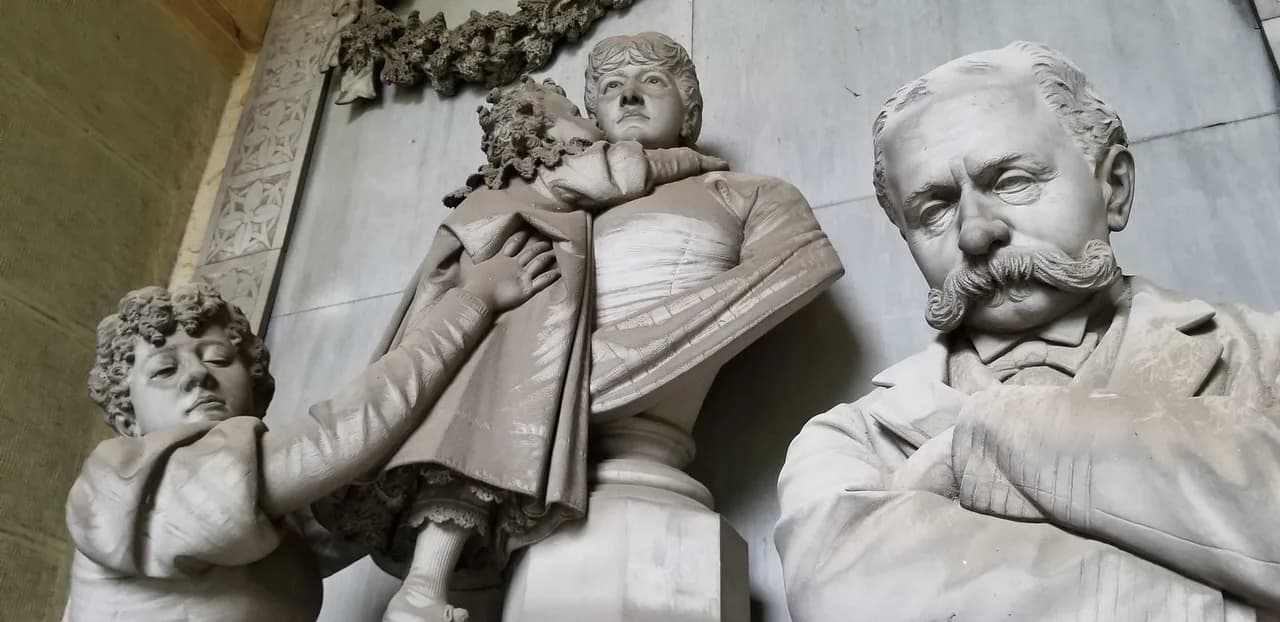
What made Staglieno famous, though, is the middle ground: nineteenth-century funerary portraits of merchants, widows and tradespeople rather than only national heroes. One popular account singles out the monument to Caterina Campodonico, a peanut seller who saved to commission her own memorial, as an example of how ordinary lives were carved into the scheme.
Look, too, at the Commonwealth war graves terraces and the Protestant and Anglican sections, which the same account describes as part of the site's historical layering. These are working memorial areas, so read them quietly and keep to the paths.
Literary Visitors and the Romantic Landscape
Staglieno's setting is part of the sculpture: the wooded upper zone, the aqueduct and the terraces folding into the hillside create the romantic backdrop that nineteenth-century travellers described. The cemetery's own summary notes that the monumental intention is inseparable from the landscape, and walking the outer paths makes that clear.
The roll call of visitors is genuinely long, from philosophers to novelists, and it is worth knowing before you arrive so you recognise the names attached to tombs and streets inside the grounds. Do not expect interpretive panels at every turn, however; a little reading beforehand pays off more than signage on site.
Self-Guided Wandering Versus City-Run Visits
You can walk Staglieno on your own, following the sector layout and the themed itineraries the city publishes for subjects such as the Risorgimento, religions and traditions, and the cemetery's changing memorial culture. These are self-guided routes rather than scheduled tours, so they work at any pace you choose.
For organised visits, the Comune di Genova runs guided tours, and the cemetery site keeps a section for them; some have raised funds for restoration work on the monuments. Special open weekends have also been held, but those are events with their own booking rather than a daily service, so do not assume a tour will be available on your dates.
Outside these, the wider city programme sometimes folds Staglieno into events such as the Rolli Days, which is how tours can appear suddenly and vanish just as fast. If you are in Genoa during an event period, check the tourist board's event listings as well as the cemetery site.
Do not rely on any schedule you read in a secondary blog post. Confirm the specific date, meeting point and whether booking is required directly with the organiser before you build a morning around it.
A Suggested Walking Route
One straightforward loop, drawn from a visitor account rather than any official map, begins at the west entrance and turns immediately into the galleries. Follow the porticoes, look out for the Campodonico grave, then head toward the Protestant section beneath the aqueduct and the Anglican chapel.
From there, climb the stairway near the aqueduct to the Commonwealth war graves terraces and continue up into the irregular wooded sector. Viale Brian and Viale Mosco loop through the upper ground toward the Pantheon, which brings you back down to the main galleries and the exit.
Treat this as one option among many. The upper paths involve real climbing, the numbers on gates can confuse a first visit, and the city's own sector list is the better authority on what is currently open; ask at the site or check the map before committing to the hillside.
Getting There from Central Genoa
Staglieno sits at Piazzale Resasco in the northern part of Genoa, well away from the historic centre, so it is a short bus or taxi ride rather than a walk from the port. One visitor account describes taking bus 34 from the Columbus statue outside Principe station, but treat that as a starting point, not a timetable.
Frequency, fares and journey times change, and the evidence here gives none of them; use the local public transport operator's own planner on the day. If you are weighing how to split your time across the city, our Genoa getting around guide covers the broader transport picture.
Hilly terrain and stepped paths are a genuine factor, and no source here documents step-free routes or entrance accessibility, so enquire ahead if mobility is a concern. Wear shoes suited to cobbles and slopes.
Etiquette at a Working Cemetery
This is Genoa's principal burial ground, and services and family visits continue alongside tourism. Keep voices low, avoid photographing mourners or graveside ceremonies, and do not move flowers or objects left at tombs; the cemetery publishes its own notes on photography and on bringing animals, which are worth reading before you go.
Dress as you would for a churchyard, and give way on narrow paths. If a funeral procession passes, stop and wait rather than continuing your route; the site's own open days and guided visits are organised with exactly this respect in mind.
Pairing Staglieno with the Rest of Genoa
Because the cemetery sits outside the centre, it works best as a half-day rather than a stop-off. Combine it with the Strada Nuova and the Rolli palaces on another morning, or with the Mercato Orientale Genova visitor guide if you want a food-led counterweight to an hour of marble.
If your time is short, our 2 day itinerary for the city prioritises the historic core, and Staglieno is the kind of addition that rewards an unhurried extra morning rather than a rushed hour. Travellers hunting for quieter corners beyond the aquarium and the port will find it fits naturally among the hidden gems in Genoa.
Plan Your Visit
Staglieno rewards a little preparation more than most sights in Genoa: check the weather alert the evening before, confirm whether any tour is running, and decide in advance how far up the hill you want to climb. The monuments are part of the cemetery, and the sector layout lets you build your own route.
Go slowly, keep the working-cemetery etiquette in mind, and leave time for the upper paths if your legs allow. Start with our Genoa Attractions hub if you are still deciding how to order the rest of the trip.
Frequently Asked Questions
Is the Cimitero Monumentale di Staglieno free to enter?
No source in this guide confirms a current entry price, so check the official cemetery pages before you go. Walking the grounds and galleries should be planned as a normal cemetery visit, but any guided tour or special open day may be organised separately, with its own booking arrangements.
Can the cemetery close because of bad weather?
Yes. Genoa's weather alert system can lead the city's operations centre to close all municipal cemeteries, and the cemetery site has posted full-day closures during orange alerts, including cancellation of guided tours. Check the Comune di Genova homepage and the cemetery site on the day, not just the general forecast.
Are guided tours of Staglieno available?
The Comune di Genova does organise guided visits, and the cemetery site keeps a section for them, but they are not a guaranteed daily service. Special weekends and city events also bring tours that require separate booking, so confirm dates and meeting points directly with the organiser rather than relying on a blog.
How do I get to Staglieno from central Genoa?
The cemetery is at Piazzale Resasco in northern Genoa, away from the historic centre. One visitor account mentions bus 34 from outside Principe station, but frequencies and fares change, so use the local transport operator's planner for current routes and times.
How long does it take to visit Staglieno?
A visitor account suggests the main galleries can be seen in under two hours, which is a suggestion rather than an official figure. Add time for the upper wooded sectors, and remember that weather closures can wipe out a visit entirely, so keep your plan flexible.
What are the sectors at Staglieno and which should I see first?
The site is divided into lettered sectors from A to G: lower and semicircular porticoes, the reception area, the upper portico with the Pantheon, the irregular wooded zone, a multi-faith area, and the Veilino, Cava and shrine zones. Begin in the lower porticoes for orientation, then climb if you have the energy.
Sources
Continue exploring
More guides you'll find useful