
Lanterna di Genova Visitor Guide: Museum, Climb and Views
Plan a visit to the Lanterna di Genova: what the lighthouse complex includes, how to reach it, the museum, the terrace climb and the 2026 shuttle access.
On this page
The Lanterna is the one structure that appears on almost every mental image of Genoa: a striped tower on a rock above the port, visible from the ferry terminal and from much of the waterfront. At 77 metres it is described by the city's tourism board as the tallest lighthouse in the Mediterranean, standing on a 40-metre rock that puts the top 117 metres above sea level.
Most travellers treat it as a photo stop, but the site is a small complex of tower, museum rooms, open-air panels and the historic Porta Nuova gate. A suggested visit duration of about one hour is an editorial estimate, not an official figure; add time if you arrive on the shuttle, walk in from the ferry terminal or linger over the museum videos.
This guide separates what is ticketed from what is public ground, explains the current shuttle arrangement during construction works, and flags what the sources do not confirm, including any public ascent to the very top.
What the Monumental Complex Actually Contains
The Lanterna is not a single tower you climb and leave. Inside what remains of the fortress that once closed the city walls at the foot of the lighthouse, the museum occupies former cannon rooms and the Ghibelline gallery, while the riflemen's rooms hold the lighthouse museum with lenses, mechanisms and models. The tower is the vertical part of the visit, and the surrounding park and walkway form a third layer outdoors.
Management matters when planning: the Lanterna website is run by Amici della Lanterna APS, the association that promotes the complex, while the city museum service publishes its own access information. Check both before travelling, because entry rules have changed with the road works described below.
The complex sits at Capo di Faro, the promontory at the western edge of the port, not in the historic centre. That geography is why the approach and the view back towards the city matter as much as the monument itself.
The Numbers That Shape a Visit
The figures published by the site are worth knowing before you commit to the stairs. The tower is 77 metres tall on a 40-metre rock, giving 117 metres above sea level; there are 172 steps to the first panoramic terrace, and 365 to the summit. The light itself reaches 50 kilometres and the lantern dome is 7.05 metres high.
The sources confirm 172 steps to the first terrace as the visitor route and mention 365 steps to the summit only as a figure. They do not state that the summit is open to the public, so plan around the first terrace and treat any full ascent as something to confirm on arrival. Italia.it likewise describes visitors climbing 172 steps on the visitable route.
Anyone with knee, heart or breathing concerns should weigh the climb honestly: 172 steps inside a tower is a real effort, and the sources give no information about lifts, benches or accessibility provisions. Ask at the ticket desk directly if you need to know.
The View from the First Terrace
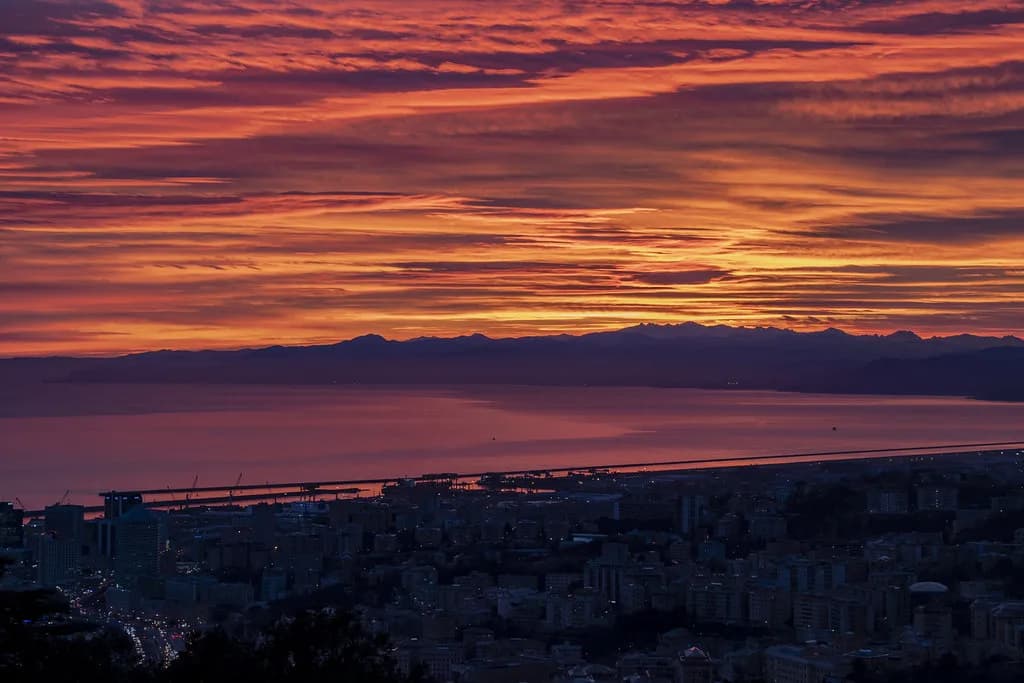
From the first terrace the official description is a 360-degree panorama over the port with its passenger and container terminals, the seventeenth-century walls and the ring of forts, the Ligurian Apennines and the promontory of Portofino. Visibility depends on weather and haze, so treat the list as what the site describes rather than a guarantee.
The better approach is to read the landscape in layers rather than tick off landmarks. Start with the port immediately below, then trace the walls up the hills, then look for how the city presses between sea and ridge; that sequence explains why Genoa grew as a maritime power rather than a land one.
For a contrasting city view without the climb, the Spianata Castelletto visitor guide covers the terrace above the old town, where you look down on rooftops instead of out to sea.
Getting There: Metro, Bus, Walkway or Car
The city's tourism board gives two straightforward approaches: arrive by metro and get off at Dinegro, or take bus 1 to the Lanterna stop, then continue on foot along the panoramic walkway. By car, the recommendation is to park at the Terminal Traghetti. From Dinegro or the ferry terminal car park, the lighthouse is described as about a ten-minute walk.
The walkway itself, built in 2001, runs roughly 800 metres and follows the line of the old western approach road through the Porta Nuova gate. It is an exposed, harbour-side path, so wind and rain matter more than distance.
Note that the official site has posted notices about the pedestrian walkway and about weather closures in the past; those are site-specific updates, not permanent rules. Check the notice panel before setting out, since the walkway is not guaranteed to be the access route while works are ongoing.
Access During the Sub-Port Tunnel Works
The area around the Lanterna is affected by construction of the sub-port tunnel, and the complex remains open but with a changed entry route. For technical and safety reasons, access is currently only via a dedicated shuttle departing every 20 minutes from Piazzale San Benigno. Treat this as a temporary arrangement tied to the works, not a permanent feature of the site.
During this construction period the city publishes reduced ticket prices of six euros for a full ticket and five euros for a reduced one, covering park, museum and lighthouse up to the first terrace. These figures are tied to the construction period, so do not assume them as the permanent rate, and confirm the current price before you buy.
Because the shuttle departs on a fixed interval, build slack into your plan rather than arriving at the last minute. If you are combining the Lanterna with a ferry departure, allow for the shuttle plus the visit rather than the walkway alone.
Inside the Lighthouse Museum
The museum is smaller and more technical than visitors expecting a general city history museum might assume. Its core is the maritime signalling collection: lenses, clockwork mechanisms and models that show how a light was focused, rotated and timed before automation.
There is also a multimedia layer: the city tourism board describes a museum where visitors choose from around 150 video contributions about the history, art, material culture and traditions of Genoa and its province, told through ordinary people's words. Trying to watch all of it would swallow the visit, so pick two or three themes that interest you before sitting down.
The video format helps if you are travelling with people who read at different speeds or in different languages, since watching a short clip together is easier than working through panels in sequence.
The Open-Air Museum, Park and Porta Nuova
Outside the tower, the park and walkway function as an open-air museum. A series of panels explain the historical and urban context, the trades and activities of the port past and present, and where possible set historic paintings, views and archive photographs against the scene in front of you.
The nineteenth-century Porta Nuova stands in the park, a monumental gate that marks the old landward entrance to the city. Reading the panels there before or after the climb gives the terrace view a second dimension, because you can match the old road line to what you see from above.
If the weather is poor, the outdoor section is the part to cut first. The museum rooms and the tower stay the priority, and the panels are best saved for a clear day when you can compare them with the actual port.
Tickets, Free Space and Practical Decisions
The ticketed product described by the city includes park, museum and the lighthouse up to the first terrace, which is the scope to expect rather than an all-access pass. Italia.it directs readers to the official website for hours and tickets rather than listing them, so check the operator's site close to your date for current opening times and any holiday variations.
Wear shoes you can climb stairs in: 172 steps in smooth-soled shoes is a poor combination, and the sources say nothing about seating on the way. Carry a light layer, because the terrace is exposed even when the city below feels warm.
Because the site sits away from the historic centre, sequencing matters. Pair the Lanterna with the waterfront and Porto Antico on the same half-day, then move inland; the Genoa Attractions hub lists the individual sights so you can slot the lighthouse into a wider plan.
Pairing the Lanterna with the Rest of Genoa
The lighthouse works best as one anchor in a slower day rather than a quick detour. After the climb, the covered market halls of the Mercato Orientale Genova visitor guide give you a natural stop for lunch near the centre, and the contrast between port industry and food stalls is itself part of the city's character.
Travellers who want corners that reward a longer walk should look at the hidden gems in Genoa guide, a sensible next step once you have covered the headline sights.
For families, the Acquario di Genova visitor guide covers the Porto Antico aquarium, which sits on a similar waterfront axis and can be combined with a ferry-terminal start to the day.
Who the Lanterna Suits
The Lanterna rewards travellers who want to understand Genoa as a working port rather than only as a medieval street grid. It suits anyone comfortable with 172 steps and an exposed outdoor walk, and it is easy to skip if stairs or weather are against you, since the view of the tower from the waterfront costs nothing.
Before setting out, confirm the current access arrangement and ticket scope on the operator and city tourism pages, since the shuttle arrangement is tied to the tunnel works. Then build the rest of the day around the harbour rather than crossing back into the centre twice.
Frequently Asked Questions
Is the Lanterna di Genova open while the sub-port tunnel works are ongoing?
Yes according to the city tourism board, but access during the works is only via a dedicated shuttle from Piazzale San Benigno, departing about every 20 minutes. The arrangement is tied to the construction, so check the operator and city pages before travelling.
How many steps are there to the Lanterna's panoramic terrace?
There are 172 steps to the first panoramic terrace, according to the official Lanterna site. The same site gives 365 steps as the figure to the summit, but it does not state that the summit is open to visitors.
Can you walk to the Lanterna from the Ferry Terminal or Dinegro metro station?
The city tourism board describes roughly a ten-minute walk from Dinegro metro station or the Terminal Traghetti car park, and bus 1 stops at the Lanterna. However, the panoramic walkway has been subject to notices and temporary shuttle access during the tunnel works, so check the access page before relying on the walk.
What is included in a Lanterna di Genova ticket?
The city describes the ticket as covering the park, the museum and the lighthouse up to the first terrace. That is not an all-access pass, so do not expect the summit to be included.
Can visitors climb all the way to the top of the lighthouse?
The sources confirm 172 steps to the first terrace and give 365 steps to the summit only as a figure; they do not confirm public access to the summit. Ask at the ticket desk on the day.
How long does a visit to the Lanterna take?
About an hour is a reasonable editorial suggestion for the museum and terrace, excluding travel. Add time for the shuttle or the walkway, and more if you read the outdoor panels.
Sources
Continue exploring
More guides you'll find useful





