12 Hidden Gems in Bruges: Secret Spots & Local Favorites (2026)
Skip the Markt crowds. This 2026 guide covers 12 hidden gems in Bruges, from a private chapel to a 1515 volkscafe and a 2-mile beer pipeline.
On this page
12 Hidden Gems in Bruges: A Guide to the City's Secret Side
Last updated July 2026, Bruges keeps its real character several streets off the Markt-to-Burg loop that most first-time visitors never leave. This guide to hidden gems in Bruges routes you into the Sint-Anna quarter, past almshouse gardens, and into a windmill you can actually climb inside. Each entry below notes the crowd level, cost, and time commitment, so you can build a route instead of chasing a checklist.
Why Seek Out Hidden Gems in Bruges Beyond the Markt
Most day-trippers spend a single visit climbing the Belfry's 366 steps and photographing the Markt before heading back to the train station. Locals describe the calmer version of the city as De Stille Stad, or Silent Bruges. It is less a separate district than a way of timing a walk so it lands in workers'-cottage lanes and private chapels instead of the postcard loop.
De Stille Stad routing centers on quarters where buses cannot reach; planning a walking or biking loop through these neighborhoods works better than deciding stops individually.
The Bruges Neighborhoods Guide: Where to Stay in 2026 maps these calmer pockets against the busier tourist core. This list overlaps with Beyond the Belfry: Off the Beaten Path in Bruges (Hidden Gems Guide) picks and 14 Unique Things to Do in Bruges: Secret Spots & Local Favorites, narrowed to addresses locals still use. A fuller shortlist of Secret Spots in Bruges: Hidden Gems and Quiet Escapes (2026 Guide) covers more ground street by street.
The Bruges City Card from Musea Brugge covers headline sights such as the Belfry and the Groeninge Museum. Most of the addresses below are independent or family-run, so check each venue's own site before assuming the card applies. Two neighborhoods carry most of this list: the Sint-Anna quarter east of the center, and the quieter west side around Langestraat and the windmills.
Each of the 12 spots below lists a crowd level, a cost, and a time commitment in plain terms rather than a numeric score, since none of these venues publish visitor statistics. Use those notes to decide what fits a rainy afternoon versus a full half-day loop.
12 Hidden Gems in Bruges You Won't Find on a Guided Tour
These 12 hidden gems in Bruges cluster mostly in two neighborhoods: the Sint-Anna quarter and the calmer west side near the windmills. Addresses run from a private family chapel to a 1515 volkscafe, with crowd levels, costs, and time commitments noted for each so you can plan a realistic afternoon.
- Adornes Domain and the Jerusalem Chapel
- The Adornes Domain in the Sint-Anna quarter is a private estate still owned by the Adornes family.
- The attached Jerusalem Church copies the Holy Sepulchre in Jerusalem, with skull-and-crossbones carvings and a crawl-through crypt.
- Crowd level stays low even at midday; plan 45 to 60 minutes and confirm current ticket prices on the estate's own site, since it operates independently of Musea Brugge.
- St Sebastiaan Royal Guild of Archers
- This working archers' guild has occupied the same Sint-Anna clubhouse for centuries and still holds member shoots.
- Its small museum covers guild history, but tours run on a limited schedule rather than daily opening hours.
- Confirm current tour days before visiting; crowd level is minimal since most travelers never find the building.
- The Windmills Along the Kruisvest
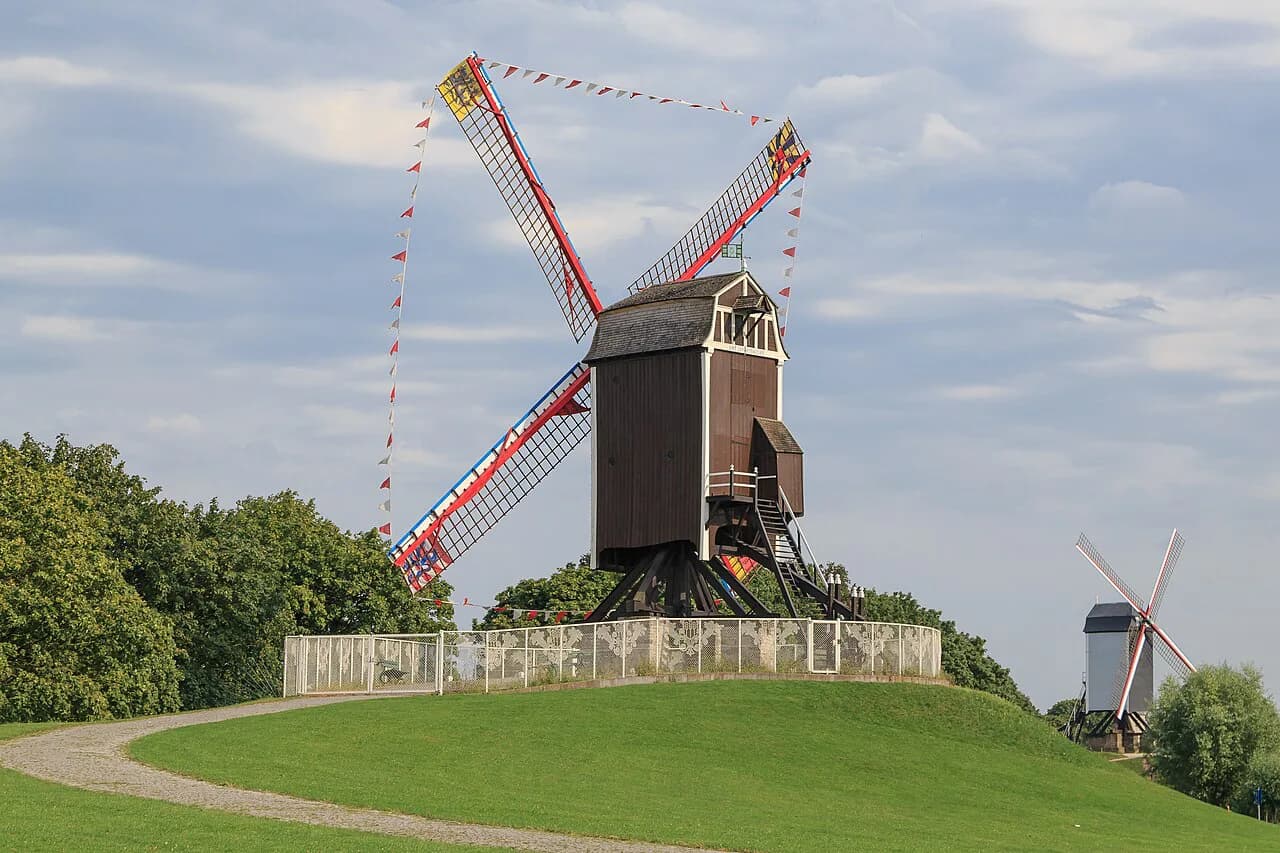
- Four windmills stand along the old city ramparts on the east side, an easy walk from the Sint-Anna quarter.
- Sint-Janshuismolen is the one open for a climb inside; the other three are viewing-only from the grass embankment.
- The row is free to walk, which puts it on the Free Things to Do in Bruges: A 2026 Budget Traveler's Guide list; check the windmills of Kruisvest page for current climb hours.
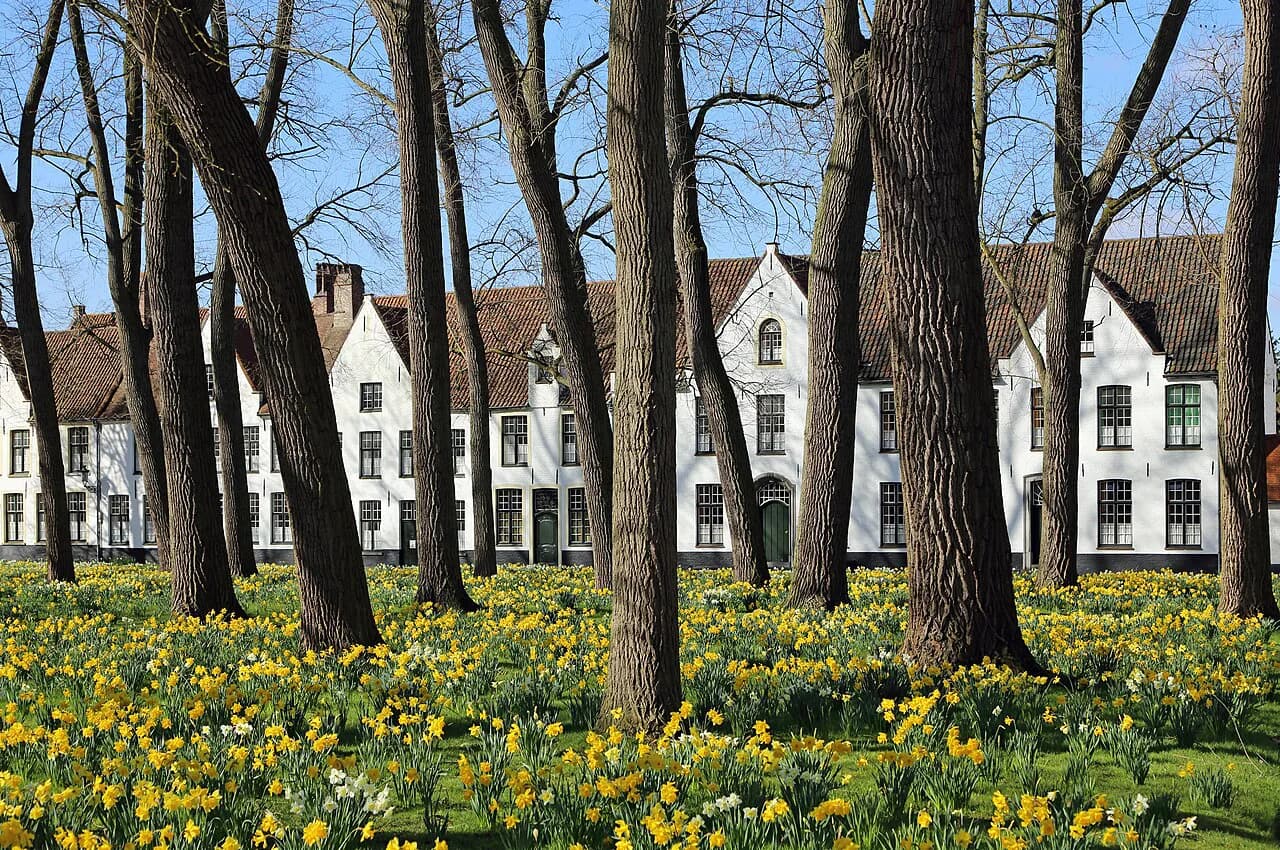
- The Begijnhof at Dawn or Dusk
- The Begijnhof courtyard is free to walk into, but midday brings tour groups through in waves.
- Arrive at opening or in the last hour before the gates close and the whitewashed courtyard empties out.
- The small house museum charges a modest separate entry fee; budget 20 minutes for the courtyard alone, longer with the museum.
- Sint-Janshospitaal's Old Pharmacy
- Most visitors come for the Hans Memling paintings and skip the museum's other wing: a preserved 17th-century hospital pharmacy.
- Jars, medical instruments, and hospital ledgers trace how the site treated patients for centuries before becoming a museum.
- The Memling rooms draw the Flemish Primitives crowd; the pharmacy wing sits nearly empty, so add 30 extra minutes there.
- The Godshuizen Almshouses
- Bruges has dozens of almshouses, small courtyards built for the poor and elderly, tucked behind unmarked doors across the center.
- Godshuis Spanoghe and Godshuis De Meulenaere have courtyard views worth a quiet pause; sheep still graze at Hofje van Jonghe in season.
- These remain private property: keep voices down, do not litter, and treat each stop as a few minutes, not a destination.
- Langestraat and Hoogstraat Antique Shops
- This is the antique and vintage corridor of Bruges, running through the Langestraat and Hoogstraat district toward the east side.
- Browse dealers for furniture, or smaller storefronts for postcards, preserved vintage dresses, and hand-restored shoes.
- Shops keep retail hours rather than tourist hours; plan an hour and expect several to close on Sundays and Mondays.
- 't Apostelientje for Authentic Lace
- Lace shops near the Markt sell mass-produced imports; 't Apostelientje sells handmade Belgian lace instead.
- Look for the Handmade in Bruges label, which marks genuine local lace, chocolate, and leather work across the city.
- A visit runs 15 to 20 minutes; pieces cost more than souvenir lace, reflecting the hours of hand work behind each one.
- Retsin's Lucifernum, the Vampire Bar
- This private mansion-turned-bar in the Sint-Anna quarter has historically opened only on Sunday nights, run by owner Willy Retsin.
- Entry has run around €10 and included a drink, based on recent visitor accounts; confirm current hours and price before making the trip.
- Inside is a self-guided wander through deliberately shock-value decor, followed by cocktails and live cimbalom or violin.
- De Halve Maan's Underground Beer Pipeline
- De Halve Maan Brewery runs a roughly 2-mile underground pipeline that carries beer straight to its bottling plant outside the center.
- A brewery tour explains the engineering and ends on the roof, a view included in the tour price.
- Book ahead in peak season; crowd level rises on weekend afternoons but thins out for the first tours of the day.
- Cafe Vlissinghe, Open Since 1515
- Vlissinghe is a volkscafe, a neighborhood talking-cafe, dating to 1515, with a walled garden that stays quiet outside weekend evenings.
- Order what regulars order rather than reach for a cocktail list; the beer selection is smaller than in center bars but the room is authentic.
- Crowd level is low on weekday afternoons and the garden makes it a fit for a slow hour with a book.
- Bruges Cat Cafe
- A niche stop for animal lovers, this cafe lets resident cats wander between tables while you order coffee or tea.
- It suits a rainy-day itinerary better than a sunny afternoon, since most other gems on this list involve walking outdoors.
- Crowd level is low and table time is typically unhurried; budget 30 to 45 minutes.
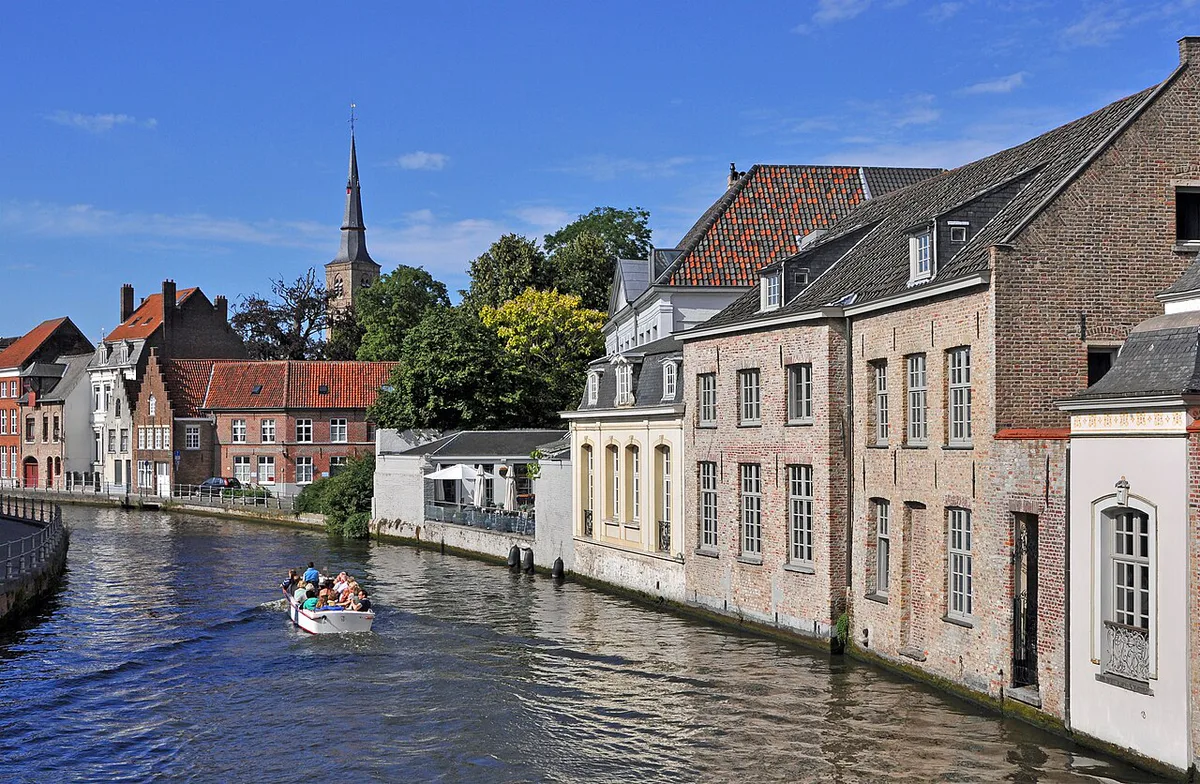
The Sint-Anna Walking Route: Langestraat to the Windmills
Treat the east side as one loop instead of separate stops. Start on Langestraat and Hoogstraat for antique shopping, then continue into the Sint-Anna quarter for the Adornes Domain and Jerusalem Church. From there it is a short walk to the St Sebastiaan Guild clubhouse and on to the windmills along the Kruisvest. The same quarter sits close to the house museum of poet Guido Gezelle, worth a stop if 19th-century Flemish literature interests you.
This loop covers roughly 2 to 3 kilometers and works equally well on foot or by bike. None of these stops sit on a bus line, so budget the walking time into a half-day rather than squeezing them between other sights. For a second, quieter loop, pair the Begijnhof with Minnewater just south of it, then finish at Sint-Janshospitaal.
When to Visit: Avoid the Monday Trap and the Midday Crush
Bruges runs on a different clock than the Markt-facing shops. Several of the addresses above keep limited or weekend-only hours, especially outside peak season, and closures often land on Mondays or Sundays rather than one predictable day. Confirm hours before building a day around any single stop. For a broader seasonal breakdown, see the best time to visit Bruges guide.
Visiting before 11 a.m. or after 3 p.m. produces quieter conditions across nearly all addresses, making departure time from central attractions more critical than selecting any particular gem.
The pattern below is a starting point, not a guarantee. Verify each listing directly, since family-run venues change hours with little notice.
The biggest planning mistake is trying to see these spots between 11 a.m. and 3 p.m., when day-trip crowds from Brussels and the coast peak in the center. Visit before or after that window for the calmest version of each stop.
| Spot | Typical Closed Days | Note |
|---|---|---|
| Adornes Domain and Jerusalem Church | Varies seasonally | Privately run; confirm on the estate's site |
| St Sebastiaan Guild | Most weekdays | Tour access is limited; contact ahead |
| Langestraat and Hoogstraat antique shops | Sundays, often Mondays | Retail hours, not tourist hours |
| Retsin's Lucifernum | Open Sunday nights historically | Confirm the current schedule before visiting |
| Volkscafes near the center | Some close midweek off-season | Hours shift outside July and August |
Getting Around: Why Bike and Foot Beat the Bus
Most of the spots on this list sit on narrow lanes that city buses do not reach. A bike or a walking route works better than public transit for stringing them together. The Sint-Anna loop and the west-side windmill walk both run under 3 kilometers, short enough on foot in under an hour each.
Once the in-city list is covered, day trips extend the same quiet-Bruges approach beyond the city walls. A Damme day trip or a Zeebrugge day trip both stay outside the peak day-tripper flow into central Bruges. The 5 Best Day Trips from Bruges: Logistics, Costs and Local Angles guide covers more options for a second or third day.
Where to Eat and Drink Away From the Center
Pair these stops with a meal away from the Markt-facing menus. Volkscafes such as In De Reisduif, De Kroon, and 't Hof van Beroep sit on the outskirts of the center. They serve a smaller, less curated beer list than tourist-zone bars, with a room full of regulars instead of visitors. Cafe Vlissinghe, open since 1515, adds a walled garden to the same style of visit.
The 8 Best Local Restaurants in Bruges: Authentic Eats Beyond the Tourist Traps guide lists sit-down options beyond the center, and the Bruges Local Food Guide: Authentic Flemish Cuisine Away From the Markt covers what to order once you are there. For something different from a bar, the Bruges Cat Cafe on this list works as a rainy-day stop between other spots.
For trip-planning details, see Bruges – Wikivoyage.
Explore hidden gems in other cities
Further reading: Bruges on Wikivoyage · Bruges on Wikipedia
Frequently Asked Questions
What is Silent Bruges, or De Stille Stad?
It is the informal name locals use for the version of Bruges away from the Markt and Belfry. It is not a single neighborhood; it is a routing and timing approach that favors the Sint-Anna quarter, the west-side windmills, and early or late visiting hours over the midday crowd window.
Which Bruges hidden gems close on Mondays or Sundays?
Several addresses on this list, including the antique shops on Langestraat and Hoogstraat and some volkscafes, keep limited hours early in the week or off-season. Retsin's Lucifernum has historically opened Sunday nights only. Confirm each venue's current schedule before building a day around it.
Does the Bruges City Card cover these hidden gems?
The Bruges City Card from Musea Brugge covers major sights such as the Belfry and the Groeninge Museum. Most of the addresses in this guide are independent or family-run, so check each one's own site rather than assuming the card applies.
How much time should you plan for the Sint-Anna quarter route?
Budget a half-day for the full loop from Langestraat through the Adornes Domain and Jerusalem Church to the windmills along the Kruisvest. Individual stops run 20 to 60 minutes each, so a slower pace can stretch the same route across a full afternoon.
Can you reach these spots without a car or bus?
Yes. Nearly every stop on this list sits on a lane that buses do not serve, so walking or a rented bike is the standard way locals and repeat visitors cover them.
What does the Handmade in Bruges label mean?
It marks lace, chocolate, leather, and other goods actually produced by local artisans, as opposed to imported souvenir versions sold in center-facing shops. Look for the label at shops such as 't Apostelientje before assuming a piece is locally made.
Explore More Hidden Bruges
Keep discovering the quieter side of Bruges with these local guides.
Quarters & nearby
- Bruges Neighborhoods Guide: Where to Stay in 2026
- Sint-Anna Quarter Bruges
- Langestraat Bruges
- Damme Day Trip from Bruges: Cycling, Boat & Walking Guide (2026)
- Zeebrugge Day Trip from Bruges: Logistics, Sights and Coastal Tips
Secret spots & the outdoors
- Secret Spots in Bruges: Hidden Gems and Quiet Escapes (2026 Guide)
- Begijnhof Bruges: A Visitor's Guide to the Princely Beguinage (2026)
- Minnewater Bruges: A Local's Guide to the Lake of Love
- Jerusalem Church Bruges: Inside the Adornes Estate's Private Chapel
- Windmills of Bruges
- Off the Beaten Path in Bruges (Hidden Gems Guide)
- 14 Unique Things to Do in Bruges
Food, drink & planning
Continue exploring
More guides you'll find useful