Jerusalem Church Bruges: Inside the Adornes Estate's Private Chapel
Visit the Jerusalem Church in Bruges (Adornes Estate): the Golgotha altarpiece, 1560s stained glass, and Anselm Adornes's tomb in the quiet Sint-Anna Quarter.
On this page
Jerusalem Church Bruges: A Guide to the Adornes Estate Chapel
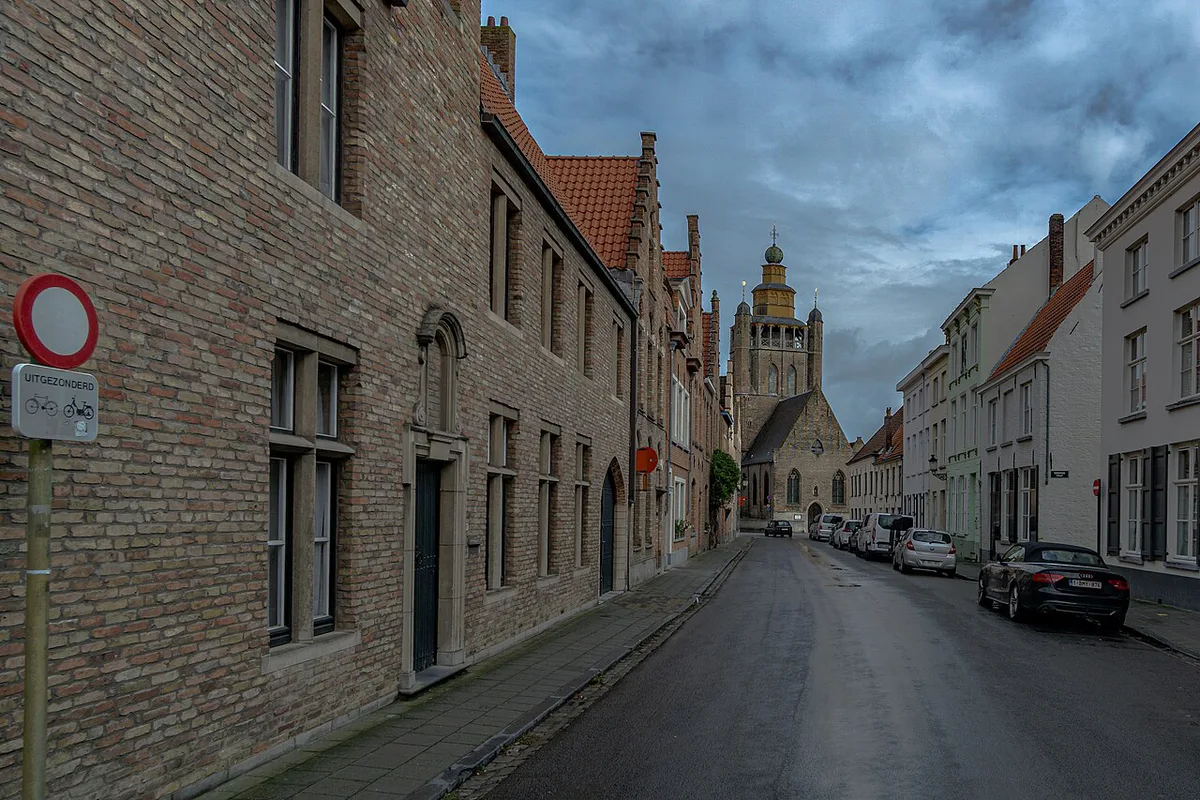
Last updated July 2026. The Jerusalem church in Bruges hides inside the privately owned Adornes Estate on Peperstraat, a short walk from the Markt yet largely free of its crowds. Built in 1429 as a replica of Jerusalem's Church of the Holy Sepulchre, the chapel still belongs to the seventeenth generation of the Adornes family.
The History of the Jerusalem Church and the Adornes Estate in Bruges
The Adornes family arrived in Bruges from Genoa around 1300, according to Visit Bruges. Strategic marriages and trade connections pushed the family into the city's political and economic elite by the 15th century. Brothers Jacob and Peter II Adornes secured a rare papal permission, usually reserved for parish churches, to build a private family chapel on the estate. That chapel was consecrated in 1429. Anselm Adornes, Peter II's son, later ordered it rebuilt as a replica of the Holy Sepulchre Church in Jerusalem, with an Eastern-style tower. Anselm combined trade with diplomacy and faith: he served as a diplomat and made a pilgrimage to the Holy Land in 1470. You won't find this level of family continuity at most Bruges churches. Today's owners, Duke and Duchess Maximilien de Limburg Stirum, are the seventeenth generation of the family in the city, tracing back to founder Opicius Adornes. That private ownership is part of what keeps the estate off most standard off-the-beaten-path itineraries, even though it sits minutes from the center.
Inside the Jerusalem Chapel: What to Look For
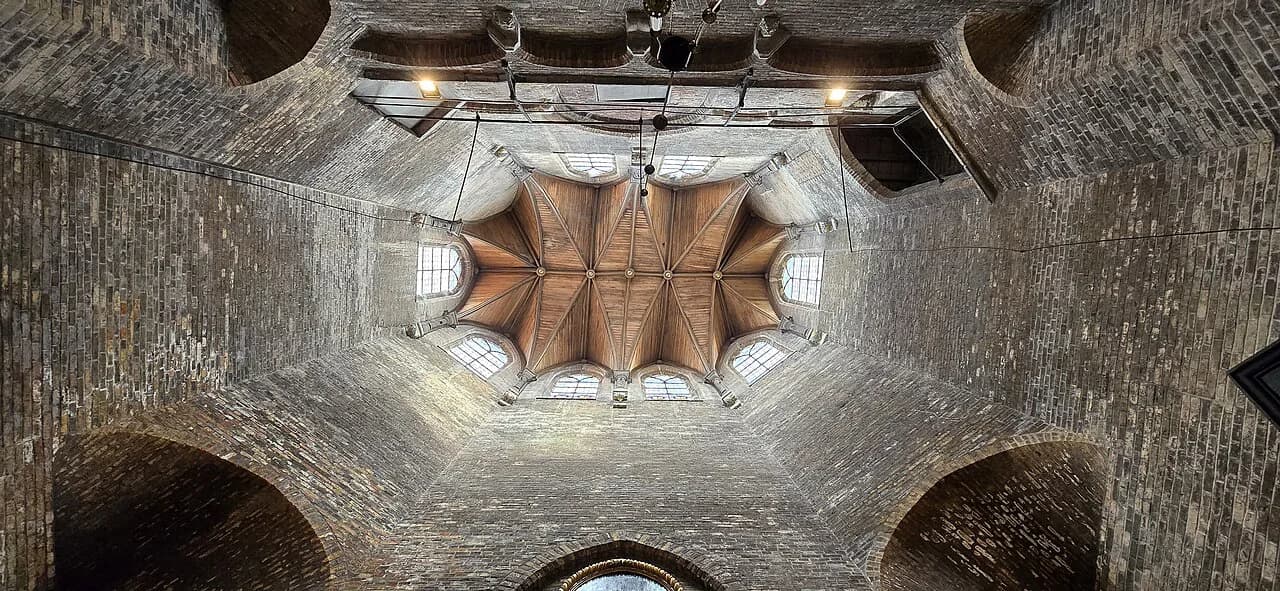
Inside, look for the Eastern-style tower that marks this building as a copy of Jerusalem's Church of the Holy Sepulchre. Anselm Adornes commissioned the rebuild after his own 1470 pilgrimage to the Holy Land. The lighting stays deliberately dim throughout the chapel. Bring a steady hand, or a wide-aperture setting, if you plan to photograph the altarpiece or the stained glass. Five details are worth slowing down for:
- Golgotha altarpiece: Golgotha translates to place of the skull. This white limestone sculpture represents Calvary, the crucifixion site.
- Tomb of Anselm Adornes and Margaretha van der Banck: carved by stonemason Cornelis Tielman. Anselm was murdered in Scotland and is buried there; only his heart was brought back to rest beside his wife.
- Stained glass: dated to around 1560, the oldest surviving stained glass in Bruges, illustrating the Adornes family story in light and color.
- Private oratory: a small gallery above the chapel floor, once used by a single family member to attend Mass.
- Triptychs: the Enthroned Madonna and Child, flanked by Saints Barbara and Catherine, and a 16th-century Christ on the Cross that shows Bruges' own skyline in the background.
Beyond the Chapel: The Almshouses and Family Museum
Anselm Adornes built twelve almshouses on the estate for single women, an act of charity typical of a 15th-century merchant family. Those almshouses now hold the estate's museum. Displays trace the Adornes family story, with a focus on Anselm's roles as merchant, diplomat, and pilgrim. His 1470 pilgrimage to the Holy Land runs as a thread through the exhibits. Duke and Duchess Maximilien de Limburg Stirum run the estate under the motto share to revive, revive to preserve, and they host occasional exhibitions of contemporary Belgian art. Because the estate stays privately owned rather than city-run, it feels different from many of Bruges' quieter sights that sit on municipal or diocesan land. After the museum, The Scottish Lounge offers an honesty-bar setup: pour a drink or snack and leave payment in a piggy bank. In summer, the lounge opens onto the estate's garden.
Planning Your Visit: Hours, Prices, and Access
The Jerusalem Church sits at Peperstraat 3, inside the Sint-Anna Quarter, away from the Markt and Burg squares. Plan for 45 to 60 minutes to cover the chapel, the almshouse museum, and the gardens. As of 2026, the official price table published via Visit Bruges lists the following categories for the Adornes Estate, which covers the chapel, museum, and gardens on one ticket:
Deliberately dim lighting preserves the chapel's 1560 stained glass—the oldest in Bruges—but necessitates slower viewing and camera adjustments. Plan accordingly when budgeting the recommended 45–60 minutes.
| Ticket type | Price |
|---|---|
| Adults | €11.00 |
| Senior citizens (65+) | €9.00 |
| Youngsters (7 to 25) | €7.00 |
| Children under 7 | €0.00 |
| Visitors with a disability | €7.00 |
| museumPASSmusées holders | €0.00 |
- Typical opening days: Monday through Saturday, with seasonal Sunday closures — confirm current hours on the official site before you go.
- Nearest bus stop: Brugge Molenbrug (stop 510612).
- Nearest train station: Station Brugge.
- Nearest parking: Langestraat car park.
- Accessibility: the adapted toilet is independently accessible, while access paths and the entrance are accessible with assistance; the courtyard itself is cobbled.
- Family discount: free entry from the third child onward.
Combining Your Visit: The Sint-Anna Quarter Loop
The Adornes Estate sits inside the Sint-Anna Quarter district, an area covered in more depth in the city's neighborhood-by-neighborhood guide. You can pair the chapel with three nearby stops on one loop:
The chapel's relative quietness compared to central churches becomes a strategic advantage when combined with its adjacent loop of cultural sites, offering a half-day itinerary that stays outside the main Markt-Burg tourist corridor.
- Kantcentrum (Lace Centre): directly adjacent, at Balstraat 16, with lace-making demonstrations and a shop tied to Bruges' textile trade.
- Volkskundemuseum (Folk Museum): just across the street, at Balstraat 43, inside renovated 19th-century workers' houses.
- Windmills of Kruisvest: about a 5-minute walk away, the Kruisvest windmill row along the old city ramparts.
Mistakes to Avoid When Visiting the Jerusalem Church
A few mix-ups trip up first-time visitors to this corner of Bruges. Watch for these before you plan the stop:
- Confusing it with the Basilica of the Holy Blood: that relic church stands near the Burg, a separate site with a separate ticket and a separate history.
- Assuming free entry: because the estate is privately owned rather than city- or diocese-run, admission costs more than most Bruges parish churches, which are often free or charge only for a side chapel.
- Arriving right before closing: last entry typically closes 30 to 45 minutes before the site does, so build in a buffer.
- Skipping the Scottish connection: Anselm Adornes held fiefs in both Flanders and Scotland through his dealings with Scottish king James III, and after his murder in Scotland only his heart was returned to the family tomb.
Crowds, Timing, and What to Pair With the Visit
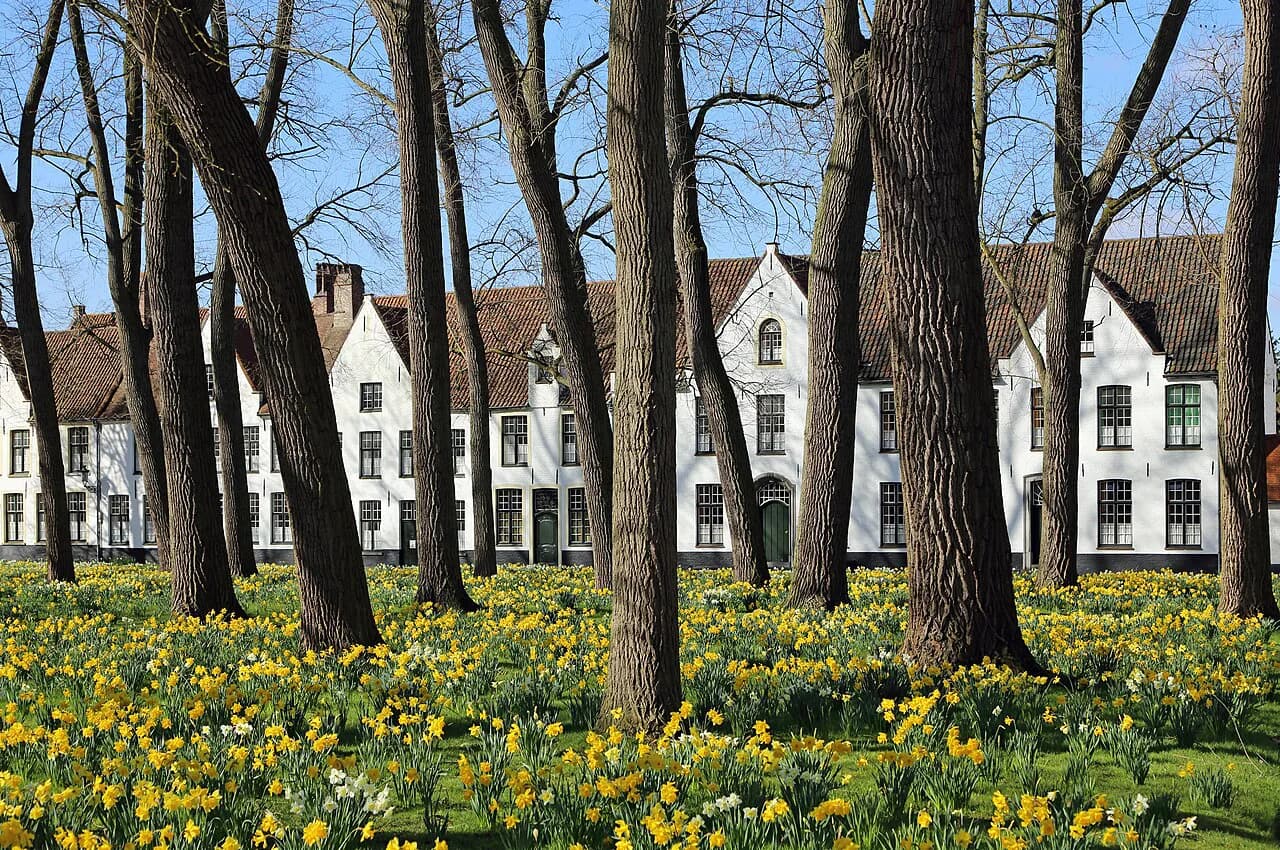
The Jerusalem Chapel draws far fewer visitors than the Belfry or the Church of Our Lady, both on the main tourist axis around the Markt and Burg. That makes it a fit if you're chasing lesser-known Bruges spots or unusual Bruges activities away from the main squares. Timing a trip around the city's quietest months to visit stretches that advantage across the rest of your itinerary too. Once the estate closes, the Sint-Anna Quarter's side streets lead back toward options covered in the city's regional food guide and its local restaurant picks. With an extra day, you can extend the trip using one of the day trips from the city, including the canal route to Damme or the coastal run to Zeebrugge. Since admission to the chapel and museum isn't free, budget-conscious travelers often balance the cost against a separate day built around no-cost Bruges activities, such as a walk past the Begijnhof courtyard or along Minnewater lake. For a longer walk through the quarter itself, the Langestraat-Hoogstraat shopping strip connects back toward the center.
Further reading: Bruges on Wikivoyage · Bruges on Wikipedia
Frequently Asked Questions
Is the Jerusalem Church in Bruges the same as the Basilica of the Holy Blood?
No. They are separate sites. The Basilica of the Holy Blood stands near the Burg and holds a relic venerated by pilgrims. The Jerusalem Church is a private 15th-century family chapel on the Adornes Estate, modeled on Jerusalem's Church of the Holy Sepulchre.
How much does it cost to visit the Adornes Estate?
As of 2026, the official price table lists adults at €11.00, seniors 65+ at €9.00, youngsters 7 to 25 at €7.00, children under 7 free, and visitors with a disability at €7.00. museumPASSmusées holders enter free.
How much time should you plan for the visit?
Budget 45 to 60 minutes for the chapel, the almshouse museum, and the gardens. That makes it easy to pair with the adjacent Lace Centre or the Windmills of Kruisvest on the same afternoon.
Where exactly is the Jerusalem Church located?
It sits at Peperstraat 3, inside the Sint-Anna Quarter, away from the Markt and Burg squares. The nearest bus stop is Brugge Molenbrug, the nearest station is Station Brugge, and the nearest parking is the Langestraat car park.
Why is it called the Jerusalem Church?
The chapel was built in 1429 as a replica of Jerusalem's Church of the Holy Sepulchre, commissioned by the Adornes family after their pilgrimages to the Holy Land, including Anselm Adornes's 1470 journey.
Is it true that only Anselm Adornes's heart is buried in the tomb?
Yes. Anselm Adornes was murdered in Scotland and is buried there. Only his heart was brought back to Bruges, where it rests beside his wife, Margaretha van der Banck, in the tomb carved by Cornelis Tielman.
Continue exploring
More guides you'll find useful