Windmills of Bruges: A Guide to the Kruisvest Walk & Museums
Discover the four historic windmills on Bruges' Kruisvest. Learn which mills you can enter, ticket prices, opening hours, and the best walking route.
On this page
The Windmills of Bruges' Kruisvest: A Complete Visitor Guide
Last updated July 2026, the windmills along Bruges' Kruisvest remain one of the city's better detours away from the Markt. Four mills stand on this eastern rampart stretch, though only one still grinds grain on its original mound. This guide covers which Kruisvest mills you can enter, what a 2026 visit costs, and the best route to see all four.
The Windmills of Bruges' Kruisvest Ramparts: An Overview
The Kruisvest is the green rampart belt running along Bruges' eastern edge, near the Dampoort and the Kruispoort. Four windmills stand along this stretch today, the last visible trace of a system that once ringed the whole city wall. Bakers depended on wind power to grind grain long before steam engines took over the job. The ramparts' open, unobstructed exposure to the wind made them the obvious site for that work, and mills stood there from the late 13th century onward.
Bruges preserved just four of roughly thirty mills that once ringed the city's 16th-century walls; uniquely, only Sint-Janshuismolen occupies its original mound, while the three others were relocated specifically to maintain the rampart's historic skyline.
According to Visit Bruges, as many as thirty mills operated on the city's walls and ramparts by the 16th century, some powered by water and others by wind. Steam power made most of them obsolete during the 19th century, and one by one they disappeared. Only Sint-Janshuismolen kept its original spot on the Kruisvest. To keep the skyline and memory of that era alive, Bruges relocated three more mills onto the same ramparts. Those three are Bonne Chiere, De Nieuwe Papegaai, and Koeleweimolen.
The result is a walk past four windmills within a single stretch of rampart, a detail most first-time visitors miss entirely. The Kruisvest sits well outside the usual sightseeing loop around the Markt and the Burg, which is exactly why it shows up in Bruges' quieter corners of Bruges guide. The wider context for this part of town is covered in the city's neighborhood breakdown, useful for anyone mapping out where the Kruisvest fits relative to the rest of Bruges.
The Four Mills of the Kruisvest: Which Ones You Can Actually Enter
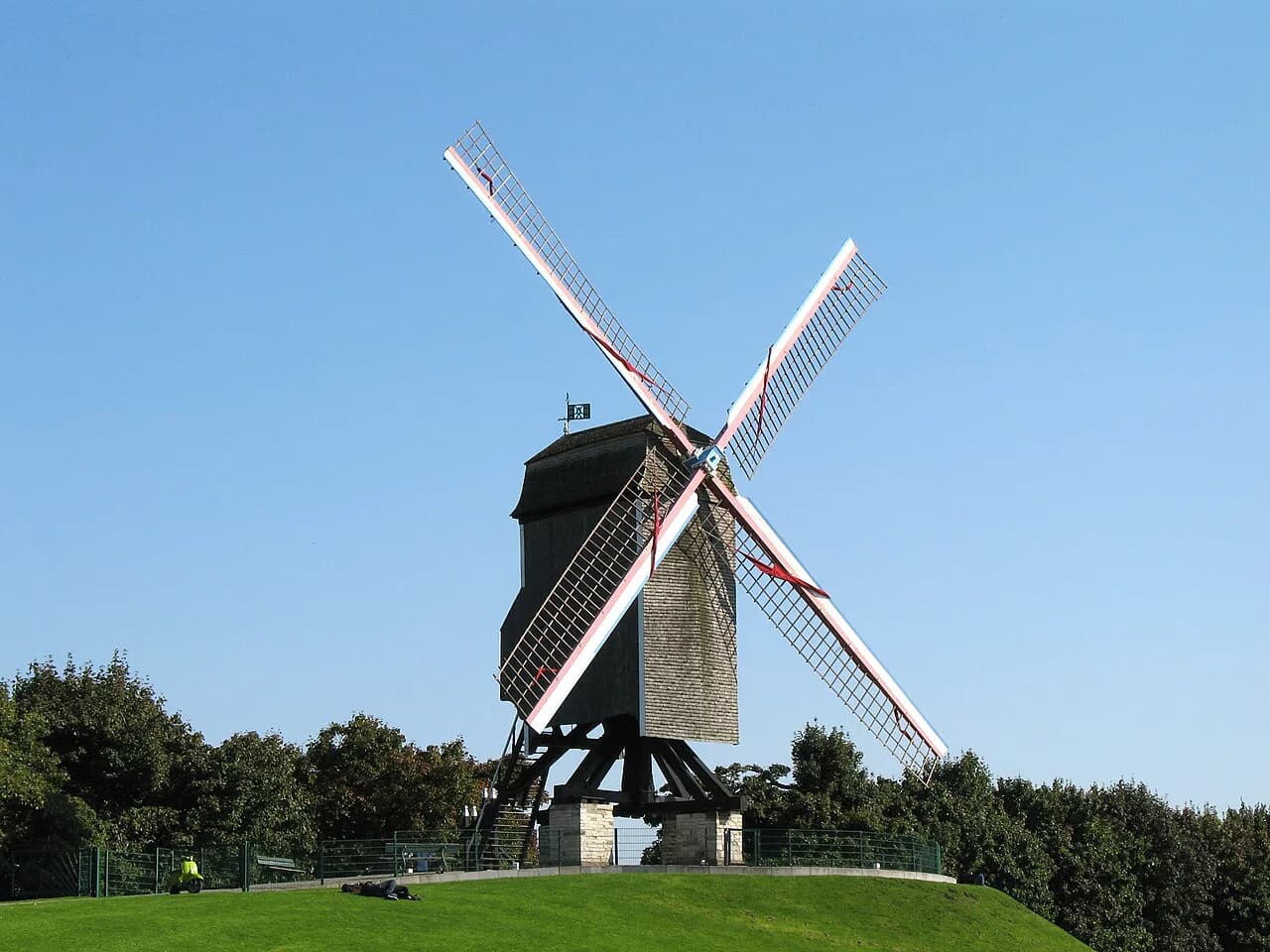
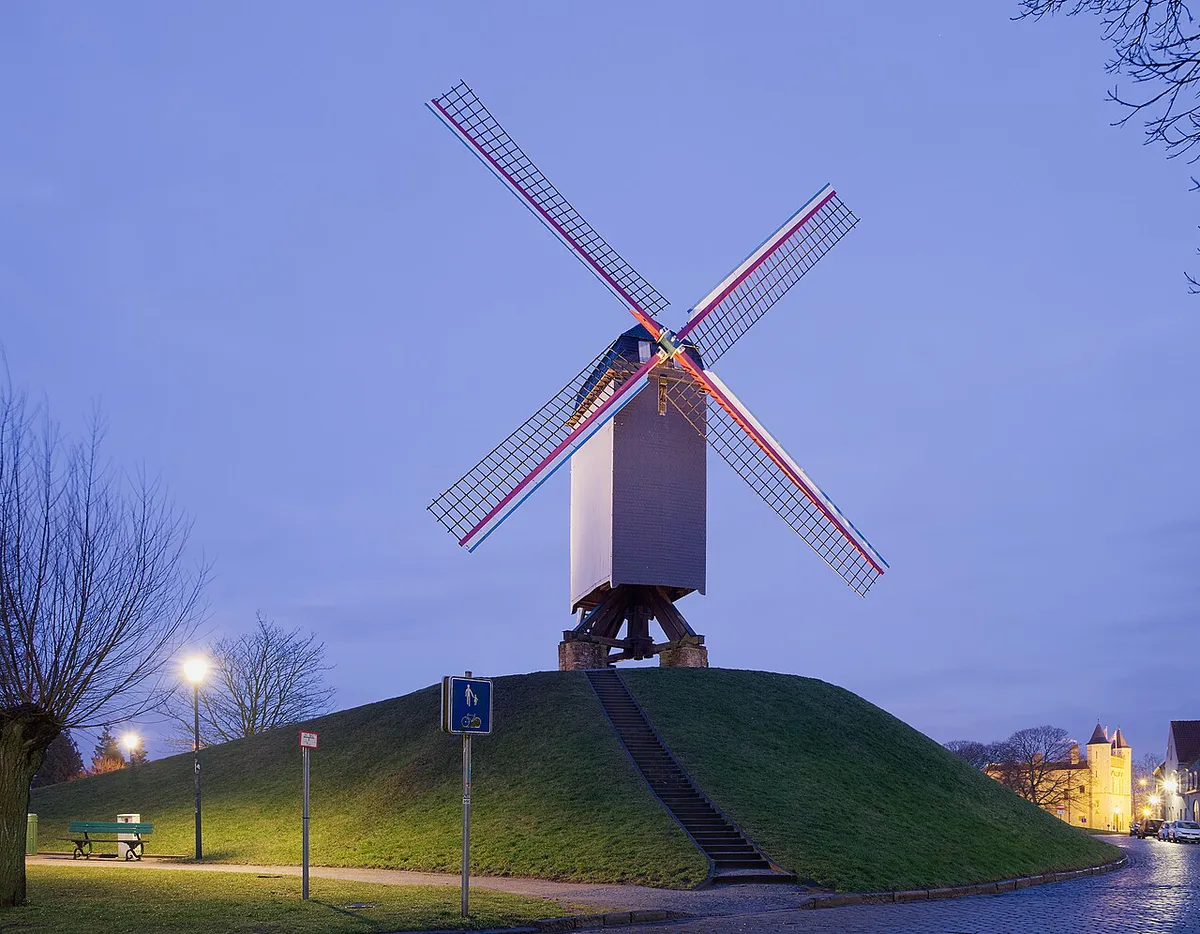
Only two of the four Kruisvest mills open to visitors, and just one of them still functions as a working mill. Sint-Janshuismolen dates to 1770 and stands on its original mound, having been rebuilt several times since a Sint-Janshuismolen first appeared on the city walls in the 14th century. It is a post mill, meaning the entire wooden body rotates around a heavy central post to catch the wind from any direction. Millers grind grain here whenever conditions allow, keeping a working craft alive rather than preserving a static monument.
The mound beneath Sint-Janshuismolen once belonged to the bakers' guild, and that history lives on in the mill's fence. Its white metal pattern reinterprets Bruges lacework, with bread boards worked into the design for anyone who looks closely. The milling craft itself carries real recognition beyond Bruges. Flanders added it to its intangible cultural heritage list in 2020. UNESCO recognized millers' craft in 2017 as part of humanity's intangible cultural heritage. Sint-Janshuismolen itself has carried an 'active mill' label from Molenforum Vlaanderen since 2026, reserved for mills still genuinely worked rather than simply preserved.
Koeleweimolen was moved onto the Kruisvest and now runs as a second museum mill, though it no longer grinds grain the way Sint-Janshuismolen does. Bonne Chiere and De Nieuwe Papegaai serve a different purpose entirely. Both were relocated purely to preserve the ramparts' historic skyline. Neither opens its doors to the public. Confirm current opening days for Koeleweimolen directly with Musea Brugge before visiting, since museum-mill hours can shift by season.
- Sint-Janshuismolen (1770): original site, still grinds grain, open to visitors as a working museum.
- Koeleweimolen: relocated mill, now set up as a museum you can enter.
- Bonne Chiere: relocated for heritage value, viewable from the rampart path only.
- De Nieuwe Papegaai: relocated for heritage value, viewable from the rampart path only.
Planning Your Visit: Costs and Opening Hours
Sint-Janshuismolen charges by age bracket, with lower rates for younger visitors and free entry for children. As of 2026, Visit Bruges lists the following rates for Sint-Janshuismolen entry:
The mills' April-through-September operating window coincides with warmer months—worth noting because the Kruisvest's exposed rampart location runs noticeably colder than downtown Bruges year-round, making layered clothing advisable even during mild seasons.
A Musea Brugge Card covers entry here along with every other open Musea Brugge site for 72 hours, sold at the box office or online. A museumPASSmusées works too. It gives admission to more than 200 museums across Belgium for a full year, with permanent collections included whenever visitors like. Mill Day falls on the last Sunday of April, and entry is free that day. Confirm the exact date each year before building a visit around it, since the day itself can shift.
Koeleweimolen's own admission is not listed alongside Sint-Janshuismolen's rates, so check its current hours and ticket price directly with Musea Brugge before visiting. Museum-mill hours also run seasonally, typically active from around April through September rather than year-round, so confirm the current 2026 calendar before planning a trip specifically to go inside. Walking the Kruisvest path itself costs nothing and stays open at any hour, a detail worth pairing with the wider no-cost Bruges activities guide. Bonne Chiere and De Nieuwe Papegaai charge no admission at all, since neither one opens to the public in the first place.
| Ticket type | Price |
|---|---|
| Adults | €5.00 |
| Senior citizens (65+) | €5.00 |
| Youngsters (18-25) | €4.00 |
| Youngsters (13-17) | €2.00 |
| Children under 13 | Free |
Getting There: Walking, Cycling, and Parking
The Kruisvest sits close enough to central Bruges for an easy afternoon add-on to any itinerary built around the Markt or the Burg. From either landmark, plan on roughly 15 to 20 minutes on foot to reach the mills.
The ramparts also form part of a longer cycling loop around Bruges, so the Kruisvest works well as one stretch of a longer ride rather than a standalone stop. The Sint-Anna Quarter acts as the gateway from the city side, with the mills sitting just to its east along the rampart line. Anyone parking near the Langestraat and Hoogstraat area has only a short walk left to the ramparts themselves. The canal path toward the Damme day trip starts near the windmills, so the two combine well into one longer outing. For other routes out of the city entirely, the guide to other day-trip routes covers further options worth comparing.
- On foot: about 15-20 minutes from the Burg or the Markt.
- By bus: nearest stop is 512124 Brugge Kruispoort.
- By train: nearest station is Station Brugge.
- By car: nearest parking is the Langestraat car park.
Nearby Attractions: Extending the Sint-Anna Loop
The Kruisvest pairs naturally with a handful of quieter stops nearby, and Visit Bruges groups several of them together in its own recommendations alongside the windmills. The Jerusalem Church sits in the Sint-Anna Quarter and works as an easy add-on once the rampart walk is done.
Tuin Gezellehuis offers a quieter stop for anyone less interested in mills alone. It is the garden tied to the birthplace of poet Guido Gezelle, who lived from 1830 to 1899. It appeals even to visitors who do not normally seek out poetry-related sites.
Foltermuseum 'De Oude Steen' sits at the opposite end of the mood spectrum. Visit Bruges recommends pairing it with the windmill visit despite the contrast in subject matter. The building itself is notable: a renovated structure regarded as among the oldest stone buildings in Bruges. None of these three stops require advance booking, though opening hours are worth checking the same day rather than assuming they match the mills' own schedule. For a broader set of low-traffic ideas across the rest of the city, the roundup of lesser-known Bruges spots extends the same theme well past the ramparts.
Local Tips and Mistakes to Avoid
The Kruisvest sits fully exposed to the wind, and temperatures there run noticeably colder than in the sheltered streets of the city center. Bring a layer even on a mild day, especially heading into the evening.
Late afternoon light works well for photographs from the mill mounds. The ramparts and rooftops catch the low sun at that hour, which is worth building into the schedule. Pairing the visit with the guide to quieter travel months helps line up good light with lighter crowds at the same time.
Inside Sint-Janshuismolen, the stairs are steep and narrow, built to a working mill's original proportions rather than to modern accessibility standards. Anyone with mobility concerns should check current accessibility details directly with Musea Brugge before planning an interior visit. The grassy mill mounds outside are steep too, so sturdy footwear helps, especially on damp days.
After the walk, the neighborhood's own food scene is covered in the local food guide and the roundup of well-reviewed local restaurants. For visitors folding the mills into a broader day out, the unusual things to do guide and the less-traveled Bruges routes guide both build around the same off-center parts of the city.
Best Route to See All Four Windmills
Use Kruispoort as the cleanest starting point from the Sint-Anna Quarter. Follow the green Kruisvest rampart path north toward Dampoort. Keep the canal side and grassy mounds in view.
- Bonne Chiere comes first near Kruispoort.
- Sint-Janshuismolen follows and deserves the longest stop.
- De Nieuwe Papegaai sits farther along the same rampart line.
- Koeleweimolen finishes the sequence near the Dampoort end.
Walk the route in reverse if you arrive from Dampoort, Coiseaukaai, or the northern cycling loop. This order keeps backtracking minimal and makes each mill easy to compare with the next. The outside walk is straightforward, but the mounds are short and steep. For photographs, pause below each mound first. Climb only where the grass is dry and the path is clear.
Further reading: Bruges on Wikivoyage · Bruges on Wikipedia
Other Cities Where the Edge Is the Point
The Kruisvest windmills sit on the old ramparts, which is the part of Bruges most visitors never reach. Ljubljana's Tivoli Park and Rožnik Hill do the same job of putting countryside within walking distance of the centre. Munich's Eisbach wave is the strangest version of a city using its own water.
Frequently Asked Questions
Which Kruisvest windmill can you actually go inside?
Sint-Janshuismolen is the main one open to visitors, and it is also the only mill still grinding grain on its original site. Koeleweimolen, a relocated mill, runs as a second museum you can enter. Bonne Chiere and De Nieuwe Papegaai are viewable only from the rampart path, since neither opens to the public.
How much does it cost to visit the windmills in Bruges?
As of 2026, Visit Bruges lists Sint-Janshuismolen entry at €5.00 for adults and for senior citizens 65 and over. Youngsters aged 18 to 25 pay €4.00, and those aged 13 to 17 pay €2.00. Children under 13 enter free. A Musea Brugge Card or museumPASSmusées also covers entry.
Is walking the Kruisvest itself free?
Yes. The rampart path is open at any hour with no admission charge. Only entering Sint-Janshuismolen or Koeleweimolen requires a ticket. Bonne Chiere and De Nieuwe Papegaai are free to view from outside, since neither opens to visitors at all.
What is Mill Day in Bruges?
Mill Day falls on the last Sunday of April, when entry to Sint-Janshuismolen is free. Confirm the exact date each year before planning a visit around it, since the specifics can shift from year to year.
How do you get to the Kruisvest windmills from central Bruges?
The mills sit roughly 15 to 20 minutes on foot from the Burg or the Markt. The nearest bus stop is 512124 Brugge Kruispoort. The nearest train station is Station Brugge. The nearest parking is the Langestraat car park.
Are the Kruisvest windmills accessible for visitors with mobility issues?
The interior stairs at Sint-Janshuismolen are steep and narrow, built to the mill's original working proportions. The grassy mill mounds outside are steep as well. Anyone with mobility concerns should check current accessibility details directly with Musea Brugge before planning an interior visit.
Continue exploring
More guides you'll find useful