Begijnhof Bruges: Princely Beguinage Visitor Guide - Free Entry
Visit Begijnhof Bruges: free courtyard entry, Begijnhofkerk, the Begijnhuisje museum, hours, and the UNESCO silence rules explained for 2026.
On this page
Begijnhof Bruges: A Visitor's Guide to the Princely Beguinage Ten Wijngaerde
Last updated July 2026. Begijnhof Bruges, formally the Princely Beguinage Ten Wijngaerde, is a walled cluster of white-washed houses around a central garden, founded in 1245. The courtyard carries UNESCO World Heritage status, and it still runs on quiet rather than crowds. This guide covers hours, fees, what to see inside, and the etiquette that keeps it one of the city's low-key things to do.
Begijnhof Bruges: What the Princely Beguinage Ten Wijngaerde Is
Begijnhof Bruges refers to the Prinselijk Begijnhof Ten Wijngaerde, the only preserved beguinage still standing in the city. Beguines were emancipated lay-women who chose a pious, celibate life without taking permanent religious vows. This walled complex housed them from the 13th century onward, and their daily life leaned on silence as much as possible. UNESCO inscribed the site in 1998 as part of the transnational Flemish Béguinages listing, covering roughly 0.55 hectares within the walls. No beguines remain today. Since 1927 the complex has functioned as Monasterium De Wijngaard, home to nuns of the Order of Saint Benedict, alongside residents connected to the Order of Vincent de Paul. The result reads less like a museum and more like a working convent that happens to welcome visitors.
Essential Visitor Logistics: Hours, Fees, and Access
The courtyard, gardens, and Begijnhofkerk exterior are free to enter. Visit Bruges lists the Begijnhof itself as a free attraction on its official price table. The Begijnhuisje, the first beguine house turned museum, charges a separate entrance fee. Check Visit Bruges directly for the current rate before visiting, since listed prices can update through 2026. Gate hours are commonly cited as roughly 6:30 AM to 6:30 PM daily, but Visit Bruges notes that hours are subject to change without notice. Confirm the day's schedule on the official site before planning an early or late visit. Cobblestone paths run through the whole complex. Visit Bruges rates the access paths and entrance as accessible with assistance rather than fully independent, so strollers and wheelchairs can manage the route but expect a bumpier ride than paved city streets. An adapted toilet on-site is listed as independently accessible. For a quieter walk-through, aim for opening time, or plan around avoiding Bruges' crowds before locking in travel dates.
| Feature | Detail | Best For |
|---|---|---|
| Central courtyard | Free access, per Visit Bruges | Budget travelers, photographers |
| Begijnhuisje museum | Paid entry, separate ticket | History buffs, lace-work enthusiasts |
| Spring visit | Daffodil bloom in the central garden | Nature lovers, expect heavier crowds |
| Early morning visit | Quietest window at the gate | Solo travelers, spiritual seekers |
- Adapted toilet: independently accessible on-site.
- Access paths and entrance: accessible with assistance, due to cobblestones.
- Child-friendly, and pets and baby carriages are allowed.
- A small museum shop operates near the Begijnhuisje.
Top Things to See Inside the Begijnhof
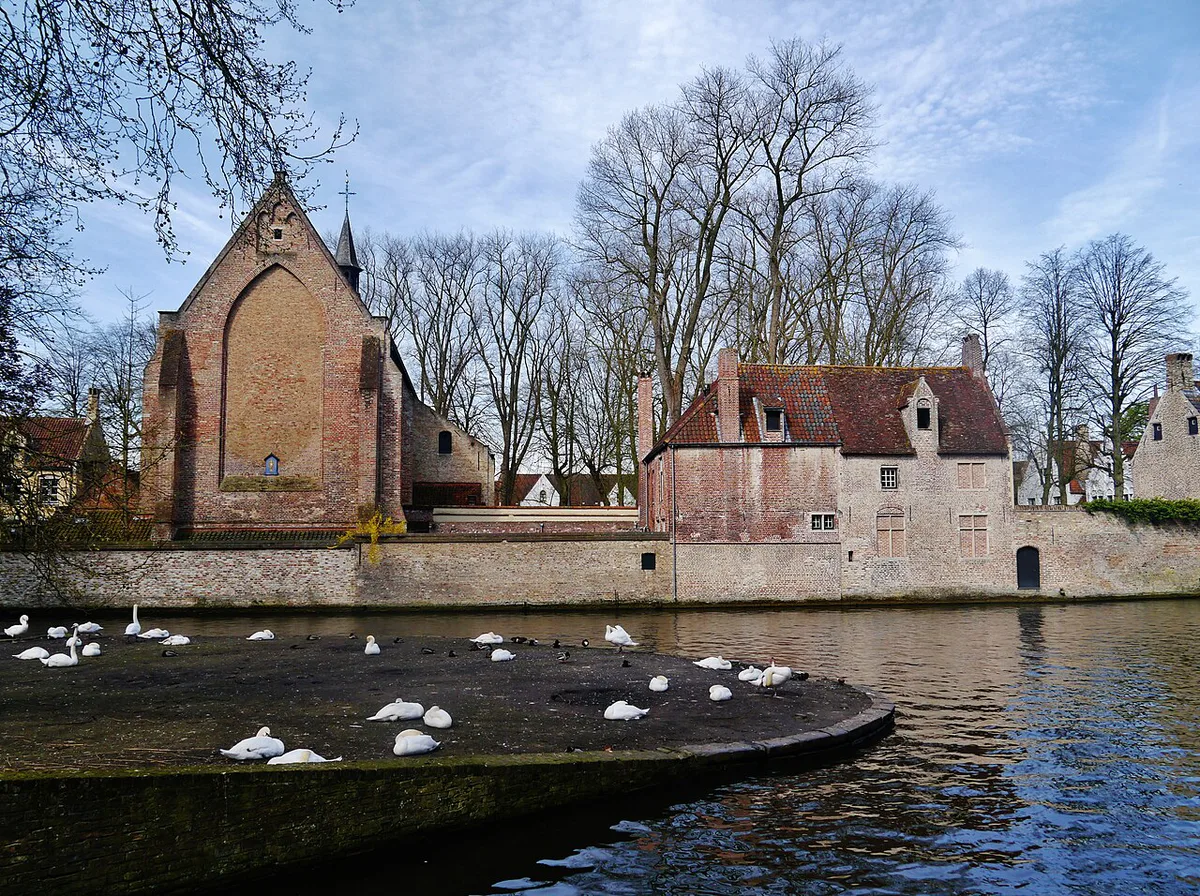
Begijnhofkerk (Beguinage Church) anchors the courtyard both visually and historically, a Gothic beguinage church that has stood at the center since the complex's founding. Its interior has picked up later decorative layers over centuries of continuous use. If religious architecture is the draw, the complex connects thematically to other Jerusalem Church visits elsewhere in the city.
- Begijnhofkerk (Beguinage Church): the central church, with Gothic origins and later interior additions.
- Begijnhuisje museum: the first house beside the entrance, furnished with 17th- and 18th-century pieces, paintings, and lacework exhibits.
- Wijngaard Bridge and main gate: a three-arched stone bridge leads to the 1776 entrance gate, built by master mason Hendrik Bultynck.
- Niche of Saint Elizabeth of Hungary: set into the gate, honoring the patron of many beguinages; the site is also devoted to Saint Alexius.
- Sas House and Sas Bridge: a second, quieter gate on the far side of the grounds.
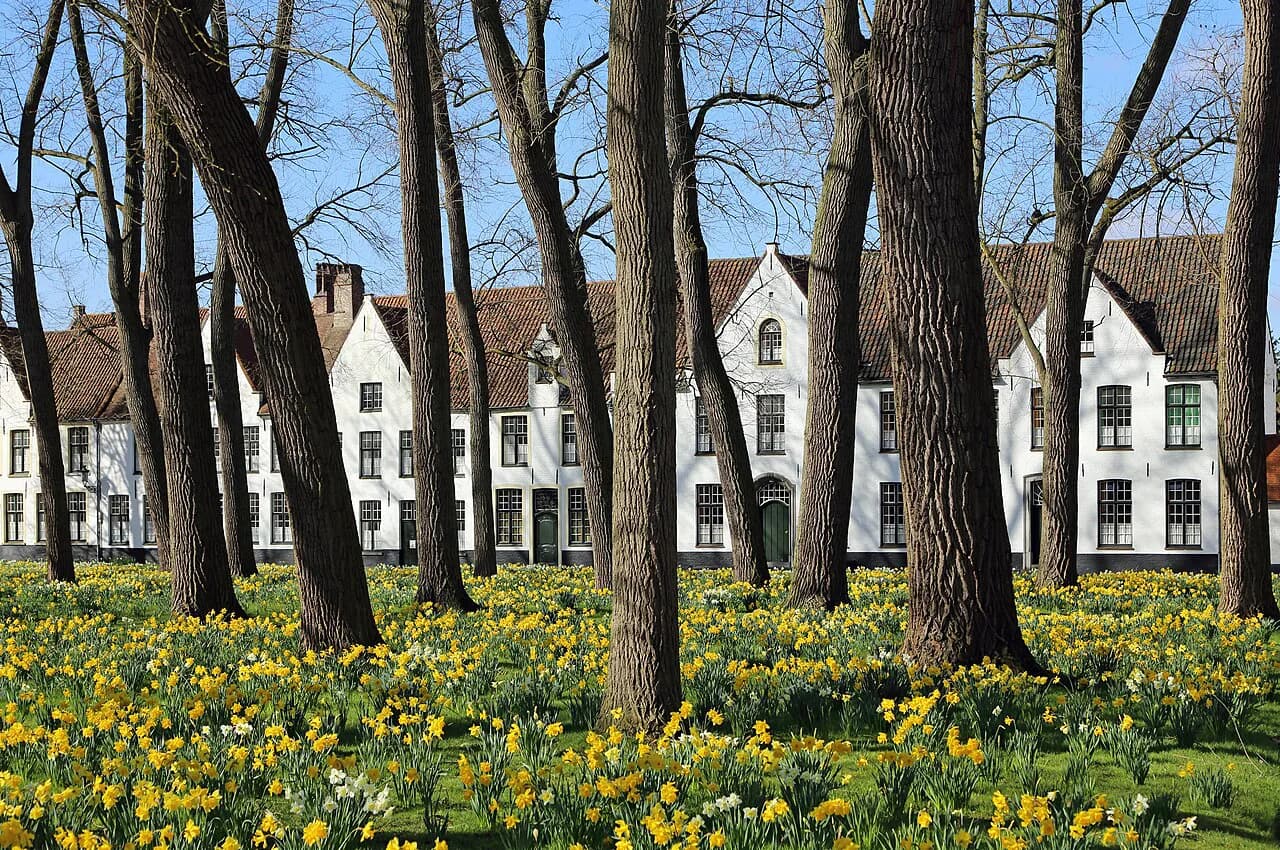
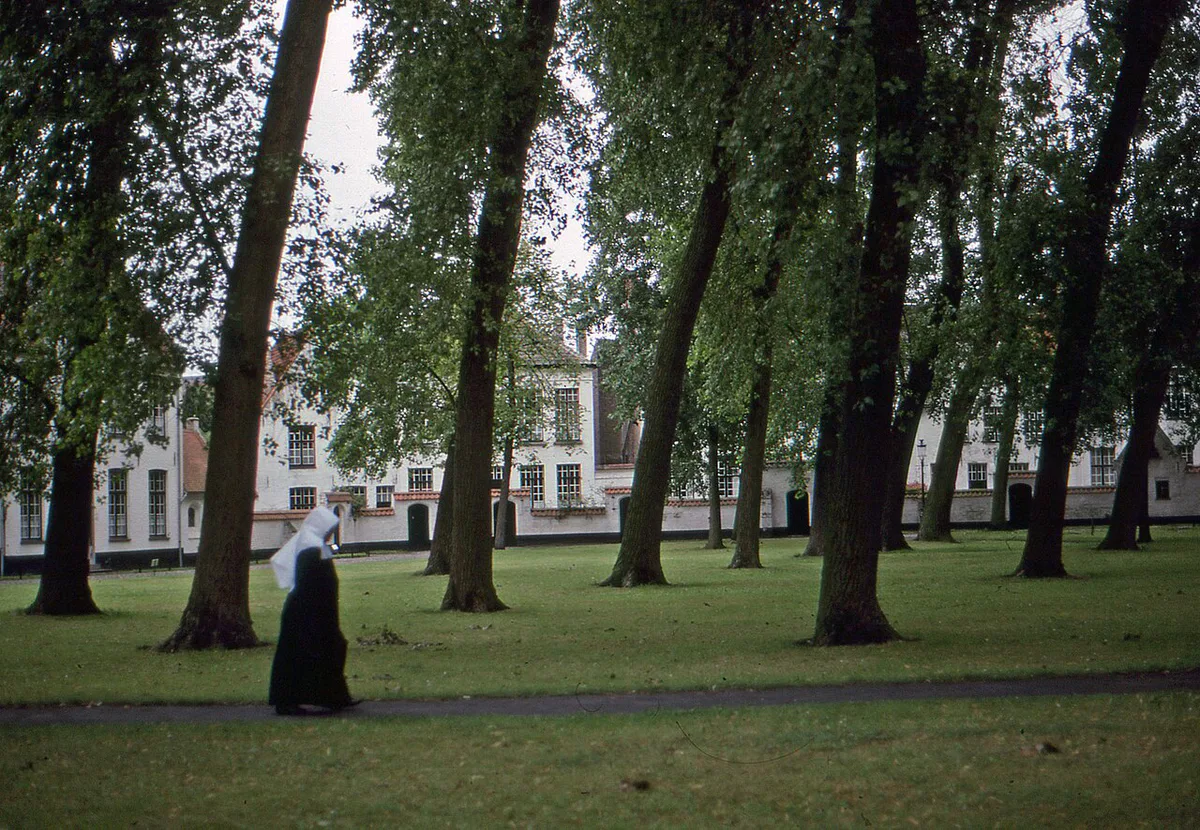
- The central garden: roughly thirty white-painted houses dating from the late 16th to 18th centuries ring a shared lawn and poplar trees.
How to Get to the Begijnhof from Central Bruges
The Begijnhof sits a short walk south of the Grote Markt, reached via Wijngaardplein and across the Wijngaard Bridge. Walking, public transport, and driving all work, and the surrounding streets pair naturally with a wider loop through this part of Bruges.
- On foot: walk south from Grote Markt toward Wijngaardplein, then cross Wijngaard Bridge to the main gate.
- By bus: get off at stop 502818 Brugge Onze-Lieve-Vrouwekerk, the nearest stop according to Visit Bruges.
- By train: Station Brugge is the nearest rail station, a walkable distance from the gate.
- By car: Katelijne car park is the nearest parking option Visit Bruges lists.
- Afterward: continue toward Minnewater's lakeside path, visible from parts of the beguinage grounds, or cross into the Sint-Anna quarter for an architectural contrast.
Etiquette and the Silence Policy: Visiting Respectfully
Silence at the Begijnhof is not a suggestion. Visit Bruges frames it as an intangible value, one of the qualities that helped earn the site UNESCO World Heritage recognition. The City of Bruges maintains the grounds and expects every visitor to treat the quiet the way residents do. Tour leaders who bring groups regularly keep instructions to a low voice and break large groups into smaller clusters near the gate rather than gathering as one crowd.
The silence that earned UNESCO recognition is most palpable in winter, when fewer visitors and bare grounds amplify the quiet, whereas spring daffodils draw crowds to the main gate.
- Speak quietly, as inside a place of worship.
- Skip photography that points directly into resident windows or doorways.
- Keep group sizes small on the central garden paths.
- Treat the lawns as view-only, not spots for sitting or picnicking.
- Remember this is an active convent, not a recreated stage set.
History: From Medieval Beguines to Benedictine Nuns
The Begijnhof's history spans roughly 800 years, moving from an independent medieval community to a functioning Benedictine priory today.
- Before 1240: a community of pious women had already settled at the domain known as 'de Wingarde'.
- 1244: Margaret of Constantinople secured permission from the bishop of Tournai to move a tomb chapel from the Burg to the Wijngaard site.
- 1245: the beguinage gained recognition as an independent parish.
- 1299: the site came under the direct authority of King Philip the Fair and was entitled the 'Princely Beguinage'.
- 1776: the current entrance gate was built by master mason Hendrik Bultynck.
- 1927: canon Hoornaert founded a Benedictine convent here; the west-side houses were reshaped into Monasterium De Wijngaard, and Beguines no longer lived on-site.
Mistakes to Avoid and Local Tips
The most common mistake is treating the Begijnhof like a photo backdrop rather than a residence. Budget travelers can pair the free courtyard with other free Bruges stops nearby, and the wider guide to hidden corners of Bruges lists more low-key spots in the same district. Don't overlook the Sas House side entrance either; it offers a quieter approach than the main Wijngaard Bridge gate, especially at midday when tour groups cluster near the front. After the visit, several local restaurants nearby sit within a short walk, useful for a meal that doesn't require backtracking across town.
Entering via the Sas House avoids the midday crowds clustering at the main Wijngaard Bridge gate; the quieter setting supports the low-voice requirement that distinguishes this working convent.
Best Time to Visit: Spring Daffodils or Winter Silence
The Begijnhof changes most clearly with the seasons, so timing affects the mood more than the checklist. Spring is the classic choice because daffodils fill the central lawn between the white houses and poplars. That is also when more visitors pause near the Wijngaard Bridge and main gate for photos.
Winter is less lush, but it suits the site’s purpose better. The bare garden, low light, and quieter paths make the silence easier to feel. It also gives clearer views of the white facades, Begijnhofkerk, and the houses around Ten Wijngaerde.
- Choose early spring for daffodils and the most recognizable view.
- Choose a winter morning for fewer people and a more contemplative atmosphere.
- Avoid midday in peak season if you want the courtyard to feel calm.
Further reading: Bruges on Wikivoyage · Bruges on Wikipedia
Other Quarters That Kept Their Quiet
The béguinage works because an enclosure rule survived the institution that made it. Kraków's Kazimierz kept its street pattern and its silence for very different and much darker reasons. Copenhagen's Christianshavn stayed separate because the canals made it awkward to absorb.
Frequently Asked Questions
Is the Begijnhof in Bruges free to visit?
The courtyard and Begijnhofkerk exterior are free. Visit Bruges lists the Begijnhof itself as a free attraction. The Begijnhuisje museum inside charges a separate entrance fee, so check Visit Bruges for the current rate before visiting.
What are the Begijnhof's opening hours?
Gate hours are commonly cited as roughly 6:30 AM to 6:30 PM daily, though Visit Bruges notes hours can change without notice. Confirm the current schedule on the official Visit Bruges page before an early or late visit.
Do beguines still live at the Begijnhof?
No. Since 1927 the complex has functioned as Monasterium De Wijngaard, home to nuns of the Order of Saint Benedict, alongside some residents connected to the Order of Vincent de Paul rather than lay beguines.
Can visitors take photographs inside the Begijnhof?
Photography is allowed in the courtyard, but avoid pointing cameras into resident windows or doorways. Keep voices low and treat the grounds as a working convent, not a photo set.
How does a Begijnhof visit fit with the rest of a Bruges itinerary?
The Begijnhof sits close to Minnewater, so most travelers combine both stops in one loop. The neighborhood around it also rewards a slower walk before or after.
Continue exploring
More guides you'll find useful