Hidden Gems in Montepulciano: Quiet Corners and Slow Finds
Find Montepulciano's quieter corners, from Vicolo del Leone sunsets to cellar tastings and slow side trips, with practical tips for unhurried exploring.
On this page
Montepulciano sits on a limestone ridge roughly 600 metres above sea level, looking out over the Val di Chiana on one side and the Val d'Orcia on the other. That position explains both its appeal and its main practical challenge: almost everything worth seeing is uphill. Treating the town as a slow half-day or full day rather than a checklist stops the climb from becoming a chore.
The rewards are concentrated. One writer who revisited in early autumn recommends around half a day plus a meal to cover the main landmarks and a cellar tasting. That is a reasonable planning figure rather than a rule, and it leaves room for the quieter corners covered below.
The Lay of the Land: A Steep Town Built for Walking
Montepulciano's old town is compact and walkable, but it is genuinely steep from the bottom up, so comfortable shoes matter more here than in most Tuscan towns. The same climb that makes the visit tiring is what produces the views, which is why the higher streets feel more rewarding the further you go. Plan the ascent once, with stops, rather than zigzagging up and down.
A tourist shuttle runs from the lower town to the top for anyone who would rather skip the climb, and one source notes that the service is seasonal. Because schedules change, check the current operating period and timings locally or with the tourist office before relying on it. Walking remains the most flexible way to see the side streets that a vehicle cannot reach.
Another traveller's account of the medieval streets makes the same point about the gradient, describing the town as essentially one big steep hill and advising good walking shoes. That warning is worth taking literally: the climb is the experience, not an obstacle on the way to it.
Il Corso and the Medieval Streets
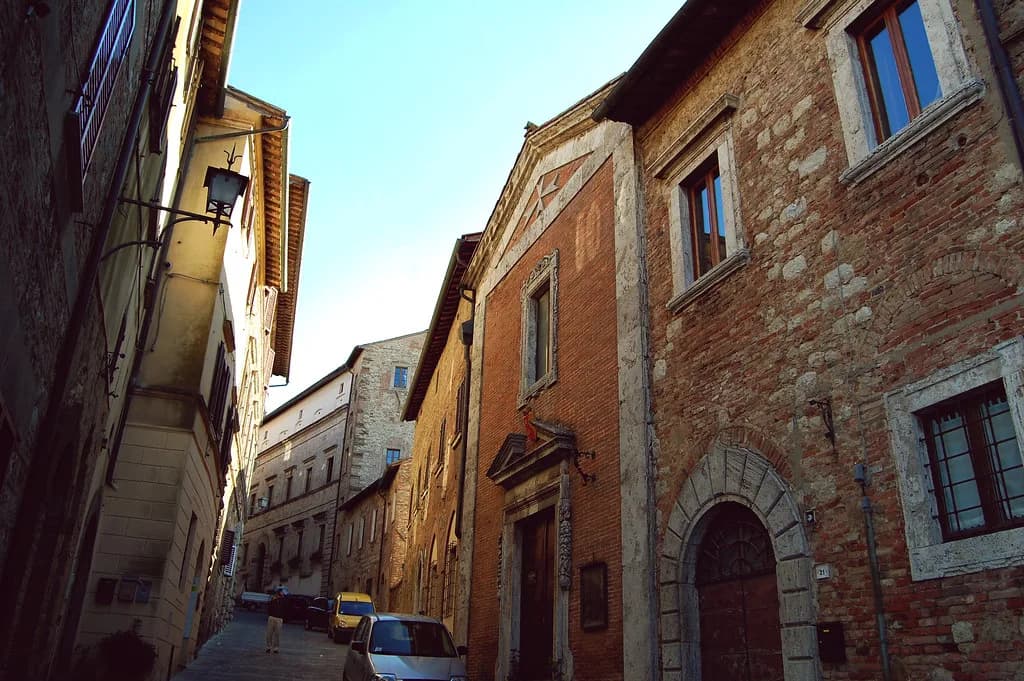
Il Corso is the town's spine, climbing from Piazza Savonarola past leather workshops, fashion boutiques and cafes toward Piazza Grande. The quieter pleasure is not the shopping but the interruptions: hidden courtyards, sudden openings onto the valleys, and small churches tucked into the street line. Walk it once without a destination and you will find a few of these openings yourself.
If you prefer a structured route that still leaves space for detours, a self-guided walking route is a good compromise: it fixes the direction of travel and the major stops while letting you linger where the town is calm. Early mornings and evenings are the least crowded, since many visitors arrive as day trippers and leave before dinner.
Piazza Grande Beyond the Postcard
Piazza Grande is the town's civic heart, anchored by the Gothic Palazzo Comunale, the cathedral of Santa Maria Assunta, and the well designed by Antonio da Sangallo. It is not a hidden corner, but it is a square where sitting still pays off: the architecture rewards a slow circuit rather than a photo stop. Note that the tower and any museum interiors are separate, ticketed or restricted spaces, so treat the square itself as the free public ground and check access on arrival.
Nearby, the Medici Fortress occupies the highest part of town and now hosts temporary exhibitions, an American university and the Consorzio del Vino Nobile, whose wine bar serves Vino Nobile with terrace views. It is a practical two-in-one: a landmark visit and a tasting without committing to a formal cellar tour. Confirm current opening arrangements before you build a day around it.
Lesser-Visited Churches: Sant'Agostino, Gesù and Santa Lucia
Sant'Agostino sits along the main street and carries a Renaissance stone facade attributed to Michelozzo over a 13th-century building, making it an easy stop on the way up. Nearby, Pulcinella Tower marks the same stretch of street. Because these churches sit on the walking route rather than at the end of a detour, they suit the loose, stop-as-you-pass rhythm of a slow day.
Chiesa del Gesù, a quieter 16th-century church with a simple symmetrical design, and Chiesa di Santa Lucia are the kind of small stops that fill the gaps between bigger sights. One source treats Gesù as the easy, quick visit it is, rather than a destination to plan a morning around. Church opening times vary, so check locally rather than planning a schedule around them.
Tempio di San Biagio Outside the Walls
Just below the town walls, the Tempio di San Biagio is a Greek-cross Renaissance church by Antonio da Sangallo the Elder, set among cypress trees and open countryside. One source describes reaching it on foot from the walls in about five minutes, which makes it a natural add-on rather than a separate outing. The lawn and setting are the draw as much as the interior.
Treat the exterior and surrounding grounds as public space and the interior as a place of worship with its own access rules, rather than assuming one ticket covers everything. It is often described as one of the finest Renaissance churches in Tuscany, which is why it earns a place in a town often reduced to its wine. Go late in the afternoon for softer light on the facade.
Sunset at Vicolo del Leone and Other Viewpoints
Vicolo del Leone runs off Piazza Grande and ends at a terrace with one of the town's best-known views, best visited as the sun goes down. Part of that terrace is occupied by a restaurant, so the practical decision is whether to book a table for the view or find a public vantage point nearby instead. Book ahead if you want the terrace itself, especially in high season.
There are lookouts scattered around the upper streets too, including spots just behind Piazza Grande, so you are not limited to a single terrace. Arriving twenty or thirty minutes before sunset gives you time to find a place without rushing the climb. Sunset times shift through the year, so check the date you are travelling rather than relying on memory.
Underground Cellars and the Vino Nobile Confusion
Many of Montepulciano's wine cellars sit beneath Renaissance palazzi, so a tasting often means descending into vaulted underground rooms rather than sitting at a street-level bar. Historic names include De' Ricci Cantine Storiche and Ercolani, known for extensive tunnels, alongside long-established producers such as Gattavecchi. Guided tastings and cellar tours commonly require booking, so check ahead for the ones that matter to you.
The name trap is worth knowing before you order. Vino Nobile di Montepulciano is made mainly from Sangiovese, locally called Prugnolo Gentile, and takes its name from the town. Montepulciano d'Abruzzo is a different wine from a different region made from the Montepulciano grape, so the two share a word and little else.
Slow Side Trips: Pienza, Montefollonico and the Val d'Orcia
Pienza is about a twenty-minute drive away, a UNESCO-listed village rebuilt in the 15th century as an ideal city, with Piazza Pio II and the Palazzo Piccolomini as its set pieces. Its pecorino is the edible reason to go. Pairing it with Montepulciano makes a full day without much driving.
For something quieter, the roughly seven-kilometre trail to Montefollonico is a genuine countryside walk with real ups and downs, and the village itself can be seen in a couple of hours. Treat the distance and the climbing as a half-day commitment rather than a stroll. Walkers should carry water and start early, since shade is limited on the open sections.
Seasonal Timing and the Crowd Rhythm
Late spring and early autumn are the sweet spot: May, June and September balance pleasant weather, working wineries and manageable crowds, while September and October bring harvest atmosphere to the countryside. Summer is hot and busiest, though longer evenings and a lively square compensate. Winter is quiet, but some wineries and restaurants run reduced schedules.
The crowd pattern is a timing decision more than a seasonal one. Many visitors come for an afternoon and leave, which leaves mornings and evenings noticeably calmer. If your priority is the town at its most relaxed, staying overnight matters more than choosing the perfect month.
Practical Mistakes to Avoid
The first mistake is underestimating the climb and wearing the wrong shoes; the second is confusing the two Montepulciano wines. A third is treating San Biagio as an afterthought when it is one of the most rewarding stops in town. A fourth is arriving without any tasting plan and discovering that the cellars you wanted are booked out.
Driving brings its own cautions: the historic centre is a restricted traffic zone, so park outside the walls and walk in. Follow local signage for visitor parking on arrival rather than memorising lot names, and check with your accommodation about parking before you commit to a base.
Finally, Montepulciano works well as a base for the wider Val d'Orcia if you have a car, with Pienza, Montalcino and quieter villages within reach. Without one, keep the itinerary tighter and enjoy the town itself.
Plan Your Slow Visit
Montepulciano's best moments are rarely ticketed: a bench in Piazza Grande, the walk down to San Biagio, the view from a side alley as the light drops. Build the day around one cellar tasting and one viewpoint, then let the steep streets fill the rest. If time is short, a one day in Montepulciano itinerary keeps the essentials in order without overloading the climb.
Before you go, confirm the details that change: cellar bookings, church access, shuttle operation in season and any restaurant terrace reservations for sunset. The rest is walking, and that is the point.
More Montepulciano guides
- A Self-Guided Walk Through Montepulciano
- Best Time to Visit Montepulciano
- Best Viewpoints in Montepulciano
- Free Things to Do in Montepulciano
- Montepulciano Historic Centre Orientation
- Montepulciano Local Food Guide
- One Day in Montepulciano
- Vino Nobile Wine Cellars in Montepulciano
- Duomo di Montepulciano
- Fortezza di Montepulciano
- Piazza Grande and Palazzo Comunale in Montepulciano
- San Biagio in Montepulciano
- Sant'Agostino Church in Montepulciano
- Santa Maria dei Servi in Montepulciano
Frequently Asked Questions
What hidden gems should I not miss in Montepulciano?
Beyond Piazza Grande, the stops most worth building time around are the Tempio di San Biagio just outside the walls, the sunset terrace at Vicolo del Leone, the quieter churches of Sant'Agostino, Gesù and Santa Lucia, and the Medici Fortress with its Vino Nobile wine bar. The quieter streets on the upper ridge reward wandering between these.
How long do you need in Montepulciano?
Around half a day plus a meal covers the main landmarks and a cellar tasting for many visitors, though the steep streets slow things down. A full day lets you add San Biagio, a longer wine stop and a sunset viewpoint without rushing the climb.
Is the Tempio di San Biagio worth visiting?
Yes, particularly if you like Renaissance architecture. The Greek-cross church by Antonio da Sangallo the Elder sits among cypress trees and countryside just below the walls, and it can be reached on foot from town in a few minutes. Treat the surrounding grounds as public space and check interior access on arrival.
Where can you watch the sunset in Montepulciano?
Vicolo del Leone, just off Piazza Grande, ends at a terrace with a wide view and is the best-known sunset spot. Part of the terrace belongs to a restaurant, so book if you want a table, or find a public lookout on the upper streets behind Piazza Grande instead.
What is the difference between Vino Nobile di Montepulciano and Montepulciano d'Abruzzo?
Vino Nobile di Montepulciano is a Tuscan red made mainly from Sangiovese, called Prugnolo Gentile locally, and named after the town. Montepulciano d'Abruzzo comes from a different region and a different grape. The shared word is a coincidence of naming, not a shared style.
Which nearby villages pair well with Montepulciano?
Pienza, about twenty minutes away by car, adds Piazza Pio II, Renaissance architecture and pecorino cheese. For a quieter, more active option, the trail to Montefollonico is roughly seven kilometres each way with real climbs, and the village can be explored in a couple of hours.
When is the best time to visit Montepulciano?
Late spring and early autumn offer the best balance of weather, open wineries and manageable crowds, with harvest drawing wine lovers in September and October. Summer is hot and busy, while winter is quiet but quieter operators run reduced schedules.
Sources
Continue exploring
More guides you'll find useful