Best Time to Visit Agrigento: Seasons, Crowds and Almond Blossom
Plan your Agrigento trip with a season-by-season look at weather, crowds, almond blossom timing and practical advice for the Valley of the Temples.
On this page
Agrigento's headline sight is not a shaded museum but a ridge of Greek temples strung along roughly 2.5 kilometres of open path, which is why the calendar matters as much as the itinerary. The same walk that feels bracing in March can be punishing in August, and the crowds shift accordingly. This guide compares the four seasons on exposure, comfort and company rather than on weather statistics alone.
The short version: spring and early autumn are the most comfortable windows, summer demands an early start and winter trades beach weather for quiet paths. The February almond blossom period gives the low season its own reason to travel. Treat any specific hours, prices or transport details you read elsewhere as things to confirm directly, because official park information is the only reliable source close to your dates.
Why Timing Decides Your Agrigento Visit
The Valley of the Temples is a large archaeological park spread across an exposed ridge, and the sources agree on one practical point: shade is scarce and water is essential. Tripmasters warns that the walk down from the town centre is a dull half hour with little to no relief from the sun, and recommends sunscreen and water for the site itself. That single fact reorders the seasons for most visitors.
Distance compounds the exposure. Travels with Talek describes the temples as linked by a 2.5-kilometre dirt path with clear signage, and suggests planning three to four hours for the temple complex alone, more if you add the museum or Kolymbethra. Tripmasters goes further, saying a thorough visit can take five to six hours. Either way, you are committing to a long, mostly unsheltered walk, so pick a season in which you can enjoy it.
Quick Answer: The Two Recommended Windows
Both planning-oriented sources point to the same pair of seasons. Tripmasters names April to June and mid-September to October as the best time to visit, when the weather is comfortable and crowds are thinner, and adds that mid-September to October is also good for the sea. Curious Sparrow recommends spring, March to May, for mild temperatures and blossom, with autumn, September to November, as a less crowded alternative.
If you want a single decision rule, choose late April to early June or mid-September to late October. Spring gives you wildflowers and the almond season's tail end; autumn gives you warmer water and softer light for photography. Summer is workable but needs a defensive plan, and winter suits travellers who value empty paths over beach days.
Spring (March to May): Mild Days and Blossom
Spring is the season most often recommended, and the reasons are practical rather than romantic. Curious Sparrow highlights mild temperatures and flowering almond and wild trees, while Tripmasters gives a spring range of roughly 50°F to 70°F. On an exposed ridge, those moderate highs are the difference between a pleasant stroll and a forced march.
The almond blossom is the seasonal anchor. Tripmasters notes that the Festa del Mandorlo, or almond blossom festival, is held towards the end of February each year and makes the city lively with events. It is a period rather than a fixed date, so check the current year's programme with local tourism offices before you build a trip around it. Late February into March also catches the first mild walking weather.
Book accommodation early for the blossom weeks and for Easter, when Italian domestic travel rises. Because the festival timing shifts with the bloom, a flexible booking is worth more than a precise one. If your dates are fixed, spring wildflowers and mild temperatures remain the draw even outside the festival.
Summer (June to August): Heat, Crowds and How to Cope
Summer is the season to plan around rather than simply book. Tripmasters describes June to August temperatures ranging from roughly 68°F to 84°F, with August the hottest month and the least favourable time to visit, and notes that July to September are peak visiting times with dense crowds. Curious Sparrow's emphasis on sun hats, sunscreen and constant water reads differently in that context.
Structure the day around the heat. Start at opening time, walk the ridge while it is still cool, and save indoor stops such as the Regional Archaeological Museum for the middle of the day. Carrying more water than feels necessary is sensible, and the cafes on site are described by Tripmasters as extremely overpriced, so pack snacks rather than relying on them.
Evenings are the reward for summer travel. Tripmasters mentions evening and night tours of the illuminated temples in the height of the season, but the exact dates and availability vary by year, so confirm with the park operator rather than trusting an older listing. A cooler evening visit can replace a punishing afternoon one, and the Agrigento evening guide covers how to use those hours well.
Autumn (September to November): Warm Seas and Softer Light
Autumn is the connoisseur's window. Tripmasters recommends mid-September to October for comfortable weather and thinner crowds, and singles out the same period as the best time for beaches because the water is still warm. Curious Sparrow, who visited in October, describes the weather as wonderful and the site as uncrowded without being empty.
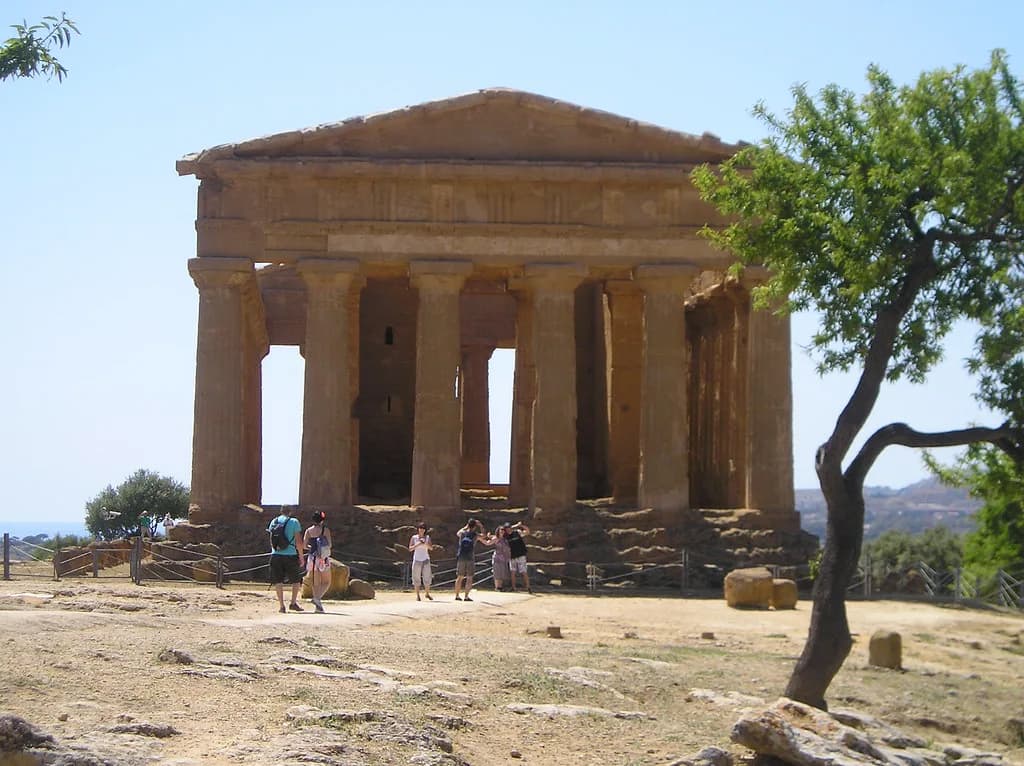
The light is the other argument. Lower autumn sun rakes across the ridge and flatters the honey-coloured stone of the Temple of Concordia, and the heat no longer dictates your pace. September can still feel summery, so treat early autumn as summer with better angles and late October as the true shoulder.
Rain becomes possible from late October, so build one indoor option into each day. The Regional Archaeological Museum and the covered streets of the old town are natural fallbacks. If your trip depends on the sea at San Leone, aim for September rather than November, when beach days become a gamble.
Winter (December to February): Quiet Paths and the Almond Season
Winter is mild by northern European standards but not beach weather. Tripmasters gives December to February temperatures of roughly 50°F to 55°F, which is cool enough for a jacket and pleasant for walking. The reward is a site you can often have largely to yourself, with no queue anxiety and no need to start at dawn.
The February almond blossom gives winter a genuine event. Tripmasters notes the festival is held towards the end of February every year and fills the city with festivities, making it a lively time to see local culture. Because it follows the bloom rather than a fixed calendar date, confirm the current programme with the tourist office before booking travel around it.
Expect some rain and shorter daylight, and plan the temples for the middle of the day when it is warmest. Winter is also a good season for the old town's churches and lanes, which reward unhurried wandering more than a rushed summer schedule allows. If you want emptiness above all, January is the quietest bet.
Month-by-Month Cheat Sheet
Use this as general guidance, not a forecast. January is cool and very quiet, with the almond bloom still weeks away. February brings the blossom period and a livelier city. March and April are mild, green and increasingly busy, with Easter the main booking pinch. May is arguably the single best month: warm, flowery and still short of peak-season crowds.
June warms quickly and fills up, July and August are hot and crowded, and September remains summery but calmer. October is the classic shoulder month for light and comfort, while November turns cooler and wetter with very few visitors. December is quiet and cool, with the Christmas period the only real spike in the old town.
Weather and What to Pack for an Exposed Ridge
Pack for a walk, not a city break. The sources repeatedly stress sun protection, comfortable shoes for uneven terrain and more water than you think you need. Add a hat with a brim, sunglasses and high-factor sunscreen even in spring, because the ridge offers little natural cover.
Layer for the shoulder seasons. Spring and autumn mornings can be cool while midday warms considerably, so a light removable layer beats a heavy jacket. In winter, add a waterproof and accept that some paths may be slippery after rain. Tripmasters also notes that the currency is the euro and US dollars are not accepted, so sort cash before you arrive.
Crowds and How They Change Your Route
Crowds follow the heat. Tripmasters places peak visitation in July to September, which is precisely when the walking is hardest, and suggests arriving mid-day to avoid ticket queues at busy times. Curious Sparrow found October pleasantly uncrowded, which fits the broader pattern of spring and autumn as the comfortable middle.
Your route should respond to the season. In summer, walk the eastern ridge early, use the pedestrian bridge behind the Temple of Hercules to link the two halves as Tripmasters describes, and retreat indoors at midday. In spring and autumn, you can linger at the Temple of Juno for the view without rushing. In winter, daylight is the constraint rather than heat, so start earlier than the temperature suggests.
A Sample Spring Day for Heat-Averse Travellers
This is a suggested plan, not an official schedule. Begin at the eastern entrance near the Temple of Juno in the morning, when the light is soft and the climb is cool. Walk west along the ridge past the Temple of Concordia and the Temple of Heracles, pausing for the views that the exposed position makes possible.
Break the walk in the middle of the day with the Kolymbethra Garden, a green pocket of citrus and olive trees inside the park that Travels with Talek describes as a quiet place away from the main tourist paths. Note that it requires its own ticket, separate from the main park entry. Finish with the Regional Archaeological Museum, also separately ticketed, to give context to what you have seen.
This structure is my suggestion for anyone worried about heat: two shorter walks separated by shaded, slower stops. It also suits travellers who want depth over distance. For a tighter version of the same day, the Agrigento one day itinerary compresses the essentials.
A Sample Autumn Day for Light and Lower Crowds
In autumn, reverse the logic. Start later and aim to be on the ridge in the golden hour before closing, when the stone glows and the summer crowds have gone. Spend the morning in the old town around Via Atenea, which Tripmasters notes is closed to traffic from 9am to 8pm, making it a pleasant place to stroll shops and cafes.
Walk down to the temples in the afternoon, or take a local bus if you would rather save your legs. Tripmasters describes a taxi from the centre to the valley as costing about €15. Keep the temple visit for the last part of the day, then return to town for dinner. The Agrigento evening guide has ideas for how to use the hours after the gates close.
Where to Base Yourself and the Walk from Town
Most visitors base themselves in Agrigento itself, which puts the temples, the museum and the old town within a short trip of each other. Staying near the valley suits early starts; staying in the historic centre suits evening meals and wandering. Curious Sparrow lists several guesthouses within walking distance of the temples and the old town, and notes Hotel Villa Athena as the splurge option beside the park.
The walk from the town centre down to the temples is possible but not glamorous. Tripmasters calls it a dull half hour with little shade, and warns it is hot in summer; buses run the same route, and taxis are an option. In spring and autumn the walk is tolerable, but in high summer take the bus in both directions. For more on the options, see the Agrigento getting around guide.
Pairing the Temples with Kolymbethra and the Museum
Do not assume one ticket covers everything. Travels with Talek notes that the Kolymbethra Garden carries a separate entry charge on top of the main park ticket, and both Tripmasters and Curious Sparrow describe the museum and the garden as separate stops with their own arrangements. Budget time and money for each rather than treating them as add-ons.
The sequence matters. Visit the museum before the temples if you want context, or after if you want to make sense of what you saw. The garden works best as a midday pause, especially in warm weather. Together they turn a half-day temple visit into a full day, which is why the season you choose should match your appetite for walking.
Common Timing Mistakes
The first mistake is underestimating the sun. A ridge with little shade and a multi-hour walk is a different proposition in July than in April, and the sources are consistent on this point. The second is overpacking the day: Tripmasters suggests five to six hours for a thorough temple visit, and adding the museum and garden on top leaves little room for anything else.
The third is trusting older third-party figures. Ticket prices, opening hours, bus operators, shuttle charges and night-tour dates all change, and blog posts age quickly. Check the official park operator and the local tourism office for current details, including whether the Kolymbethra Garden and museum are open on your dates. Treat any price you read, including in this guide's sources, as a prompt to verify rather than a quote.
When to Go, in One Line
Choose late April to June or mid-September to October for the most comfortable walking and thinner crowds, with the almond blossom period as the winter alternative. Summer is possible with an early start and an indoor midday, and winter rewards travellers who prefer empty paths to warm seas.
Frequently Asked Questions
How many days do I need in Agrigento?
Most travellers can see the Valley of the Temples in a long half day, with three to six hours suggested depending on how thoroughly you walk the ridge. Adding the Regional Archaeological Museum and the Kolymbethra Garden, each separately ticketed, turns it into a full day. Two nights in the city gives you time for the temples plus the old town without rushing.
Which months are best for visiting the Valley of the Temples?
Spring, roughly March to May, and early autumn, mid-September to October, are the most comfortable windows for walking the exposed ridge. Summer is hot and crowded, and winter is mild but cool. Confirm current opening hours with the park operator before fixing your dates.
Can you walk from Agrigento town centre to the Valley of the Temples?
Yes, but it is a half-hour walk with little shade, which is unpleasant in summer. Local buses run the route, and a taxi from the centre is a common alternative. In hot months, take transport down and save your energy for the temples.
Is Agrigento worth visiting in summer?
It can be, if you start early, carry plenty of water and use the middle of the day for the museum or a long lunch. Expect heat and dense crowds in July and August. Evening visits and illuminated temple tours are sometimes offered in season, but confirm dates with the operator.
When does the almond blossom festival take place in Agrigento?
The Festa del Mandorlo is held towards the end of February each year, timed to the almond bloom rather than a fixed date. Check the current year's programme with the local tourist office before booking travel around it.
What should I pack for a spring visit to Agrigento?
Pack for a long walk in the open: comfortable shoes for uneven ground, a hat, sunglasses, sunscreen and a refillable water bottle. Add a light layer for cool mornings and a rain shell for spring showers. The ridge offers little shade, so protection matters more than fashion.
Is winter a good time to visit Agrigento?
Winter suits travellers who value quiet over beach weather. Days are mild but cool, rain is possible, and the temples are far less busy. The February almond blossom gives the season a lively focal point, and the old town rewards unhurried exploration.
Sources
Continue exploring
More guides you'll find useful