Getting Around Agrigento: Trains, Buses and Walking
Plan how to move around Agrigento: arriving by train or coach, reaching the Valley of the Temples by local bus, and walking the steep old town on foot.
On this page
Agrigento is easy to picture as one place and awkward to move through as one place. The historic centre sits on a ridge above the Valley of the Temples, the beach resort of San Leone lies beyond that, and the railway station and coach hub sit below the old town rather than beside the ruins. Treating arrival, the archaeological site and the evening as three separate journeys is the single most useful planning decision you can make. For wider planning, see Hidden Gems in Agrigento. For wider planning, see Agrigento Attractions: Visitor Guides to 10 Sights.
The travel guide published by the Valle dei Templi site notes that the centre is roughly four miles from the temples, reached via Via Crispi and Via Panoramica dei Templi up to the Temple of Juno entrance. That distance is walkable in principle, but the gradients and the Sicilian heat decide whether it is pleasant on a given day, so treat the walking option as an editorial suggestion rather than a fixed rule.
Why Transport Planning Matters Here
Three movement problems get merged in most trips: arriving in Agrigento, reaching the archaeological site, and circulating inside the old centre. Each has a different solution and a different cost in time. If you plan them separately, you avoid the classic mistake of assuming the station is near the temples or that the temples are near your dinner table.
The city's institutional portal is worth a look before you travel, particularly for civic notices and event listings, since practical information changes more often than monuments do. At the time of research its events box showed nothing scheduled in the following 30 days, which tells you about the calendar and nothing about whether individual sites are open.
Everything below about local lines, fares and timings comes from third-party travel pages and should be read as indicative rather than current. Bus numbers get reassigned, tickets change price and seasonal services appear and disappear. Confirm with the operator or the tourist office before you build a day around a specific departure.
Arriving by Train
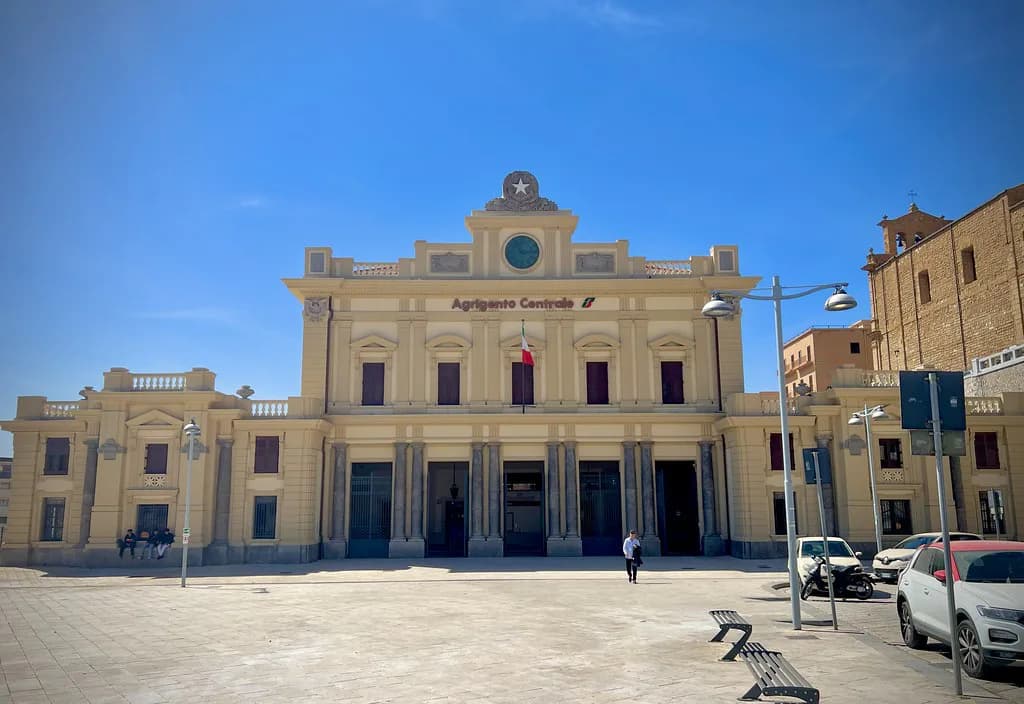
The train station is described by the Valle dei Templi travel guide as located in the city centre, which makes it a reasonable anchor for the old town rather than a remote outpost. That same page reports rail connections toward Palermo and Caltanissetta, with the Caltanissetta line branching onward toward Catania, Messina and the mainland.
Do not read those connections as a timetable. Frequency and journey length shift with the season, so check the operator's own site for the date you actually travel, and allow slack if you are connecting to a flight or a ferry.
Arriving by Coach and the Piazza Rosselli Hub
Long-distance coaches are the workhorse of arrival in Agrigento. The Valle dei Templi travel guide reports regular fast coach services linking the main Sicilian towns with the city, run by more than one company, plus longer routes from Rome, Naples and Salerno. That fragmentation is normal here: you check several operators rather than one national portal.
Piazzale Rosselli is the practical transport hub. The same travel guide lists it as the departure point for most regular city buses, so arrive here, orient here, then move. A local city guide describes it as a few steps from the central Piazza Vittorio Emanuele, which makes the map of Agrigento much less confusing than it first looks.
Use Piazza Rosselli as your fixed reference point even if you are staying uphill in the old town. From there the old centre is a climb and the temples are a bus ride, and knowing which direction you face saves an unnecessary taxi.
Arriving by Air
Nobody flies into Agrigento. The options are Palermo's Falcone and Borsellino airport, Trapani's Vincenzo Florio and Catania's Fontanarossa, and from each one the onward leg is by coach, hired car or private transfer. The Valle dei Templi guide puts the driving time from the airports at around two hours, which is a useful reminder that Sicily looks compact on a map and is not.
If you are arriving by air and continuing by coach, work backwards from the operator's published departures rather than from your landing time. Airport transfers, baggage waits and the journey south all add up, and a missed coach can mean a long wait in a place where you had planned to be somewhere else.
Orientation: Station, Piazza Rosselli and Via Atenea
Picture three levels. Below and roughly central are the station and Piazza Rosselli, with Piazza Vittorio Emanuele alongside. Above them climbs the old town along the pedestrian Via Atenea. Some distance below and outside the city lie the temples, and beyond them the coast at San Leone.
The relationship between those levels is what makes a car sometimes useful and sometimes a burden. Parking in the historic centre is constrained, and the local city guide recommends metered parking at Piazza Vittorio Emanuele as a workable option. If you are staying around Via Atenea, arriving on foot or by bus is often simpler than hunting for a space.
Walking the Old Town
Via Atenea is the pedestrian spine of the historic centre, lined with bars, restaurants and shops, with small alleys branching off in every direction. Walking it is the best way to see the place: noble palaces with ornate balconies, churches such as Santa Maria dei Greci and the cathedral of San Gerlando, and the mural-covered Scalinata degli Artisti.
It is also steep. The centre sits on a ridge and the side streets drop or climb sharply from the main street, so a short distance on the map can cost real effort. Build the day around one uphill direction rather than criss-crossing, and treat the afternoon heat as a scheduling constraint rather than an inconvenience.
The quieter stretches of the centre reward slow walking, and this is where the city rewards people who leave the main street. Allow more time than the distance suggests, and check what you plan to visit is open before climbing to it. For wider planning, see Hidden Gems in Agrigento.
Reaching the Valley of the Temples by Local Bus
The Valle dei Templi guide suggests an approach worth copying: take a bus up to the Temple of Juno entrance, walk down through the site, and take a bus back to town from the lower exit. One direction on foot, one by bus, and gravity does the hard work. Ask which service is running when you buy your ticket.
The same page advises buying bus tickets at kiosks in Piazzale Rosselli and stamping them in the machine on board, and notes that some buses stop for the archaeological museum at San Nicola and for Porta V, so you can split the site rather than doing it in one push. Line numbers and fare levels quoted there are older and should be treated as indicative and checked locally before you rely on them.
Walking from the centre to the temples is possible on the described route, but the return leg climbs. Exploring the wider site, the museum collection and the garden as separate stops helps you pace the day rather than racing one long loop. For wider planning, see Kolymbethra Garden guide.
San Leone Beach and the Evening Run
San Leone is the seaside resort a few kilometres from the centre, and in summer it is where the local evening happens: an aperitivo on the beach at sunset, often stretching into live music and a late dinner. The local city guide describes it as a short distance from the city centre, which makes it a transport decision rather than an afterthought.
Buses connect the city with the coast, but evening frequency is exactly the kind of detail that changes with the season. Check the last return before you commit to a late table, or agree on a taxi or designated driver. Nothing sours a good sunset like discovering the schedule ended earlier than you assumed.
Car or No Car
A car pays off outside the city: the beaches, the Turkish Steps and the small inland towns that make good excursions. It pays off far less inside Agrigento, where the old centre is tight and parking is metered and contested. The Valle dei Templi guide points to parking areas at the Porta V and Temple of Juno entrances for the site itself, without quoting current fees.
If you want a car only for the surrounding area, check supply before you commit: the local city guide notes only a couple of rental agencies in town and suggests renting in Palermo or Trapani for more choice. Treat any parking fee you read in an older blog as a starting question, not a budget line.
Ticketing and Validation Habits
Buy local bus tickets before boarding where kiosks are available, keep them until you are clear of the vehicle, and validate on board if the machine requires it. The Valle dei Templi guide describes exactly this stamping practice, and it catches visitors out: an unstamped ticket can be treated as an invalid one.
Because fare levels and day passes move, budget from the operator's current published tariff rather than from a guidebook figure. If a kiosk is closed, ask at the bus company's office or a tobacconist before assuming you can pay on board.
Sample Half-Day and Full-Day Movement Plans
With half a day and no car, start at Piazza Rosselli, take the bus up to the Temple of Juno, walk down through the temples to the lower exit and ride back. Spend what remains of the day on Via Atenea and its side alleys rather than trying to add the museum and the beach. This is a suggested plan, not an official timing. For wider planning, see Agrigento One-Day Itinerary.
With a full day, keep the morning for the temples while it is cooler, take a long lunch, and use the afternoon for the old town before heading to San Leone. Check the last coastal bus before you go, and if the timing is awkward, move the beach to a different day when a car or a transfer makes it easier. For wider planning, see Agrigento Day Trips.
For a longer stay, treat public transport as the city tool and a car as the regional one. That split keeps parking stress low and still lets you reach the surrounding sights, and it matches how the area is actually laid out. For wider planning, see Agrigento Attractions: Visitor Guides to 10 Sights.
Plan Your Visit
Agrigento rewards a plan built around its levels: hub below, old town above, temples in the valley and the sea beyond. Get those four positions straight and the transport questions answer themselves, from which bus to take to whether a car is worth it.
Before you travel, confirm current schedules with the bus and rail operators and the city's own pages, and treat every line number and fare quoted in any guide, this one included, as a starting point rather than a promise. For wider planning, see Hidden Gems in Agrigento.
Frequently Asked Questions
Can you walk from Agrigento to the Valley of the Temples?
Yes, in principle. The Valle dei Templi travel guide describes the centre as roughly four miles from the archaeological site, with a route via Via Crispi and Via Panoramica dei Templi leading to the Temple of Juno entrance. The catch is the return climb, and in summer heat many visitors prefer the bus up and the walk down. Confirm the walking route locally before setting out.
How do you get from the station to the Valley of the Temples?
Walk or take a short ride to Piazzale Rosselli, which the Valle dei Templi guide lists as the departure point for most regular city buses. Ask at the kiosks there about which service is currently running and where to get off for the Temple of Juno, Porta V or the museum at San Nicola. Line numbers change, so verify on the day rather than relying on a guide.
Do you need a car to get around Agrigento?
No for the city itself. The old town is walked, and buses link the hub, the temples and the coast. A car helps for the wider area, including the beaches, the Turkish Steps and inland towns, but parking in the centre is constrained and metered, so many visitors rent outside Agrigento or use a driver for day trips.
Where do local buses to the Valley of the Temples leave from?
Piazzale Rosselli, also written Piazza Rosselli, is the departure point reported by the Valle dei Templi guide. It is described as a few steps from Piazza Vittorio Emanuele and within easy reach of the railway station, which makes it the natural place to start any day in Agrigento.
How do you reach San Leone beach from central Agrigento?
Buses connect the city with the coast, but evening frequency varies with the season. Before committing to a sunset aperitivo or a late dinner, check the last return service with the operator or agree on a taxi. Treat any timetable you find online as indicative and confirm it on the day.
Is the old town of Agrigento walkable?
Yes, Via Atenea is a pedestrian spine with shops, bars and alleys opening off it, and walking is the best way to see the palaces, churches and stairways. Be realistic about gradients: the centre sits on a ridge and side streets are steep, so plan one uphill direction rather than zig-zagging, and go easier in the afternoon heat.
Sources
Continue exploring
More guides you'll find useful