Agrigento Day Trips: Temples, Beaches and Nearby Sites
Plan day trips from Agrigento: a realistic half day at the Valley of the Temples, adding beaches, the museum or a second site, and judging car, bus or tour.
On this page
Agrigento rewards a little arithmetic before you set out. The Valley of the Temples sits about three kilometres outside the hilltop city, so the ruins do not consume a whole day by themselves, and the coast west and south of town offers a completely different afternoon.
Exact prices, opening hours and transport schedules are left out here because they change and the published figures disagree. Confirm them with the official park site and the transport operator before you commit. What follows is the decision layer: how long to allow, which entrance to use, and which add-ons justify the extra time. For wider planning, see Agrigento Attractions: Visitor Guides to 10 Sights.
Why Agrigento Works as a Day-Trip Base
Because the park is a short ride from the centre, you can stay in the historic town and still reach the ruins early. For travellers moving around Sicily by car or bus, Agrigento also sits within reasonable reach of Palermo and the southern coast, which makes it a natural overnight stop rather than a sprint. Further visitor details appear in Visiting The Valley of The Temples, Sicily | A Complete Guide — ALONG DUSTY ROADS.
The park is a UNESCO-listed group of Greek temples on a limestone ridge, founded as the colony of Akragas in the sixth century BC. The Temple of Hercules is the oldest of the great Doric temples here, raised in the late sixth century BC, and the Temple of Concordia survives largely intact because it was later converted into a church. That history helps you decide which ruins deserve your attention when time is short.
Beyond the temples, Agrigento has an old town strung along Via Atenea, a monastic tradition of pistachio sweets, and a surprisingly lively evening scene. Those quieter corners are worth an hour of your day, especially if you stay overnight.
How Long the Valley of the Temples Actually Takes
Most visitors should plan on three to four hours for the temple park alone, walking a route of roughly four to five kilometres across exposed ground. That is a suggested duration, not an official one, but it reflects the distance between entrances and the number of temples spread along the ridge. A half day is the realistic minimum.
Add the Pietro Griffo Archaeological Museum and you add at least another hour, because the collection explains what you have just walked past. It holds the reconstructed Telamon from the Temple of Olympian Zeus and material from the surrounding necropolises. Fitting both into one morning is possible but leaves little slack for heat or crowds.
With only a partial day, prioritise the eastern zone, where the Temple of Concordia and the Temple of Hercules stand closest together. The Temple of Juno on the eastern ridge repays the short climb with the view back along the sacred road. Save the western monuments for a return visit or a longer stay.
Choosing Your Entrance and Avoiding Backtracking
The park has two ticket offices and entrances: Porta V in the west and the Temple of Juno entrance in the east. One ticket covers both zones, and the walking route between them runs a little over two kilometres. The practical problem is that whichever car park you use, you must retrace your steps or find another way back. For wider planning, see Getting Around Agrigento.
A simple workaround is to arrive at one end by public bus and leave from the other, turning the walk into a through-route. Local buses link the city with both entrances, but frequencies are uneven and the eastern entrance is served less often. Check the current timetable with the operator before relying on it. Further visitor details appear in Visiting The Valley of The Temples, Sicily | A Complete Guide — ALONG DUSTY ROADS.
For those who drive or tire in the heat, a small electric shuttle runs inside the park between the two ends for a modest per-person charge. Treat it as a way to shorten the return leg, not to skip the site; you still walk to the individual temples.
Museum and Garden: When the Add-Ons Are Worth It
The temple park, the archaeological museum and the Garden of Kolymbethra are separate products, and combination tickets bundle them at a discount rather than covering everything automatically. If you want context for the ruins, the museum combination is the better buy; if you want shade at midday, the garden add-on makes more sense. Current prices are not quoted here because published figures conflict. For wider planning, see Kolymbethra Garden guide.
The garden is a five-hectare green pocket inside the park, watered by an ancient underground aqueduct and now managed by the FAI heritage fund. It reopened in 1999 after decades of neglect and holds citrus groves, olive trees and Mediterranean scrub. In summer it offers shade and somewhere to sit, which the ridge itself largely lacks. Further visitor details appear in A Guide to the Valley of the Temples: Unveiling Ancient Akragas - Slow Sicily.
Beach and Coast Add-Ons
San Leone is the easiest coastal add-on, a sandy resort about six kilometres from the centre and the city's most popular beach. In summer people head there for a sunset aperitivo and stay late for the bars and music along the seafront. It suits an evening slot after the temples rather than a full beach day.
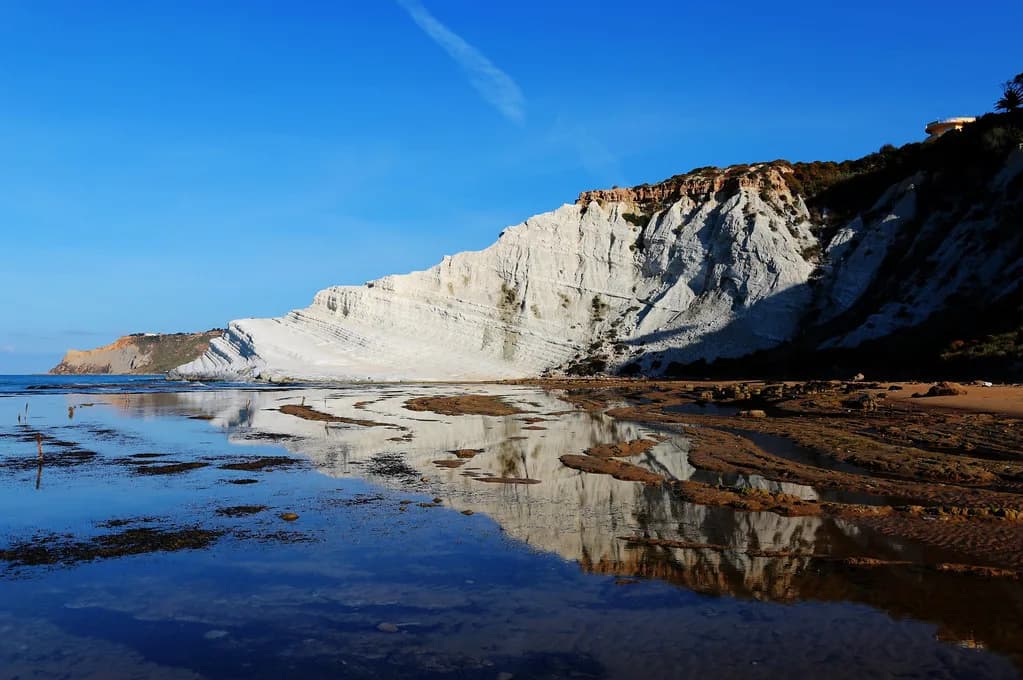
Scala dei Turchi is a white marl cliff about fifteen kilometres west of the city, shaped like a giant staircase and best seen from the beach or the roadside viewpoint. Climbing the cliff is no longer allowed, so plan to admire it rather than scale it. Arrive early in high season if you want a parking space.
For a quieter swim, the Torre Salsa nature reserve about thirty kilometres away protects dunes, wetlands and white cliffs, with parking near the Pantano entrance and a short walk to the sand. Eraclea Minoa, thirty-five kilometres west, pairs a Greek archaeological park with a long golden beach. Both need a car or a tour, so treat them as half-day outings in their own right.
Second-Day Archaeology Outside the City
The Villa Romana del Casale near Piazza Armerina, roughly an hour and a quarter east, holds a famously rich collection of Roman mosaics, a UNESCO site in its own right. It makes a strong contrast to the Greek temples but requires a full day with a car.
Closer in, Favara is a fifteen-minute drive away and hosts Farm Cultural Park, a contemporary art project that revived a run-down quarter of the town with installations and exhibitions. Porto Empedocle, the old harbour, holds a mural tribute to the writer Andrea Camilleri. Both work as short detours rather than headline days.
Selinunte, about an hour west, is the other great Greek site of southern Sicily, its temples spread across a headland above the sea. It rewards travellers with a second day and their own transport.
Day Trips from Palermo or Elsewhere Without a Car
Agrigento is reachable from Palermo by train, and the station sits a short walk from Piazza Rosselli, where local buses to the park depart. Buses from Palermo also terminate near the same square, making the connection straightforward. Check current departures with Trenitalia or the bus operator, as timetables vary by season. For wider planning, see Getting Around Agrigento.
Train connections from eastern Sicily are slow and indirect, so a day trip from Catania is impractical without a car or an organised tour. Guided day trips from Palermo and Catania combine the temples with stops elsewhere, swapping flexibility for a fixed itinerary. That trade-off suits travellers who would rather not plan the logistics. Further visitor details appear in Day Trips from Agrigento.
If you build the day yourself, the Agrigento one day itinerary shows how to sequence the temples, the old town and a coastal stop without overloading the schedule.
Car Versus Bus and Tour
A car buys flexibility for the coast and inland sites, but parking in the historic centre is tight and the park's entrance car parks charge by the hour. Renting in Palermo or Trapani usually offers more choice than Agrigento itself. If your trip is confined to the city and the temples, a car is more burden than benefit.
Public buses cover the city-to-park run and the coast reasonably, but frequencies thin out in the evening and on quieter days. A guided tour removes the timetable problem and often includes entry, though it fixes your pace. Weigh which of those costs bothers you more.
Season, Heat and Time of Day
Summer heat on the exposed limestone ridge is genuinely punishing, and shade inside the park is scarce. Arriving at opening or returning in the late afternoon is not a stylistic choice in July and August, it is essential. Carry water and refill at the drinking fountains rather than relying on buying bottles on site. For wider planning, see Best time to visit Agrigento.
Spring brings almond blossom to the valley around February and March, when Agrigento holds its Almond Blossom Festival with folk groups and torchlight processions. The festival began in Naro and has been held in Agrigento since the 1950s. Check the organiser's own announcements for dates rather than assuming a fixed weekend.
Autumn offers cooler walking and thinner crowds, while winter is quiet and atmospheric, though some facilities may run reduced hours. Evening visits in summer, when the temples are illuminated, are a popular alternative to the midday slog. Confirm seasonal hours on the official park site before planning around them.
Practical Packing and On-Site Etiquette
Wear closed shoes with grip, because the paths are uneven and the limestone becomes slippery when wet. Bring a hat, sunscreen and a refillable bottle, and remember that tripods are not permitted in the park.
Stay on the marked routes and never climb on the temple structures. Guards are sparse and the site is open, so sensible behaviour from visitors is what keeps it that way. Keep litter with you until you find a bin.
Suggested One-Day and Two-Day Plans
For a single day, start at the eastern entrance early, walk the ridge to the west, and use the shuttle or a bus to return if the heat bites. Spend the late afternoon in the old town along Via Atenea and finish with an aperitivo at San Leone. That shape gives you temples, city and sea without rushing. For wider planning, see Agrigento old town walking guide.
With two days, give the first to the park and museum, then use the second for Scala dei Turchi and the Torre Salsa reserve, or push further to Selinunte. Our two day itinerary for Agrigento sets out that split in more detail. For wider planning, see Agrigento in Two Days.
Plan Your Visit
Agrigento's appeal depends on pacing: a half day for the temples, a second block for the museum or the coast, and honest allowances for heat and walking. Choose your entrance to avoid retracing the ridge, and check current prices and hours with the official park before you go.
Beyond the temples, the old town, the monastery sweets and the evening seafront give the city enough texture to justify an overnight stay. Build that in and the day trips radiating out from Agrigento stop feeling like a checklist.
Frequently Asked Questions
How much time do you need in Agrigento?
Plan a half day for the Valley of the Temples alone, roughly three to four hours including the walk between entrances. Add at least an hour for the archaeological museum, and a further half day if you want the coast or a second site. Most travellers do the city justice with one overnight stay.
Can you walk from Agrigento to the Valley of the Temples?
Yes, the eastern entrance is about three kilometres from the city, but the route climbs and the Sicilian summer heat makes it feel longer. Buses and taxis cover the distance more comfortably. If you walk, start early in the morning.
Should you visit the Valley of the Temples in the morning or evening?
Early morning gives soft light, cooler temperatures and thinner crowds. In summer, late afternoon and evening visits are popular because the ridge is exposed and shade is scarce midday. Confirm seasonal evening openings on the official park website before planning around them.
Do you need a car for day trips from Agrigento?
Not for the temples, the old town or San Leone, which buses and taxis cover. A car helps for Scala dei Turchi, Torre Salsa, Eraclea Minoa and inland sites such as the Villa Romana del Casale. Tours fill the gap if you would rather not drive.
Is Agrigento worth an overnight stay?
Yes, if you want to see the temples without rushing and still have time for the old town or the coast. Staying overnight also lets you visit at opening time, before the heat and the tour groups arrive. A day trip from Palermo covers the temples but little else.
Sources
- A Local's Guide to Agrigento, Sicily — Go Ask A Local
- Visiting The Valley of The Temples, Sicily | A Complete Guide — ALONG DUSTY ROADS
- Day Trips from Agrigento
- Temple of Hercules — Google Arts & Culture
- Things to do in Agrigento, Sicily
- What to do in Agrigento like a local: 10 travel tips | Visititaly.eu
- A Guide to the Valley of the Temples: Unveiling Ancient Akragas - Slow Sicily
Continue exploring
More guides you'll find useful