Temple of Concordia Guide: Agrigento's Best-Preserved Doric Temple
Plan a visit to the Temple of Concordia in Agrigento's Valley of the Temples: its Doric design, church conversion, setting and how to check hours and tickets.
On this page
The Temple of Concordia is the reason many travellers come to Agrigento, and it rewards more than a quick photo stop. Standing on the temple row in the Valley of the Temples, it is a Doric building of unusually intact form, and its story runs from Greek Akragas through a Christian conversion to modern restoration. This guide explains what you are looking at, where it sits in the park, and how to check visiting details before you travel.
A third-party listing for the temple records hours of 08:30 to 23:00 with admission ending at 22:00, and suggests one to two hours at the site. Treat that as a source-dated snapshot rather than a guarantee, since seasonal hours at the archaeological park change. The park's own website is where you should confirm hours, ticket scope and access rules for your own dates.
Why the Temple of Concordia Matters
Agrigento's archaeological park preserves a group of Greek temples, and the Temple of Concordia is singled out in visitor sources as the best preserved of them. That status is not a modern accolade invented for tourism; it reflects the fact that the building remained in use, and therefore maintained, long after the Greek city declined. For travellers, it means you can read the architecture on site rather than reconstructing it from foundations.
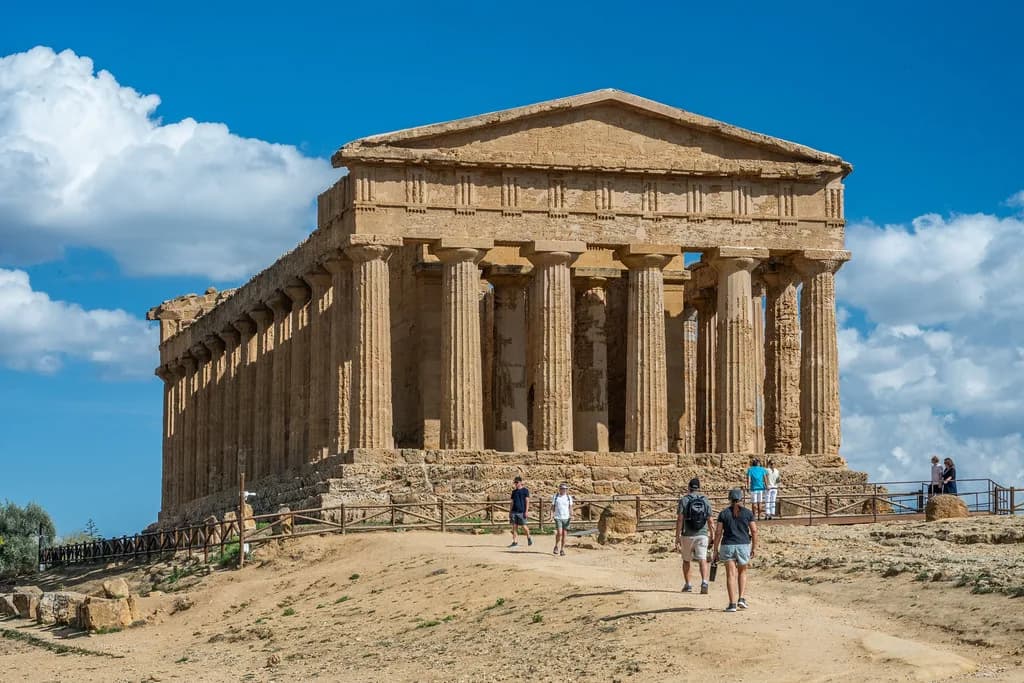
The temple belongs to the Doric order, the sober style with fluted columns and simple capitals that most people picture when they imagine a Greek temple. One visitor-oriented description calls it a large Doric building and places its integrity second only to the Parthenon in Athens, though that is a secondary characterisation rather than an official or scholarly measurement. Take the comparison as shorthand for how complete the structure feels, not as a ranking.
Where the Temple Sits in the Valley of the Temples
The Valley of the Temples is a long archaeological park rather than a single walled compound, and the Temple of Concordia occupies a central stretch of the temple row. Because the park is linear, the order in which you walk it shapes what you see and how much walking you do. A planned route matters more here than at a compact museum site.
For the wider layout, entrances and how the individual temples relate to each other, use our Valley of the Temples visitor guide before fixing a route. It will help you decide where to start and what you can realistically cover on foot in a half day. Plan your entry point around the park's own map and notices rather than assuming one ticket gate serves every section equally.
Reading the Doric Style Up Close
Stand in front of the facade and start with the columns. Doric columns are fluted, with no carved base, and they carry a plain capital beneath the entablature. One visitor description notes intact columns at the front and along the side, which lets you see the rhythm of the colonnade as a whole rather than as a fragment. Specific column counts circulate online, but treat them as description rather than official data.
Then step back and look at proportions. A Doric temple is designed to be seen from outside, with the inner room set behind the colonnade, and the whole mass calibrated so the columns appear even from a distance. Walking along the side rather than only facing the front shows how the builders handled the long view. Give yourself time to circle the building slowly; this is where a suggested one to two hours is spent.
Finally, notice what has changed. The building has been altered, restored and reused across its long life, so you are not looking at an untouched ancient surface. That is part of the point: the temple's present form is the result of careful work, and patched and weathered areas show where conservation has stepped in. Look for those seams as you walk around.
The Church Conversion and Why the Temple Survived
The key to the Temple of Concordia's preservation is its later life as a Christian church. According to one account, the building was converted into a Catholic church in the sixth century AD, which spared it the fate of other temples in the area, and it was not restored to its original appearance until 1788. The conversion meant the structure stayed in use and maintained rather than being quarried for stone.
That sequence explains a lot of what you see. When you notice alterations in the masonry or a shape that does not quite fit a classical temple, you may be looking at evidence of the building's long afterlife rather than a defect. Reading the site this way turns a handsome ruin into a document of changing religious and civic power in Sicily. It is also why the temple's plan differs from a purely excavated Greek sanctuary.
Ancient Akragas in Context
The temples were built by the Greek city of Akragas, the settlement that later became Agrigento. One tour listing frames the surrounding ruins as those of ancient Akragas, a city that once rivalled Athens, which gives a sense of the scale and ambition behind the temple row. The city's wealth and reach are the context for why so many monumental temples were built here.
Dating is where caution helps. One source gives 440 BC as the temple's construction date, but that figure should be treated as a secondary characterisation rather than a certified fact. Lean on the broad sequence, Greek city, Greek temples, later reuse, rather than pinning the whole visit to a single year. The park and museum displays provide the more authoritative chronology if you want it.
For the objects that came out of this landscape, our Agrigento Archaeological Museum guide is the natural follow-up to a temple visit. The Museo Archeologico Regionale Pietro Griffo gathers finds from the surrounding sites, so it fills in the everyday life that the temples only hint at. Pairing the two turns a scenic stop into a proper city story.
Seeing the Temple With Limited Time
If you have only a couple of hours in the park, treat the Temple of Concordia as the anchor and build outward from it. Approach from your chosen entrance, spend the bulk of your time on the temple itself, then choose one adjacent stretch of the temple row rather than attempting the whole park. This is an editorial strategy, not an official route; use the park map to confirm distances on the day.
Walk the colonnade slowly in both directions, front and side, then read the later masonry changes before moving on. A short stop at a single nearby temple gives you a useful comparison for how much more intact Concordia is. Our Temple of Juno guide covers the sanctuary toward the other end of the temple row, which makes a sensible second stop.
Guided Tour or Independent Visit
An independent visit gives you control of pace, and the temple's exterior is legible without a guide if you have read up beforehand. A guided walk buys interpretation and logistics instead: one operator-listed skip-the-line tour runs about two hours with a certified local guide and includes the park entrance ticket. That listing is a commercial product, not an official park offering, and its price and availability change.
Be precise about what skip-the-line means here. The same operator states that priority applies at the ticket office only, while security checks cannot be skipped and you may still have to queue. Late arrivals can forfeit the tour because the entrance ticket is valid only for the start time. If you book, arrive early and treat the queue as part of the morning.
Checking Hours, Tickets and Entry Rules
Hours and ticket scope at the Valley of the Temples are the details most likely to change between seasons and between booking channels. Start with the official park website for current opening times, last admission and what standard admission covers. A third-party listing may be useful for orientation, but it should not be the source you rely on for the day of your visit.
Ask specifically whether your ticket covers the whole archaeological park or only part of it, because the site is large and includes several distinct areas with their own arrangements. Do not assume that a guided tour's ticket, a sunset product or an audioguide carries the same inclusions as general park admission. Check the inclusions line by line before paying, and keep a copy of the confirmation.
If you want independent background on the temple, Lonely Planet's Tempio della Concordia page offers a concise overview of the site. Use it to orient yourself, then rely on the park's own notices on the ground for anything time-sensitive. That division keeps your planning grounded in the operator's current information.
Pairing the Temple With the Rest of the Park
The Valley of the Temples holds more than one monument, and the best visits give the temple row a rhythm rather than treating Concordia in isolation. Combine the temple with the ancient city ruins and one further sanctuary, and you start to see how a Greek city organised its sacred landscape. Allow for heat and walking; the site is exposed and spread out.
Within the park, the Giardino della Kolymbethra is a separate garden area with its own character and visiting arrangements, so check before assuming it is included in your park ticket. Our Kolymbethra Garden guide explains what the garden offers and how it fits a longer day. It is a good counterpoint to the stone and sun of the temples.
Beyond the park, Agrigento rewards slower exploration, and our hidden gems in Agrigento guide balances the headline sights with quieter city corners. It is a useful way to spend an afternoon after a morning among the temples. Keep the park as the centrepiece and let the city fill the edges of your day.
Plan Your Visit
The Temple of Concordia is reason enough to build a day around Agrigento, and the most useful preparation is understanding what you are seeing. Read up on the Doric order, look for the church-conversion changes, and give the colonnade enough time to reward a slow walk. Then confirm hours, ticket scope and entry rules on the official park website for your dates.
Use the Agrigento Attractions hub to compare individual sites before you commit to a route, and bring in our Temple of Juno (Hera Lacinia) Guide when you want to link the temple to the rest of the row. Together they support a practical self-guided day without relying on any single listing. Agrigento rewards the traveller who arrives informed rather than rushed.
Frequently Asked Questions
Why is the Temple of Concordia so well preserved?
Its survival is closely tied to later reuse: one account says the temple was converted into a Christian church in the sixth century AD, which kept the structure in service and maintained. That legacy of continued use, followed by later restoration, is why the colonnade still reads so clearly today. Read the masonry for signs of those changes.
Where is the Temple of Concordia inside the Valley of the Temples?
It stands on the temple row within the archaeological park, in a central position among the other Greek monuments. The park is a long, spread-out site, so plan your entrance and walking direction in advance. Check the official park map and notices on arrival for the route that fits your available time.
How long should I allow for the temple?
One visitor listing suggests one to two hours at the temple itself, though that is an editorial suggestion rather than an official figure. Add time for walking between monuments, because the park is large and exposed. If you have a half day, anchor on the temple and add one adjacent stretch of the row.
Is a guided tour worth it for the Temple of Concordia?
A guide adds interpretation and logistics, while an independent visit lets you set your own pace. Be clear about the limits of skip-the-line products: one operator states priority applies at the ticket office, not at security checks, and late arrivals can lose their slot. Compare the inclusions with standard park admission before booking.
When is the best time of day to see the temple?
There is no single official best time; decide based on light, heat and the hours published by the park for your date. The site is exposed, so early or late in the day is often more comfortable. Check the official park website for current closing time and last admission before planning an evening visit.
Sources
Continue exploring
More guides you'll find useful