Bačvice Beach Split: A Local's Guide to Picigin, Crowds, and Costs
Plan a visit to Bačvice Beach in Split: how to get there, picigin rules, sunbed costs, family vs nightlife hours, and honest pros and cons for 2026.
On this page
Bačvice Beach Split: What to Know Before You Go in 2026
Last updated July 2026. Bačvice Beach in Split sits about 0.6 miles (1 km) from Diocletian's Palace, making it the closest sandy shore to the Old Town in a region where most coastlines run pebble or rock. The bay is also the birthplace of picigin, the ball game invented here in 1908 and now protected as Croatian intangible cultural heritage. This guide covers the walk from the ferry port, what picigin looks like in practice, and the concrete-versus-sand trade-offs many first-time visitors miss.
Bačvice Beach Split at a Glance
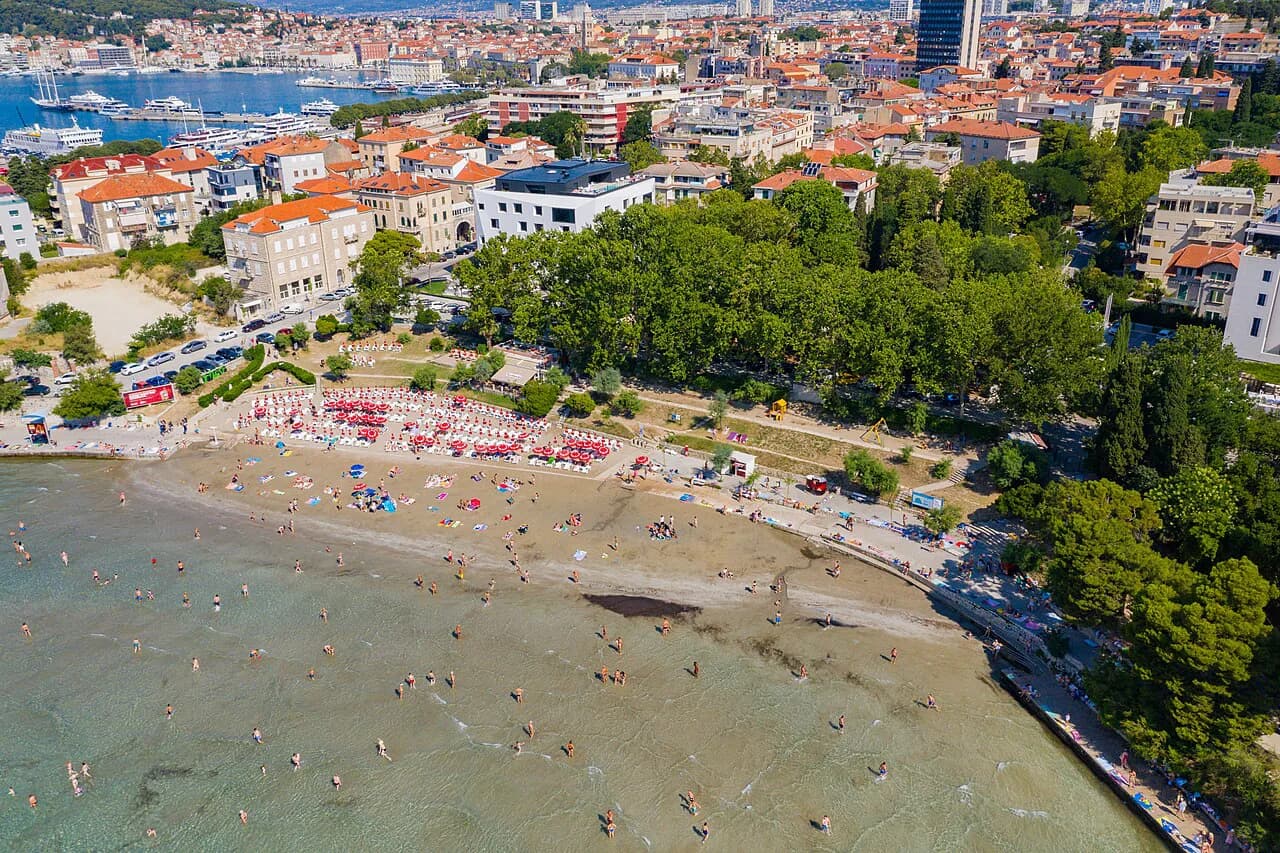
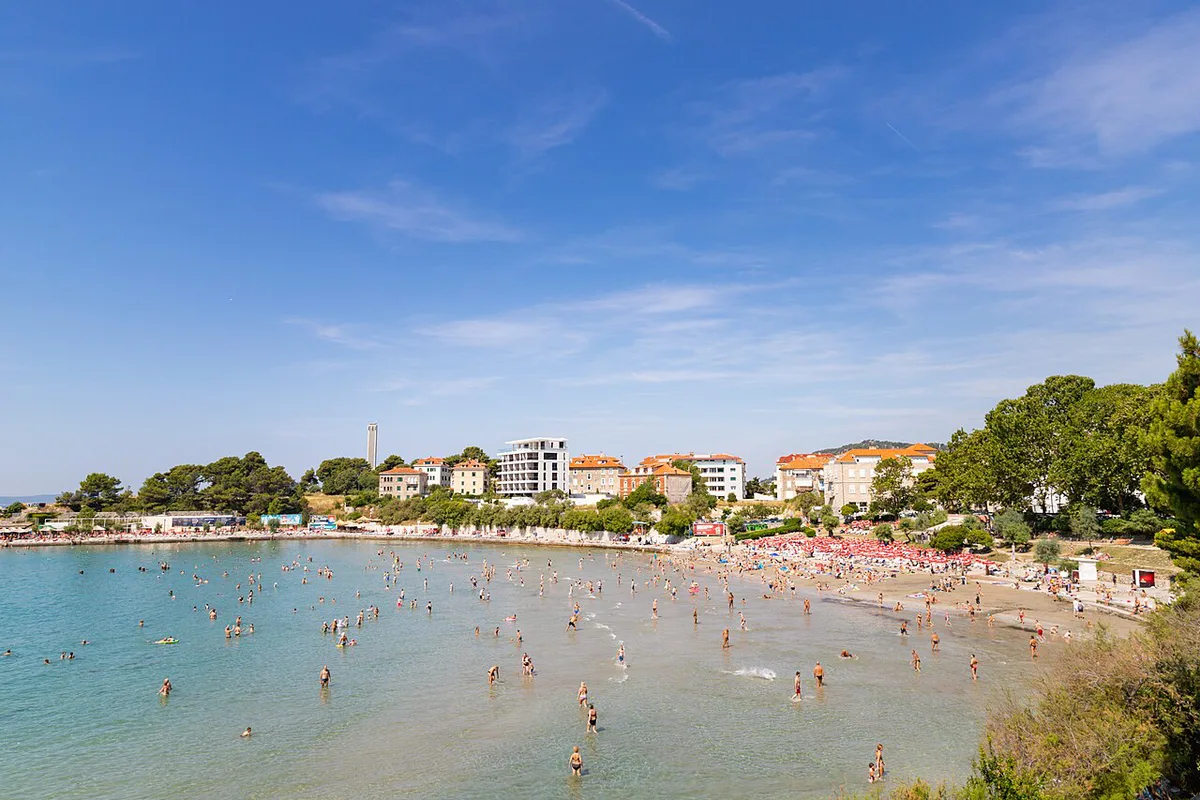
Bačvice curves along the shoreline just east of Split's harbor, close enough to the Old Town that most visitors reach it on foot. The bay is sandy, a rarity on a coast where pebble and rock dominate most public beaches. Locals and guidebooks alike describe it as a break in an otherwise rocky coastline, sitting right inside a working city rather than tucked away from it. Entry is free, and the beach stays open with no gate or ticket booth. Because entry costs nothing, Bačvice regularly appears on lists of Free Things to Do in Split: A 2026 Budget Guide. Ferries and harbor cranes stay visible from the sand, and the walk in from town crosses a working harbor bridge rather than a quiet lane.
- Location: about 0.6 miles (1 km) from Diocletian's Palace and Split Old Town
- Access: roughly a 10-minute walk from the main bus station and ferry port
- Entry: free, public beach with no admission fee
- Status: Blue Flag, the first beach in Split to earn the designation
Picigin: The Local Religion Played With a Rubber Ball
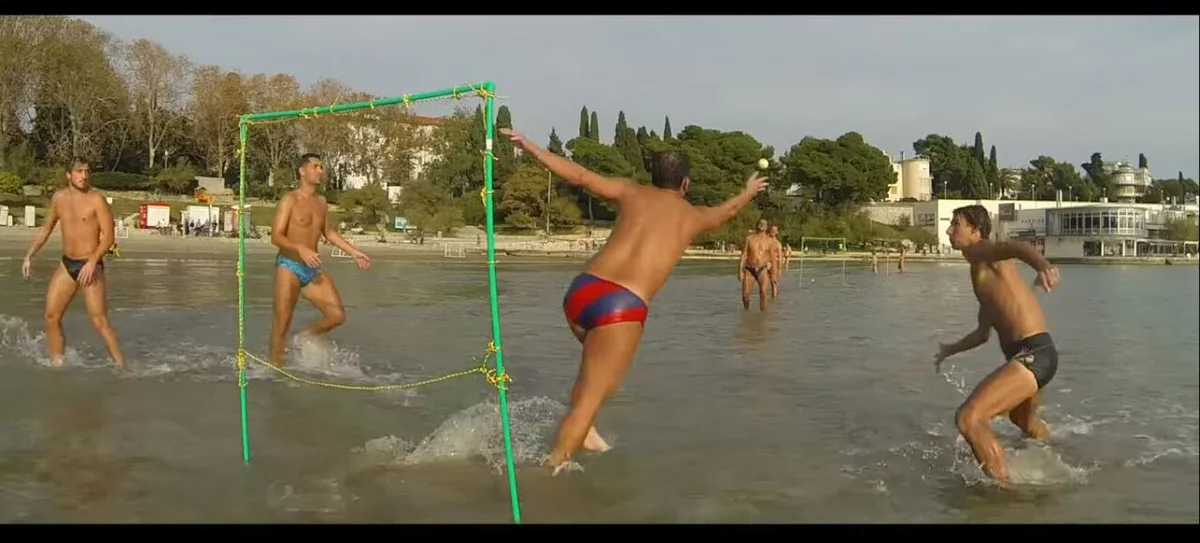
Picigin was invented in this exact bay in 1908, and Croatia now protects it as intangible cultural heritage. The rules stay simple. Players stand in shin-to-knee-deep water and use open palms to keep a small rubber ball, called the balun, from touching the surface. There is no net and no formal score. The sound carries across the bay: an open palm meeting a wet ball, then a splash if the save fails. Teams judge themselves on style, rewarding dives, one-handed saves, and acrobatic stretches over the water. Spectators often gather on the promenade above the sand just to watch, since a skilled rally can hold attention for several minutes. Anyone can join an open game in the shallows; no reservation or special gear is required beyond a ball. Bačvice has hosted a Picigin world championship since 2005, usually held in summer. Confirm the current year's dates locally, since scheduling can shift. Locals treat the game as a habit, not just a summer pastime, and small groups still play into the cooler months whenever weather allows.
Getting to Bačvice From the Ferry Port and Bus Station
From the ferry port and the main bus station, head toward the harbor inlet and cross the pedestrian bridge that spans it. Bačvice's sandy bay opens up on the other side, framed by the hospitality complex along its eastern edge. The walk takes about 10 minutes at a normal pace, with no hills or stairs involved, and it passes directly by the ferry terminal's arrivals hall. Signage toward the port makes the return walk just as easy to retrace. Drivers have two parking options, at the beach's northern and western entrances. Spaces fill quickly in July and August, so arriving before mid-morning improves the odds of finding one.
Best Time to Visit: Morning Calm vs Afternoon Crowds
Arrive before roughly 9 a.m. for the calmest water, when the crowd is mostly local swimmers doing laps before work. By late morning, families claim the shaded corners and the shallow water fills with kids. By late afternoon, sunbeds fill and the beach bars turn up the music, shifting the mood from swim spot to social scene. Sunset draws a crowd of its own, arriving for the view before the nightlife shift begins in earnest. Bačvice's capacity tops 10,000 bathers, and July and August afternoons regularly push toward that limit, especially on weekends. Weekday mornings offer a noticeably calmer version of the same beach. For a broader view on avoiding the peak crush citywide, see the guide to the Best Time to Visit Split Without Crowds: A 2026 Season-by-Season Guide.
The 10-minute ferry-port walk attracts crowds that can reach 10,000 bathers on peak afternoons, turning afternoon visits into standing-room-only conditions; early-morning arrivals before 9 a.m. recover the swimming experience.
Facilities and Costs: Sunbeds, Lockers, and the Toilet Situation
Bačvice covers the basics, though nothing here is posted at a fixed rate. Rentals and lockers run close to other central Split beaches; confirm the current price at the on-site kiosk before settling in. The eastern hospitality complex adds a children's playroom, a small water park, and several nightclubs alongside the cafes and kiosks. The corner shop near Hotel Park covers sunscreen, snacks, and drinks for anyone who forgot to pack them. For sit-down options beyond the beach kiosks, consult the Split Local Food Guide: Where to Eat Like a Local in 2026. 8 Best Local Restaurants in Split: Where Locals Actually Eat (2026) covers the Old Town side too.
Situated just 0.6 miles from the Old Town, Bačvice's convenient proximity attracts enough summer crowds to create real frictions: no public toilets and concrete lounging areas dominate the sunbathing space.
- Showers: freshwater, on both sides of the beach, typically free or coin-operated
- Sunbeds and umbrellas: rentable on-site; no fixed published rate, check the kiosk
- Lockers: paid, for valuables
- Dining: Café Žbirac overlooks the main sandy stretch
- Eastern entrance: Hotel Park, plus an ATM, a corner shop, and a bike rack
- Western entrance: an outdoor gym and a beachfront restaurant
- Toilets: no public restrooms; cafés provide access, usually tied to a purchase
Family Beach by Day, Party Zone by Night
This beach runs two different schedules depending on the hour. By day, the shallow water suits young kids, and an inflatable aqua park adds extra entertainment near the shore. Sandcastle building stays easy thanks to the soft sand near the waterline. Even the daytime crowd skews social, with picigin games doubling as a way to meet other travelers and locals alike. By night, the same stretch turns into one of Split's busiest nightlife spots, with beach bars and clubs drawing both locals and visitors. The Split Beach Festival takes over the beach for a stretch of summer nights most years; confirm current dates before planning around it. Bars along the shore often stay open until 3 a.m. or later in peak season.
| Daytime | Nighttime | |
|---|---|---|
| Atmosphere | Families, swimmers, picigin games | Bars, music, dancing |
| Water use | Shallow wading, sandcastles | Warm-weather night swims |
| Best for | Kids and casual sunbathers | Groups out for a late night |
What Blue Flag Status Actually Means for Swimmers
Bačvice was the first beach in Split to earn Blue Flag status, an eco-label overseen by the Foundation for Environmental Education. The designation is not just a marketing sticker. It covers water-quality testing, environmental management, safety provisions, and the availability of basic services at the beach. For swimmers, the practical takeaway is straightforward: the water here is tested against a recognized standard, not just assumed clean because it looks that way. That matters at a beach this crowded, since heavy daily use is exactly the kind of pressure Blue Flag criteria are designed to catch early. The flag does not promise an empty beach or flawless conditions every single day. Seagrass still washes ashore occasionally, and the sand still gets kicked into cloudy patches during the busiest afternoons. What it does promise is a baseline of monitoring that many unrated beaches simply do not have.
The Reality Check: Pros, Cons, and Who Should Skip It
This beach earns its reputation, but it comes with trade-offs worth knowing before you go. The blend of Old Town access and sandy shoreline is unusual for this stretch of the Adriatic, and it draws a crowd because of it. Travelers who want desert-island quiet should look elsewhere. Marjan Hill's coves trade sand for pine shade and far fewer people. Sustipan Park offers a similar clifftop quiet within walking distance of the center. Weigh the trade-offs against what matters most for the day: convenience and energy, or space and quiet.
- Pro: about 0.6 miles (1 km) from Diocletian's Palace, easy to combine with Old Town sightseeing
- Pro: sandy bottom and shallow water, unusual for a Dalmatian city beach
- Pro: Blue Flag status, tied to water-quality testing and environmental management standards
- Con: much of the lounging area is concrete slab, not sand
- Con: peak-season crowds can feel closer to standing room than a swim
- Con: seagrass (posidonia) sometimes washes ashore and can cloud the shallow water
What's Nearby: Neighborhoods, Day Trips, and Quieter Alternatives
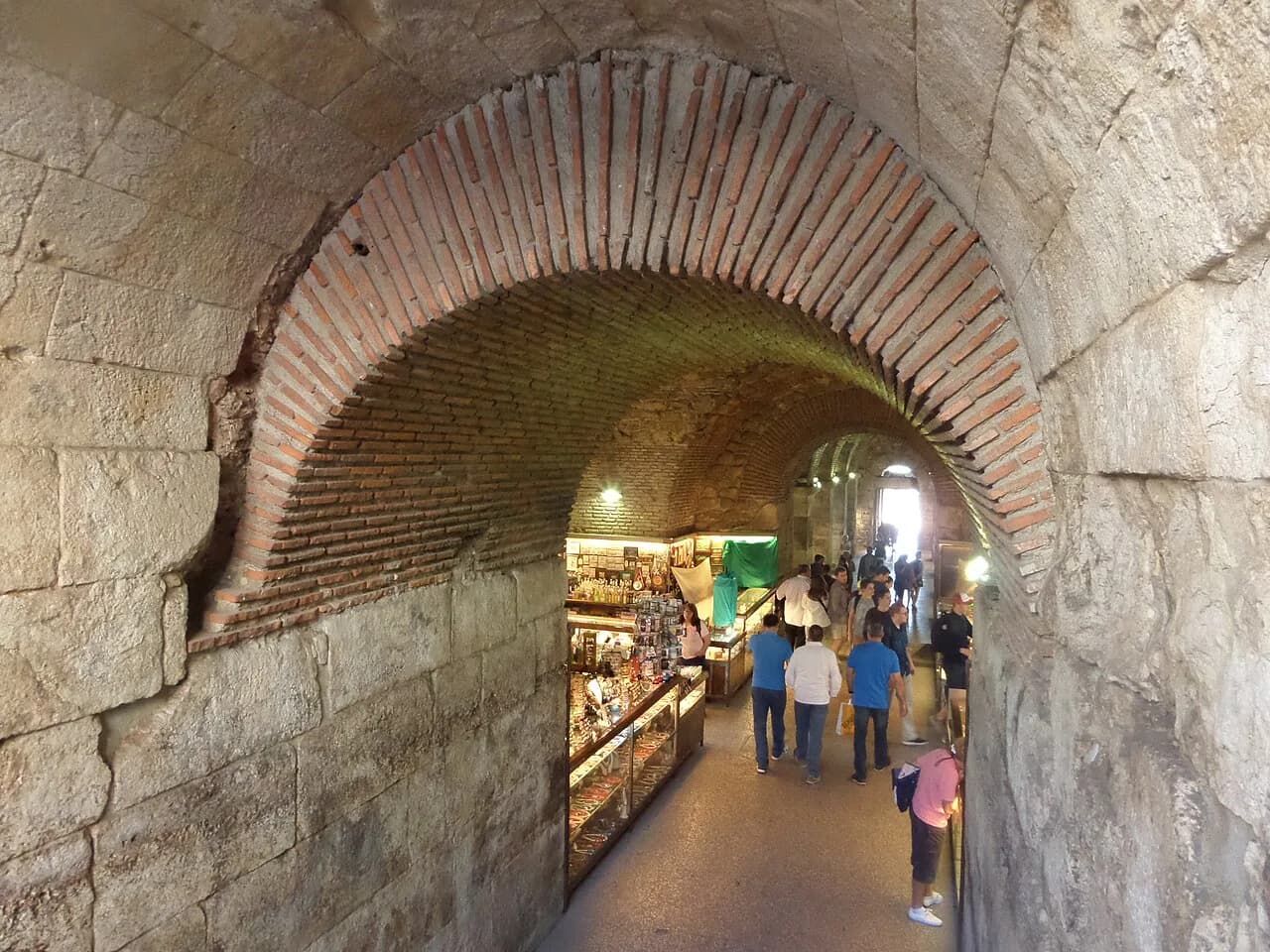
Bačvice sits between two residential neighborhoods worth a walk. One is Lučac-Manuš. Veli Varoš is the other. Both feature in the broader Split Neighborhoods Guide: Where to Stay and Explore (2026), useful for finding a quieter place to stay near the beach. That same ferry port puts you a 10-minute walk from the beach and also runs boats to nearby islands and coastal towns. One easy option is a Trogir day trip. Another is a Šolta island day trip, a quieter alternative to the city beach itself. Both appear in the roundup of 8 Best Day Trips from Split, Croatia (2026 Travel Guide). Inside the Old Town, the cellars of Diocletian's Palace stay cool on a hot afternoon, a useful break from the beach sun. The promenade connecting the beach to the harbor stays walkable well after dark, lit by the same cafes and clubs that keep the area busy. For more low-key stops across the city, the 15 Hidden Gems in Split: Local Escapes Beyond the Palace (2026) guide rounds up spots most visitors miss.
Understanding Bačvice’s Sand-and-Concrete Layout
Bačvice has a sandy seabed, but it is not a wide ribbon of dry sand. The main sandy area sits around the shallow central bay below Café Žbirac. This is the best section for children, sandcastles, and entering the water without crossing rocks.
Much of the surrounding sunbathing space consists of concrete platforms and paved edges. These areas provide direct water access but feel very different from a traditional sandy beach. Bring a padded mat if you plan to lie outside the central sand section.
The eastern side leads toward Hotel Park and the hospitality complex, where cafés and clubs make the setting more urban. The western side continues toward the outdoor gym and beachfront restaurant.
Arrive early if dry sand matters to you, since that limited area fills before the concrete perimeter. The sandy bottom extends farther into the shallow water than the visible beach suggests. This makes Bačvice excellent for wading, even when the dry shoreline feels crowded.
For trip-planning details, see Picigin – Wikipedia.
Frequently Asked Questions
Is Bačvice Beach in Split free to visit?
Yes. Bačvice is a public beach with no entry fee. Renting a sunbed, umbrella, or locker costs extra, and rates track other central Split beaches. Bringing your own towel and mat avoids those costs entirely.
How far is Bačvice Beach from the ferry port and bus station?
Plan on about a 10-minute walk. Cross the pedestrian bridge from the port and bus station area. Bačvice's sandy bay opens up on the other side, with the hospitality complex visible ahead. No bus transfer is necessary for this distance.
What is picigin, and can visitors join a game?
Picigin is a no-net, no-score ball game invented at Bačvice in 1908. Players use their palms to keep a small rubber ball airborne in shin-to-knee-deep water. Casual games form near the shallows, and joining in usually just takes asking a nearby group. No equipment is required beyond a ball, which nearby shops sell.
Is Bačvice Beach good for young kids?
During the day, yes. The water stays shallow and warm near the shore, and the sand suits sandcastle building. An inflatable aqua park adds extra activity for older kids. Evenings shift toward a nightlife crowd, so families usually head out before the bars ramp up.
Are there public toilets at Bačvice Beach?
No dedicated public restrooms exist on the beach. Cafés along the shore provide access, though staff usually expect a purchase in return. Carrying small change or planning a coffee stop solves the problem in advance.
When is the best time to visit Bačvice Beach?
Early morning, before roughly 9 a.m., brings calmer water and a local crowd doing laps. Afternoons in July and August draw the heaviest crowds, so arrive early or wait for early evening. Weekday visits are noticeably quieter than weekends.
Continue exploring
More guides you'll find useful