Cellars of Diocletian's Palace in Split: The Complete Visitor Guide
Plan your visit to the cellars of Diocletian's Palace in Split: free Central Hall vs paid Substructures, 2026 hours and prices, and Game of Thrones filming spots.
On this page
Cellars of Diocletian's Palace in Split
Last updated July 2026, the cellars of Diocletian's Palace in Split are the vaulted Roman halls beneath the Peristyle that once held up the Emperor's private apartments and stored the palace's food and wine. Most visitors wander through the free central passage without noticing the paid museum wing just beyond, with intact vaults, ancient wine presses, and the rooms where Game of Thrones filmed Daenerys's dragon dungeons. This guide separates the free market hall from the ticketed Substructures, so you know exactly where to walk, what to pay, and which side rewards a longer look.
The Cellars of Diocletian's Palace in Split: What They Are
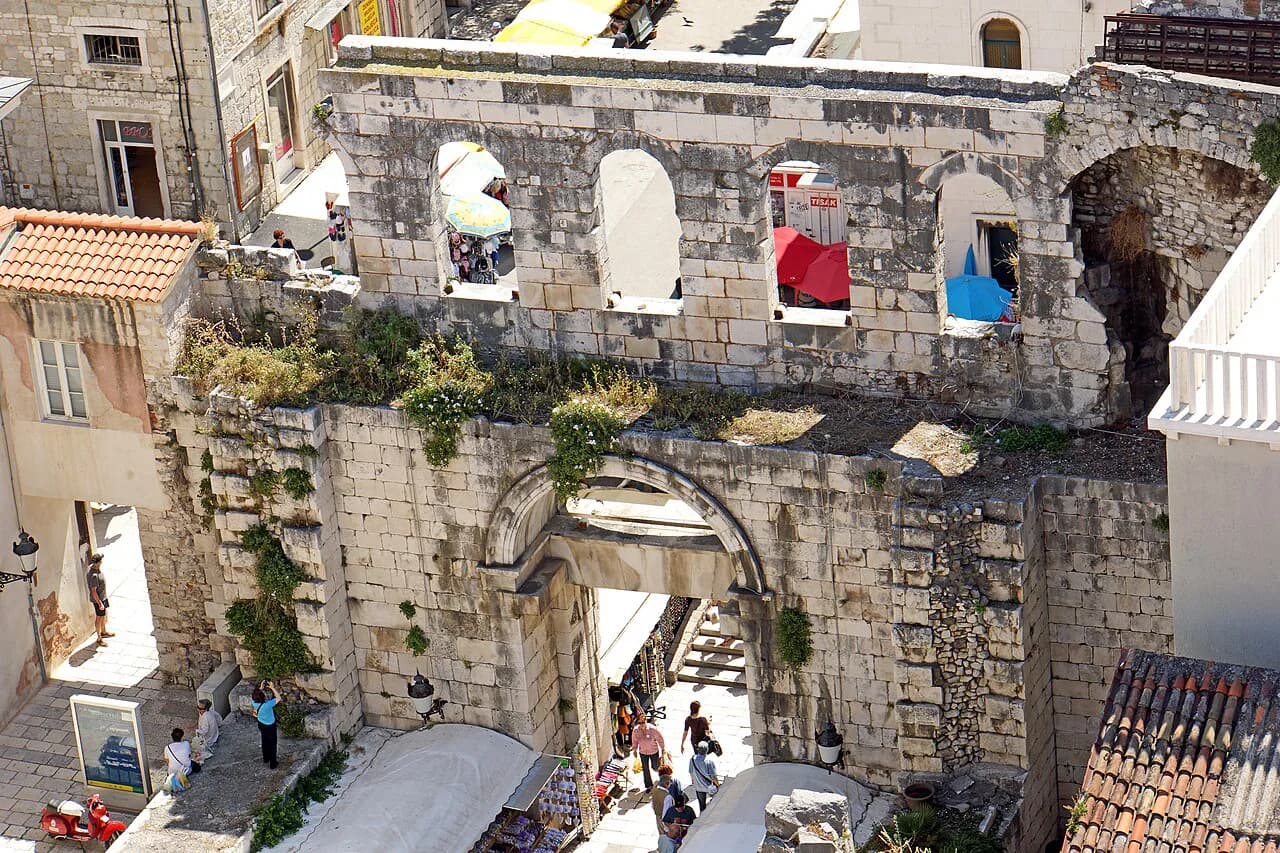
The cellars of Diocletian's Palace in Split sit at the southern edge of the palace complex, linking the waterfront Riva promenade to the Peristyle square above. Local guides still call them Podrumi, the Croatian word for cellars. Roman builders raised these vaulted halls in the early 4th century AD. Their purpose was to level ground that sloped toward the sea, so the Emperor's private apartments above could sit on a flat floor. Food and wine for the palace were stored in the same vaults. Today the halls cover roughly one-eighth of the palace's total footprint, a complex that spans about 690 by 620 feet, or 210 by 190 meters, end to end. Inside, the vaulted rooms line up beneath the palace's old Cardo Maximus, the main north-south street, so the underground layout still traces what once stood above it. That same southern entrance, the Bronze Gate, still leads into the cellars from the Riva today. Split's historic core, cellars included, joined the UNESCO World Heritage list in 1979.
Free Central Hall vs. Paid Substructures: Which One to Visit
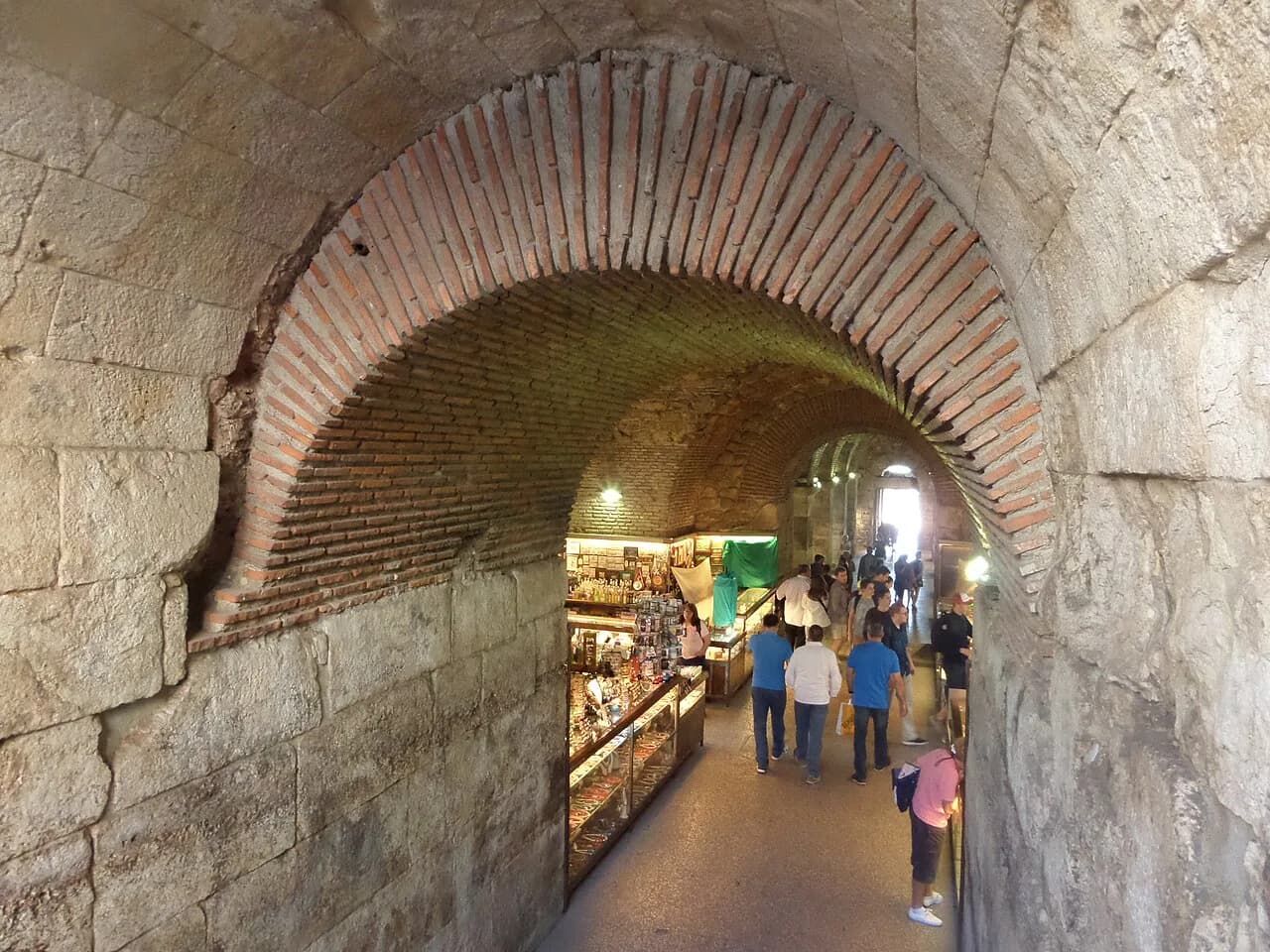
Walk in from the Bronze Gate, and the Central Hall greets you first. This barrel-vaulted passage forms the main route between the Riva and the Peristyle, and it costs nothing to walk through. Souvenir stalls selling lace, jewelry, and local crafts line both sides, so the atmosphere reads more like a covered market than a museum. Two paid Substructures wings branch off from this hall, one to the west and one to the east.
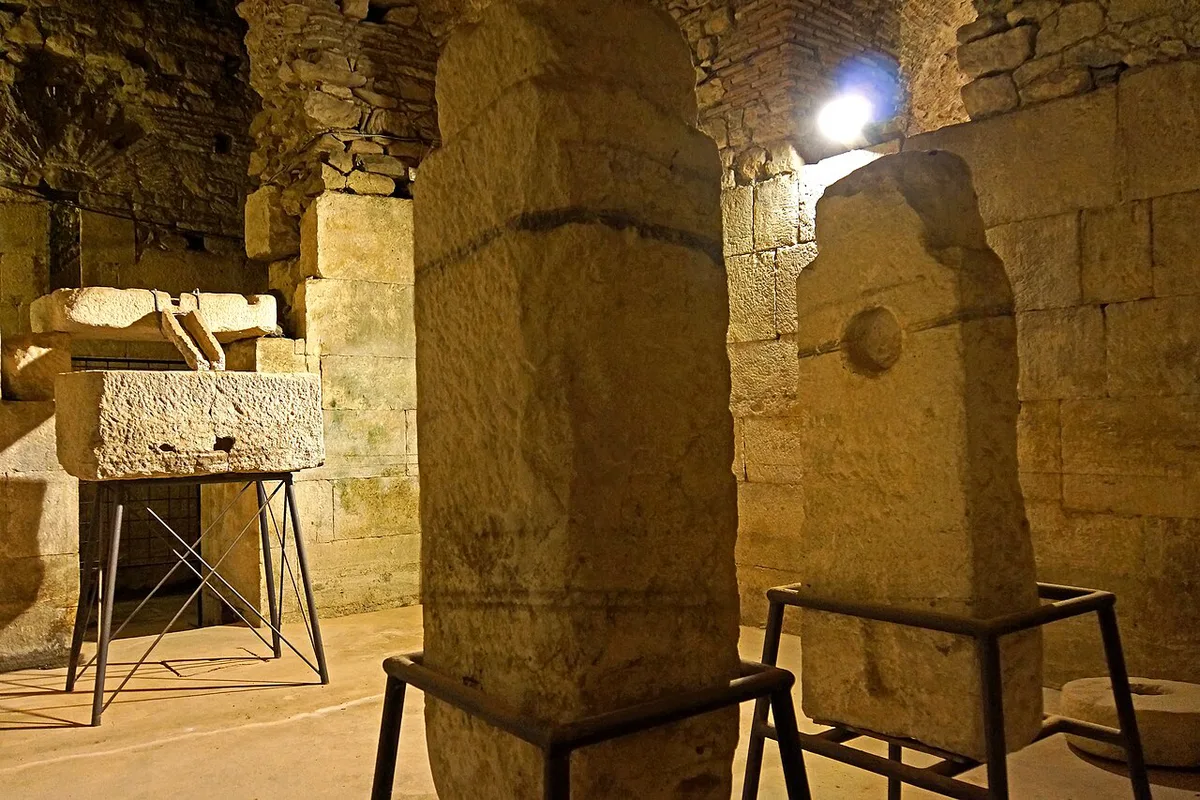
Western halls survived largely intact and reopened to the public first, back in 1959; today they also host art exhibitions and seasonal fairs. Eastern halls partially collapsed centuries ago and took longer to excavate, reopening only in 1995. Fewer visitors detour into the eastern rooms, so they tend to feel quieter. That's worth the extra steps if Split's lesser-known corners interest you more than the busiest stretch of the palace. Look for the ticket booth near the entrance to each paid wing, where you can decide on the spot whether to continue past the Central Hall. For a rundown of everything else nearby that costs nothing, see the guide to Split's other free attractions.
| What you get | Central Hall (Free) | Substructures Museum (Paid) |
|---|---|---|
| Cost | Free to walk through | Adult ticket in the €6–€8 range |
| Time needed | 5–10 minutes | 30–45 minutes |
| What you see | Souvenir stalls in a market-lined passage | Original Roman floor plan, wine and oil press, marble table |
| Crowd levels | Busiest mid-morning to midday | Thinner, especially early or late in the day |
Why the Cellars Survived: Roman Engineering and a Medieval Waste Pit
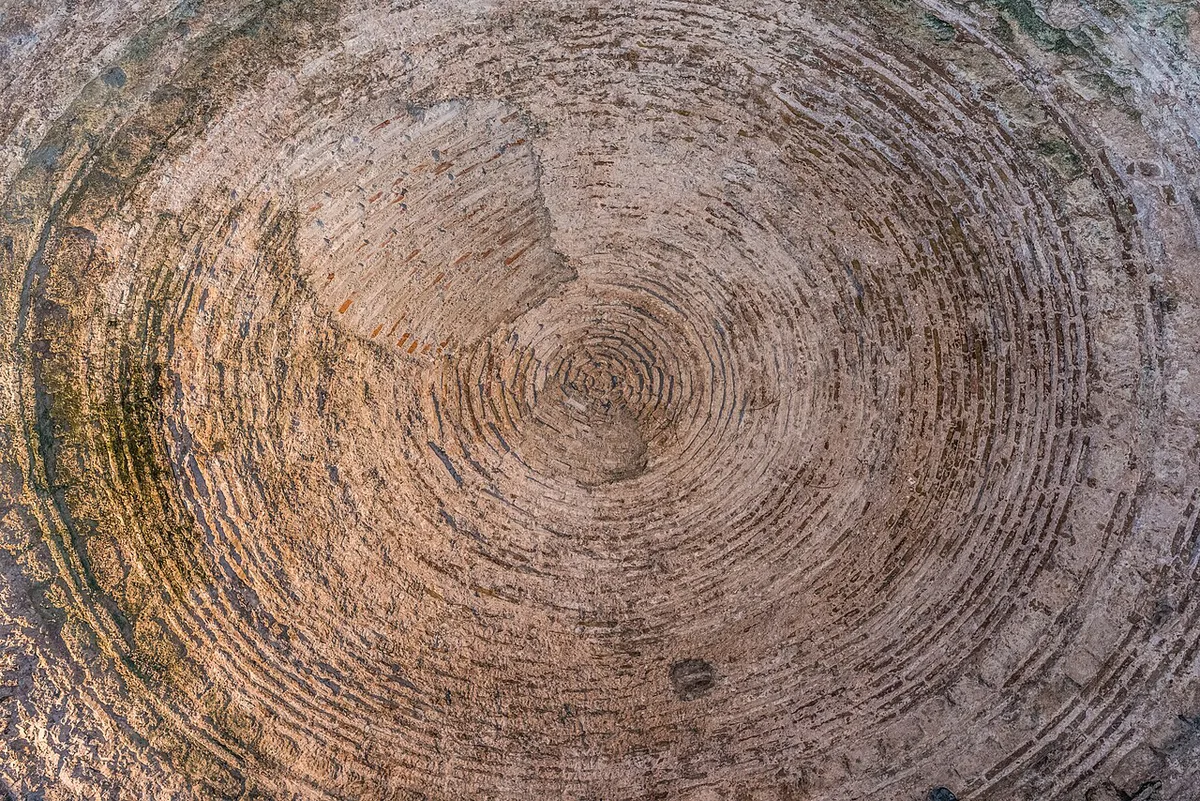
Because the vaults below were built to match the rooms above almost exactly, historians can reconstruct the Emperor's vanished apartments by studying what survives underground. Archaeologists describe this as a mirror-image layout. According to Visit Split's official description, the cellars are a faithful structural replica of the chambers that once sat above them. None of this would have survived if the halls had stayed in everyday use. Households built directly above the vaults dropped waste through holes in their floors for centuries, and that debris packed the halls solid. Eastern walls suffered further damage when medieval builders stripped stone from them to raise the cathedral's bell tower. Restoration only began in the 1850s, led by conservationist Vicko Andrić. Work continued in stages: the western halls opened to the public in 1959, and the eastern half followed in 1995 after further excavation. Archaeological work continues today, particularly in the far corners of the eastern halls, and has turned up walls that may predate the palace by roughly two centuries.
Key Artifacts to Look For Inside the Substructures
A handful of named features help orient a walk through the vaulted rooms, especially once you move past the souvenir stalls into the quieter halls.
- Turnjačica: a stone wine and oil press still standing in the hall where archaeologists found it.
- Mensa: a marble dining table salvaged from the Emperor's own dining room upstairs.
- Nymphaeum: a small shrine built around a water source, part of the original Roman layout.
- Water wells: a network dug by medieval residents after the palace's Roman-era use ended.
- Eastern labyrinth: a maze-like room layout in the eastern halls, the result of centuries of collapse and later excavation.
Game of Thrones Filming Locations in the Cellars
Fans of the show will recognize the cellars immediately. Production crews used these vaulted halls as Meereen's dungeon, the space where Daenerys Targaryen kept her dragons chained in Game of Thrones. Split hosted numerous other Game of Thrones filming locations, but the cellars remain the most accessible one without booking a dedicated tour. These scenes were filmed inside the paid Substructures halls, not the free Central Hall, so a museum ticket gets you into the actual filming location. Signage inside focuses on Roman history rather than the show. Look instead at the architecture itself: the barrel vaults and stone niches match what appears on screen.
Game of Thrones filmed exclusively in the paid Substructures wings, not the free Central Hall, requiring a €6–€8 adult ticket to see the actual Meereen dungeon set.
Entrances, Hours, and Ticket Prices for the Substructures
Two entrances lead into the Substructures, and picking the right one saves time in high season. Porta Aenea, the Bronze Gate, opens directly off the Riva waterfront and drops you straight into the Central Hall. A stone staircase beside the Peristyle offers the second route, useful if you're touring the Cathedral of St. Domnius first and want to continue underground from there. According to Visiting Split's listing, hours commonly run 08:30 to 21:00 from June through September, narrowing in the shoulder season.
The eastern halls didn't open to visitors until 1995, making them significantly younger than the western chambers and notably less crowded during peak season visits.
- Porta Aenea (Bronze Gate): enters from the Riva promenade, on the palace's seaward side.
- Peristyle stairs: enters from the main palace square, beside the Cathedral of St. Domnius.
- Summer hours (June–September): commonly listed as 08:30–21:00 daily.
- October hours: commonly listed as 08:30–20:00, with Sundays shortened to 09:00–17:00.
- Adult ticket: typically €6–€8; confirm the exact 2026 price at the ticket window.
- Discounts: commonly available for students, children, and local tourist-card holders — ask at the entrance.
Visitor Tips: Footwear, Timing, and Photography
Underground, the air stays noticeably cooler than the Riva promenade above, a practical break during peak Dalmatian summer heat. Original Roman stone floors are uneven, and they can turn slippery near the souvenir stalls when wet. Interior lighting is dim in several rooms, so a tripod is impractical during busier hours. A phone camera or a fast-aperture lens copes better with the low light. Check with staff about photography rules whenever a temporary exhibition or event is running, since the halls regularly host art shows, theater performances, and fairs such as the International Flower Fair. Central Hall floors stay flat and stroller-friendly, but some Substructures rooms have stairs and uneven thresholds, so mobility needs are worth planning around. Winter hours run shorter across the board, so confirm the current schedule through Visit Split or the basement halls listing before a low-season visit. A single Substructures ticket generally admits you to both the western and eastern halls, though a temporary exhibition can occasionally require its own separate fee. Cruise ship groups tend to fill the Central Hall mid-morning, so the first hour after opening or the last hour before closing are the calmest windows. Split's Old Town streets around the palace are pedestrian-only, so plan to walk in from wherever you're staying rather than arranging a drop-off nearby. For a fuller season-by-season breakdown, see the guide to visiting Split without the crowds.
- Wearing smooth-soled shoes: the Roman stone floors are uneven and slick after rain or spills near the stalls.
- Skipping the paid wings because the free Central Hall looks like the whole attraction.
- Visiting only at midday, when cruise ship groups fill the Central Hall.
- Assuming the eastern and western halls are identical: the layouts differ, and the eastern side stays quieter.
Exploring the Rest of Diocletian's Palace
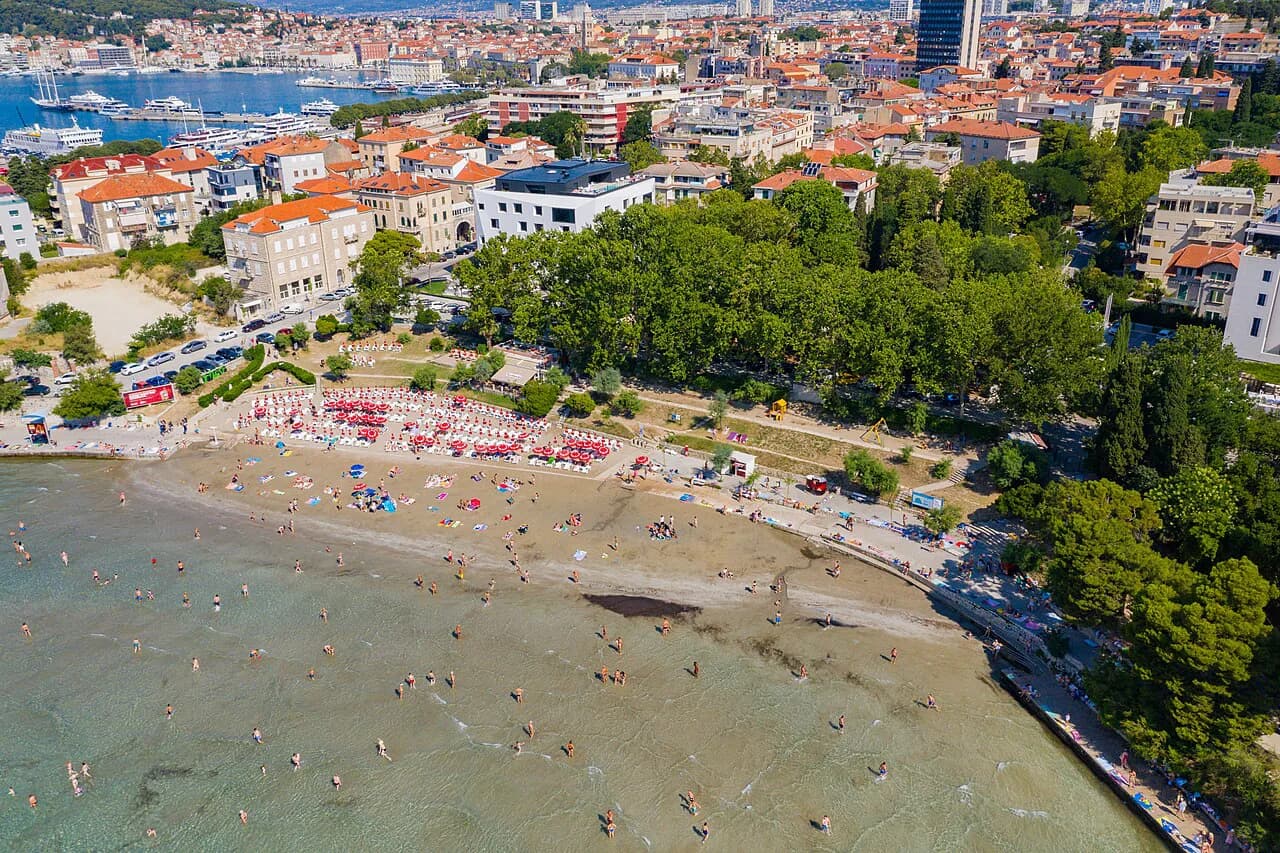
Step back up through either entrance, and the Peristyle square sits right above the cellars, ringed by the granite columns of Diocletian's original courtyard. Cathedral of St. Domnius, known locally as Sveti Duje, rises on the square's eastern side and charges its own separate entrance fee. Diocletian's original mausoleum, an octagonal structure, was later converted into the cathedral that stands there now. Just beside it, the Vestibule connects the square to the cellars below and rewards a pause for its acoustics alone. Summer evenings often bring klapa performances into that domed space, the region's traditional style of a cappella singing. Split City Museum, housed nearby in the Papalić Palace, adds Roman and medieval artifacts if the cellars leave you wanting more context — confirm current opening status, since the museum has undergone renovation work. Once outside the palace walls, Split's Old Town districts guide helps place the palace within the wider city. Split's less obvious attractions cover what to do once the main sites are checked off. If time allows for a walk beyond the palace walls, Marjan Hill and the waterfront at Bačvice both make practical add-ons to a cellars visit. For a longer day out from the palace, many visitors continue toward Trogir's old town or catch a boat to Šolta island.
Is the Paid Substructures Ticket Worth It?
The paid Substructures are most worthwhile for Roman-history enthusiasts, architecture fans, and Game of Thrones viewers. The eastern and western wings reveal the palace’s original engineering far better than the commercial Central Hall. Visitors can examine the vaulted room plan, turnjačica press, mensa, and the halls used as Meereen’s dragon dungeon.
Casual sightseers with limited time may prefer the free passage between the Bronze Gate and Peristyle. It provides the underground atmosphere and a convenient route through the palace, but its market stalls obscure much of the Roman structure.
Allow about 30 to 45 minutes for the museum wings. Choose the paid visit when the rooms themselves interest you, rather than treating the cellars only as a shortcut from the Riva. Families should consider the uneven thresholds and stairs before buying tickets. Visitors seeking a quieter experience should enter near opening or late in the day. The eastern halls usually offer more breathing room than the Central Hall, especially when cruise groups arrive.
Frequently Asked Questions
Is it free to visit the cellars of Diocletian's Palace in Split?
Walking through the Central Hall, the main passage between the Bronze Gate and the Peristyle, costs nothing. Entering the vaulted Substructures wings on either side requires a paid ticket, generally in the €6 to €8 range for adults.
What's the difference between the Central Hall and the Substructures?
Central Hall is the free, market-lined thoroughfare running straight through the middle of the cellars. Substructures refers to the quieter vaulted rooms branching off to the east and west, where the original Roman floor plan and artifacts like the turnjačica press survive.
Where was Game of Thrones filmed inside the cellars?
Production crews used the paid Substructures halls as Meereen's dungeon, where Daenerys Targaryen kept her dragons chained. Its free Central Hall counterpart was not used for these scenes, so a ticket is required to stand in the actual filming location.
How long should you plan for a visit to the cellars?
Walking only through the free Central Hall takes about 5 to 10 minutes. Adding the paid Substructures wings brings a typical visit to 30 to 45 minutes, longer if a temporary exhibition is running.
What are the opening hours for the Substructures?
Hours have commonly run 08:30 to 21:00 daily from June through September, narrowing to 08:30 to 20:00 in October with shorter Sunday hours. Confirm the current 2026 schedule with Visit Split before your trip, since seasonal hours can shift.
Do you need separate tickets for the eastern and western halls?
A single Substructures ticket generally covers the accessible halls on both sides. Confirm at the entrance whether any temporary exhibition requires a separate fee, since events like the International Flower Fair sometimes use the space.
Is Diocletian's Palace itself free to enter?
Walking through the palace grounds costs nothing, since Split's Old Town has lived inside the walls for centuries. Individual sights inside, including the cellars' paid Substructures wings, the cathedral, and the bell tower, charge their own separate entrance fees.
What should you wear to visit the cellars?
Flat, grippy shoes work best, since the original Roman stone floors are uneven and can get slippery near the souvenir stalls. Layers help too, since the underground halls stay noticeably cooler than the streets above.
Can you visit the cellars with limited mobility?
Central Hall floors are flat and easy to cross. Some Substructures rooms include stairs and uneven thresholds, so confirm accessible routes with staff before you go.
Continue exploring
More guides you'll find useful