Split Local Food Guide: Where to Eat Like a Local in 2026
A 2026 split local food guide to Dalmatian staples, marenda timing, konoba picks by neighborhood, and budget vs. fine-dining prices in Split, Croatia.
On this page
Split Local Food Guide: Where to Eat Like a Local in 2026
Last updated July 2026: this Split local food guide focuses on what Splićani actually order, not what tourist menus inside Diocletian's Palace advertise. Split's kitchens run on fresh catch from Peškarija, produce from Pazar market, and a slower midday tradition called marenda. The sections below cover staple Dalmatian dishes, konoba picks by neighborhood, and the real cost of eating well near the Riva.
What Counts as Local Food in Split
Local food in Split starts with olive oil pressed along the Dalmatian coast and fish sold the same morning it was caught. Wild herbs, like rosemary and bay, show up throughout Dalmatian sauces too. Much of the dining culture follows pomalo, the unhurried pace that shapes when locals sit down and how long they stay. Split's food scene spans two extremes. Family-run konobas serve whatever the market had that day, often with a handwritten menu and no set hours. Chef-driven rooms sit at the other end. Some of those higher-end rooms appear in the MICHELIN Guide's Split restaurant selection, priced for a special occasion rather than a weeknight dinner.
The Split Local Food Guide to Dalmatian Staples
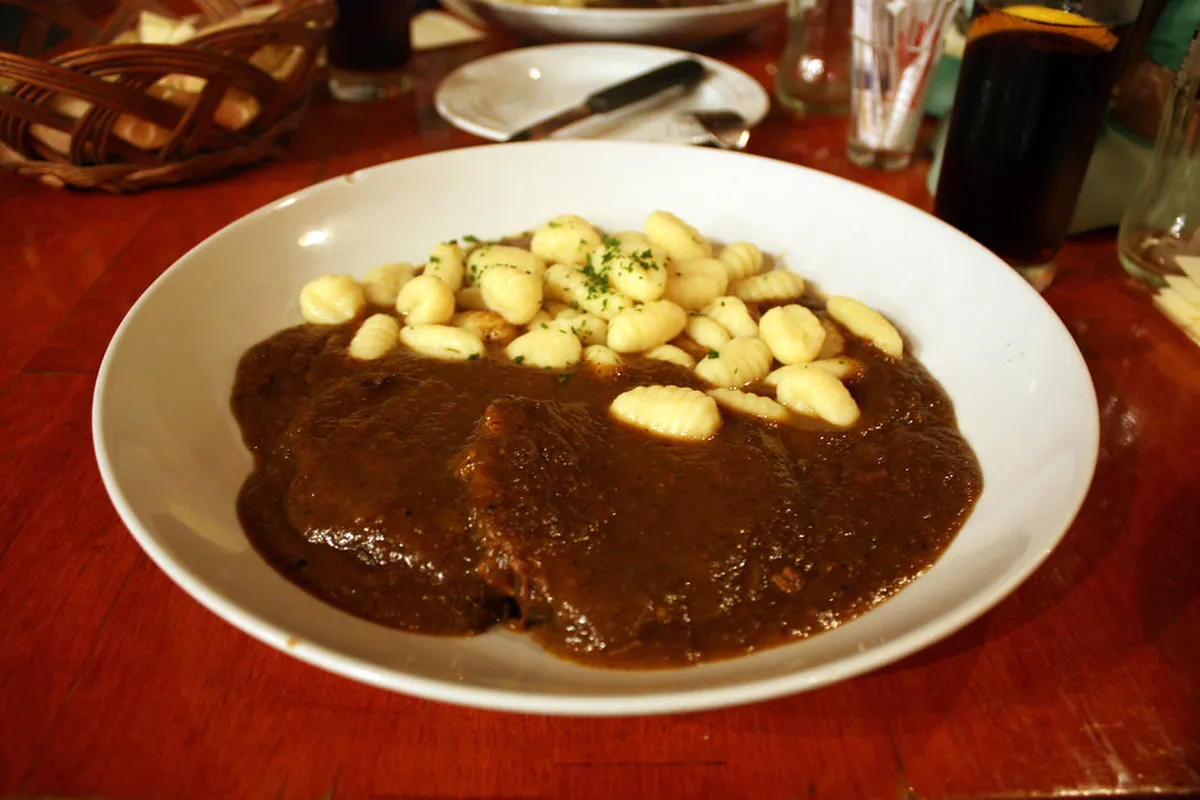
Five dishes anchor the Dalmatian table in Split. Pašticada is slow-braised beef in a sweet wine sauce, usually served over homemade njoki (gnocchi) and reserved for Sundays or celebrations. Crni rižot is black risotto, colored and flavored with cuttlefish or squid ink. Soparnik is a chard-and-garlic flatbread from the nearby Poljica region, closer to a savory pie than a pizza. Ćevapi, grilled minced-meat sausages, round out the list as a Balkan staple on nearly every casual menu. Burek, filo pastry filled with cheese, spinach, or meat, belongs to a different meal entirely: it comes from the pekara, not the konoba.

Marenda is the tradition most visitors miss entirely. It's a mid-morning meal, typically served between 10:00 AM and 1:00 PM, built for dock workers and market traders rather than tourists. Expect hearty, affordable stews, beans, or a plate of fresh seafood rather than a light brunch. Ordering marenda at a konoba near Pazar or Peškarija puts a table next to locals on an actual work break, not other travelers. Travelers who want a modern brunch format instead can find that style at newer spots like BOKUN Bar and Kitchen, off the Riva, though that is a different meal from marenda itself.
- Pašticada: slow-braised beef in a sweet wine sauce, served with homemade njoki
- Crni rižot: black risotto colored with cuttlefish or squid ink
- Soparnik: a chard-and-garlic flatbread from the Poljica region
- Ćevapi: grilled minced-meat sausages, a cheap-eats staple
- Burek: filo pastry with cheese, spinach, or meat, sold at every pekara
The Market Connection: Pazar and Peškarija
Split's freshness comes from two markets that most restaurant menus quietly depend on. Pazar, the city's green market, supplies the produce, herbs, and fruit that shape seasonal specials from one week to the next. Peškarija, the covered fish market, supplies the catch that seafood konobas list simply as 'today's catch' rather than a fixed menu item. Both markets run daily and set the ceiling on what a kitchen can actually cook that day. A konoba advertising a rotating menu, like Villa Spiza, is really just describing what its cook picked up at Pazar or Peškarija that morning. Walking through either market before a meal is one way to see why the same dish can taste different depending on the season and the week.
Marenda diners eat between 10:00 AM and 1:00 PM, when the morning's freshest catch just arrived at Peškarija. Timing meals to that window puts you alongside dock workers and traders at peak ingredient availability.
Old Town Ambience vs. Veli Varoš and Lučac Value
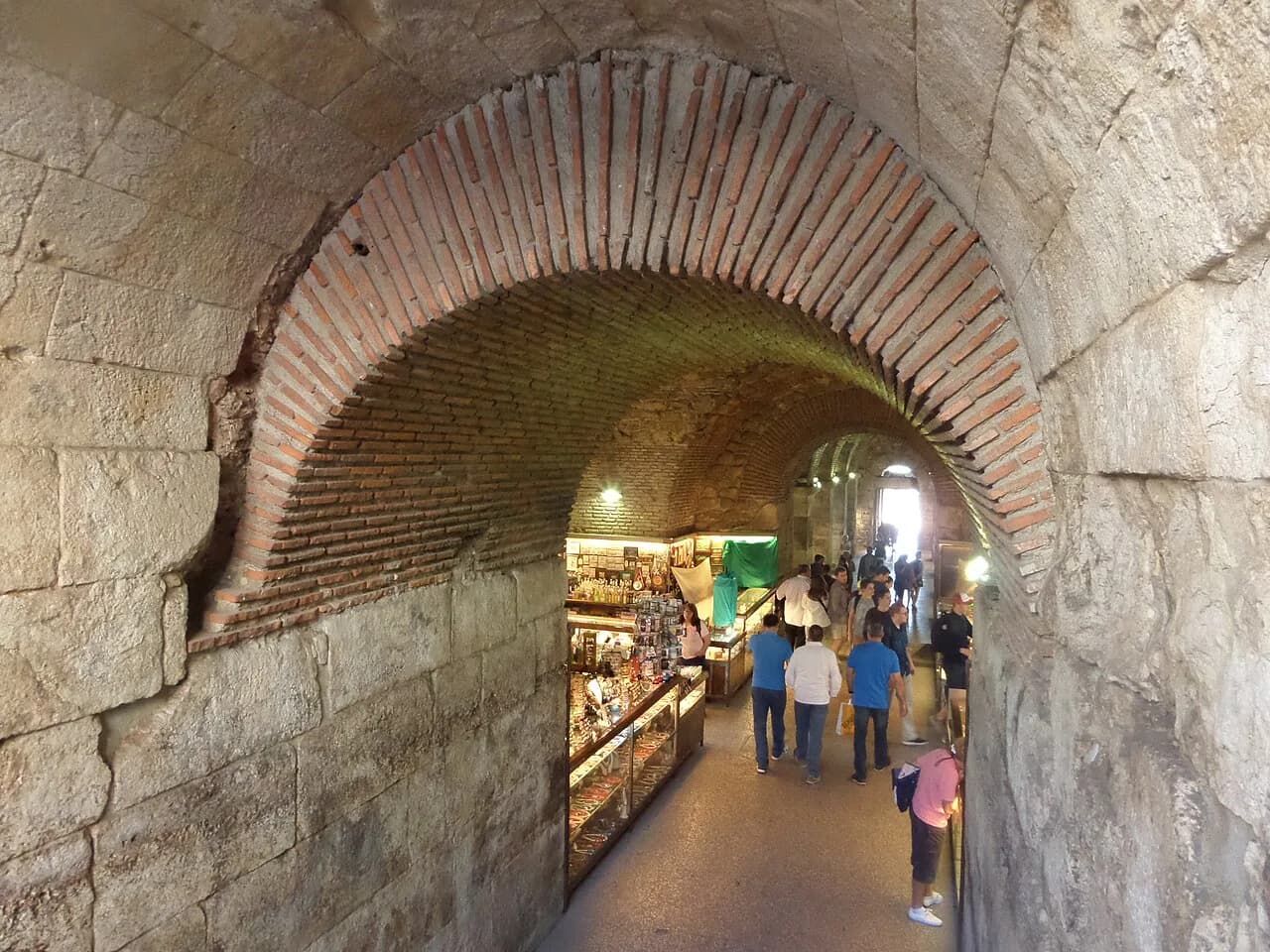
Where to eat in Split often comes down to a trade-off between atmosphere and price. Restaurants inside Diocletian's Palace sit in courtyards, colonnades, and the palace's ancient cellars beneath the Old Town. That setting carries a markup. Walk a few minutes into Veli Varoš or Lučac and the same style of cooking gets noticeably cheaper. Konoba Varos and Konoba Fetivi, both in Veli Varoš, are standard local recommendations for Dalmatian cooking away from the tourist core. Fife Konoba, by the marina, is another regular pick for travelers who want konoba cooking without leaving the Old Town waterfront. For a longer list of vetted picks in both zones, see the local restaurant recommendations for Split. Lučac functions the same way as Veli Varoš: fewer tourists, lower prices, and menus built around whatever the kitchen bought that morning. For a fuller picture of how Split's neighborhoods differ beyond food, that guide breaks down each district in more depth.
Just outside the Old Town walls, off-the-beaten-path spots like Konoba Kod Joze draw a different crowd. According to one visitor account, the owner has described it as the place bus drivers eat after dropping off a full tour group. The slow-roasted beef and gnocchi dish, cooked for two days before serving, is the reason regulars keep returning. A complimentary shot of rakija after the meal is standard here, not an upsell.
Fine Dining and Seafood by the Kilo
Split's higher end includes Apetit, an Old Town room that has built a reputation for fine dining over roughly a decade in business. Dvor and Zrno Soli sit in the same tier, both included among the MICHELIN Guide's recommended Split restaurants noted above. Leonis, on the eastern edge of the Old Town, is the standing recommendation for seafood specifically. Past guests single out its squid ink risotto, octopus salad, and stuffed clam shells. Scampi, seabass, and whole lobster round out a typical order there. For groups with mixed preferences, Adriatic Sushi & Oyster Bar offers an Old Town courtyard setting and a broader international menu alongside its sushi rolls, a useful option when not everyone wants Dalmatian seafood that night. Many seafood restaurants price whole fish and shellfish by the kilogram rather than as a fixed plate. Ask the server for the day's weight and price before ordering, since the catch and the cost both change daily.
Pizza, Italian Influence, and Cheap Eats
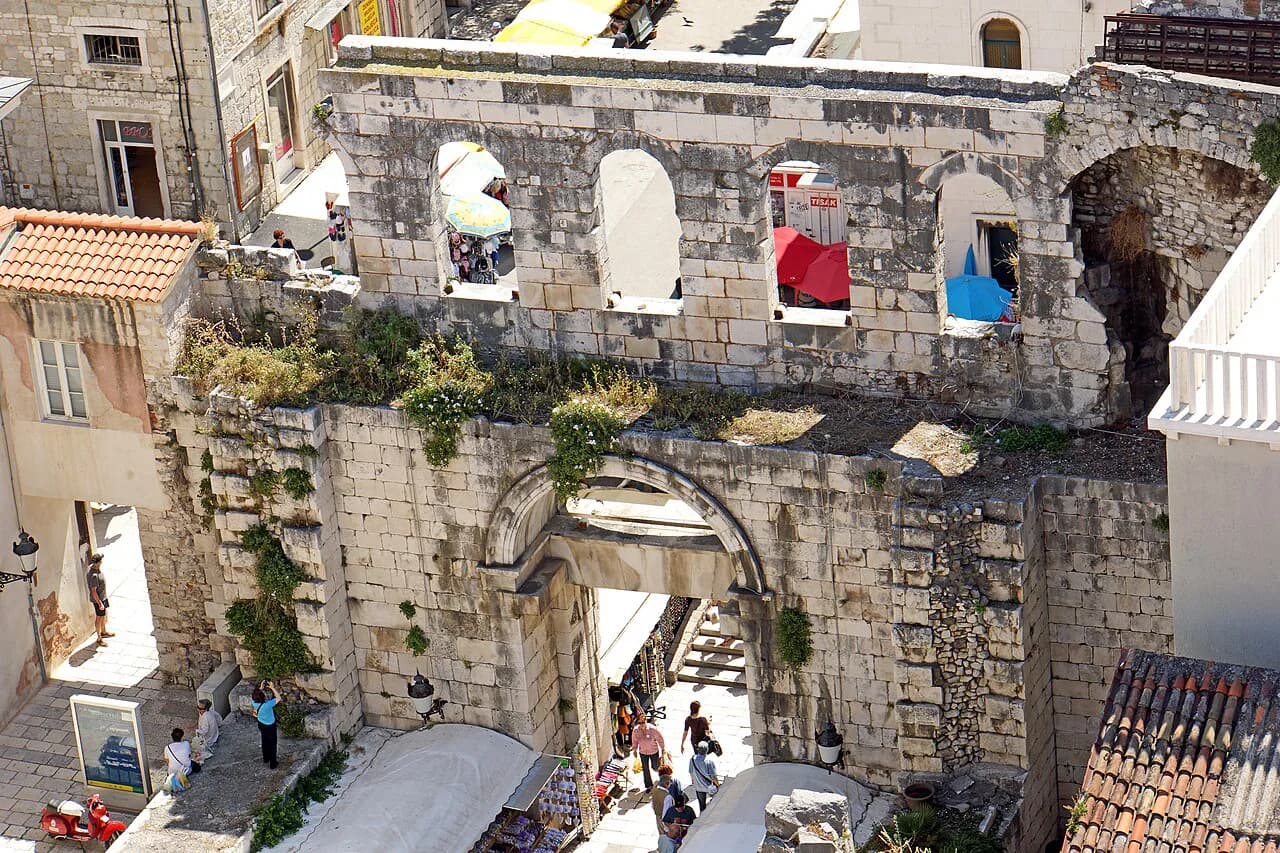
Split's pizza culture reflects centuries of contact with Italy, dating to the Venetian era and reinforced today by simple geography. Pizzeria Kaleta, tucked just off the busiest Old Town lanes, is the budget standard. Large pizzas there run around €15, burgers about €6, and daily sandwiches on fresh-baked bread about €5. Pizzeria Portas, near the Golden Gate, adds a grape-vine-covered terrace and a broader Italian-Mediterranean menu alongside its pizza. Pizzeria Skipper, near the marina, offers views toward the Old Town and the surrounding mountains. Two beers and two large pizzas there typically run €30-35 total. Bokemora leans further into Italian style with dessert pizzas, including a white chocolate, raspberry, and pistachio version, priced a bit higher than Skipper. Menu prices across all of these move with inflation, so treat the figures above as a floor rather than a locked rate for a 2026 visit.

- Pizzeria Kaleta: large pizza around €15, burger around €6, sandwich around €5
- Pizzeria Skipper: two pizzas plus two beers for two people, about €30-35 total
- Pizzeria Portas: near the Golden Gate, sit-down Italian-Mediterranean menu
- Bokemora: dessert pizzas (white chocolate, raspberry, pistachio), priced above Skipper
Eating in Split on a Budget
A pekara (bakery) is the cheapest reliable meal in the city. A slice of burek or a filled pastry typically costs under €5, and pekaras open early enough to double as breakfast. Breakfast pastries, filled rolls, and burek all fall under this same rough ceiling, which makes a pekara stop the easiest way to hold down a full day of eating without skipping meals. For a sit-down budget meal, Kantun Paulina is the standard ćevapi recommendation, priced well under a typical Old Town dinner. Villa Spiza is the other budget benchmark: cash only, no reservations, and a rotating menu based on what the market had that morning. Its prices sit closer to Pizzeria Kaleta's range than to a tasting-menu room like Apetit, though the exact bill depends on the day's specials.
A casual pizza-and-beer meal costs €15-20 per person. Adding the standard 10% tip brings your actual bill to €17–22, not counting couvert charges restaurants add separately.
A casual pizza-and-beer meal in Split costs about €15-20 per person, which lines up with the roughly €30-35 two-person tab at places like Pizzeria Kaleta and Pizzeria Skipper. Fine dining at a MICHELIN-listed room can run €60 or more per person for a multi-course tasting menu. There's little middle ground: budget-friendly and unpretentious on one side, a clear step up into special-occasion pricing on the other.
| Place | Vibe | Price Range | Signature Dish |
|---|---|---|---|
| Pizzeria Kaleta | Casual patio, away from the busiest lanes | €5-15 per item | Homemade bread sandwiches |
| Kantun Paulina | Stand-up cheap eats | Well under a full sit-down dinner | Ćevapi |
| Villa Spiza | Cash-only counter, no reservations | Similar to Kaleta's range | Rotating daily market menu |
| Pizzeria Skipper | Marina-view casual dining | €30-35 for two people | Wood-fired pizza |
| Apetit / Dvor / Zrno Soli | Special-occasion fine dining | Around €60+ per person | Multi-course tasting menus |
Drink Culture: Riva Coffee, Wine, and Rakija
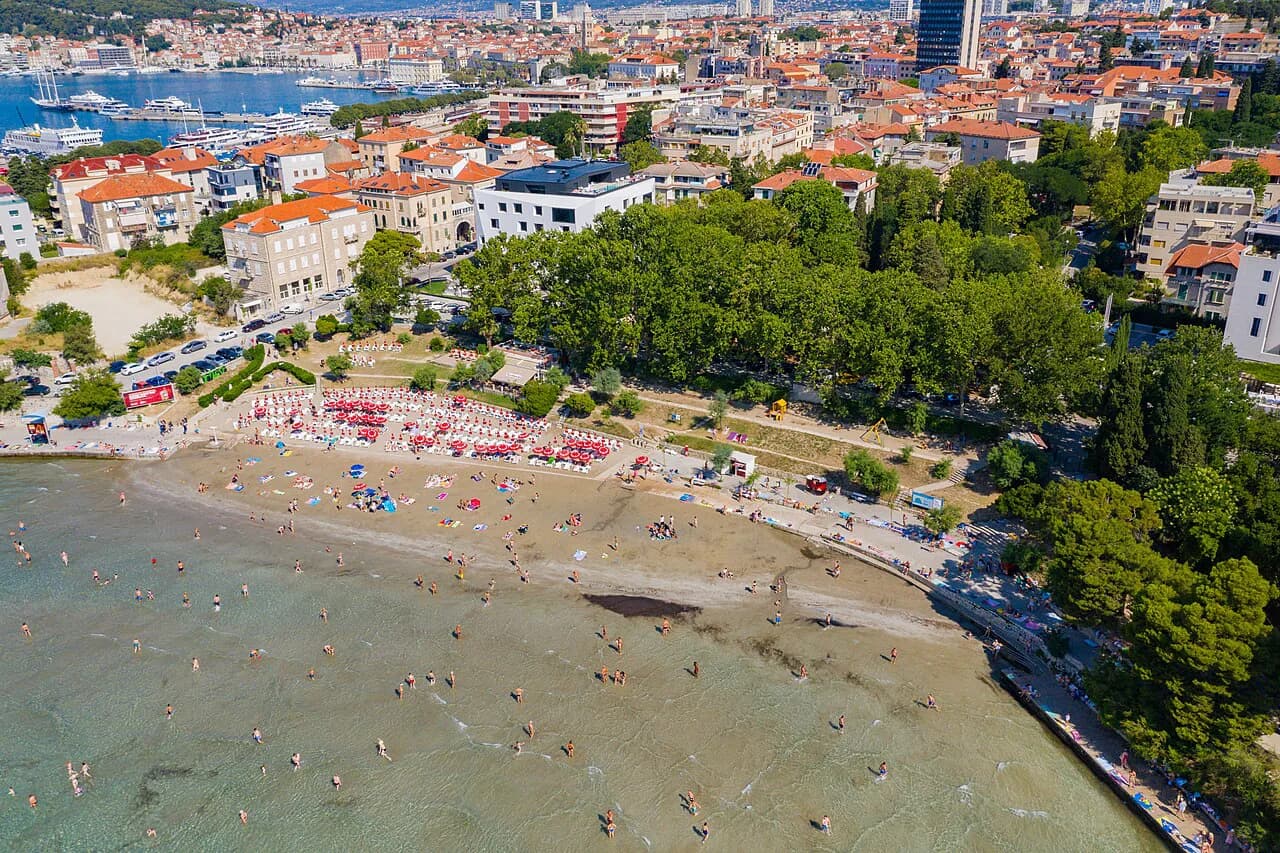
Sitting on the Riva promenade with a single coffee for an hour or two isn't slow service, it's the expected pace. Cafes along the water expect patrons to linger, and rushing the bill is the unusual behavior here, not the other way around. Split's Dalmatian wines are worth ordering by name rather than by the glass blind. Plavac Mali is the reference red, full-bodied and suited to pašticada or grilled meat. Pošip is the reference white, and it pairs naturally with crni rižot or a plate of fresh fish. Rakija, and its herbal variant travarica, functions as both a welcome shot and a digestif. Many konobas, including Konoba Kod Joze, offer it free after a meal. A craft beer scene has also started appearing in Split in recent years, adding local taprooms to a drink list that used to be wine, rakija, or an imported lager. Evening drinks also cluster around the beach district of Bačvice, a livelier late-night alternative to the Riva's slower cafe pace.
Practical Planning: Reservations, Tipping, and Seasonal Hours
Peak season in Split runs June through August, and reservations matter most in that window. Popular Old Town rooms, especially MICHELIN-listed spots and well-known konobas, can book out days ahead in midsummer. Villa Spiza is the deliberate exception: it takes no reservations at all, so arrive early or plan for a wait. Tipping 10% is standard for good service, added on top of the bill rather than folded into it. Restaurants commonly add a small couvert, a per-person bread-and-cover charge, which is separate from the tip and not optional.

Split is a seasonal city for dining as much as for beaches. Restaurants across the city reduce hours or close entirely between November and March, and some owners take a break in November before reopening for December. Confirm current hours on a restaurant's own website or Facebook page before an off-season visit rather than assuming a listed schedule still holds. Eating earlier in the day, particularly during marenda hours, is one reliable way to avoid crowds. Cruise-ship crowds fill the Old Town's restaurants for lunch and dinner in summer. For a broader look at quieter times to visit Split overall, that guide covers timing beyond just meals.
Dietary needs are manageable with some planning. Pandora Greenbox is a named option for vegan dining in the city, and seafood-forward menus elsewhere make pescatarian eating straightforward almost everywhere. Travelers with shellfish allergies should ask directly how a dish is prepared, since shared fryers and stocks are common in seafood-heavy kitchens.
For trip-planning details, see Pašticada – Wikipedia.
For the wider city context, see our complete Split tourism attractions guide.
Frequently Asked Questions
What is marenda in Split?
Marenda is a mid-morning meal, usually served between 10:00 AM and 1:00 PM, built around hearty and affordable dishes like stews or fresh seafood. It's the meal working locals eat between shifts, not a tourist brunch. Ordering it near Pazar or Peškarija puts a diner alongside market traders and dock workers instead of other visitors.
How much should you tip at restaurants in Split?
A tip of 10% is standard for good service and should be added on top of the bill. Many bills also include a small couvert, a per-person bread-and-cover charge that is separate from the tip. Confirm the couvert is already on the check before deciding how much extra to leave.
Do you need reservations for restaurants in Split?
During peak season, June through August, reservations matter for popular Old Town restaurants and MICHELIN-listed rooms. Villa Spiza is a notable exception: it never takes reservations, so plan to arrive early or wait for a counter seat. Outside peak season, walk-ins are usually fine even at well-known spots.
Are restaurants in Split open year-round?
Many restaurants reduce hours or close entirely from November through March, and some owners take a break in November before reopening in December. Confirm current hours directly on a restaurant's website or Facebook page before an off-season trip. Old Town anchors are more likely to stay open than smaller seasonal spots.
Where can vegans eat well in Split?
Pandora Greenbox is a named vegan option in the city. Seafood-forward menus elsewhere also make pescatarian eating simple, since fish and vegetable sides are already standard. Vegans should still call ahead at smaller konobas, since some rely heavily on meat stock and dairy in shared dishes.
Continue exploring
More guides you'll find useful