Secret Spots in Salzburg: A 2026 Guide to Quiet Corners Locals Use
Secret spots in Salzburg for 2026: Steingasse, a quiet Kapuzinerberg viewpoint, Augustiner Bräu Mülln, and day trips locals still keep to themselves.
On this page
Secret Spots in Salzburg: Where to Go When You've Done Getreidegasse
Last updated August 2026, this guide maps secret spots in Salzburg that stay quiet even during peak Getreidegasse congestion. Locals shift one street over to Steingasse, climb Kapuzinerberg instead of Mönchsberg, and drink at the Augustiner Bräu Mülln beer garden. Every entry below names the exact bus number, trail head, or street address instead of a vague pointer toward somewhere quieter.
Beyond Mozart: Why Search Out Secret Spots in Salzburg
Salzburg's Altstadt and Hohensalzburg Fortress earn their crowds. Both reward a first visit and belong on any itinerary. Moving one street back changes the experience completely, and that shift is the entire strategy behind secret spots in Salzburg. Getreidegasse feeds tour groups toward the same landmarks. Steingasse, one block closer to the river, stays close to empty most mornings. Broader picks beyond this list live in the hidden gems overview. This guide narrows in on quieter substitutes for specific famous stops, with the exact bus, trail, or address for each one. Several of these sequence into a single day in the off-the-beaten-path itinerary.
| Instead of | Try | Why it works |
|---|---|---|
| Getreidegasse | Steingasse | Medieval alley one block back from the river, far fewer tour groups |
| Mirabell Gardens fountain line | Zwerglgarten (Dwarf Garden) | Same grounds, up the steps past the Pegasus Fountain, usually empty |
| St. Peter's Cemetery | St. Sebastian's Cemetery | Off Linzergasse, where Mozart's wife is buried with far less foot traffic |
| Festungbahn funicular queue | Mönchsberg stairs behind the Festival Hall | Same hilltop museum access, no ticket line |
Hidden Corners of the Altstadt and Neustadt
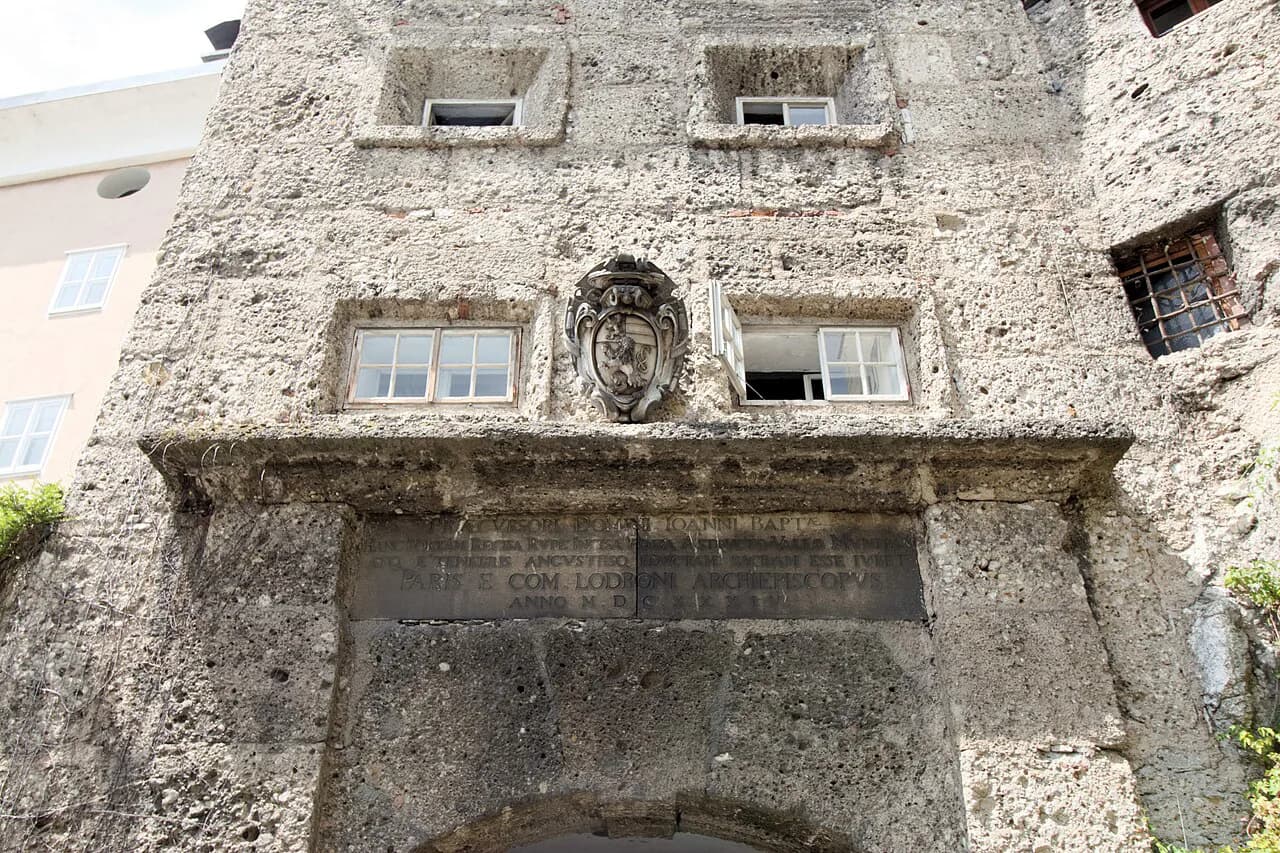
Steingasse's quiet lane sits one block behind the main riverside road, through the Neustadt district. Cobblestone paving and low stone archways date to the medieval salt-trading era, and the street stays shaded even at midday. The guide to Salzburg's neighborhoods maps Neustadt against the Altstadt and Nonntal for a longer stay. A few minutes' walk away, four more corners round out a quiet loop. The free things to do guide lists more no-cost stops like these across the city.
- Steingasse (Neustadt): free to walk, quietest in the early morning before tour buses arrive.
- St. Sebastian's Cemetery, off Linzergasse: free entry; holds the grave of Mozart's wife, Constanze, and the mausoleum of Prince-Archbishop Wolf Dietrich. A staircase near the southern corner climbs to the grave of the physician Paracelsus.
- Zwerglgarten (Dwarf Garden), inside Mirabell Gardens: free entry; climb the steps past the Pegasus Fountain and cross the small bridge to find eighteenth-century dwarf statues collected by Prince-Archbishop Franz Anton Harrach.
- Orangerie, same Mirabell courtyard: free entry; a warm winter stop with caged birds and turtles.
- St. Peter's Catacombs, off Kapitelplatz: €2 entry, cut into the Mönchsberg rock face behind the monastery.
Unusual Art and Culture Beyond the Concert Halls
Salzburg's Walk of Modern Art scatters contemporary sculpture through the Altstadt and Kapuzinerberg, including the gold Sphaera sculpture near the cathedral and the Spirit of Mozart figure. Most visitors walk past without noticing either one. Salzburg Puppet Theatre offers a different evening than a standard concert, staging marionette versions of The Sound of Music and The Magic Flute with full orchestration. Hangar-7, near the airport, houses Red Bull's collection of historic aircraft, Formula One cars, and helicopters under a curved glass roof. It makes a solid rainy-day plan, since the exhibits sit entirely indoors, and the Ikarus restaurant inside extends the stop into a meal. The unique things to do guide has more on the modern-art trail and how to time a Hangar-7 visit around opening hours.
Local Haunts: Eating and Drinking Like a Salzburger
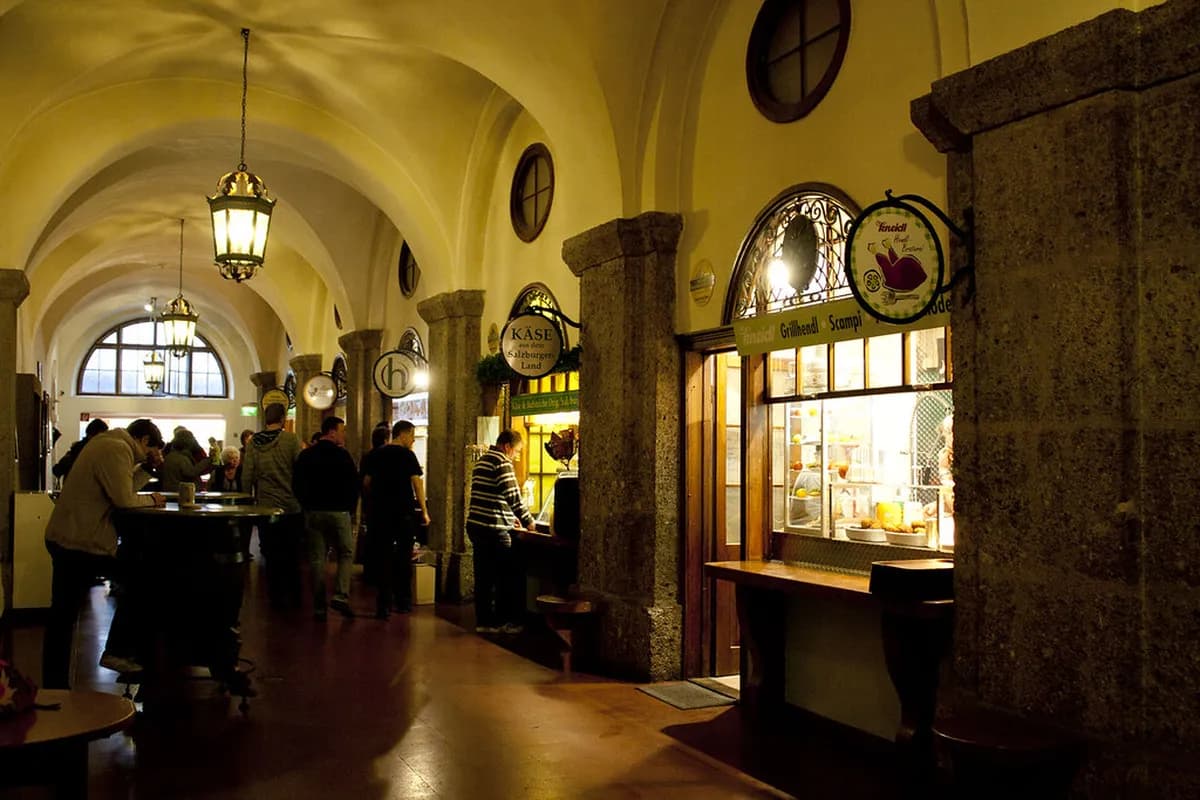
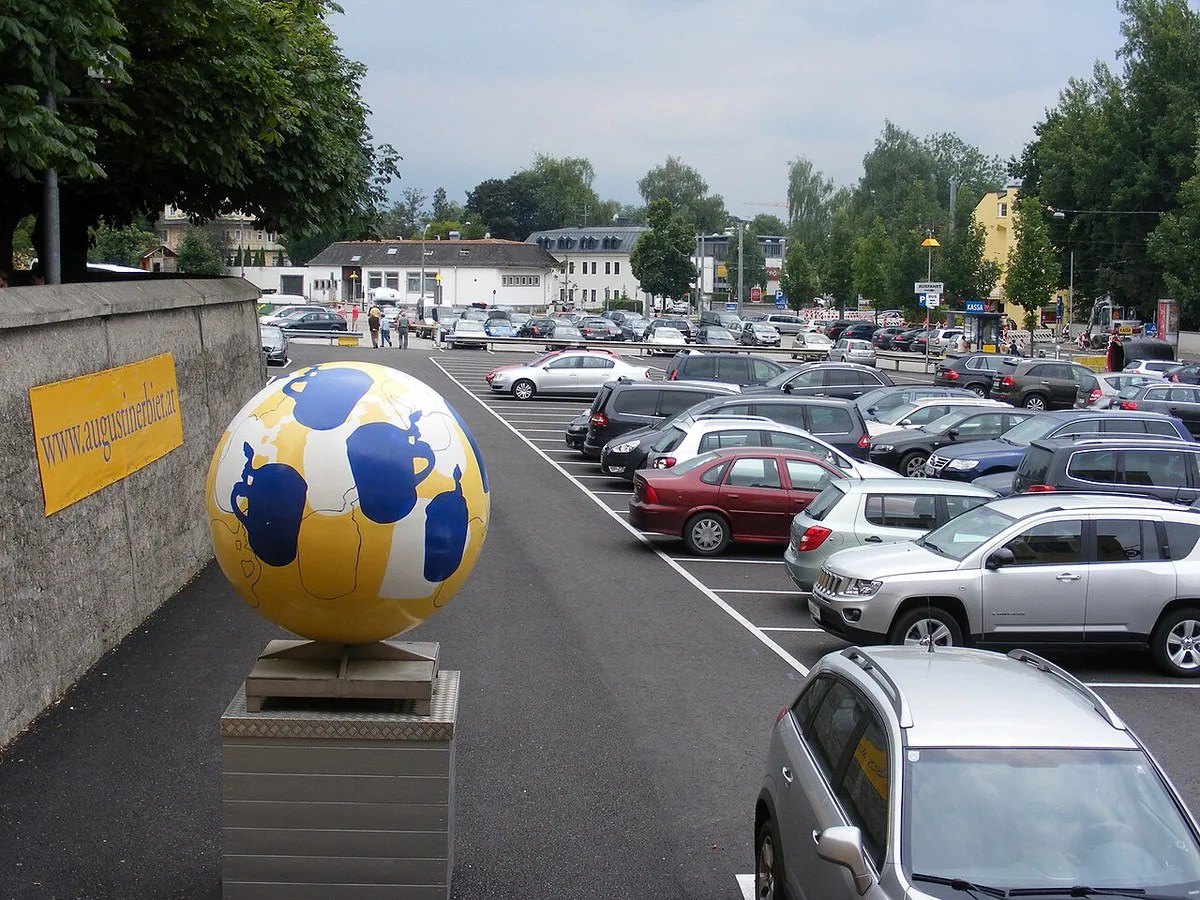
Augustiner Bräu Mülln operates inside the old Mülln monastery brewery, where brewing has continued since 1621. The venue is cash-only and runs on a ritual that catches first-timers off guard. Eight rooms and a chestnut-shaded beer garden give you options. The Stockhammersaal holds reserved Stammtisch tables, where the same families have met for decades. The Abbot Nicolaus Hall, relocated from Salzburg's old railway station, is worth a look too. The Augustiner Bräustübl walkthrough has the full room-by-room breakdown. Stiftsbäckerei St. Peter, often described as the city's oldest bakery, still bakes brioche, sourdough, and small sourdough rolls called Vintschgerl in wood-fired ovens below the monastery courtyard. A water wheel powers the mill at the entrance, and the smell reaches the courtyard before the door does. For coffee, 220 Grad roasts its own beans at two locations, including a branch in the Nonntal neighborhood that works well for brunch. The local food guide expands on where else Salzburgers actually eat. The local restaurant picks add sit-down options beyond the bakery and beer hall.
- Grab a stone mug, a half-liter or full liter, near the entrance.
- Rinse the mug yourself at the stone fountain.
- Pay at the cash desk and name your beer to get a voucher.
- Redeem the voucher at the barrel station for your pour.
The Three-Mountain Strategy: Kapuzinerberg, Gaisberg, and Mönchsberg
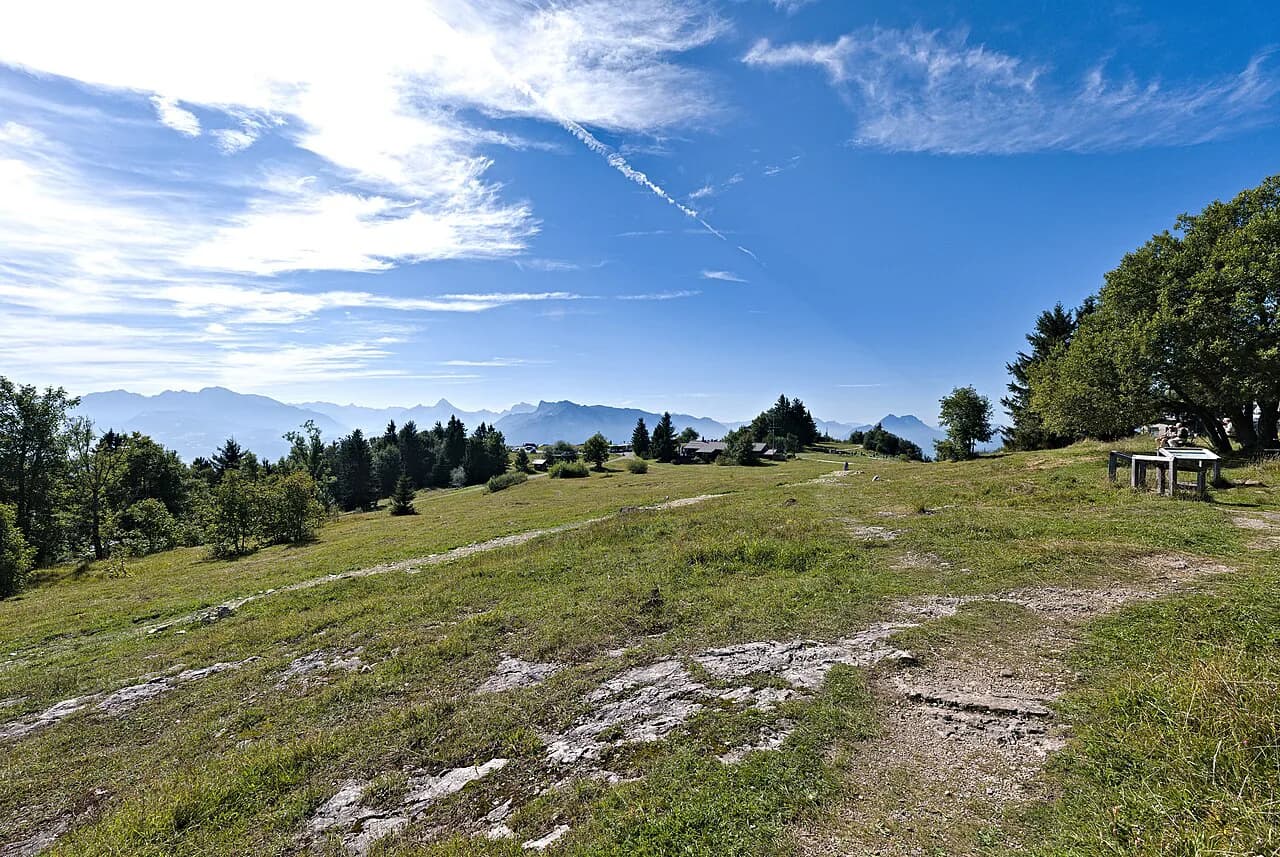
Three hills ring the Altstadt, and each asks for a different amount of effort. Kapuzinerberg, directly across the river from the Fortress, is the fast option. Follow the Stations-of-the-Cross footpath up from Linzergasse. The climb to the Hettwer Bastei viewpoint takes about 45 minutes round trip and delivers a Fortress view with almost no crowd. Gaisberg asks for more. Its foot brushes the Schallmoos district, where several trail access points sit a short walk from the city center. Bus 151 runs from Mirabellplatz to the summit area for under €10, a 20-minute ride. Hikers can instead start at the trailhead on Eichstraße 66 in the Gnigl district and climb roughly three hours to an altitude of about 4,300 feet. A flat circular trail, the Rundwanderweg, loops the upper mountain in about an hour for anyone who rides partway up and wants to stretch their legs. Mönchsberg splits the difference. The Festungbahn funicular and the Mönchsbergaufzug lift both reach the Museum der Moderne quickly, but a stairway behind the Festival Hall climbs the same hill for free and without a line. Beneath Mönchsberg runs the Almkanal, a Prince-Archbishop-era waterway that drains once a year in September for cleaning, the only window when its underground stretch opens for a walk-through. The Kapuzinerberg trail directions cover the full Stations-of-the-Cross footpath. The Gaisberg trail details cover both the bus and the Eichstraße trailhead.
Gaisberg climbs to 4,300 feet in roughly three hours, matching Bluntautal Valley's three-hour round trip, so visitors seeking similar-length day hikes have multiple options from the city center.
| Effort level | Pick | What to expect |
|---|---|---|
| Low | Steingasse or the Mirabell corners | Flat walking, 20-30 minutes total, no ticket needed |
| Medium | Kapuzinerberg to Hettwer Bastei | 45-minute round trip climb, Fortress view, no crowd |
| High | Gaisberg hike from Eichstraße 66 | About 3 hours uphill to roughly 4,300 feet, ride Bus 151 back down |
Off-the-Beaten-Path Day Trips From the City
Three spots outside the center reward a half-day or full day away from downtown Salzburg. Bluntautal Valley opens up past the Golling/Salzach train stop. The flat walk passes two small lakes before reaching the Bärenwirt restaurant, the only building inside the valley. Continuing about 0.9 miles further leads to a waterfall at the valley's end, for a roughly three-hour round trip on foot. Drivers can also detour to the separate Gollinger Wasserfall, a few minutes from the same parking area. Königsseeache River, near Rif and Hallein, is where locals swim and grill through summer. Sandy sections sit closer to the village, while stonier banks lie near the point where the river meets the Salzach. Anif Waldbad hides at Waldbadstrasse 50, behind a Maximarkt supermarket. Confirm current train fares at the Golling station ticket machine, since posted prices change from year to year.
Bus 151 reaches Gaisberg for under €10, matching the €7 day pass at Anif Waldbad, so visitors exploring both summit and swimming-spot day trips stay within comparable budgets.
| Spot | Transport | Cost / Time |
|---|---|---|
| Bluntautal Valley & Golling Waterfall | S3 train to Golling/Salzach, then a 45-minute walk | About 3 hours round trip on foot |
| Königsseeache River (Rif) | Bus 170 or Bus 175 from Mirabellplatz | Free; busiest on hot summer weekends |
| Anif Waldbad | Bus 170 from Mirabellplatz to the Maximarkt stop | €7 day pass, open until sunset |
| Schloss Hellbrunn's Steintheater | Bus 25 from Rathaus near Staatsbrücke | Included with palace grounds access |
Planning Your Secret Salzburg Itinerary
Timing changes how quiet any of this feels. The Salzburg Festival runs through late July and August and fills the Altstadt, so a visit outside those weeks keeps even well-known corners calmer. The best time to visit guide breaks shoulder-season weeks down by month. A Salzburg Card is worth pricing out if the day includes several paid stops. It typically bundles public transport, which covers the Bus 151 fare to Gaisberg, along with entry to sights including St. Peter's Catacombs. Run the math against buying each ticket separately before deciding. Nonnberg Abbey is the more genuine Sound of Music stop for anyone chasing film locations. Visitors can join a guided tour or attend Mass, a quieter experience than the photo line at the Mirabell Gardens fountain, which appears in the same film. Confirm current tour and Mass times directly with the abbey before visiting.
Frequently Asked Questions
What is the easiest secret spot in Salzburg to reach without a car?
Steingasse takes the least effort, since it is a flat walk one block behind the main riverside road in the Neustadt. Pair it with the Zwerglgarten inside Mirabell Gardens, reached by the steps past the Pegasus Fountain, since both are free and close together.
How do you get to Gaisberg without driving?
Bus 151 leaves from Mirabellplatz and reaches the summit area for under €10 one-way. Hikers can start instead at the trailhead on Eichstraße 66 in the Gnigl district, a roughly three-hour climb to about 4,300 feet.
Is Nonnberg Abbey open to visitors as a Sound of Music stop?
Guided tours are available and visitors can attend Mass, which draws a much smaller crowd than the Mirabell Gardens fountain scene from the same film. Confirm current tour and Mass times with the abbey directly before visiting.
When should you plan a visit for a quieter Salzburg?
Outside the Salzburg Festival weeks in late July and August, the Altstadt and its quieter alternatives both feel calmer. Shoulder-season weeks in spring and early autumn give the best balance of open attractions and thin crowds.
Is the Salzburg Card worth buying just for these secret spots?
It can be, since the card typically bundles public transport covering the Bus 151 fare to Gaisberg along with entry to St. Peter's Catacombs. Compare the card's cost against buying each ticket separately for the specific stops planned before deciding.
Continue exploring
More guides you'll find useful