Salzburg Local Food Guide: What to Eat, Where, and What to Skip
A Salzburg local food guide to the specialties worth seeking out, how to choose between street food, Wirtshaus, café, and fine dining, and what to skip.
On this page
Salzburg Local Food Guide
Last updated August 2026, this Salzburg local food guide starts with the question most visitors ask first: what to actually order. The city's kitchen blends Alpine, Austrian, and Bavarian traditions into a short list of dishes and desserts that show up again and again, from Salzburger Nockerln to Bosna street-food rolls. These sections sort those dishes by where to try them, and explain how to choose between street food, a Wirtshaus, a historic café, and a fine-dining table.
Salzburg Local Food Guide: What Defines the Local Cuisine
Salzburg cooking runs on three things: Alpine ingredients, Habsburg-era refinement, and a genuine beer-hall culture that predates most of the city's famous landmarks. Expect hearty roasts and dumplings in winter, river fish and fresh herbs in summer, and a steady rotation of sweets built around eggs, sugar, and local dairy. Locals split dining into three registers: a Wirtshaus for a filling lunch, a coffeehouse for cake, and refined dining rooms for special occasions. Knowing which register fits which meal saves you both money and a wasted seat at the wrong table.
Salzburg's Culinary Heritage: Alpine, Austrian, and Bavarian Roots
Salzburg sits close enough to Bavaria and Tyrol that its menus borrow from both, while centuries as a prince-archbishopric added a layer of court-kitchen polish on top. Mountain dairy and cured meats built the savory side of the menu, from cheese dumplings to cold Alpine platters. Winter menus lean into slow-cooked roasts, stews, and dumplings built to hold up against cold weather. Summer brings out river fish, fresh vegetables, and herbs instead, a lighter register that still stays close to the same farmhouse roots. That range is why the same city serves a bucket-sized beer alongside a plated dessert with imperial-era pedigree.
Iconic Dishes and Desserts Worth Ordering
A handful of dishes define what to eat in Salzburg, and ordering each one in the right place matters as much as ordering it at all.
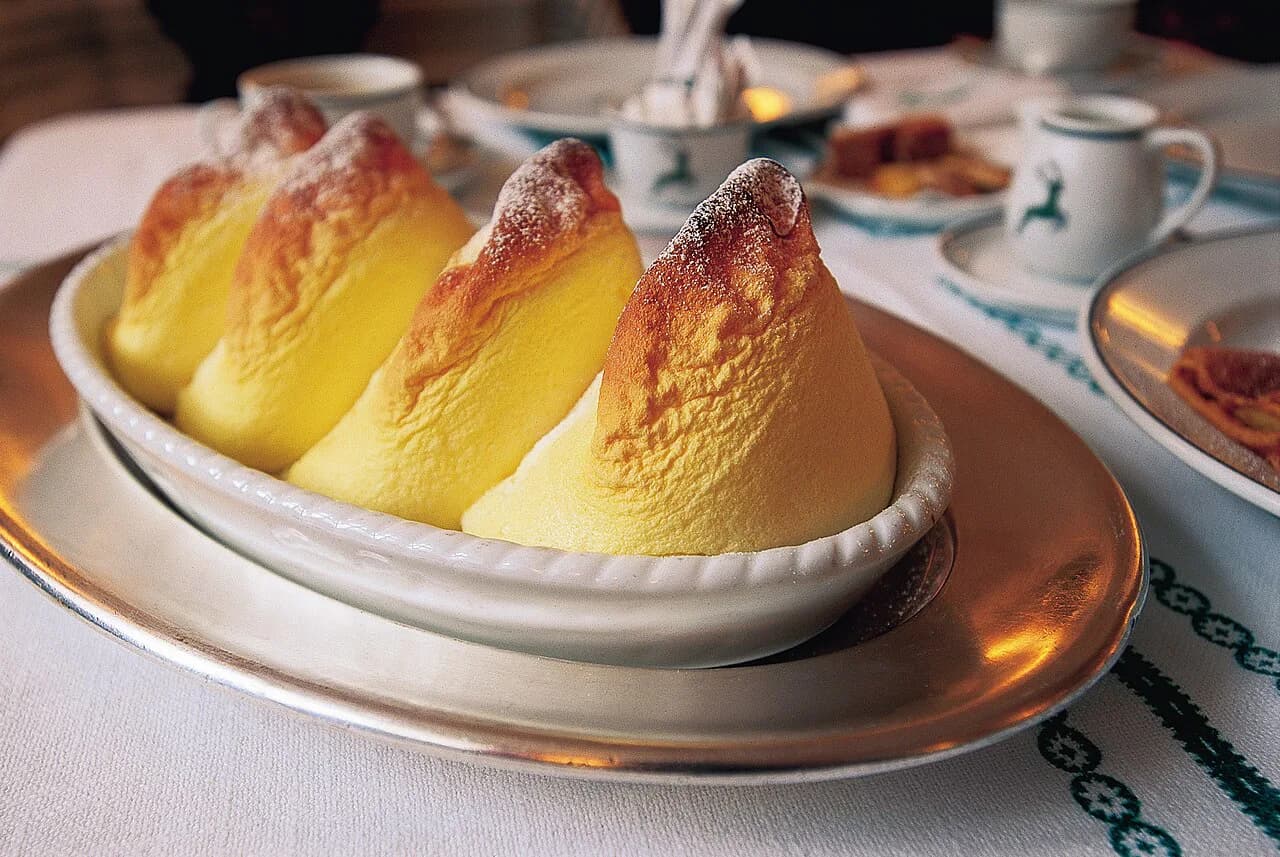
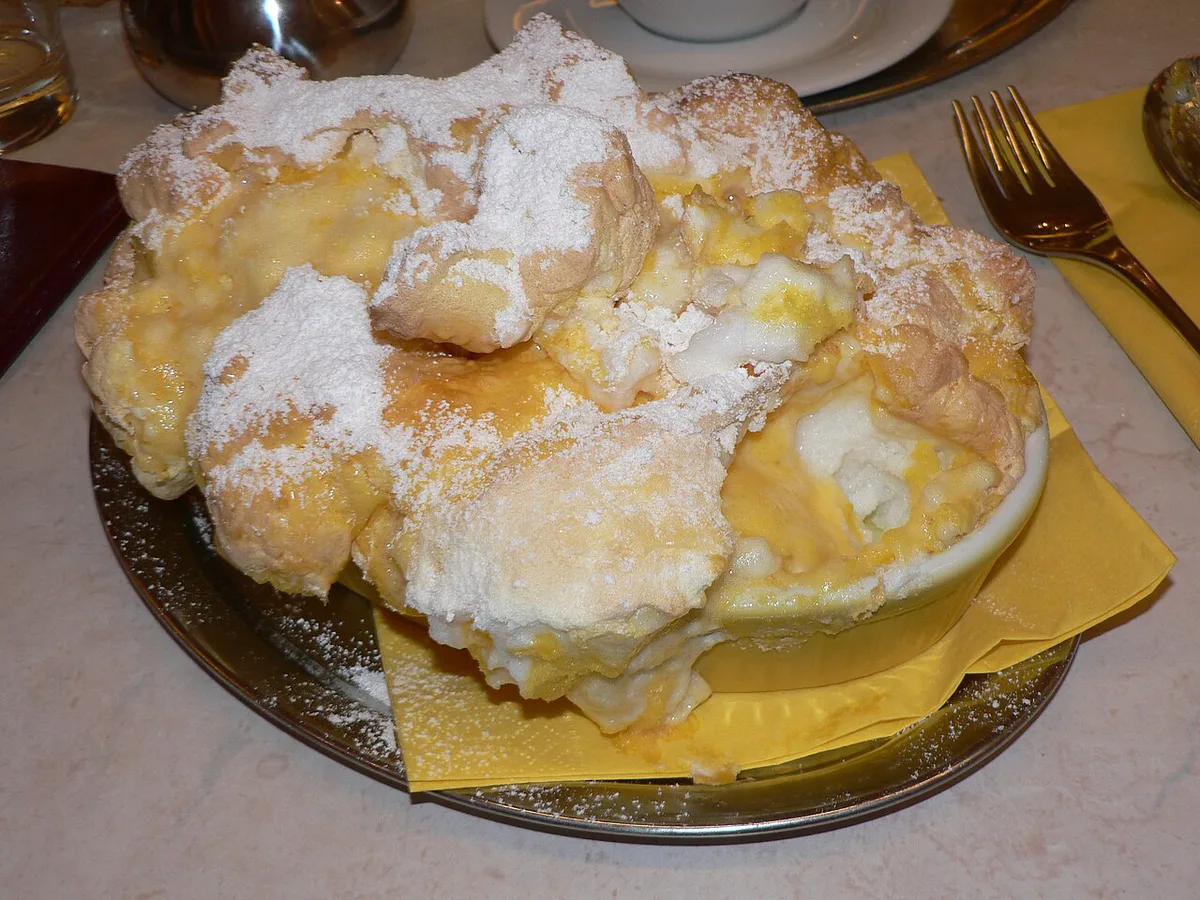
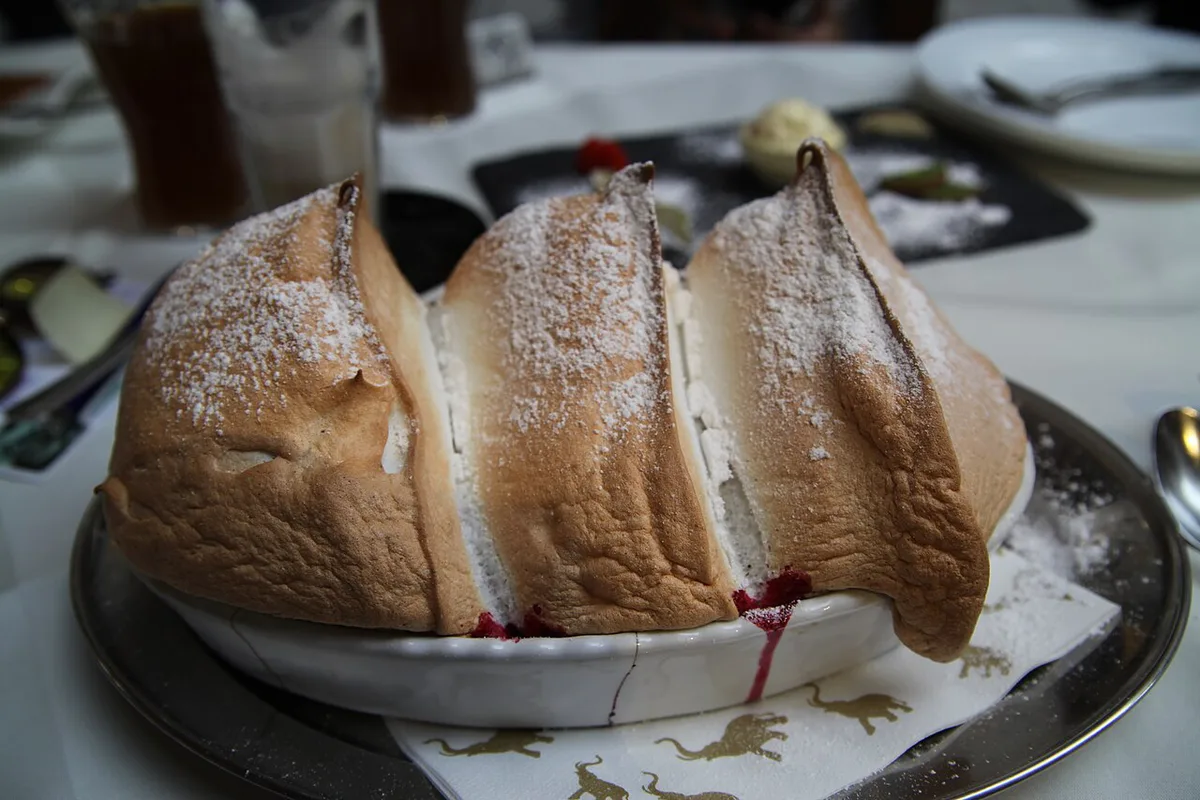
- Salzburger Nockerln: an egg-and-sugar soufflé baked into three golden peaks, said to represent the Kapuzinerberg hill, the Gaisberg hill, and Mönchsberg. Long-standing beer-hall-style venues such as Stiegl-Keller keep it on the regular menu. It comes in one size only, nominally for two, though the portion regularly stretches to feed a larger table. Order it to share, and put the order in early since the kitchen needs time to bake it fresh.
- Mozartkugel: a pistachio-marzipan-and-nougat center dipped in dark chocolate, created in 1890 by confectioner Paul Fürst. Handmade versions at Konditorei Fürst or Café Habakuk taste noticeably richer than the foil-wrapped, mass-produced versions sold under brands like Mirabell in nearly every gift shop. Buy the handmade kind for flavor, and save the packaged kind for gifts.
- Sacher Torte: a dense chocolate sponge cut through with apricot jam and coated in dark chocolate glaze. It was invented in Vienna in 1832 and is still made by hand through dozens of steps to the original method. Salzburg's Café Sacher and Hotel Sacher Salzburg, on the Salzach riverbank, serve it in the same tradition.
- Tafelspitz: boiled beef simmered with root vegetables and served with horseradish and apple sauce, a dish once favored by Emperor Franz Joseph I. It shows up most often on refined-dining menus rather than casual ones.
- Wiener Schnitzel: a large breaded, fried veal cutlet that's arguably Austria's best-known dish. Traditional plating pairs it with a lemon wedge, parsley potatoes, and cranberry relish, not noodles.
- Bierfleisch: a beef stew slow-cooked in local beer with onions and spices, a direct product of Salzburg's brewing tradition. Look for it on Wirtshaus menus, especially on cooler days.
- Roast pork knuckle with dumplings: a Wirtshaus staple served across the old town, including at multi-room beer-hall restaurants with more than a dozen separate dining rooms.
- River fish: a lighter, herb-forward option on summer menus, paired with seasonal vegetables. It turns up most often in the lake district beyond the old town.
Street Food and Casual Bites: Bosna and Brettljausn
Not every Salzburg meal needs a table booked in advance. Two casual options cover most of what people grab on the move.
- Bosna: a spicy sausage in a crisp bread roll, topped with onion, mustard, and curry powder. It dates to the 1940s and remains the city's signature street-food order. Best for a quick, budget bite between sights rather than a sit-down meal.
- Brettljausn (also called Jause): a cold Alpine board of cured meats, cheese, pickles, and horseradish, built to share. It works better as a sit-down order at a Wirtshaus than as something to eat standing up.
- Pretzel bread: sold from old-town stalls for around €3, often in savory versions like cheese-and-garlic. It is one of the cheapest ways to sample the city's baking without sitting down.
Where to Eat by Experience Type: Wirtshaus, Café, or Fine Dining
Salzburg's dining splits into three registers, and matching the meal to the register is the single biggest factor in cost and pacing. Its neighborhoods guide breaks down where each style tends to cluster across the city.
| Tier | What to Expect | Cost | Best For |
|---|---|---|---|
| Wirtshaus / beer hall | Communal tables, hearty portions, beer poured by the liter-mug | Budget to mid-range | A filling lunch or dinner without ceremony |
| Café / Konditorei | Table service, cake and coffee, historic interiors | Mid-range for cake and coffee | Slowing down between sightseeing stops |
| Fine dining | Reservations expected, formal service, tasting-style plating | The highest of the three tiers | A special-occasion meal or a splurge night |
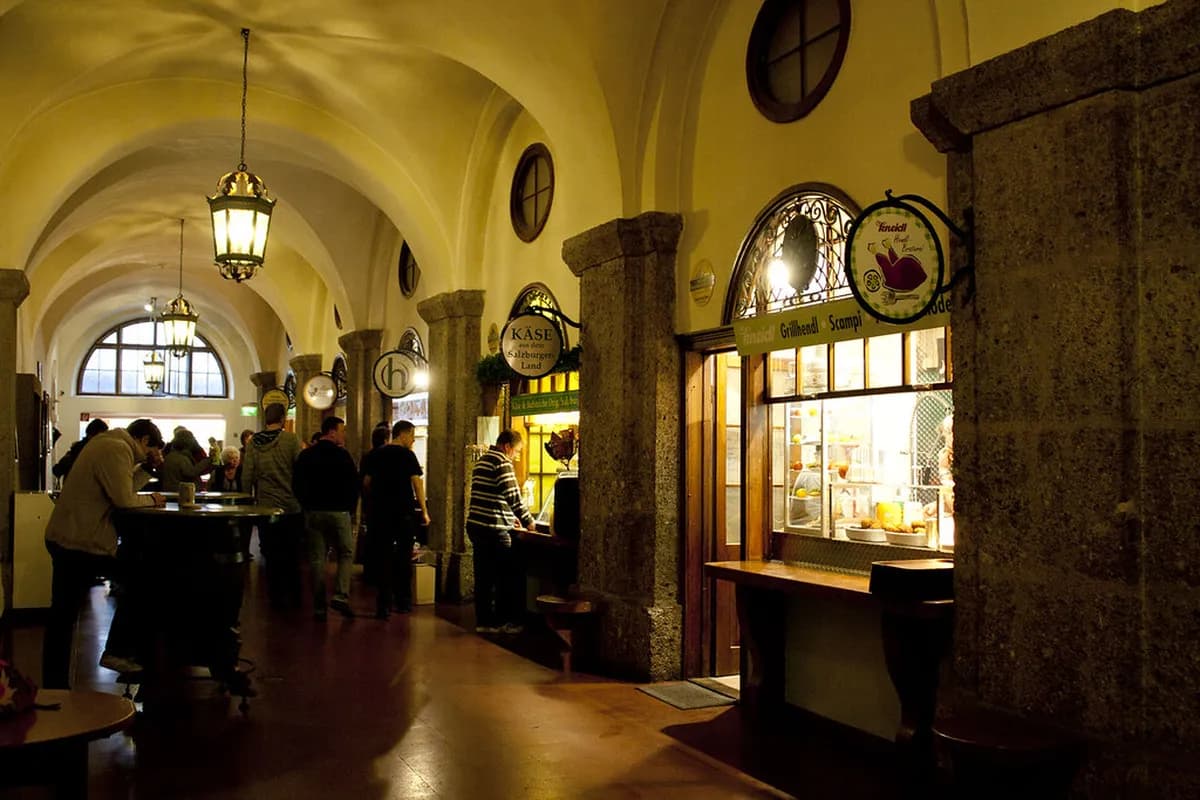
Augustiner Bräustübl: Salzburg's Self-Serve Beer Hall
The Augustiner Bräustübl at Kloster Mülln runs on a self-serve model that surprises most first-time visitors. Monks founded the hall in 1621, and it is often described as Austria's largest beer hall. Bringing food from outside has historically been welcome alongside buying it on-site. Confirm current hours and the outside-food policy before visiting, since self-serve halls occasionally tighten their rules. What makes the detour worth it is the mix at the tables, with locals in work clothes seated next to visitors, at prices well below the old-town tourist strip. It counts as one of the more 10 Unique Things to Do in Salzburg, Austria (2026 Guide) precisely because so few visitors expect to serve themselves. Other private breweries, including Stiegl and Trumer, shape the rest of the city's beer culture without the same self-serve ritual.
Augustiner's self-serve model, continuous since 1621, operates outside Salzburg's three standard dining registers—Wirtshaus, café, and fine dining—which explains why it surprises most visitors.
- Pick a stoneware mug from the shelf near the entrance.
- Rinse the mug under the fountain before it gets filled.
- Hand the mug to the tap for a fill of Augustiner beer.
- Buy food from stalls inside selling Leberkäse, sliced radish, and Schaumrollen pastries.
Historic Café Culture: Slow Down Between Sights
Coffeehouses are where Salzburg's food culture slows down. Café Tomaselli, on the market square, has poured coffee since 1705 and is frequently cited as Austria's oldest coffeehouse. Konditorei Fürst, nearby, still makes its Mozartkugeln by hand on-site, using the recipe credited to Paul Fürst. Both draw heavy tourist traffic in peak season, so a quieter alternative is worth knowing. Café Habakuk, away from the main square, makes the same style of handmade Mozartkugel with shorter lines. Order cake with coffee, and expect to linger; nobody rushes a table in a Salzburg coffeehouse.
Seasonal Food Experiences: Christmas Markets and Festival Season
Food ties directly to the calendar in Salzburg. The Christkindlmarkt at Residenzplatz runs through Advent and centers on Mohn Brezen, poppy-seed pretzels, alongside spiced gingerbread and mulled wine. Sturm, a young, still-fermenting wine, appears on menus each autumn and disappears once it finishes fermenting into regular wine. Salzburg's Easter Festival brings its own run of festive menus to hotel restaurants around the old town. Confirm exact market dates, stall lineups, and festival programming with official sources before building a trip around them, since seasonal calendars shift year to year. For help timing a visit around thinner crowds generally, see the Best Time to Visit Salzburg Without Crowds (2026 Guide).
Costs, Timing, and Logistics
Budget in relative terms rather than exact menu prices, since those shift year to year. Street food is the cheapest tier: a pretzel runs about €3, and a Bosna roll costs only a little more. Wirtshaus meals cost several times that, still well below what a reserved fine-dining table runs. Reservations matter most at the popular spots. Book ahead for standout Nockerln kitchens and for refined dining rooms, including centuries-old venues like St. Peter Stiftskulinarium, with records some trace back to 803 AD. Portion sizes run generous across the board, especially at Wirtshaus tables, so order to share before adding extra dishes. Plan on at least half a day for a food-focused outing that includes a sit-down lunch, a Bräustübl stop, and cake at a historic café. A Salzburg Card bundles transit access with some attraction discounts. Check current tiers and inclusions on the official Salzburg Card site before counting on it for food-related savings.
A €3 pretzel from old-town stalls and handmade Mozartkugel both deliver quality flavor, reflecting how Salzburg's food culture prioritizes craft at every price point from street level to coffeehouse.
Mistakes to Avoid: Spotting a Tourist-Trap Menu
A few signals separate a tourist-trap menu from a kitchen locals actually use. Photo-heavy menus, listings printed in five languages, and staff who wave down passersby are the clearest tells, especially on the streets closest to the cathedral. Short, handwritten daily-specials boards are usually a better sign than a long laminated menu that covers every cuisine at once. Bosna stalls and lunch counters that skip the souvenir maps are exactly the kind of find covered in a guide to 11 Hidden Gems in Salzburg Beyond the Getreidegasse Crowds. For a wider spread of picks away from the main sightseeing loop, the off-the-beaten-path guide covers ground this article does not. Beyond the food scene, the secret spots guide adds still more options.
For trip-planning details, see Salzburger Nockerl – Wikipedia.
Frequently Asked Questions
What food is Salzburg famous for?
Salzburg is best known for Salzburger Nockerln, Mozartkugeln, and Sacher Torte on the sweet side, plus Tafelspitz, Bierfleisch, and roast pork knuckle with dumplings on the savory side. The street-food equivalent is Bosna, the city's defining quick bite.
What is the most common street food in Salzburg?
Bosna, a spicy sausage in a crisp roll with onion, mustard, and curry powder, is the most common street-food order. It dates to the 1940s and remains a fast, budget-friendly option between sights.
What is the famous dessert in Salzburg?
Salzburger Nockerln is the signature dessert, a three-peaked soufflé said to represent the hills around the city. Mozartkugeln and Sacher Torte are the other two desserts most associated with Salzburg.
What drink is Salzburg known for?
Beer from local breweries like Augustiner, Stiegl, and Trumer defines Salzburg's drink culture. Schnaps and Mozart liqueur cover the stronger end, and Sturm, a young fermenting wine, appears on menus each autumn.
Where do locals eat in Salzburg?
Locals tend to favor Wirtshaus tables and self-serve halls like Augustiner Bräustübl over the restaurant rows closest to the cathedral. Menus with a short, handwritten specials board are usually a better signal than a long laminated one aimed at tour groups.
How much time should you plan for a Salzburg food outing?
Plan at least half a day for a proper food outing that includes a sit-down meal, a beer-hall stop, and cake at a café. Quick street-food lunches, by contrast, take well under an hour.
Continue exploring
More guides you'll find useful