Casa Grotta di Vico Solitario: Matera Cave House Guide
Plan a visit to Casa Grotta di Vico Solitario in Matera's Sasso Caveoso: what the furnished cave house shows, its audio guide and how long to allow.
On this page
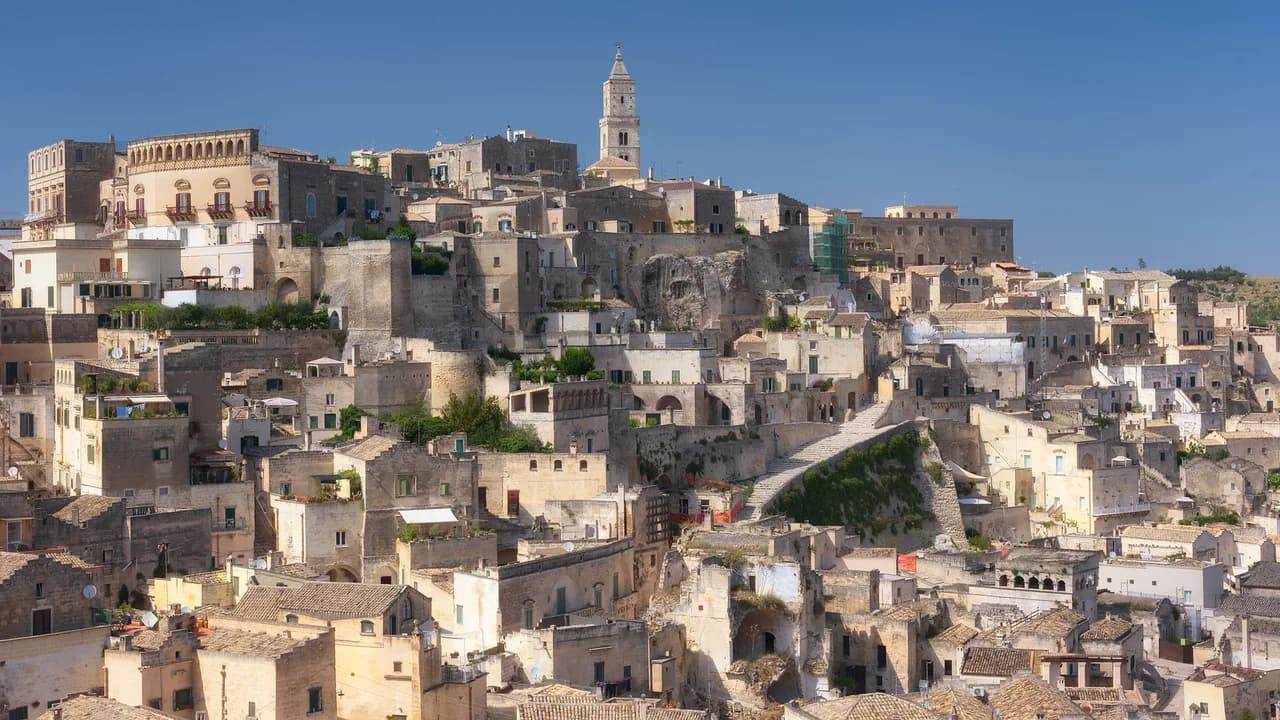
Casa Grotta di Vico Solitario is a cave dwelling in Matera's Sasso Caveoso, kept as a small house museum with period furniture, tools and household objects rather than modern reconstructions. It sits in the alleyway of Vico Solitario, a short walk from Piazza San Pietro Caveoso, which makes it an easy anchor for a walk through this part of the Sassi. Entry is paid, and the ticket is for this house alone.
The visit is short by design, and a suggested allowance of about 30 to 45 minutes is a sensible self-set target rather than an official figure. What makes the stop worthwhile is not scale but detail: the objects inside explain daily work, food preparation and the cramped coexistence of people and animals. Before you build a day around it, check the operator's current information, because opening details and ticket terms can change.
Where the cave house sits in the Sasso Caveoso
The house stands in one of the more intimate lanes of the Sasso Caveoso, close to Piazza San Pietro Caveoso, the lower square that gathers several of the district's landmarks. That position matters practically: you can reach it on foot while moving between the square, the rock churches on the Monterrone spur and the lanes above. It is a single small interior, not a sprawling complex, so it fits into a walk rather than defining one.
If you are still getting your bearings among the two Sassi, start with an overview in our Sassi di Matera visitor guide, which explains how the Caveoso and Barisano districts relate to each other and to the modern city above. Then treat the cave house as one stop among several rather than a destination in itself.
What you actually see inside
Inside, the rooms are furnished with original period pieces, tools and household objects from the time the dwelling was inhabited. The display is not a stylised recreation: it keeps the material memory of cave life, from cooking equipment to the tools women used to prepare food and wash clothes. Because the space is tiny, the objects sit close together, and the effect depends on looking carefully rather than scanning quickly.
Among the details worth seeking out are the straw beds used by adults and the special cradles made for babies, which show how ordinary domestic life was adapted to a rock-cut room. A hotel guide to Matera's sights describes these elements as the core of what cave-house visits reveal about life in the Sassi. Look for them deliberately instead of assuming the interior is only about furniture.
The layout: cramped rooms and a ceiling that is a street
The most memorable structural detail is easy to miss if you keep your eyes at floor level. In these dwellings the ceiling of one cave served as the floor of the alleyway above, so the house is literally pressed between levels of the rock city. Understanding that relationship explains why rooms feel low and enclosed, and why the lane outside is not simply a corridor but part of the building's structure.
Within a few square metres, large families lived alongside their domestic animals, which is the detail that reframes everything else in the room. Once you know that, the small hearth, the storage corners and the shared sleeping space read differently. Give yourself a moment to picture the household at work before moving on to the next display case.
Why the Sassi emptied in 1952
The house museum's historical framing centres on 1952, when Prime Minister Alcide De Gasperi had a law passed to relocate inhabitants from the Sassi, whose living conditions were officially regarded as a national shame. The audio guide sets out this context, which is why the visit works better as a short lesson than a quick photo stop. The same law and its aftermath explain why so many cave dwellings stood abandoned before later restoration.
After the displacement, the cave dwellings remained empty until the Sassi were redeveloped and families restored and reopened many of the caves as attractions. That timeline, described by a Matera hotel's guide to the city's sights, helps you read the difference between a restored house museum and a ruined cavity.
The audio guide and what it changes
The visit includes an audio guide in eight languages: Italian, English, French, German, Spanish, Japanese, Chinese and Russian. Because the commentary carries the historical context, it rewards a slower pace rather than a hurried pass through the rooms. If you only have time for one interpretive tool here, make it the audio guide.
Practical point: the guide forms part of the paid house-museum ticket rather than a separate audio rental, so budget for one purchase. Check the language options when you arrive in case a set is temporarily unavailable.
Practical visiting details to verify
The house is described as open every day of the year, including Sundays and public holidays, with continuous hours from 9:30 until the evening. No exact closing time or last entry is published in that description, so plan your day around an earlier arrival and confirm the end of the day locally. Treat these hours as a pattern to check, not a guarantee for the date you travel.
Entry is paid, and the operator's website does not publish a current ticket price in the material reviewed here. Check the operator's website for the present price, ticket scope and any booking arrangements before you set out, and do not assume online reservation is either required or unavailable. The operator's site is the right place to confirm current terms.
How long to allow, and what stretches a visit
Plan on roughly 30 to 45 minutes if you listen to the commentary and read the objects with some attention. That is a suggested allowance, not an official duration, so adjust it to your own pace. The interior is compact, and a walk-through without the audio guide will take considerably less.
Visits run longer when you use the guide fully, linger over the tools and furnishings, or arrive with questions about the 1952 evacuation. Photography, by contrast, tends to shorten a visit: a few frames and you are out. Decide in advance which kind of stop you want.
Reading the objects: work, food and washing
The tools on display are the most concrete evidence of how households functioned. Food preparation equipment shows what was cooked and with what; washing tools show how laundry was managed without the plumbing taken for granted today. The furnishings, meanwhile, reveal how a large family arranged sleeping and storage in a space with no room to spare.
Read the objects as a set rather than individually. Together they describe a self-contained domestic economy in which the cave was kitchen, bedroom, workshop and animal shelter at once.
Combining the visit with nearby Sasso Caveoso sites
From the cave house you can walk to the church of San Pietro Caveoso, built on 13th-century foundations and standing out as the Sassi church not carved into the rock, and to Santa Maria de Idris, cut into the Monterrone spur and holding medieval frescoes. Santa Lucia alle Malve, a rock convent with three naves and frescoes, lies in the same district. Each of these is entered on its own terms, so check separately whether a church is free to enter or charges for its interior.
For the church on the square itself, our Chiesa di San Pietro Caveoso visitor guide covers what to look for inside and how it fits the district's layout. Keep it as a separate stop in your plan rather than assuming one ticket covers both.
If you want to continue beyond the Sassi into the ravine opposite, the rock churches cut into the Murgia Materana are a further, distinct outing with their own access arrangements. Our Chiese rupestri della Murgia Materana guide explains what that landscape adds.
Other cave houses worth comparing
Matera has more than one cave dwelling open to visitors, and choosing between them is part of planning. The Casa Grotta del Casalnuovo in the Sassi is described as an authentic testimony of rural life, and the Casa Grotta Narrante is also recommended by a Matera hotel's guide to the city. Each is a separate visit with its own entry terms, so pick the one that matches the story you want.
Vico Solitario's edge is its position near Piazza San Pietro Caveoso and its original furnishings paired with an eight-language audio guide. If you have time for two, compare how each presents the 1952 evacuation and daily life.
Mistakes to avoid
The common error is treating the house as a photo stop: without the audio guide the rooms are atmospheric but hard to interpret. The second is assuming a single ticket covers the neighbouring churches or MUSMA; each site should be checked on its own. Third, do not count on a late-afternoon visit without confirming the day's closing time.
A fourth mistake is skipping the context entirely. Knowing why the Sassi emptied in 1952 turns a curiosity into a legible piece of urban history, and it makes the rest of your walk through the district sharper.
Who this visit suits
First-time visitors to Matera get the clearest return, because the house explains in miniature what the wider Sassi once were. Families with older children usually find the scale manageable and the audio guide helpful. Slow travellers with limited time can fit it into a single morning alongside the nearby churches.
If you are building a broader itinerary, browse the Matera Attractions hub to see how this stop sits beside the cathedral, the cisterns and the cave churches. For quieter corners beyond the main circuit, our selection of hidden gems in Matera offers alternatives to the busiest lanes.
Plan Your Visit
Casa Grotta di Vico Solitario is a short, focused visit that pays back attention rather than time. Come for the original furnishings, the shared human and animal living space and the ceiling that doubles as the lane above, and use the included audio guide to make sense of them.
Before travelling, confirm the current ticket price, closing time and whether booking is needed through the operator, and treat the hours described here as a pattern to verify. With 30 to 45 minutes set aside and the Sasso Caveoso churches nearby, it slots neatly into a slow morning in Matera.
Frequently Asked Questions
Is Casa Grotta di Vico Solitario worth visiting?
It is worth it if you want to understand how families lived in the Sassi before the 1952 evacuation. The interior keeps original furnishings, tools and household objects rather than reconstructions, and the audio guide explains the historical context. Allow roughly 30 to 45 minutes and listen to the commentary rather than walking straight through.
What can you see inside Casa Grotta di Vico Solitario?
You see a rock-cut dwelling furnished with period furniture, cooking and washing tools, straw beds and cradles, arranged in a very small space. The ceiling of the cave served as the floor of the alleyway above, and families once shared the rooms with domestic animals. The detail is dense rather than spectacular, so look closely.
Is the audio guide included in the ticket?
Yes. The visit includes an audio guide in Italian, English, French, German, Spanish, Japanese, Chinese and Russian, so there is no separate audio rental to budget for. Check which languages are available when you arrive.
How long does a visit take?
A suggested allowance is about 30 to 45 minutes if you follow the audio guide and study the objects. A quick walk-through takes far less. Photography or a rushed schedule will shorten the visit, while questions about the 1952 evacuation will extend it.
Is it open every day?
It is described as open every day of the year, including Sundays and public holidays, with continuous hours from 9:30 until the evening. No exact closing time is published in that description, so confirm the day's end time with the operator before planning a late arrival.
Why were the Sassi of Matera evacuated in 1952?
In 1952 Prime Minister Alcide De Gasperi had a law passed to relocate inhabitants from the Sassi, whose living conditions were officially considered a national shame. The cave dwellings stood abandoned until later redevelopment and restoration reopened many of them as homes and attractions.
Which other cave houses in Matera can you visit?
The Casa Grotta del Casalnuovo and the Casa Grotta Narrante are also recommended by a Matera hotel's guide as cave dwellings open to visitors. Each is a separate visit with its own entry terms. Compare how each presents daily life and the evacuation before choosing.
Do nearby churches share a ticket with the cave house?
The sources do not describe a combined ticket with the nearby churches or museums, so treat each site separately. Some churches may be free to enter and others may charge for interiors, and rules vary. Check at each entrance rather than assuming one purchase covers several sites.
Sources
Continue exploring
More guides you'll find useful