
Sassi di Matera Visitor Guide: Barisano, Caveoso and the Civita
Plan a walk through the Sassi di Matera: how Sasso Barisano, Sasso Caveoso and the Civita fit together, what the stairs demand, and what to see in a short visit.
On this page
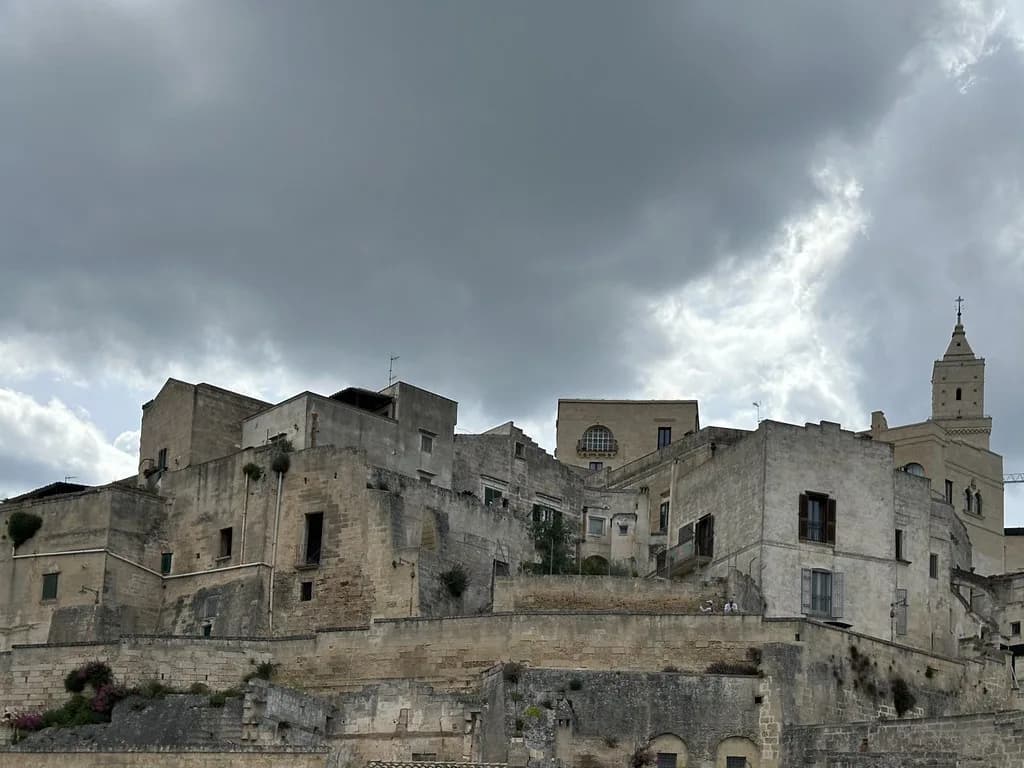
Matera's Sassi are the reason most travellers come to Basilicata, yet they are easy to misread as a single open-air museum. They are two inhabited rock districts, Sasso Barisano and Sasso Caveoso, wrapped around a limestone spur and dropping towards the Gravina ravine, with a third historic core, the Civita, on the high ridge between them. Understanding that three-part layout before you arrive makes the difference between following a crowd and choosing your own route.
As a rough editorial suggestion rather than an official figure, allow two to four hours to walk both districts and take in a few viewpoints. This guide also treats the Sassi as a place where walking is free but nearly everything inside a door is separately ticketed. Cave houses, rock churches, the underground cistern and the sculpture museum each have their own entry arrangements, so budget your time and money by deciding which interiors actually interest you. Start with the broader Matera Attractions index if you want to compare sights before fixing a plan.
What the Sassi Actually Are
Sassi is simply the plural of sasso, the Italian word for stone, and locals use it for the two cliffside quarters that make up the historic centre. The districts are built from calcarenite, a soft limestone usually called tufo, which residents have cut and extended for millennia; the same rock forms the caves, the facades and the paving underfoot. That single material explains both the honey-grey colour of every photograph and the way buildings appear stacked on one another.
Between the Sassi and the opposite plateau runs the Gravina, a deep limestone gorge that separates the city from the Parco della Murgia Materana. The park's education centre describes the Gravina as a canyon roughly 230 to 260 feet deep, with footpaths on the Murgia plateau and rougher routes in the ravine itself that involve uneven steps and exposed stretches. That geography is why so many viewpoints look across rather than down, and why the far rim is worth planning for.
The Sassi have been UNESCO World Heritage since 1993, a status repeated across official and independent sources. Beyond that label, the deeper history is best attributed generally: the rock-cut dwellings and rupestrian churches reflect very long continuity of settlement, which independent guides describe without a single agreed date. Treat dramatic claims about the city being the oldest in the world as colour rather than fact.
The Three Parts Explained: Barisano, Caveoso and the Civita
Sasso Barisano lies on the northern side and is usually the first quarter you meet when walking down from the modern town. It holds many of the hotels, restaurants and shops, and the rock church of San Pietro Barisano with its bell tower gives the area a landmark visible from several angles. If you have limited mobility or limited time, Barisano's approach from the modern town makes it the easier introduction.
Sasso Caveoso sits on the southern flank and tends to feel rawer and more dramatic, with caves cut straight into the slope and views opening over the ravine. Several independent visitors describe it as their favourite half, partly because the abandoned cave fronts on the edge of the quarter show the district before renovation. The rock churches of Santa Lucia alle Malve and Santa Maria di Idris are the obvious anchors here.
The Civita occupies the highest ground between the two Sassi and was once the walled city proper, while the cave districts lay outside it. Today the ridge is where you find the cathedral, and the lanes around it act as an unofficial border between Barisano and Caveoso. In practice you cross from one district to another without noticing, so use the cathedral piazza as your mental compass rather than looking for a boundary line.
How Long to Allow: A Suggested Two to Four Hours
Allow roughly two to four hours simply to walk both districts and take in a few viewpoints; that is an editorial suggestion, not an official figure. Two hours gets you a descent through one district and a loop back up, while four hours lets you slow down, sit with a coffee and still cover the ridge. Independent guides tend to recommend at least two nights in Matera overall, which tells you how much a single walk compresses.
Add interiors and the arithmetic changes. A cave house visit is short but absorbing, the Palombaro Lungo cistern is a quick underground detour beneath Piazza Vittorio Veneto, and the Duomo rewards a proper look. Each is its own ticket with its own published conditions, so check the current price and times with the operator rather than relying on older trip reports, which may quote outdated figures.
If you plan to climb out to the Belvedere Murgia Timone on the far side of the ravine, set aside considerably more. The park's education centre describes the belvedere path as a guided circular walk of just over two hours, and warns that the ravine routes are comparable to mountain paths. Doing it independently still means heat, water and footwear decisions, not a quick photo stop.
Walking Terrain: Stairs, Slippery Limestone and Footwear
The Sassi are genuinely hilly, and the most atmospheric alleys are often the least forgiving, with long staircases, cobbles and sloped stone paving. Several independent writers report the limestone becoming dangerously slick after rain, and one describes an actual fall. Shoes with grip matter more here than in almost any other Italian city you will visit on the same trip.
Carry water in summer and plan shade breaks, because the stone stores heat and much of the route is exposed. The park's education centre makes the same point about its trails, advising comfortable shoes with rubber soles and warning that footpaths in the ravine are not suitable for anyone who suffers from vertigo. Treat a full Sassi walk as a half-day of gentle hiking rather than an urban stroll.
Route Logic: Descend from the Modern Town or Start at a Belvedere
Most visitors arrive from the modern town above, which means descending into the Sassi and climbing back out at the end. That order gives you a first glimpse from a belvedere near Piazza Vittorio Veneto before you commit to the stairs, and it puts the cathedral roughly halfway if you aim for the ridge. Keep the return leg in mind when choosing where to stop for lunch.
The alternative is to begin on the opposite rim of the Gravina at the Murgia Timone viewpoint and look back at the whole city before entering it. The park's visitor centre at Jazzo Gattini is the practical base there, and the centre's site confirms that park paths are free to enter while guided tours are the reliable way inside the locked rock churches around Murgia Timone. That orientation is worth the detour if you have a car or can use the seasonal bus arrangements the centre publishes.
Whichever direction you choose, avoid arriving with luggage in the middle of the day. Vehicles face restrictions in the historic quarters, and hotels often sit up flights of steps, so settle bags first and confirm access arrangements with your accommodation before descending. Independent guides consistently flag this as the single most avoidable mistake.
Viewpoints Worth Planning Around
The Belvedere di Piazza Giovanni Pascoli, beside Palazzo Lanfranchi, gives the classic view over Sasso Caveoso, with the Monterrone rock and its churches rising in front of you. Independent guides describe this as the city's signature panorama, and it is also the one easiest to reach from the modern town. Try it once in daylight to orient yourself and again after dark when the quarters are lit.
Near Piazza Vittorio Veneto, the Belvedere Luigi Guerricchio, known as the viewpoint of the three arches, looks towards the cathedral rather than the ravine. It is quieter in the early evening, when the light falls differently from the Pascoli side, and one independent account notes a lower level that often escapes the crowd entirely. The cathedral piazza and the lanes near Via Duomo add further framed views that reward slow walking.
Across the gorge, the Murgia Timone belvedere is the one that shows the whole shape of Matera at once. The park's education centre notes that on certain festive weekends cars cannot reach the Belvedere area of Murgia Timone between 9am and 7pm, and that a seasonal bus line runs to connect the centre of Matera with the park on those days. Check the park's notices before driving there, and consider a guided walk if you want the rock churches on that side opened rather than viewed through grilles.
Separate Tickets for Cave Houses, Rock Churches, Cisterns and Museums
Nothing about walking the Sassi requires a ticket, but almost every interior does, and each is scoped differently. A restored cave house shows domestic life, a rock church shows frescoes, the underground cistern shows water engineering, and the sculpture museum shows a collection inside a cave palace. Do not assume one purchase covers the others, and check the current price at each entrance or on its official page.
The cooperative-managed rock churches inside the city, principally San Pietro Barisano, Santa Lucia alle Malve and Santa Maria di Idris, are the most visited cave interiors, and photography is not allowed inside. The cooperative that manages them, Oltre l'Arte, is the source to consult for what is currently included in any combined arrangement; older travel blogs describe passes whose scope and cost may no longer apply.
MUSMA occupies Palazzo Pomarici in Sasso Caveoso and describes itself as the only museum inside a cave setting, dedicated to sculpture from the late nineteenth century onwards. Its own site publishes opening days and ticket information, which is the only reliable place to confirm when you can go. Palombaro Lungo, the vast cistern under the main piazza, is a separate attraction with its own entry arrangements.
For context on how the Sassi were lived in until the mid-twentieth century, the Casa Grotta di Vico Solitario is the best-known reconstructed cave dwelling, though tour groups crowd it at peak times. Quieter equivalents exist in both districts, and the wider story is also told through the Casa Noha multimedia visit managed by the FAI heritage foundation. Fees and days vary by site and season, so confirm with each site before building a route around one.
Free to View from Outside: Rock Churches and the Ravine
Many rock churches cost nothing to admire from outside, and several of the most photographed can only be seen that way. Santa Maria di Idris sits dramatically on the Monterrone spur and is visible from viewpoints across the city, while Santa Lucia alle Malve is similarly legible from the lane above. Inside, the rules and tickets differ, so treat the exterior view as the free part and ask at the entrance about the rest.
Out in the park, the churches of Sant'Agnese, Madonna delle Tre Porte, Madonna delle Croci and San Falcione are generally visible through protective grilles, with interiors accessible only on guided visits. The park's education centre states this plainly, and it is also the most honest way to plan: assume locked doors unless you have booked a guide. That protection exists because the frescoes are fragile.
The CEA visitor centre near Murgia Timone also sells a paper map of the area and shows a short film on the park, which is useful if you intend to walk the ravine trails rather than just photograph them. Note the centre's own seasonal opening times before making the trip out, since they shift between winter and summer.
Sleeping in the Sassi: Cave Hotels as Part of the Visit
Staying inside a cave room changes the experience, because you wake up in the stone rather than descending into it each morning. Independent travellers consistently describe it as worthwhile when the budget allows, and note that cave hotels vary widely in comfort, so read recent reviews carefully. Rooms are often spread across several buildings a short walk apart, so ask about luggage help at check-in.
Basing yourself in the flat modern town is a legitimate choice, especially with mobility issues or heavy bags, and it keeps parking and daily errands simple. The trade-off is that you lose the empty early-morning lanes and the lit-up evening views. A middle path is a hotel on the edge of the Sassi, close enough to walk in within minutes.
Food and Drink Without Turning the Walk Into a Crawl
Matera's cooking leans on Basilicata staples: orecchiette, peperoni cruschi, lamb, caciocavallo podolico cheese and Aglianico del Vulture wine, with the local PGI bread appearing on most tables. Independent writers recommend booking dinner in advance, since well-known addresses fill quickly even outside high season. A long lunch is a better fit for a Sassi day than three rushed stops.
The city's own tourism portal is a sensible starting point for orientation and for official visitor information, while a neighbourhood guide helps you match a restaurant to the district you plan to end in. Keeping dinner near your exit route saves a climb after dark.
Accessibility, Mobility and Practical Cautions
If stairs are a problem, base yourself in the modern town and choose your entry points deliberately: the Pascoli belvedere and the lanes near the cathedral involve less climbing than a full descent into Caveoso. Ask your accommodation about step counts and lift access before booking, because cave rooms are frequently reached only on foot. The park's guidance on the ravine trails adds that they are not suitable for anyone with vertigo.
Driving brings its own complications, since the historic quarters operate limited traffic arrangements and parking outside the Sassi is limited. Independent sources advise confirming permission with your hotel and being dropped as close as possible rather than wheeling suitcases through the lanes. Treat any specific parking rule you read online as something to verify locally.
A Simple Half-Day Shape
Start at the Pascoli belvedere for orientation, descend into Sasso Caveoso past the Monterrone churches, and pick one interior that suits your interest: a cave house for social history or a rock church for frescoes. Climb to the cathedral ridge for the view and a pause, then drop into Sasso Barisano on the way back towards the modern town. That loop delivers both districts without exhausting you. For wider planning, see A Self-Guided Walk Through Matera's Sassi.
If you have a full day, add Palombaro Lungo beneath Piazza Vittorio Veneto and one museum, then return to a viewpoint after dark. If you are staying longer, the quieter corners of the districts and the surrounding landscape reward another day; our hidden gems in Matera cover some of those overlooked spots.
What to Skip on a First Visit
Skip the temptation to see every church interior. After two or three, the frescoes blur, and your time is better spent walking the lanes and sitting in a piazza. Independent travellers who tried to cover everything consistently report rushing and remember less.
Also skip any itinerary that depends on driving into the Sassi to save steps. The quarters are pedestrian by nature, and vehicles are restricted, so the walk is the visit. Leave the car, take the staircase, and let the city unfold at its own pace.
Plan Your Visit
The Sassi reward preparation rather than a checklist. Decide which of the three parts you want to prioritise, choose one or two interiors that genuinely interest you, and leave slack for viewpoints in both daylight and darkness. Good shoes and a water bottle will do more for your day than any additional ticket.
Before you travel, confirm opening days, prices and access rules with each site or with the park visitor centre, since arrangements change by season. Then set out early, walk slowly, and let the stone city set the pace.
Frequently Asked Questions
What does Sassi mean in Matera?
Sassi is the plural of the Italian word sasso, meaning stone. It refers specifically to the two historic districts, Sasso Barisano and Sasso Caveoso, built from soft limestone cut and extended over centuries.
How long should you allow for walking the Sassi?
As a suggestion rather than an official figure, two to four hours covers both districts and a few viewpoints on foot. Add more time for any cave house, rock church, cistern or museum you want to enter, since each is separately ticketed and may have limited capacity.
Is the Sassi di Matera worth visiting?
Yes, for the combination of layered rock architecture, cave interiors and ravine views that exists nowhere else in quite the same form. Set expectations realistically: the streets are steep and slippery, summer heat is intense, and the most famous spots get busy.
How do you get to Matera without a car?
Matera sits in Basilicata with Bari as the nearest major gateway, and independent guides describe regional rail and bus options rather than high-speed connections. Confirm current services, operating companies and any seasonal suspensions directly with the operator before booking, since schedules change.
Are the Sassi difficult to walk?
They involve constant stairs, cobbles and sloped limestone, and the stone becomes slippery after rain. Most reasonably fit visitors manage the main routes, but anyone with knee, hip or balance issues should base themselves in the flat modern town and choose entry points carefully.
Do you need tickets to visit the Sassi?
Walking the districts is free. Cave houses, rock churches, the Palombaro Lungo cistern, MUSMA and Casa Noha are each separately ticketed with their own rules, so check the current price and opening arrangements with each operator before you go.
Where should you stay when visiting the Sassi?
A cave room inside the districts gives the most atmospheric stay, provided you accept stairs and restricted vehicle access. The modern town above is flat, easier with luggage or mobility limitations, and only minutes from the main viewpoints. Ask each property about steps, luggage help and parking.
What is the difference between Sasso Barisano and Sasso Caveoso?
Barisano, to the north, is the busier quarter with more shops and hotels and the San Pietro Barisano rock church. Caveoso, to the south, feels more dramatic, with cave fronts on the ravine edge and the rock churches of Santa Lucia alle Malve and Santa Maria di Idris. The cathedral ridge sits between them.
Sources
Continue exploring
More guides you'll find useful





