
Chiesa di San Pietro Caveoso: A Matera Church Guide
Visit Chiesa di San Pietro Caveoso above Sasso Caveoso: its Baroque rebuild, painted nave ceiling, artworks to spot, reported free entry and active-parish etiquette.
On this page
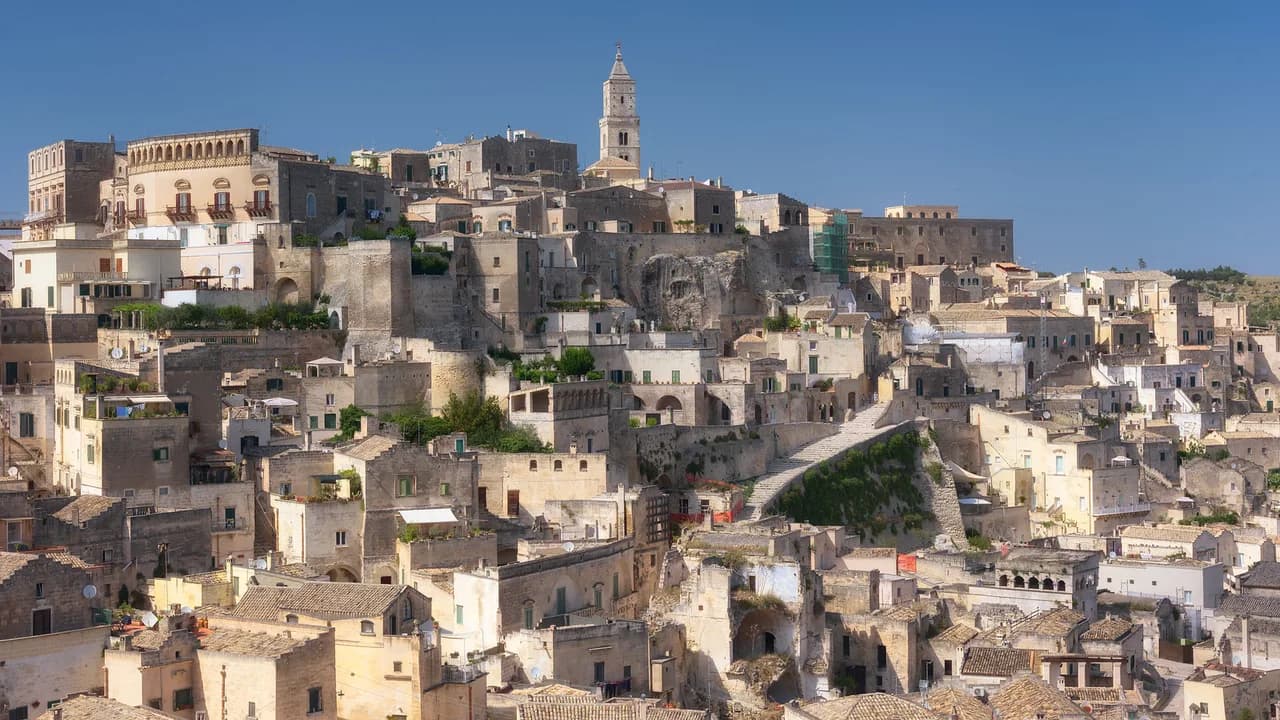
Chiesa di San Pietro Caveoso stands on Piazza San Pietro Caveoso at the lower edge of Sasso Caveoso, where Matera's cave district meets the ravine. Visitor reports describe free entry, with doors closed during services; treat that as a report rather than an official schedule, since this is an active parish.
Despite the name, this is not a cave church. It is a masonry parish church whose medieval origins were largely overwritten by an eighteenth-century restoration described by the city's tourism portal. Allow roughly twenty to thirty minutes for the interior and the square outside, and longer if you photograph the canyon.
Where the Church Sits in the Sassi
The church occupies Piazza San Pietro Caveoso in the lower part of Sasso Caveoso, the more southerly of Matera's two sassi districts. Its name refers to the caves around it, not to the building itself. Walking down from the Piano or across from Sasso Barisano delivers you onto a square where the ravine suddenly opens up.
Because the square is a through-route into the lower alleys, it sees a steady flow of visitors. The church works best as a deliberate pause: step inside, look up at the ceiling, then come back out for the view. If you want quieter corners of the district, the hidden gems in Matera guide sets out alternatives nearby.
A Medieval Foundation Behind a Baroque Face
The building is formally the Chiesa dei Santi Pietro e Paolo, and its origins reach back to the medieval period. What you see today is largely an eighteenth-century restoration. The city's tourism portal states that the nave was lengthened, a stone vault replaced the wooden roof, and a new facade and bell tower were built, with the spire added later.
That history changes how you read the interior. Visitors expecting the bare stone of Matera's rock chapels instead find stucco, a conventional nave and a painted ceiling. The contrast is the point: this is the parish church of a district also carved from rock. It is a useful comparison with the Cattedrale di Matera visitor guide if you are following how religious building in the city evolved.
What to Look For Inside
Start with the central nave ceiling. The tourism portal dates the stucco work to 1756, commissioned under Monsignor Lanfreschi, who had the vault covered with a painted faux wooden ceiling. Look up before looking around, because the illusion is why the interior reads as Baroque and is easy to miss if you head straight for the altar.
On the main altar sits a polyptych by an unknown painter dated 1540, showing a Madonna and Child between Saints Peter and Paul with the Last Supper beneath. The same portal notes a sixteenth-century polychrome Madonna and Child by Altobello Persio, statues of Saint Leonard and Saint John of Matera, and six stone panels by Persio from 1531 in the chapel of Saint Anthony. Further visitor details appear in San Pietro Caveoso - MateraWelcome.
The second chapel, dedicated to Our Lady of the Annunciation, holds fifteenth-century frescoes by an unidentified artist. Visitor posts also single out the painted ceiling over the central nave as a highlight, which suggests this is the element most first-time visitors overlook.
Entry, Hours and Mass Etiquette
A third-party visitor page reports free admission, noting that entry is restricted during mass, and records an early-morning-to-late-evening opening window. Treat both as visitor reports rather than an official schedule: parishes adjust doors around services and maintenance, and travel listings go stale. Confirm on arrival.
If you want an institutional starting point before you descend into the lower sassi, the Comune di Matera site carries city notices and points to its tourism pages, while MateraWelcome publishes the institutional place description. Neither guarantees an hour-by-hour door schedule for the church itself.
Because this is an active parish, the main thing to avoid is walking in during a service. Mass times circulate online but shift with the liturgical calendar, so read the noticeboard at the entrance instead of relying on a cached listing. If a service is under way, wait outside.
The Viewpoint Beside the Church
The reward of the lower square is the panorama across the ravine. Visitors describe the viewpoint next to the church as a wide prospect over the canyon, cliffs and caves on the eastern side of the city, making it a natural place to pause before climbing back through Sasso Caveoso.
For a wider prospect, cross to the Belvedere di Murgia Timone on the far side of the ravine, which frames the sassi rather than looking out from inside them. The two views complement each other: one puts you within the district, the other shows its shape. The Matera viewpoints guide covers both.
Pairing the Church With a Sasso Caveoso Walk
A simple loop starts high and ends low: begin near the Piano, wind down through Sasso Caveoso, reach the church, then follow the lower lanes back up. Keep the church as a midpoint so tired legs are not climbing at the end. For the district's cave dwellings, the Casa Grotta di Vico Solitario visitor guide explains a reconstructed interior a short walk away.
Do not assume one ticket covers several churches. San Pietro Caveoso is a parish church, the rock-hewn chapels are separate sites with their own arrangements, and the cathedral is a distinct building. Plan the loop by geography, not by assumed combined access.
Not One of Matera's Cave Churches
Guides to Matera often lump rock churches together, blurring a real distinction. The chiese rupestri are carved into the limestone, usually small and decorated with wall paintings. San Pietro Caveoso is a built church on a cliff-edge square, with masonry walls, a bell tower and an eighteenth-century vault.
That makes it a useful anchor when you tire of dim rock interiors. You get a conventional church with dated, attributable artworks, plus one of the district's best outdoor views on the doorstep. On a short visit, that combination is easier to justify than a single small chapel.
Plan Your Visit
Treat San Pietro Caveoso as a short interior visit wrapped in a longer walk through Sasso Caveoso. Check the door when you arrive, respect any service in progress, and give the artworks the attention their dates and makers deserve. The square and the ravine view need no schedule.
Before setting out, skim the Matera Attractions hub to see how this church fits alongside the cathedral and the cave dwellings. Then confirm the practical details on the day, since a parish noticeboard is more current than any listing you read in advance.
Frequently Asked Questions
Is entry to Chiesa di San Pietro Caveoso free?
Visitor reports describe entry as free, and it functions as an active parish rather than a ticketed monument. Because access can change around services and special occasions, check the entrance notice when you arrive.
Do I need to book tickets to visit the church?
There is no published booking system for this church, and it functions primarily as a place of worship. Access depends on the doors being open and no service being under way.
How long should I allow at San Pietro Caveoso?
A suggested twenty to thirty minutes covers the nave, the painted ceiling and the chapels, plus a little longer on the square for the ravine view. This is editorial advice, not an official timing.
What artworks should I look for inside?
Look up first for the painted faux wooden ceiling over the central nave, dated in the city tourism portal to 1756. Lower down, find the 1540 polyptych on the main altar, the sixteenth-century Madonna and Child by Altobello Persio, and his 1531 stone panels in the Saint Anthony chapel.
Should I avoid visiting during mass?
Yes. If a service is under way, wait outside and return later rather than walking through. Reported mass times circulate online but change with the liturgical calendar, so the notice at the entrance is a better guide than a cached page.
Is this the same as Matera's cave churches?
No. The cave churches are hewn into the limestone and usually small, while San Pietro Caveoso is a constructed parish church on the edge of Sasso Caveoso. An eighteenth-century restoration reshaped the building you see today.
Sources
Continue exploring
More guides you'll find useful





