
Casa Cava, Matera: Visitor Guide to the Underground Cultural Centre
A practical guide to Casa Cava in Matera's Sasso Barisano: what this former tufa quarry cultural centre is, published visiting details and how it fits a Sassi walk.
On this page
Casa Cava is not a museum with a fixed collection but a cultural and events centre inside a former tufa quarry in Matera's Sasso Barisano. Because the programme changes, a little planning helps: the operator publishes winter hours of 10:00 to 13:00 and 15:00 to 18:00, with a midday gap worth knowing before you climb down into the district.
What Casa Cava Is
The operator describes Casa Cava as a cultural centre created inside an old tufa quarry. It lists an auditorium, exhibition and meeting rooms, and event spaces, which makes it a working venue rather than a cave dwelling museum. If you arrive expecting a fixed visitor route, the experience can feel uneven; if you know the calendar drives what you see, it makes more sense.
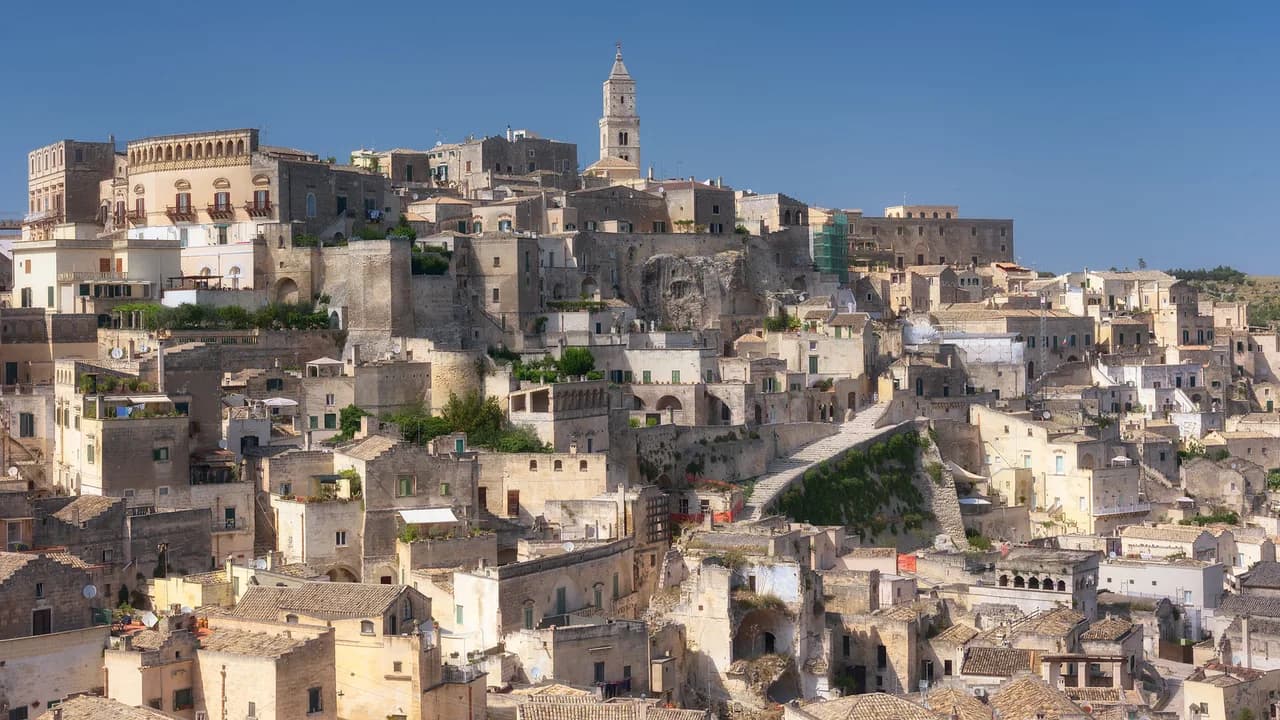
The venue's published address is Via S. Pietro Barisano 47 in Matera, which places the entrance in Sasso Barisano rather than the busier Sasso Caveoso side. That orientation helps when planning a walk, because the two Sassi sit on opposite flanks of the old town. If you are unsure which district you are in, use the landmarks around the entrance rather than street numbers alone.
Casa Cava is unrelated to DO Cava, the Spanish sparkling wine produced mainly around Sant Sadurní d'Anoia in Catalonia. The shared word is coincidence, and searches for Cava wineries will not help you plan a visit here. Keep the two separate when you research, and use the venue's own site for anything about the Matera space.
From Quarry to Cultural Venue
The operator's history explains that the site began as a tufa quarry, was later abandoned and used as a dumping ground, and was eventually transformed into a centre for young creativity. That sequence explains why the rooms feel raw in places rather than polished like a conventional gallery. The scale and acoustics come from extraction, not from a purpose-built hall.
Matera's wider story follows a similar arc. The Sassi were declared a UNESCO World Heritage Site in 1993, and the city held the European Capital of Culture title in 2019, a milestone the operator also mentions. Seeing Casa Cava as part of that regeneration helps set expectations: this is a contemporary use of an ancient extraction site, not a preserved historic interior.
For context on how Matera's cave architecture works, the Sassi di Matera visitor guide covers the districts, the staircases between them and the relationship to the Gravina ravine. Reading that first makes Casa Cava easier to place, since the venue is one stop in a much larger carved landscape rather than a standalone attraction.
What You Actually See Inside
Casa Cava is organised around an auditorium plus secondary exhibition and meeting rooms, some cut directly from the tufa. The operator lists spaces for events, catering, guided tours and information services, which reflects a venue designed to flex between performances, exhibitions and private bookings. On any given day, part of the building may be closed for an event, so treat the published listing as the reliable guide to what is open.
Because the programme changes, what you see depends on the calendar. The operator posts exhibitions and events on its site, and those listings are the right place to check before you commit to a visit. Do not assume a specific exhibition is running because a travel article mentioned it; verify against the venue's current page close to your travel dates.
Reading the Published Winter Hours
The operator publishes winter opening hours of 10:00 to 13:00 and 15:00 to 18:00 every day, including Sunday. That splits the day into a morning and an afternoon block, so arriving at 13:30 means waiting. The same page labels these as winter hours, so do not treat them as year-round without checking.
The operator does not publish summer hours on the page describing these winter times, and this guide does not guess them. Before travelling, check the official site or contact the venue by telephone or email using the details it lists, particularly if Casa Cava is the main reason for your trip. This is also the way to confirm whether a particular event requires registration or a separate arrangement.
One practical note: the entrance sits among the stepped lanes of Sasso Barisano, and the historic centre is hilly with uneven limestone. Casa Cava's own published information does not describe step-free access or lift provision, so visitors with mobility concerns should ask the venue directly rather than assuming.
If the weather turns, Casa Cava is a sensible indoor stop, and the Matera rainy day guide sets out other covered options for the same afternoon. Pairing the two avoids spending a wet day moving between distant parts of the Sassi.
Casa Cava does not publish an official visit duration, and because it is partly an event venue the time you need depends on what is running. A suggested allowance is 45 to 90 minutes for the public spaces, plus whatever the current exhibition or performance adds; treat that as a planning estimate, not an official figure.
Nearby in Sasso Barisano
Casa Cava sits in the quieter Sasso Barisano, which groups naturally with the rock church of San Pietro Barisano and the lanes above it. The church is the largest of Matera's rupestrian churches and dates back to the 12th century, and its crypt with carved seats for the dead is memorable; entry is separate from Casa Cava, so budget time rather than assuming one ticket covers both.
If you want more contemporary art after Casa Cava, the MUSMA Museo della Scultura Contemporanea visitor guide covers a sculpture museum set inside a 17th-century cave palace, which makes a natural companion stop for culture-first visitors. Together the two give a fuller picture of how Matera reuses carved space.
For a broader route through the district, the hidden gems in Matera guide covers the smaller corners of Sasso Barisano that are easy to miss between the headline sights. Walking between them is the point; the distances are short but the staircases add up.
Two different Sassi in one day is realistic if you keep the stops close together. A workable pairing is Casa Cava and San Pietro Barisano in the morning, then a slow lunch, then a crossing to Sasso Caveoso in the afternoon.
Practical Pacing Around the Sassi
Matera's historic centre is steep and the limestone becomes slippery after rain, so footwear with grip is more useful than anything else in your bag. Build in pauses and avoid timing a tight schedule around a staircase-heavy route, particularly if you are carrying luggage or travelling with children.
Arriving with bags is the main logistical risk, because cars are restricted in parts of the Sassi and many hotels sit up flights of steps. Leave luggage at your accommodation or a drop-off point before wandering, and confirm with your hotel in advance how vehicles can reach the entrance.
If you want the wider picture of the Sassi's structure before you arrive, the Sassi di Matera visitor guide covers the two districts and their relationship to the Gravina. Reading it once makes a walking route through Sasso Barisano much easier to plan.
Who Casa Cava Suits
Casa Cava works best for visitors who enjoy contemporary culture in unusual spaces, or who are looking for an indoor stop with architectural interest rather than a traditional museum circuit. It also suits anyone attending a scheduled event, since the venue's programme is the main reason to build a visit around it.
Visitors wanting a cave-dwelling experience should look to the Casa Grotta di Vico Solitario visitor guide instead, where the focus is reconstructed daily life rather than performances and exhibitions. Understanding that difference before you set out saves disappointment in both directions.
Finally, plan Casa Cava as one part of a Matera day rather than the anchor. The wider city rewards slow wandering, and the venue's value increases when it complements a walk through Sasso Barisano rather than standing in for it.
Plan Your Visit
Check the operator's current listings for opening hours, exhibitions and events in the week before you travel, since Casa Cava's calendar is what determines what you will see. Use the published address in Via S. Pietro Barisano to plan your route through Sasso Barisano, and allow extra time for the staircases between stops. For related planning, see Matera Attractions: Visitor Guides to 12 Sights.
Frequently Asked Questions
What is Casa Cava in Matera?
Casa Cava is an underground cultural and events centre in Matera's Sasso Barisano district, created inside a former tufa quarry. The operator describes it as a centre for creativity with an auditorium and exhibition spaces, rather than a museum with a fixed collection or a cave dwelling.
Where is Casa Cava located in the Sassi?
The venue's published address is Via S. Pietro Barisano 47, which places it in Sasso Barisano, the district on the quieter flank of the old town. It is a short walk from the rock church of San Pietro Barisano, though entry to each is separate.
What are Casa Cava's opening hours?
The operator publishes winter hours of 10:00 to 13:00 and 15:00 to 18:00 every day. Summer hours and any seasonal variations are not published on that page, so check the official site or contact the venue before visiting, especially if the venue is your main reason for the trip.
Was Casa Cava once a quarry?
Yes. The operator's history explains that the site was carved as a tufa quarry, later abandoned and used as a dumping ground, and eventually converted into a cultural centre. That history explains the unusual scale and acoustics inside.
Is Casa Cava the same as the Cava wine region in Spain?
No. DO Cava is Spanish sparkling wine produced mainly in Catalonia, with a separate official website and visitor network. Casa Cava in Matera is an unrelated cultural venue in Basilicata, so use its own site for visiting information.
How long should I spend at Casa Cava?
The operator does not publish an official duration. As a planning estimate, allow around 45 to 90 minutes for the public spaces, plus time for whatever is on the current programme, and check listings shortly before your visit.
Sources
Continue exploring
More guides you'll find useful





