Casa Buonarroti Visitor Guide: Michelangelo’s Home in Florence
Plan your visit to Casa Buonarroti with our guide to Michelangelo’s home, featuring ticket tips, must-see art like the Madonna of the Stairs, and local context.
On this page
Casa Buonarroti Visitor Guide: Michelangelo’s Home in Florence
Stepping into the former residence of the world's most famous sculptor offers a rare glimpse into his private life and artistic evolution. While many travelers build their Florence attraction plan around the David, Casa Buonarroti reveals a quieter and more intimate side of the master. The museum serves as a monument to the genius of Michelangelo and the long-standing legacy of his family in Tuscany.
The History of Casa Buonarroti: Michelangelo’s Florentine Legacy
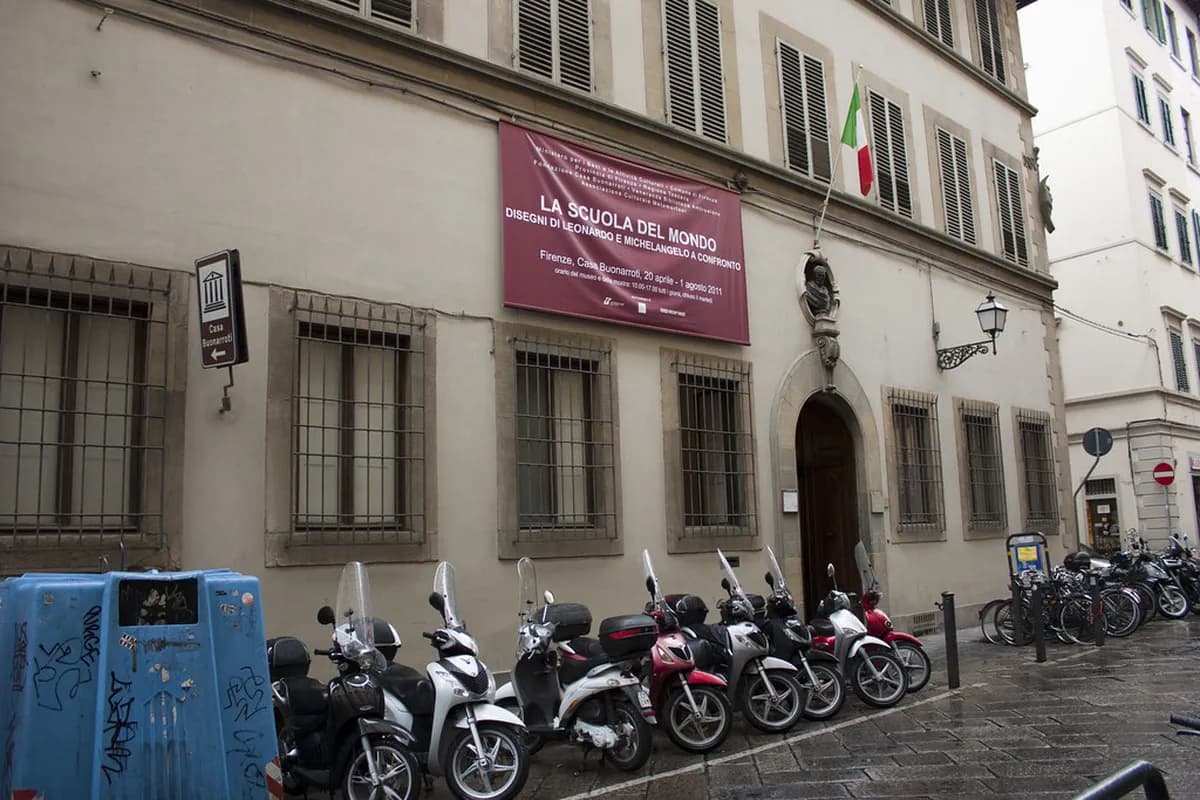
Michelangelo Buonarroti originally purchased this property on Via Ghibellina in 1508 to create a dignified home for his family. Although he spent much of his later life in Rome, he maintained a deep connection to this Florentine residence and lived here at different moments before leaving Florence for good in 1534. The artist never saw the building in its current grand form, as it was expanded long after his passing.
His great-nephew, Michelangelo the Younger, transformed the modest house into a sophisticated palace from 1612 onward. He commissioned leading artists of the time to decorate the rooms with frescoes celebrating his famous ancestor's life. These ornate galleries were designed specifically to display the family's growing collection of the master's early works.
The building remained in the hands of the Buonarroti family for centuries until Cosimo Buonarroti, the last direct descendant, donated the house and collection to Florence in 1858. Today, the Buonarroti Foundation manages the site, ensuring that the legacy of the High Renaissance remains accessible to the public.
Walking through the rooms feels like a journey through time where art and family history intersect seamlessly. Preservation efforts have kept the 17th-century atmosphere intact, providing a stark contrast to the modern museum layouts found elsewhere. This historical continuity makes the house one of the most authentic cultural sites in the entire city.
Must-See Art: The Madonna of the Stairs and Battle of the Centaurs
The museum houses two of Michelangelo's earliest known marble sculptures, which are essential for understanding his development. The Madonna of the Stairs is a delicate bas-relief created when the artist was only about fifteen years old. It showcases his early mastery of the stiacciato technique, a low-relief carving style popularized by Donatello.
Nearby, you will find the Battle of the Centaurs, a dynamic work that reveals his lifelong fascination with the human form. This sculpture was inspired by classical mythology and demonstrates an incredible sense of movement and overlapping figures. Art historians often point to this piece as the first true manifestation of Michelangelo's unique sculptural language.
Another highlight mentioned in this Firenze Made in Tuscany - Michelangelo Guide is the fascinating Noli me tangere painting. While the physical painting was executed by Pontormo, the composition was based entirely on a lost cartoon drawn by Michelangelo. This collaboration provides a rare look at how the master influenced his contemporaries through his innovative designs.
The museum also displays a collection of wooden models, including the original proposal for the facade of San Lorenzo. These architectural artifacts prove that Michelangelo was as much a builder and visionary as he was a sculptor.
Planning Your Visit: Tickets, Hours, and Booking Advice
The museum typically opens from Wednesday to Monday, though it usually remains closed on Tuesdays throughout the year. Standard operating hours run from 10:00 AM to 4:30 PM, but you should always verify these times before your arrival. Check the Official Casa Buonarroti Website for the most accurate and up-to-date schedule for 2026.
Savvy travelers can save money by taking advantage of a specific local ticket partnership. If you have already visited the nearby Basilica of Santa Croce, show your ticket at the desk for a reduced entry fee. This discount makes it very affordable to combine both sites into a single morning or afternoon itinerary.
Booking in advance is generally not required for individual visitors because Casa Buonarroti remains one of the city's quieter gems. Groups should book ahead, and online purchases add a 2 euros pre-sale fee per ticket. Independent visitors can usually walk in and purchase a ticket directly at the entrance without facing long queues.
For transit, treat Casa Buonarroti as a walking stop inside the historic center rather than a destination that needs a special transfer. Via Ghibellina is close to Santa Croce and works well between central museum visits; if you arrive by taxi, ask for the Santa Croce or Teatro Verdi side of the neighborhood so you avoid unnecessary turns through the restricted traffic zone.
- Ticket Pricing Details
- € 8.00 full price
- € 5.00 reduced price
- € 6.00 ticket reserved for workshop participants
- Combo Discount: Santa Croce holders
- Visitor Logistics
- Location: Via Ghibellina 70
- Best Time: Right after opening or late afternoon before last entry
- Accessibility: Contact the museum before arrival for specific arrangements
- Common Mistake: Do not plan a Tuesday visit
Inside the Museum: Sketches, Letters, and Personal Artifacts
Casa Buonarroti holds the world's most significant collection of Michelangelo's personal papers, including hundreds of original sketches. Because paper is highly sensitive to light, the museum only displays a rotating selection of these items at any given time. Seeing his handwriting and rough drafts offers a humanizing perspective on the man behind the legendary statues.
The collection includes intimate letters written to family members and patrons that reveal his daily struggles and financial concerns. These documents are preserved in climate-controlled cases to ensure they remain intact for future generations of art lovers. This is the part of the visit that rewards slow looking: the value is not just famous names, but the evidence of how ideas moved from page to clay, wood, and marble.
You can also view small clay models that served as preliminary studies for his larger marble commissions. These tactile objects show the physical process of his work, much like the domestic displays at Palazzo Davanzati nearby. The museum layout encourages a slow pace, allowing you to appreciate the fine details of these fragile artifacts.
Casa Buonarroti is closed every Tuesday, so plan your visit accordingly.
Practical Tips for Visiting Casa Buonarroti
Many visitors wonder if this site is worth their time compared to the major state museums. While the Accademia is home to the massive David, Casa Buonarroti offers a peaceful atmosphere free from overwhelming crowds. Think of it as the personal Michelangelo stop: early work, family memory, design studies, and a house that still feels connected to the neighborhood around Santa Croce.
Plan to spend approximately 60 to 90 minutes exploring the various rooms and the rotating paper exhibits. The morning hours right after opening are usually the quietest time to enjoy the galleries in near solitude, while late afternoon works well if you want to pair the museum with Santa Croce first. Wear comfortable shoes as the historic floors can be uneven in certain sections of the building.
The museum shop offers unique books and high-quality prints that you won't find in the more commercialized souvenir stalls. Support the foundation by picking up a detailed guidebook that explains the complex fresco cycles in the upper rooms. Taking a moment to rest in the small courtyard before leaving provides a nice break from the busy streets of Florence.
| Decision Point | Casa Buonarroti | Accademia |
|---|---|---|
| Atmosphere | Quiet, domestic, and uncrowded | Busy, iconic, and reservation-driven |
| Michelangelo Focus | Early reliefs, drawings, models, family history | David and major public sculpture |
| Best For | Art-history depth and a slower visit | First-time visitors who must see the David |
| Common Mistake | Expecting a large blockbuster museum | Arriving without a timed plan in peak season |
Morning hours right after opening are usually the quietest time to enjoy the galleries in near solitude, or visit late afternoon if you want to pair the museum with Santa Croce first.
Nearby Attractions in Florence’s Santa Croce Neighborhood
The museum is located in the vibrant Santa Croce district, an area rich with artisan workshops and historic landmarks. Just a short walk away is the Basilica of Santa Croce, where Michelangelo is buried in a magnificent tomb. Visiting both sites creates a complete narrative arc of the artist's life from his early home to his final resting place.
A strong Michelangelo-in-Florence half day starts at Casa Buonarroti, continues to Santa Croce, and then moves toward the Accademia area if seeing the David is part of your plan. If you want a quieter art route and other things to do in Florence off the beaten path, pair the house with the Museo di San Marco, where the convent setting keeps the pace calm and reflective. Alternatively, you could enjoy a relaxing walk through the Bardini Garden to see the city from a different vantage point.
Exploring the side streets around Via Ghibellina reveals hidden gems in Florence and local life away from the main tourist drag. This part of Florence feels more authentic and less hurried than the area immediately surrounding the Duomo, rewarding travelers who seek out non-touristy things to do in Florence, and it also combines naturally with domestic-history stops such as Palazzo Davanzati or science-focused visits to Museo Galileo.
Frequently Asked Questions
Is Casa Buonarroti worth visiting compared to the Accademia?
Yes, Casa Buonarroti is worth visiting for its intimacy and early masterpieces like the Madonna of the Stairs. While the Accademia has the David, this museum offers a quiet look at Michelangelo's personal life without the massive crowds. It is a perfect addition to any Florence museum itinerary.
How long does it take to tour Casa Buonarroti?
Most visitors spend between 60 and 90 minutes exploring the museum. This allows enough time to view the primary sculptures, the rotating sketch collection, and the beautiful 17th-century frescoes. It is a manageable size that does not cause museum fatigue.
Do you need to book tickets for Casa Buonarroti in advance?
Advance booking is generally not necessary for Casa Buonarroti. Unlike the Uffizi or Accademia, this museum rarely has long lines, allowing for spontaneous visits. You can simply walk to the ticket office on Via Ghibellina and enter immediately.
What are the most famous works in Casa Buonarroti?
The most famous works are the Madonna of the Stairs and the Battle of the Centaurs. These marble reliefs represent Michelangelo's earliest achievements as a teenager. The museum also features a significant collection of his architectural models and personal correspondence.
Casa Buonarroti provides a unique and deeply personal perspective on one of history's greatest artistic minds. By visiting his family home, you gain insights into his early talent and the legacy he left for his descendants. This museum remains an essential stop for anyone wanting to truly understand the man behind the masterpieces.
To verify current details, consult the Casa Buonarroti on Wikipedia.
Continue exploring
More guides you'll find useful