Secret Spots in Verona: Hidden Places Locals Actually Go
Skip the Juliet's House line and find Verona's real secret spots: quiet hilltop viewpoints, a forgotten fort, and back-street courtyards, plus what each one costs in time.
On this page
Secret Spots in Verona
Last updated August 2026, this guide to secret spots in Verona skips the Juliet's House line entirely. Verona's real hidden corners sit on the San Leonardo hill, along a forgotten wall stretch, and inside a garden's upper terrace. Each spot trades extra walking time for far fewer tourists, and this guide shows exactly what that costs, spot by spot.
Secret Spots in Verona: A Quick-Answer List
Secret spots in Verona cluster in three places. San Leonardo hill holds two overlooked forts. Verona's city wall runs quiet and overgrown along its northern stretch. Several residential districts see almost no visitors at all. None of the spots below require a guide or a car. Decide based on how much extra time and effort feels worth trading for fewer tourists nearby, not just on how each spot looks in photos. Each one beats its more famous counterpart nearby in at least one way, as the list below explains.

- Santuario Nostra Signora di Lourdes (Fort San Leonardo): an unobstructed hilltop view many locals rate above Castel San Pietro, about a 30-minute walk from the center.
- Forte Sofia: an abandoned 1838 Austrian fortress on the same hill, viewable from outside only.
- The northern city wall hike: an overgrown, little-used stretch of the wall starting near Castel San Pietro.
- Porto Vescovo: a residential district near Verona's second train station where few visitors go, even in shoulder season.
- Giardino Giusti's upper garden: a wilder terrace and rock-cut staircase above the formal Renaissance grounds.
- Micro-finds: Roman ruins under the street, a whale rib at Arco della Costa, and a courtyard called the Well of Love.
Santuario Nostra Signora di Lourdes: The Quiet Viewpoint Locals Prefer Over Castel San Pietro
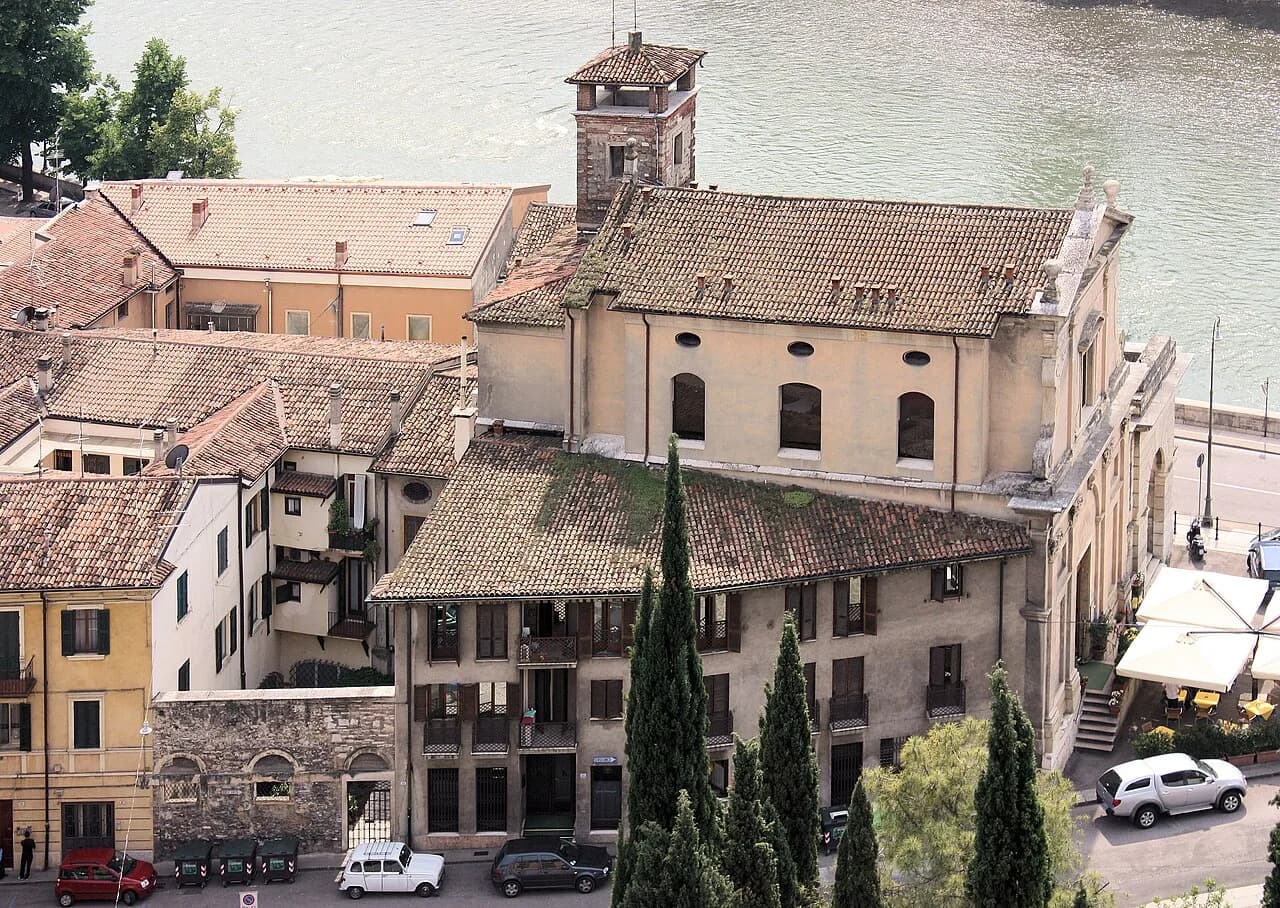
Austrian forces built this hilltop structure in 1838 as Fort San Leonardo. The congregation of Stimmatini converted it into a sanctuary in 1952. Its façade still carries the original military lines, with a dome added during that conversion while the interior was reworked for religious use. Views from the grounds stretch unobstructed across Verona's church spires, rooftops, and the Adige River below. Castel San Pietro sits closer to the center, but tree cover blocks part of that vantage point, which is why some locals rate this hilltop as the better of the two. The sanctuary is visible from Ponte Pietra on a clear day, a useful landmark if you're navigating on foot. Roughly a 30-minute walk connects the sanctuary to the city center, most of it uphill. Grounds and a small garden stay open during daylight hours, giving visitors room to linger. Interior access closes during services, and a dress code applies inside the church itself. Sunset draws the biggest crowds at Castel San Pietro, so travelers chasing that same golden light with fewer people around tend to end up here instead. Plan around service times, and check that dress code before heading up the hill.
Both this sanctuary and Forte Sofia, its neighbor on the same hill, date to 1838 as Austrian military installations, but have diverged completely in use: one is now a functioning religious site with service closures and dress codes, while the other remains an abandoned ruin.
Forte Sofia: The Abandoned Fortress Next Door
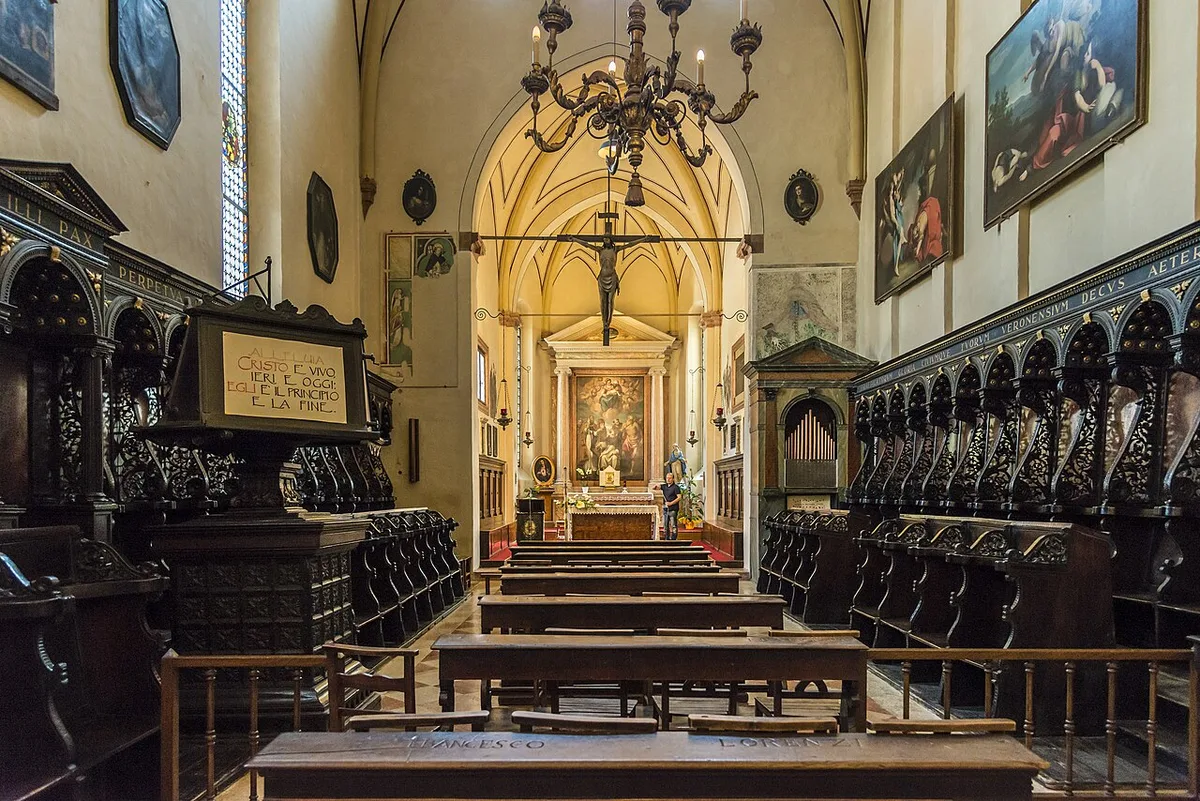
Forte Sofia sits just below the sanctuary, on the same San Leonardo hill. Austrian engineers built it in 1838, the same year as the sanctuary's original structure, and named it for Archduchess Sophie of Bavaria. It once held up to 150 infantrymen and 24 gunners, backed by 14 smooth-bore guns. Vegetation now covers its dried-up moat, and parked cars line the street outside the walls. Access stays exterior-only, since the interior has fallen into disrepair and isn't open to visitors. Just a short walk connects it to the sanctuary, so pairing both takes little extra time on the same outing. Genuinely low visitor numbers make this a stop for travelers who want an authentic low-traffic detour rather than a polished attraction. Budget ten to fifteen minutes here, mostly for photos of the exterior stonework from the surrounding street.
The 30-minute walk to the Santuario barely changes when Forte Sofia joins the pairing just downhill. A few extra minutes connects both sites, making an efficient morning circuit through two contrasting Austrian structures built in the same era.
Hiking Verona's Northern City Wall: The Least-Visited Historic Route
Verona's city wall dates to Roman times, with major expansions added during the Middle Ages as the city grew in strategic importance. Most visitors only see the well-maintained sections near the center, close to gates like Porta Borsari. A quieter stretch runs along the northern edge, past occasional graffiti and an old guard tower or two, with overgrown vegetation marking long stretches of disuse. Start at Castel San Pietro and follow Via Castel San Pietro past a campsite on the edge of town. Continue north along that road until the wall itself comes into view, then follow it as far as time allows. Expect a steady, moderate climb rather than a technical trail, since the route follows a paved road before turning onto older path sections. Signage stays minimal along this stretch, so a map or offline route helps more than it would in the center. Some describe this stretch as part of the wider Torricelle hills area above the city, though confirm current trail conditions locally before setting out. Exact timing depends on how far along the wall you go, so budget more time than a similar-distance walk on paved streets. This route suits travelers with time to spare and some tolerance for informal navigation, not a quick add-on between other stops. Bring water and check a map before setting out, since posted trail markers are sparse and cell coverage can be patchy on the hillside.
Porto Vescovo: Where Verona Isn't Performing for Tourists
Porto Vescovo sits southeast of the old city center, near Verona's second train station. The district takes its name from the old city-wall gate at the same spot, a mix of brick and white stone wedged between two busy roads carrying steady traffic. Foot traffic here stays thin compared with the center, even during shoulder season when Piazza delle Erbe and the Arena steps fill up. Small restaurants and churches line the surrounding streets, largely without the crowds common closer to the historic core. How this district fits into the wider city layout gets more coverage in the surrounding districts guide. Anyone hungry after the walk can compare notes against the local restaurants roundup before picking a spot to eat. Porto Vescovo suits travelers who have already covered the main sights and want an unscripted look at daily life rather than another photo stop. Reaching it works best on foot from the center or by a short local bus ride, since it sits outside the pedestrian core that most itineraries stick to.
Giardino Giusti's Wilder Upper Garden and Secret Staircase
Giardino Giusti opened as a 16th-century palace garden and remains one of the finer examples of Italian Renaissance landscaping in the region. It sits in the Veronetta district, on the left bank of the Adige, an easy walk from the historic center. Most visitors stop at the formal lower terraces, with their clipped hedges, statues, and a small maze laid into the garden beds. The maze and topiary near the entrance draw most of the garden's day-trippers, which is exactly why the upper staircase stays comparatively empty. Fewer continue up to the wilder upper garden, reached by a rock-cut staircase off Via Giardino Giusti that most day itineraries never mention. A small stone courtyard called Corticella Vetri hides along the way, centered on an old well and shaded by an olive tree. Near the top, a tower leads to a lookout that rewards the climb with a different angle on Verona's rooftops than the more common viewpoints. Entry runs around €10, though it's worth confirming the current rate before visiting since garden admission fees shift over time. Give the garden close to an hour if the upper paths and staircase are the actual goal, rather than just the formal lower terraces near the entrance. Giardino Giusti suits travelers who want quiet without a long walk from the center, though its popularity keeps rising, so it's less of a true secret with each passing season.
Micro-Finds Hiding in Plain Sight
A few Verona oddities require no hike at all, just a slower walk through streets most visitors cross without looking down. Near Porta dei Leoni, a viewing platform looks down into a hole in the street, exposing Roman ruins and the remains of a fortified gate that once had two defensive towers and an inner courtyard. Elsewhere in the center, a separate set of Roman ruins sits beneath a shop, easy to miss entirely without knowing to look for it. Arco della Costa, near the old market square, has a whale rib hanging from a chain overhead, a fixture there since at least the 1700s with no confirmed explanation for how it got there. Off a side street, a quiet courtyard holds a well locals call the Well of Love, tucked away enough that most walking tours pass right by it. None of these stops takes more than a few minutes, so string several together on a single walk between other sights, treating them as detours rather than destinations.
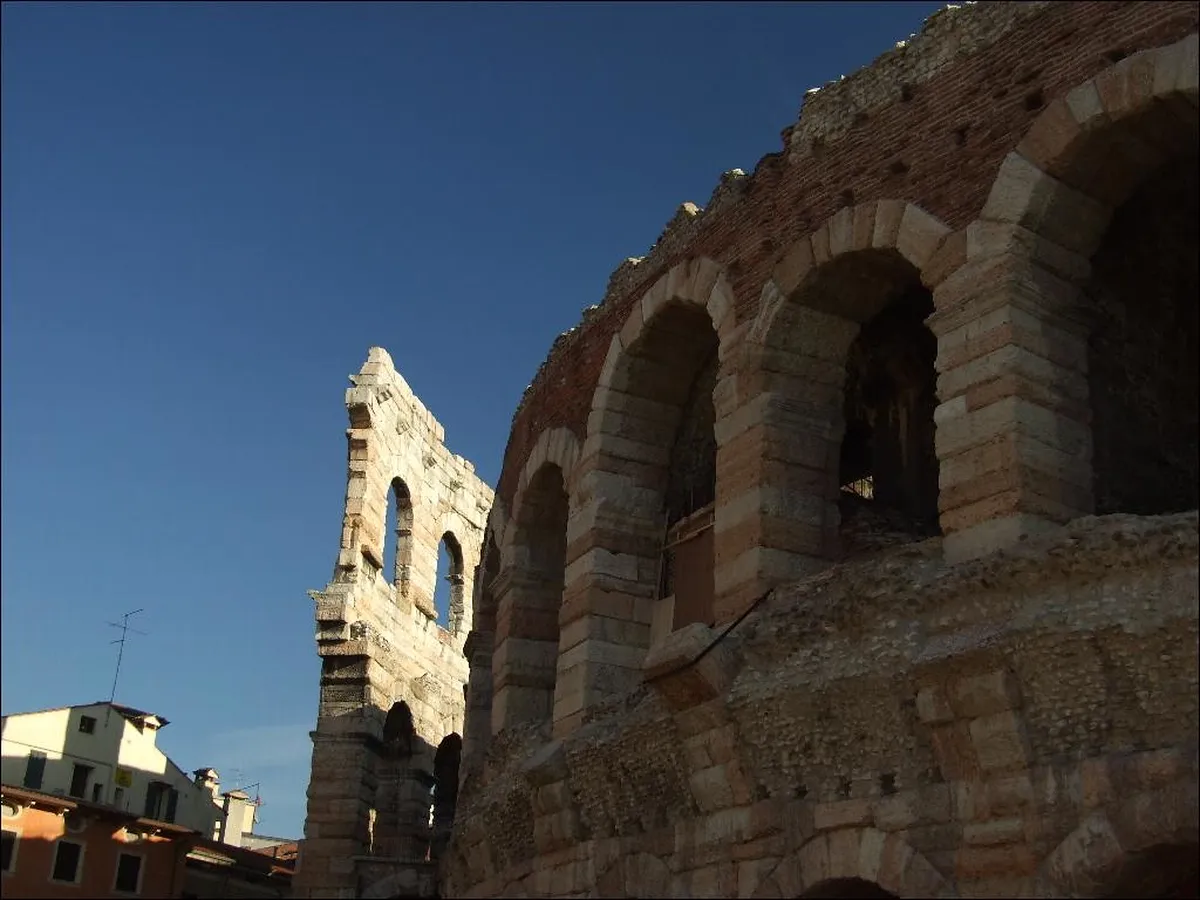
- Roman ruins at Porta dei Leoni: viewing platforms over a street-level dig.
- Roman ruins beneath a shop: a separate site elsewhere in the center.
- Arco della Costa's hanging rib: a whale bone hung since at least the 1700s.
- The Well of Love courtyard: a quiet stone courtyard off a side street.
Secret Spot vs. Mainstream Sight: What You're Trading Off
Every spot above trades something for quiet, whether that's extra walking time, a less-polished setting, or fewer amenities nearby. This table breaks down the walk time, the crowd level in our editorial assessment, and what actually changes compared with each spot's better-known counterpart, so the trade-off is clear before setting out.
| Secret Spot | Compare To | Walk / Access | Crowd Level | Trade-Off |
|---|---|---|---|---|
| Santuario Nostra Signora di Lourdes | Castel San Pietro | About a 30-minute uphill walk from the center | Low, but growing | Wider unobstructed view, but the interior closes for services and a dress code applies |
| Porto Vescovo | Central piazzas (Piazza delle Erbe, Piazza dei Signori) | Short walk or local bus from the center | Genuinely low | Local color over polish, with fewer cafes and amenities geared to visitors |
| Forte Sofia | Formal museum attractions like Castelvecchio | A few extra minutes past the sanctuary | Genuinely low | Exterior-only view of an abandoned fortress, with no interior access |
| Northern city wall hike | Well-maintained wall sections near the center | Extends past Castel San Pietro, informal route-finding | Genuinely low | Rewards with quiet, overgrown stretches, but costs extra time and planning |
Fitting These Spots Into a Verona Itinerary
None of these spots need a dedicated day on their own, and most work best folded into time already set aside for Verona. Pair the sanctuary and Forte Sofia with an early walk, before the center fills up and while the light on the hillside is still soft. Add the wall hike to a slower second day, ideally one without a train booked for later, since route-finding eats into the schedule. Porto Vescovo works well as a late-afternoon wander after museums close, when there's little else competing for the remaining daylight. Travelers with only 48 hours in Verona might fold in just the sanctuary and Forte Sofia, saving the wall hike for a future visit. Crowd patterns shift by season across the wider trip, and the low-crowd timing guide covers that in more depth. Travelers building a longer stay can extend outward from Verona using the regional day-trip guide. Sirmione, on Lake Garda, is one common add-on, detailed in the Sirmione day trip guide. Valpolicella wine country is the other, covered separately in the Valpolicella wine tour guide. Neither counts as a secret spot itself, more a logical next step once the quieter corners of the city are covered on foot. Two more guides cover overlooked ground beyond this list. For a wider angle on the same theme, see the off-the-beaten-path guide. Different discoveries turn up in the unique Verona finds guide, which overlaps only partly with the spots covered here. Most of the spots above cost nothing to visit, which pairs naturally with a no-spend day built from the free Verona activities list. These overlapping angles come together in the Verona hidden-gems guide, a fuller starting point for the city's quieter side.
Mistakes to Avoid at Verona's Secret Spots
Treat these spots as an addition to Verona's main sights, not a replacement for them. Skipping the Arena or the central piazzas entirely to chase quieter corners misses most of what put Verona on any itinerary in the first place. Overclaiming secrecy is its own mistake, and this list tries to avoid it. Forte Sofia, Porto Vescovo, and the northern wall hike stay genuinely low-traffic by most accounts. The sanctuary and Giardino Giusti draw more visitors each year, even if both stay quieter than Castel San Pietro or the center on any given day. Service hours catch some visitors off guard at the sanctuary, since the interior closes then and a dress code applies inside. Route-finding on the wall hike trips up visitors who expect marked trails and clear signage, so budget extra time and bring a paper or offline map. None of these are hard rules, more a checklist for keeping expectations realistic before setting out.
- Don't skip the Arena or central piazzas entirely to chase quiet corners.
- Don't assume every spot here is equally undiscovered; some are quieter than others.
- Don't show up at the sanctuary during service hours or without appropriate dress.
- Don't start the wall hike expecting marked trails or reliable signage.
Frequently Asked Questions
What are the best secret spots in Verona that most tourists miss?
Forte Sofia, Porto Vescovo, and the northern stretch of the city wall stay genuinely low-traffic by most accounts. The Santuario Nostra Signora di Lourdes and Giardino Giusti's upper garden are quieter than the center, though both draw more visitors each year. Micro-finds like the Roman ruins near Porta dei Leoni and the Arco della Costa's hanging rib round out the list. None of these require booking ahead or joining a tour.
Is the Santuario Nostra Signora di Lourdes better than Castel San Pietro for views?
The sanctuary's view is arguably more open, since fewer trees block the sightline compared with Castel San Pietro. It takes about a 30-minute walk to reach, mostly uphill, versus a shorter climb or a funicular ride to Castel San Pietro. The sanctuary also draws fewer visitors overall, though that gap has been narrowing. Which one wins depends on whether a shorter walk or an unobstructed view matters more on the day.
How long does the Verona city wall hike take?
No official timing is posted for this route, since it follows informal paths rather than a marked trail. Budget more time than a similar-distance walk on paved streets, since route-finding and uneven terrain slow things down. A relaxed morning or afternoon covers the walk out from Castel San Pietro and back comfortably. Give yourself extra buffer if signage or cell coverage turns out to be unreliable on the day.
Is Porto Vescovo safe and worth visiting?
Porto Vescovo is a normal residential district near Verona's second train station, not an isolated or unusual area. It sees consistently fewer visitors than the center, even during shoulder season when other spots fill up. It's worth visiting for travelers who have already covered the main sights and want an unscripted look at daily life in Verona. Basic caution that applies anywhere in the city applies here too.
How do you get to Verona's hidden viewpoints without a car?
The sanctuary and Forte Sofia are reachable on foot from the center, about a 30-minute walk that's mostly uphill. Castel San Pietro adds a funicular option that covers the climb in under a minute, according to visitor accounts. Porto Vescovo and the wall hike are also walkable, or reachable by a short local bus ride. None of these spots require a rental car or a guided tour to reach.
Are Verona's secret spots free to visit?
Most of the spots on this list cost nothing beyond the walk to reach them. Giardino Giusti is the exception, with entry running around €10, so confirm the current rate before visiting. Pairing free stops together, such as Forte Sofia and the sanctuary grounds, keeps a full afternoon at no cost. Only the garden requires a specific budget line, and it's a modest one at that.
Continue exploring
More guides you'll find useful