Giardino Giusti Verona: A Complete Guide to Tickets, Hours, and the Renaissance Garden
Plan a visit to Giardino Giusti in Verona: 2026 hours, ticket prices, the hedge maze, and how the view compares to Castel San Pietro.
On this page
Giardino Giusti Verona: A Complete Guide to Tickets, Hours, and the Renaissance Garden
Last updated August 2026, this guide to Giardino Giusti in Verona covers current hours, tickets, and layout. A plain orange facade on Via Giardino Giusti hides a 16th-century palazzo and a garden that climbs to a rock-cut belvedere. It's a short detour from the 8 Hidden Gems in Verona: Local Picks Beyond the Arena and Juliet's House circuit, with a hedge maze and a quiet skyline view.
Giardino Giusti Verona: A Quick Overview
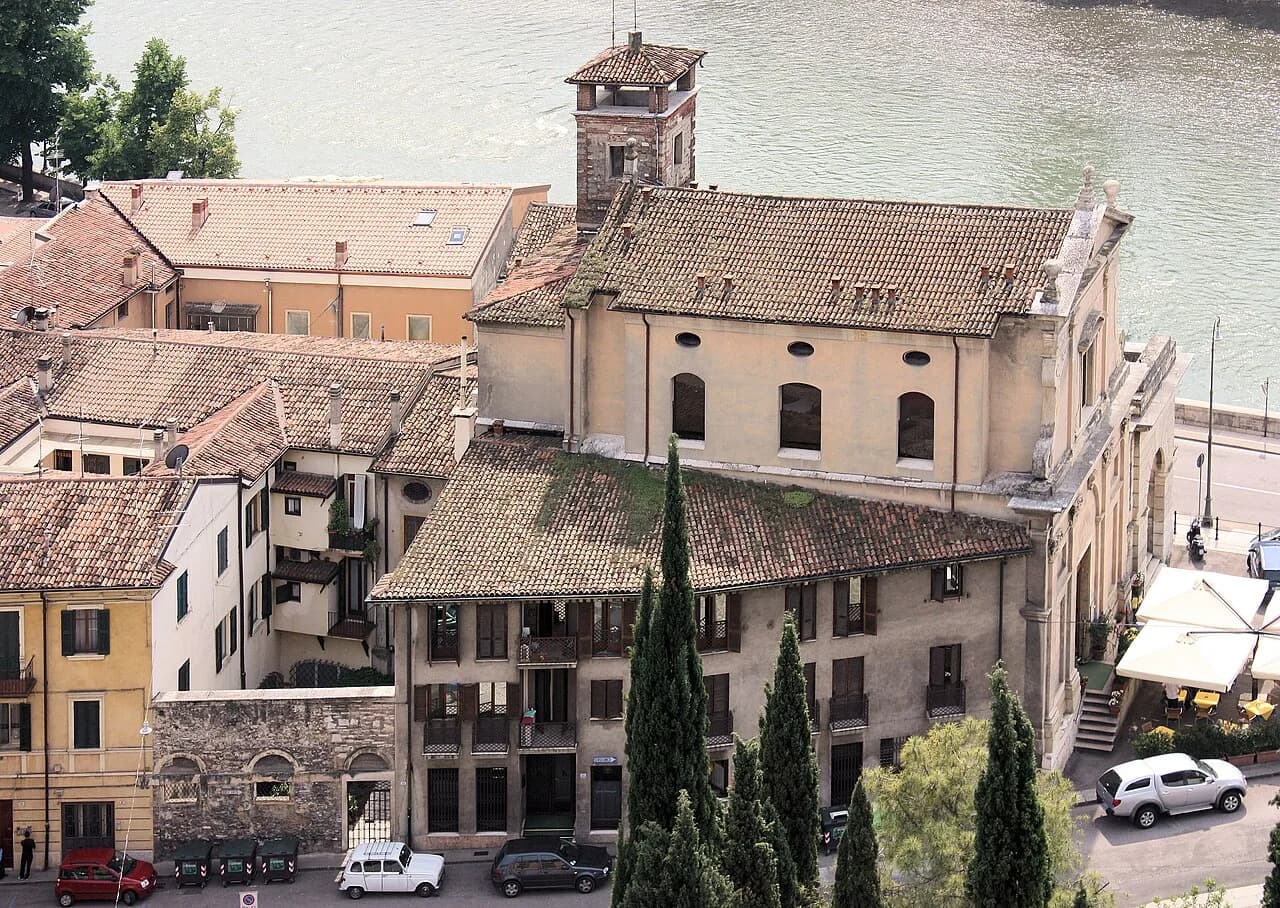
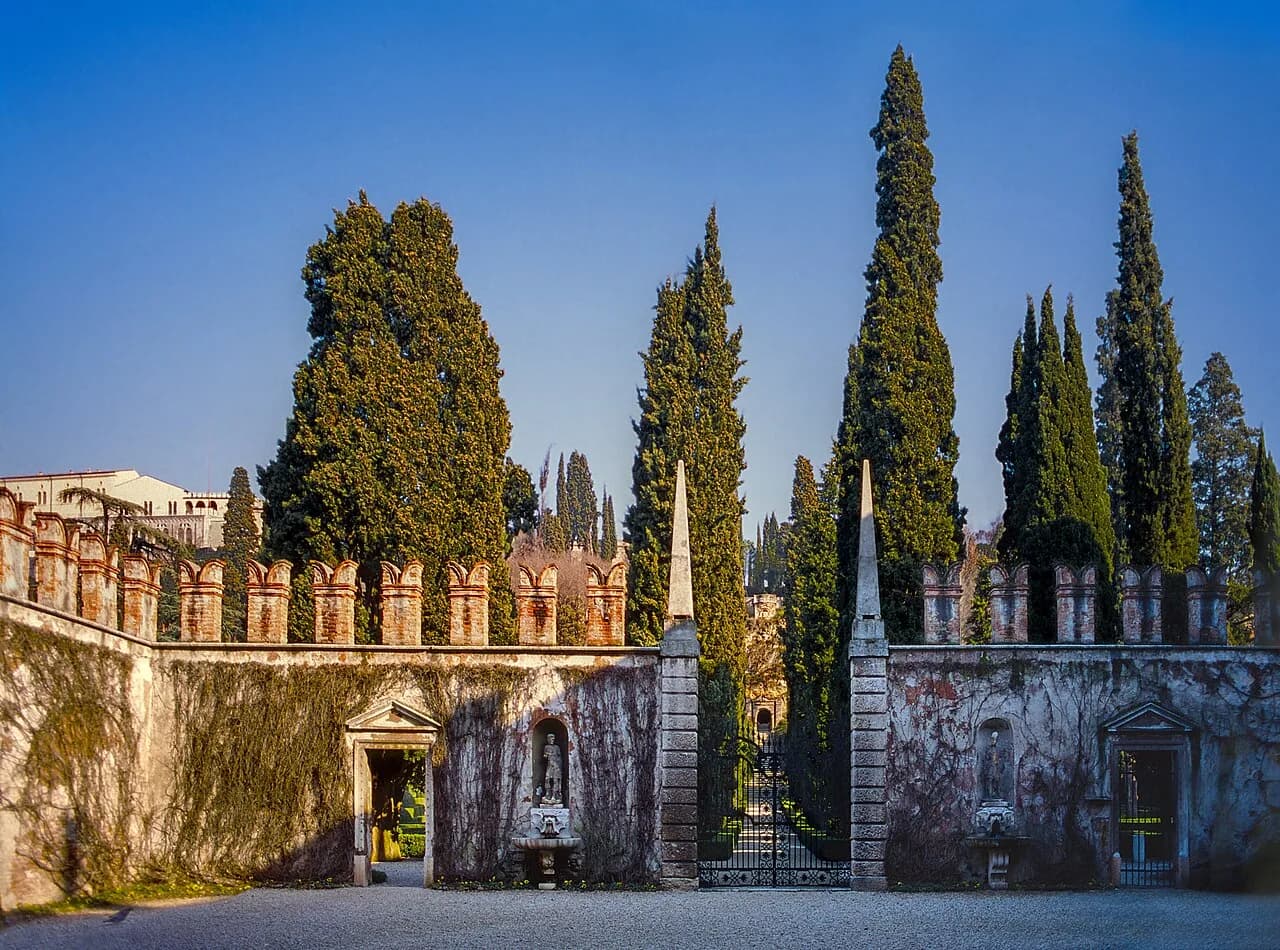
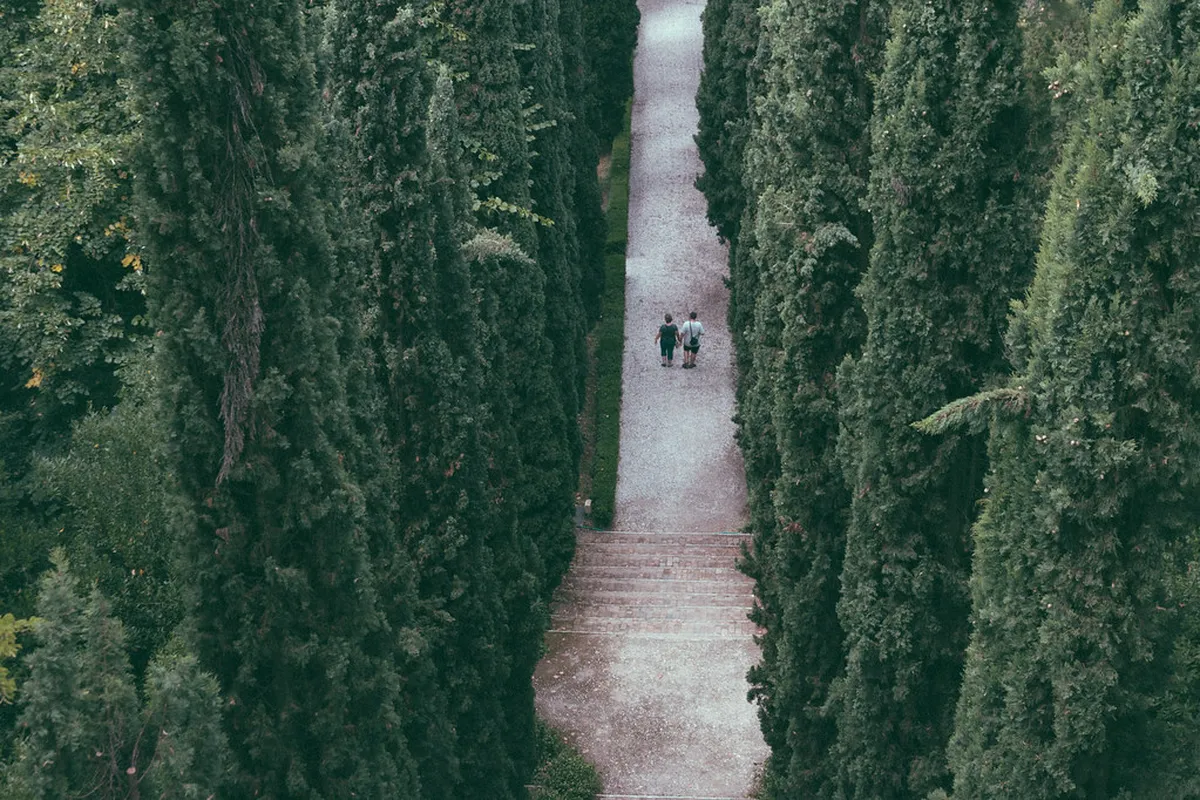
Giardino Giusti sits across the Adige River from Verona's historic center, a short walk from Piazza Isolo in the Veronetta district. Provolo Giusti bought the plot in 1406, when the family used it to boil dye vats for the city's wool trade. Agostino Giusti (1548-1615), a Knight of the Venetian Republic, turned the site into a formal garden in the following century. He commissioned the palazzo in the style of architect Michele Sanmicheli, and the gardens themselves were planted starting in 1580. Austro-Hungarian rulers later granted the family the right to add 'del Giardino' to their surname, recognition of the garden's reputation. Behind the plain orange facade on Via Giardino Giusti, a porticoed entrance opens onto the main courtyard. Beyond it, a long cypress avenue runs straight to a grotto and a carved stone mask. That axis anchors every later addition to the garden. The mix of formal geometry and civic history makes it one of the Secret Spots in Verona: Hidden Places Locals Actually Go most first-time visitors miss.
Planning Your Visit: Hours, Tickets, and the Giardino Giusti App
Giardino Giusti opens every day from 9:00 AM to 8:00 PM, with last entry at 7:00 PM, according to the official site. Tickets are sold at the on-site ticket office, online through the official booking page, or via the purchase widget on the same site. Groups larger than ten people need a reservation by email, and guided tours can be arranged the same way for schools and small groups. As of 2026, the official site lists these rates. Verona Card holders pay the reduced €9.00 rate, useful if you're timing a quiet, low-crowd visit to the city. A free companion app, downloadable from the App Store or Google Play, adds an audio guide to the numbered stops around the garden. Photography and filming, including wedding shoots, need written authorization from the garden's management before the visit. Buying tickets through one of the official channels ahead of time can save waiting during Verona's busiest travel months.
| Ticket type | Price |
|---|---|
| Full ticket | €14.00 |
| Students | €10.00 |
| Verona Card holders | €9.00 |
| Groups of 15 or more | €10.00 |
| School groups (students) | €6.00 |
| Family: 2 adults + 1 child (6-18) | €25.00 |
| Family: 2 adults + 2 or more children (6-18) | €35.00 |
| Palazzo Maffei / Biblioteca Capitolare ticket holders | €13.00 |
| Members of ADSI, FAI, or Touring Club Italy | €10.00 |
| Annual membership card / family membership | €55.00 / €75.00 |
The Lower Garden: Symmetry, Statues, and the Hedge Maze
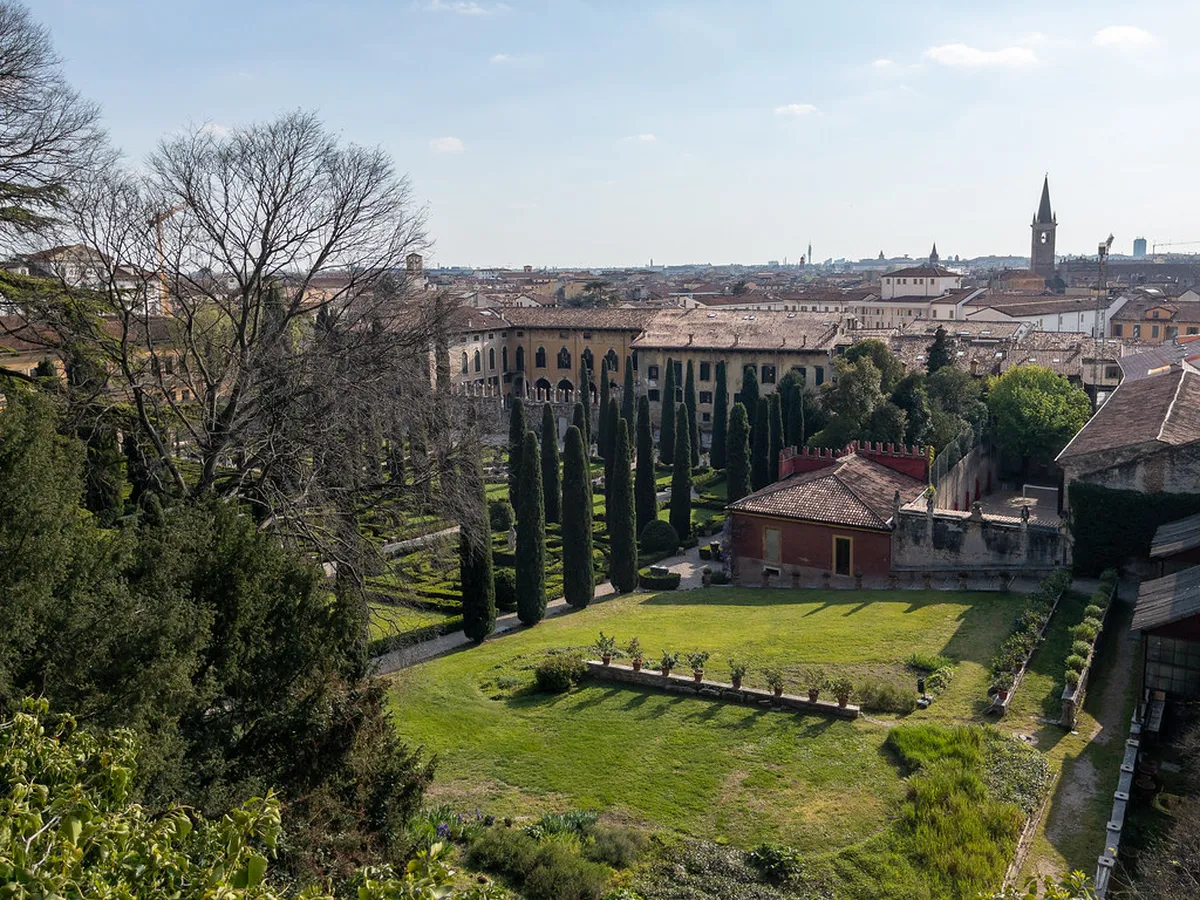
Past the entrance courtyard, the lower garden follows the giardino all'italiana style, with nine square box-hedge sections arranged like rooms along the central cypress avenue. Each section stays trimmed and geometric, the opposite of the wild paths waiting higher up. The formal layout has shifted over time. Early 18th-century plans, recorded in a 1714 work called Nurnbergische Hesperides, show only two parterres flanking the cypress avenue, with a maze behind one of them. Verona's state archives hold a later map showing four more flower parterres added on the opposite side. Today's unified layout dates from the early 20th century, and the maze itself was rebuilt after 1945. The maze is one of the few working hedge mazes still open in Italy, a detail the off-the-beaten-path crowd tends to seek out specifically. From inside it, sightlines are short enough that getting briefly lost is part of the point.
- A French-style parterre, added in 1765, with five marble statues by sculptor Lorenzo Muttoni: Diana, Venus, Atalanta, Apollo, and Adonis
- A hedge maze redesigned in 1786 by Luigi Trezza and rebuilt after 1945
- A citrus garden and vaseria, where potted citrus trees overwinter
- Roman epigraphs and archaeological fragments, first collected by Agostino Giusti
The Upper Garden: Grottoes, the Mascherone, and the Climb
Past the lower garden, the paths turn steep and the mood shifts from ordered to wild. Built into a small tower next to the 14th-century city walls, a secret staircase climbs toward the upper terraces. Along the garden's edge, a wall dates to the twelfth century, when Verona was a free commune. It sits atop an earlier fortification attributed to the Ostrogoth king Theodoric, who ruled from 454 to 526. Three carved niches once held sculptures of Bacchus, Ceres, and Venus, though the Venus figure is no longer in place. Citrus grown in the garden was valuable enough historically to be sold as far away as Russia. Near the tower, a smaller chapel-grotto, dated 1591, predates most of the garden's other structures by nearly two centuries. From the belvedere platform above the mask, the view opens over Verona's rooftops and the bend of the Adige River below. Compare it later with the panorama from Castel San Pietro, Verona's other well-known lookout. For a photo that captures the full axis, stand at the Mascherone platform and look back down the cypress alley toward the palazzo.
- The grotto: a 16th-century facade with a mirrored back wall and traces of a shell-and-coral ceiling
- Orrido con Rupe, a rocky precipice built to unsettle 18th-century visitors
- Bosco Sacro, a Sacred Wood planted with dark-leaved laurel and yew
- The Padiglione pavilion, built from salvaged 13th-century columns, with a passage to a green tunnel
- The Mascherone, a grotesque stone mask-belvedere attributed to Bartolomeo Ridolfi, once rigged to belch smoke and flames
Palazzo Giusti and Appartamento 900
Inside, the palazzo's piano nobile splits into two apartments around a central reception hall. East-wing ceiling paintings from 1721 are by Louis Dorigny. Sala dell'Aurora, in the west wing, was frescoed in 1766 by Francesco Lorenzi, a pupil of Giambattista Tiepolo. Other rooms carry their own themes: one focuses on horses and horseshoes, and the dining room holds paintings of Verona's streets and squares. Appartamento 900 covers the family's 20th-century history. Rooms damaged early in the century were restored after World War II, and they now display frescoes, sculpture, and family photographs. Corte d'Onore, the main courtyard, is ringed by a brick wall topped with swallowtail battlements, a nod to the Giusti family's Ghibelline origins. It once hosted theatrical performances, including a 1581 staging of Torquato Tasso's pastoral play Aminta, plus musical evenings held by the Accademia Filarmonica.
The Goethe Cypress and the Grand Tour Legacy
Until 23 August 2020, a cypress more than 600 years old stood near the grotto. Johann Wolfgang von Goethe admired it during his 1786 visit and wrote about it in Italian Journey, published in 1817. A violent storm that August night brought the tree down, along with other plantings across the garden. Verona's garden joined Europa Nostra's '7 Most Endangered' list of heritage sites at risk after the storm. Restoration work continues, and the wider grounds stay maintained in the deliberately spare all'antica style, with few flowers or exotic species. Long before the 2020 storm, Giardino Giusti was a fixture of the Grand Tour circuit, a required stop for European travelers touring Italy's gardens and antiquities.
- Cosimo III de' Medici, Grand Duke of Tuscany
- Wolfgang Amadeus Mozart, who passed through in 1769
- Holy Roman Emperor Joseph II
- Tsar Alexander I of Russia
- Carlo Felice of Savoy, King of Sardinia
- Charles de Brosses, French magistrate and writer
- Thomas Addison, physician
- John Evelyn, diarist
- John Ruskin, critic
Giardino Giusti vs Castel San Pietro: Which View Wins?
Cost and crowd level usually settle the choice between Verona's two best-known viewpoints. Is the climb across the river worth it? For travelers interested in garden design, history, or a view without a crowd, it usually is. Travelers short on time and focused only on major landmarks may prioritize the city center first. Giardino Giusti rewards the entrance fee with quiet and clipped geometry, in our editorial assessment. Castel San Pietro wins on convenience and a more direct view of the Duomo. Check current access details in our Castel San Pietro guide. For a third option, the Torricelle Hills offer another climb-for-a-view trade-off north of the center.
| What matters | Giardino Giusti | Castel San Pietro |
|---|---|---|
| Cost | €14.00 full ticket, 2026 official rate | See current rates in the linked neighborhood guide |
| Crowd level | Quieter, a genuine detour off the main sightseeing loop | Busier, one of Verona's best-known lookout stops |
| View quality | Rooftops and the Adige bend, framed through the Mascherone | A direct angle on the Duomo and the old town skyline |
| Effort | Flat lower garden, steep and rooted paths above | Route details in the linked neighborhood guide |
Essential Tips: Footwear, Accessibility, and Timing
The lower garden's gravel paths are flat and manageable for wheelchairs and strollers. Stairs and rooted dirt paths in the upper garden are not wheelchair accessible. Spring and autumn bring cooler temperatures than peak summer, when the open lower garden holds heat into the evening. Morning light suits photographs of the lower garden's hedges and statues. Late afternoon favors the belvedere, when the view over the rooftops turns gold before sunset. Time a visit around Verona's best time to visit without crowds to skip both the garden's own footfall and the Arena's.
Last entry closes at 7:00 PM, so planning a late-afternoon visit to catch golden light at the belvedere requires tight timing—arrive after 5:00 PM to avoid the heat, but leave ample time to climb to the upper terraces before closure.
- Wear closed shoes with grip; upper-garden paths are dirt and rooted
- Carry water in summer; the open lower garden gets hot with little shade
- Head toward the Torre and Bosco Sacro for shade once the sun is high
- Visit near the 9:00 AM opening or after 5:00 PM for softer light and thinner paths
Where Giardino Giusti Fits in a Veronetta Day
Giardino Giusti sits inside Veronetta, the district across the Adige from the Arena and Piazza Erbe. Food stops, artisan shops, and streets most day-trippers skip entirely fill the surrounding blocks. Pair the garden with a walk through the rest of the Veronetta neighborhood. Afterward, stop at one of its local restaurants for lunch or dinner. It's also a solid alternative to the queue at Juliet's Balcony, and one of several 10 Unique Things to Do in Verona: A Local Guide Beyond the Postcard Sights that don't involve a line. Many of Verona's free things to do sit on the same side of the river, within walking distance of the garden. West of the river, San Zeno offers a different pace for travelers extending the walk. So does Borgo Trento, further north along the same bank.
Frequently Asked Questions
How much does it cost to visit Giardino Giusti?
As of 2026, the official site lists full admission at €14.00, with a €10.00 student rate and a €9.00 rate for Verona Card holders. Families pay €25.00 for two adults and one child, or €35.00 for two adults and two or more children.
What are Giardino Giusti's opening hours?
Giardino Giusti opens daily from 9:00 AM to 8:00 PM, with last entry at 7:00 PM, according to the official site. Groups larger than ten people should reserve by email in advance.
Is Giardino Giusti wheelchair accessible?
The lower garden's flat gravel paths work for wheelchairs and strollers. Stairs and rooted dirt paths in the upper garden are not wheelchair accessible.
Is the Goethe cypress still standing?
No. The cypress Goethe admired in 1786 fell during a violent storm on 23 August 2020, after more than 600 years. Verona's garden was added to Europa Nostra's endangered heritage list following that storm and remains under restoration.
Can you combine Giardino Giusti with a day trip from Verona?
Yes. A visit typically takes an hour or two, leaving room for more the same day. Many travelers pair it with the 12 Best Day Trips From Verona: Logistics, Costs & Local Advice, including Lake Garda or the Valpolicella wine region.
What's nearby in Veronetta worth combining with the garden?
Veronetta belongs to Verona's wider set of neighborhoods worth exploring, each with a distinct character. Its streets also carry a good share of the city's local food scene, from bakeries to trattorias rarely visited by day-trippers.
Should you buy Giardino Giusti tickets in advance?
Tickets are available at the on-site office, on the official booking page, and through the purchase widget on the same site. Buying ahead through one of these official channels can save time during Verona's busiest travel months.
Is there an audio guide for Giardino Giusti?
Yes. The garden has its own free app, available on the App Store and Google Play, that provides an audio guide to numbered points of interest throughout the grounds.
Continue exploring
More guides you'll find useful