Where to Stay in Syracuse: Ortigia vs Mainland Neighborhoods
Compare staying on Ortigia island with mainland Syracuse by walkability, vibe and budget, and see why Neapolis works as a daytime sight, not a base.
On this page
The most useful thing to settle before booking a room in Syracuse is a naming confusion: Ortigia is not a separate town but the island that forms the city's historic centre, joined to the mainland by two short bridges you may cross without noticing. Once that is clear, the accommodation question narrows sharply, because most visitors are really choosing between the island and the mainland rather than among a long list of districts. For wider planning, see Ortigia Neighbourhood Guide.
This guide treats that choice as a set of trade-offs rather than a ranking of hotels. Walkability and atmosphere pull in one direction, while parking, space and nightly cost pull in another, and the right answer depends on whether you arrive by car, travel on a budget or want the sea within a few minutes of your door. No exact current hotel rates appear here, because those shift by season and should be checked directly with properties for your dates.
Quick orientation: one city, two halves
Syracuse sits on Sicily's southeastern coast between Catania and Ragusa, and its oldest nucleus was the island of Ortigia, also written Ortygia. Over time the city spread onto the mainland, so today the island functions as the old town and the mainland holds the wider, more everyday city. You can browse the city's own heritage listings for the archaeological park, cathedral and other monuments. For wider planning, see Syracuse Attractions: Visitor Guides to 14 Sights.
The two halves are close enough that the distinction mostly affects where you sleep, not what you can see. A local guide describes Ortigia as roughly a kilometre long and narrower than that, so even a mainland address a short walk from the bridges keeps the island's squares and waterfront within easy reach on foot.
Anyone planning a broader sweep of overlooked corners should read the hidden gems in Syracuse before fixing a base, since a few of those places sit on the mainland rather than the island.
Why the choice is really Ortigia versus the mainland
Travel writing about Syracuse often implies a menu of neighbourhoods, but the practical decision is binary. Ortigia concentrates the baroque squares, the market and the sea views, while the mainland offers ordinary streets, easier vehicle access and a train station within walking distance of parts of the centre.
That does not make the mainland a consolation prize. It is where you find cheaper rooms, more space and a less performative version of the city, and the crossing into Ortigia takes minutes on foot from the bridgeheads.
A useful way to frame it is by what you want to spend time on. If your days are built around wandering the island, sleeping there removes friction; if your days include the archaeological park, day trips to Noto or Catania and a rental car, the mainland earns its keep. The Neapolis area is not a residential district with hotels, so keep it as a daytime sight rather than a room-search term.
Ortigia: pedestrian, photogenic and the obvious first-timer base
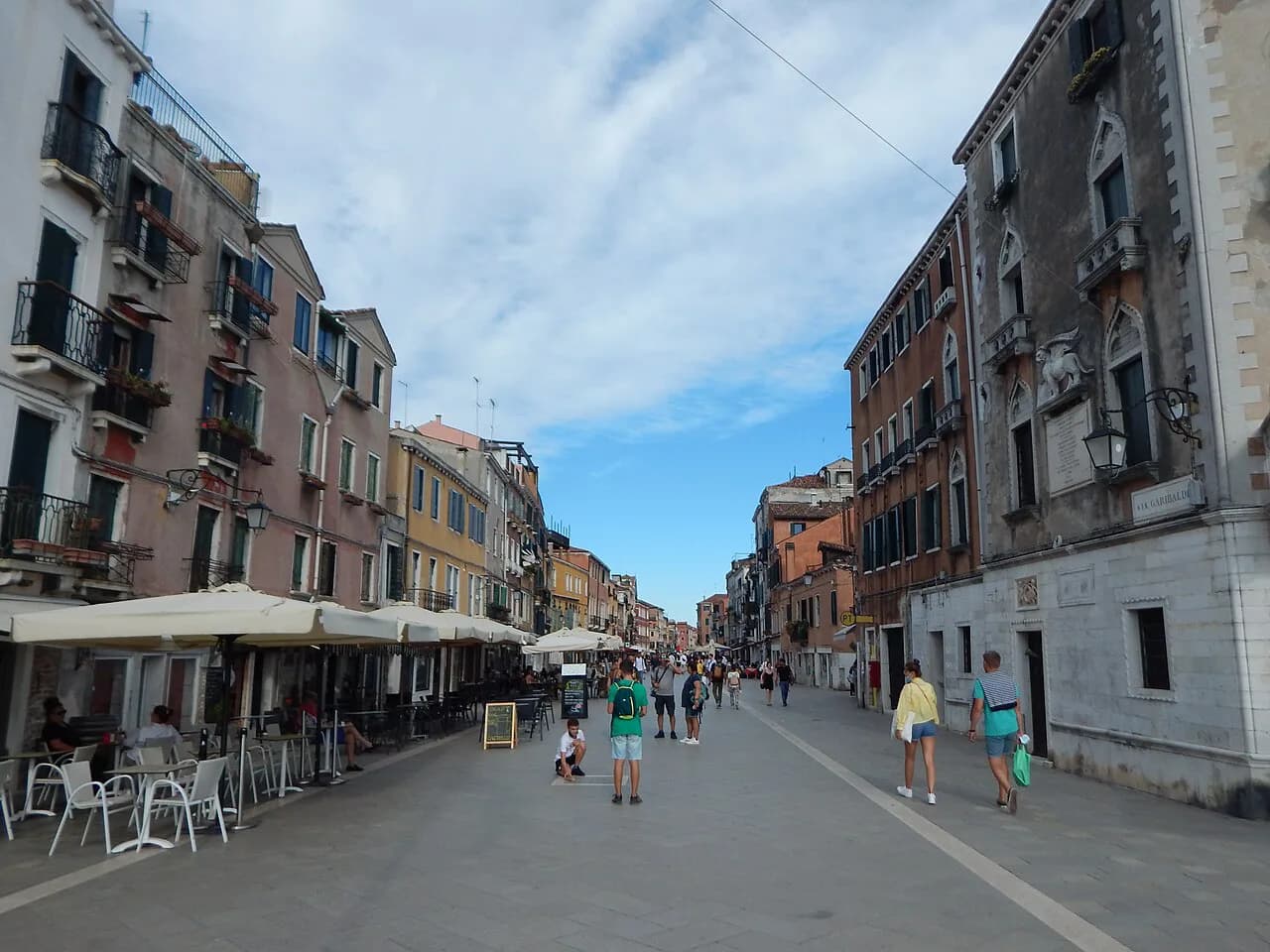
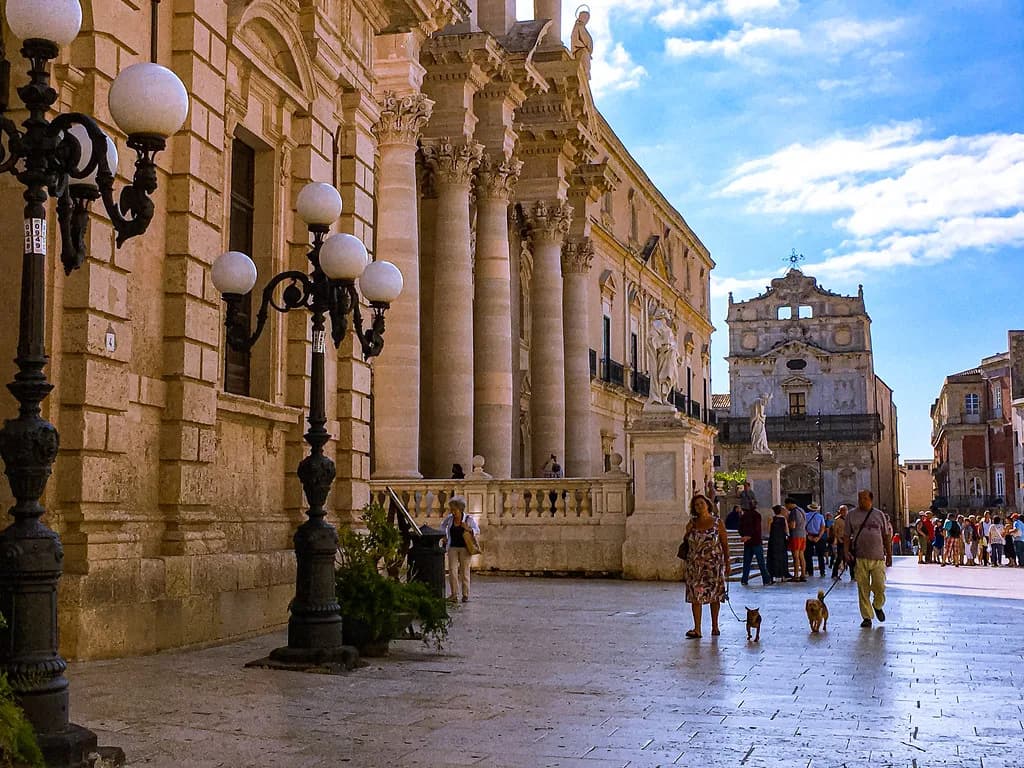
Ortigia is largely pedestrian and rewards slow walking more than any single sight. Start at the Temple of Apollo just across the Umbertino bridge, continue to Piazza Archimede and its Diana fountain, then follow the lanes to Piazza Duomo, where the cathedral's baroque facade conceals columns of an older temple to Athena.
Nearby, the Fonte Aretusa spring is ringed by papyrus, and the Lungomare Alfeo on the western side is where people gather for sunset drinks. The island's perimeter walk also passes Castello Maniace at the tip, a thirteenth-century fortress that served as palace and prison as well as defence.
The trade-off is cost and comfort. Ortigia is the priciest place to sleep in the city, rooms are often small in converted palazzi, and only a minority of properties have private parking, so you should confirm arrangements directly with the property rather than assume.
Entering churches and squares costs nothing, but paid interiors such as the cathedral are separate, and the island's free appeal is the streets themselves. Budget for café seats and museum entries individually instead of treating the whole island as one ticket.
What a day on Ortigia looks like on foot
Begin at the market near the Temple of Apollo, where stalls sell fish, produce, cheese and olives. A travel guide reports that the outdoor market runs daily except Sundays from about seven in the morning until early afternoon, though some traders pack up before the stated close, so an early start is safer.
From the market, drift through the Giudecca, the old Jewish quarter, then climb to Piazza Duomo for coffee and people-watching. Continue to Fonte Aretusa, walk the Lungomare and finish at Castello Maniace before doubling back for an aperitivo.
The whole loop can be walked in a couple of hours at pace, but the point of staying on the island is not to rush it. Allow a full day if you want to sit, swim from the rocks near Forte Vigliena in season, or take a boat trip to the sea caves.
Mainland Syracuse: space, parking and the train station
Across the bridges, the city grid is wider, blockier and less immediately photogenic, but it holds the everyday infrastructure that makes a trip run smoothly. The train station and bus links sit here, which matters if you plan to arrive from Catania by rail or continue toward Noto and Ragusa.
Parking is the strongest argument for the mainland if you are driving. A local guide notes two pay car parks at the island entrances near Marina and Talete, and that accommodation with its own parking is scarce on Ortigia, so a mainland hotel with a car park can save both money and nightly manoeuvring.
Mainland streets are also quieter at night, which suits families and light sleepers. The cost is atmosphere: you will walk or hop on a bus to reach the island's restaurants, so weigh that against the calm.
Neapolis: a daytime sight, not a place to book a room
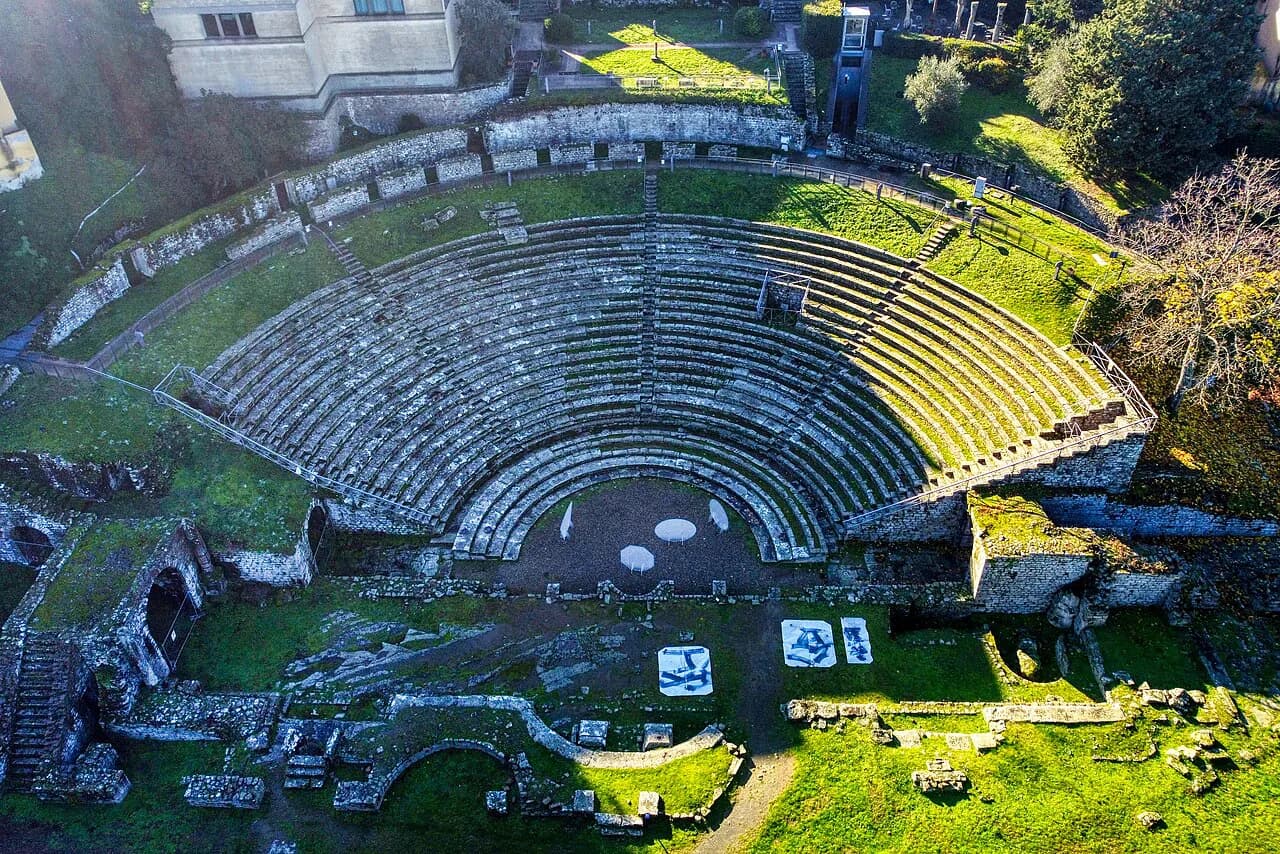
Neapolis is best understood as the mainland's archaeological zone, not a residential neighbourhood with a hotel stock. It holds the Greek theatre, still used for performances, along with cave and quarry formations cut at cathedral scale and the nearby Paolo Orsi museum.
Treating it as an area to stay in leads to muddled bookings, because the appeal is a ticketed daytime visit rather than evening streets. Plan the park as a morning or late-afternoon outing, then return to whichever base you chose.
Opening times and ticket arrangements for the park and museum change with the season, so check the official operator pages before you go rather than relying on old blog posts.
Should you stay in Ortigia if you have a car?
It can work, but only with a plan. Because most Ortigia properties lack private parking, drivers should either book a place that explicitly offers it or budget for a pay car park at the island entrance and treat the car as unnecessary during the stay, since the island is pedestrian and you will not need it to move around.
If your trip includes day drives to the Val di Noto towns or the beaches, a mainland base with parking simplifies every departure and return. If the car is only for arriving and leaving, the inconvenience is limited to two movements.
Beach and coastal options nearby
Syracuse is not a classic sand-and-lounger resort, and the city's own beach, Spiaggia di Cala Rossa, is small and pebbly. In summer, a free wooden sundeck is erected on the rocks near Forte Vigliena, and there are paid solarium options nearby with loungers and a more polished setup.
For proper sand, look outside the centre. Arenella is the closest decent sandy beach at just over ten kilometres, Fontane Bianche offers a long white stretch reachable by public transport, and Calamosche sits at the end of a trail in the Vendicari reserve with no facilities at all.
Staying near a beach trades the evening piazza for sea access and usually requires a car or bus. It suits travellers who prioritise swimming over city wandering or who visit in high summer and want to escape midday heat.
Budget and booking trade-offs
Dated travel blogs quote nightly rates that ranged widely across Ortigia and the mainland, from modest guesthouses to grand waterfront hotels, but those figures reflect past seasons and should never be treated as current. Use them only to understand the pattern: the island skews expensive and the mainland offers more room for less.
Check live rates for your own dates and compare like for like, factoring in parking charges, breakfast and the cost of taxis or buses if you stay outside the centre. A cheaper room far from the bridges can cost more once transport is added.
Book early for late spring through early autumn, when demand peaks, and be sceptical of any listing promising guaranteed quiet or a specific view without confirmation. Ask the property directly about stairs, lifts and access if mobility matters.
Arriving from Catania and moving between the halves
Catania Fontanarossa is the nearest airport, about an hour's drive away according to a local guide, and buses and trains connect Catania with Syracuse throughout the day. Fares and journey times vary by operator and season, so confirm schedules on the carriers' own sites before travelling.
Once in the city, moving between mainland and island is a short walk over either bridge, which is why the two bases are less different in practice than they first appear. The city's own site publishes notices on traffic restrictions and local services that are worth checking for temporary changes.
If you prefer a structured route rather than a rough direction, follow the Syracuse Self-Guided Walk: From Ortigia to Neapolis, which links the island streets with the mainland park in one continuous line.
A suggested two-day split
This is a suggestion, not an official itinerary. On day one, walk Ortigia from the Temple of Apollo through the market, Piazza Duomo and Fonte Aretusa to Castello Maniace, then take a sunset drink on the Lungomare Alfeo and eat on the island.
On day two, cross to the mainland for the Neapolis archaeological park in the morning, when temperatures are kinder, then spend the afternoon in the Paolo Orsi museum or on a boat trip along the coast. If you have a third day, add a beach or a Val di Noto town.
Two full days covers the essentials comfortably, while a single day forces a choice between the island and the ruins. Slow travellers should give Syracuse three nights and treat one day as unstructured wandering.
Seasonal crowds, heat and practical cautions
Late spring to early October brings the best swimming weather but also the heaviest demand on Ortigia, and the island's narrow lanes can feel congested in high season. Crowd levels vary by day and by month, so no street can be promised as quiet.
Summer heat in Syracuse is best handled by sightseeing early and late, with the middle of the day reserved for the sea, a museum or a long lunch. Winter visits are mild by northern European standards and quieter, though swimming is out.
Before booking, confirm current rates, opening times and any access restrictions directly with the property and the site operators, since these change and are not fixed by guidebooks or blogs.
Plan Your Visit
Choose Ortigia if atmosphere, walkability and evening squares matter more than room size or a car park, and accept the higher cost as part of the deal. Choose the mainland if you are driving, watching the budget or want quieter nights, and treat the short bridge crossing as a pleasant part of the day rather than a barrier.
Either way, keep Neapolis as a daytime destination and let the island be the place you wander. Confirm current rates, transport schedules and site hours before you commit, and leave room in the plan for the aimless walking that Syracuse rewards most.
Frequently Asked Questions
Is it better to stay in Ortigia or Siracusa?
They are the same city, so the real choice is the island old town versus the mainland. Ortigia offers the historic centre on foot and a livelier evening atmosphere at a higher price, while the mainland offers more space, easier parking and quieter nights within walking distance of the bridges. Match the choice to whether you arrive by car and how much you value stepping outside into the old town.
Can you walk from Ortigia to mainland Syracuse?
Yes. Two short bridges connect the island to the mainland, and the crossing takes only a few minutes on foot. Many travellers based on the mainland walk into Ortigia for dinner and back, while those staying on the island walk out for the train station or the archaeological park.
Is Neapolis a good area to stay in Syracuse?
Neapolis is the mainland's archaeological zone rather than a residential neighbourhood with hotels, so it is not a sensible place to search for accommodation. Visit it for the Greek theatre and the nearby museum during the day, and book a room on Ortigia or in the mainland centre instead.
Where is the best area to stay in Ortigia?
There is no single best pocket, but a room within a short walk of Piazza Duomo puts the cathedral, the market and the waterfront close at hand. The island is small, so almost any address keeps most sights reachable on foot; prioritise the property's stairs, lift and parking over micro-location.
How many days do you need in Syracuse?
Two full days covers Ortigia on foot plus a morning at the Neapolis park and museum. Three days lets you add a beach or a day trip to a Val di Noto town without rushing, while a single day forces a choice between the island and the ruins.
What is the difference between Syracuse and Ortigia?
Ortigia is the island that forms Syracuse's historic centre, linked to the mainland by two short bridges. Syracuse is the wider city, including the mainland streets, the train station and the archaeological park. Confusing them as separate destinations is the most common planning error.
Sources
Continue exploring
More guides you'll find useful