Castello Maniace Syracuse: Visitor Guide to Ortigia's Sea Fortress
Plan a visit to Castello Maniace in Syracuse: Swabian history, what to see inside, rampart views over Ortigia, and how to confirm current hours before you go.
On this page
Castello Maniace sits at the very end of Ortigia, the limestone island that forms the historic heart of Syracuse. Because the fortress is surrounded by water on three sides, the walk out to it is as much a part of the visit as the building itself. This guide covers the history behind the name, the architecture worth slowing down for, and the practical steps that make a visit run smoothly, with its place in the wider set of Syracuse Attractions noted along the way.
One caution shapes everything below: published visiting hours and admission figures for the castle vary by season and by source, so treat any schedule you find online as a starting point rather than a promise. A hotel blog that summarises castle hours explicitly warns that times may change and advises checking the official website or the city's tourist offices before travelling. Do that check close to your visit date.
Where Castello Maniace Sits on Ortigia
The castle occupies the southern tip of a small island roughly one kilometre long and about 500 metres at its widest point, as described in an Ortigia orientation guide. Two bridges connect the island to mainland Syracuse, and most arrivals cross the Ponte Umbertino near the Temple of Apollo and the morning market. From there, the fortress is at the far end of the peninsula, so orientation is simple: keep walking south. For wider planning, see Ortigia Neighbourhood Guide.
That geography makes the castle a natural final stop on a walking day rather than a detour. The city's own tourism pages group Ortigia's headline sights, including the Duomo and the Fonte Aretusa, into one central cluster, and the castle closes the loop at the seaward edge. Plan the fortress last, so you are heading toward open water rather than back into the busiest lanes. Further visitor details appear in Comune di Siracusa.
A Short History: Frederick II and the Maniace Name
The name is the most confusing part of the story. George Maniakes was a Byzantine general who briefly retook Syracuse from Arab rule in 1038, two centuries before the castle was built. The fortress visible today was commissioned by Holy Roman Emperor Frederick II of Swabia and constructed between 1232 and 1240 as part of a wider defensive system along the Sicilian coast. Keeping those two figures separate stops you attributing the building to the wrong century.
After the Swabian period the castle changed hands and functions repeatedly. It served as a royal residence, later as a prison, and eventually as a military base under Spanish rule, while the Aragonese strengthened its defences in the fifteenth century. Restoration and conservation work has since made the structure visitable. Read this as background, not as a guide to what is open on any given day.
Architecture to Look For
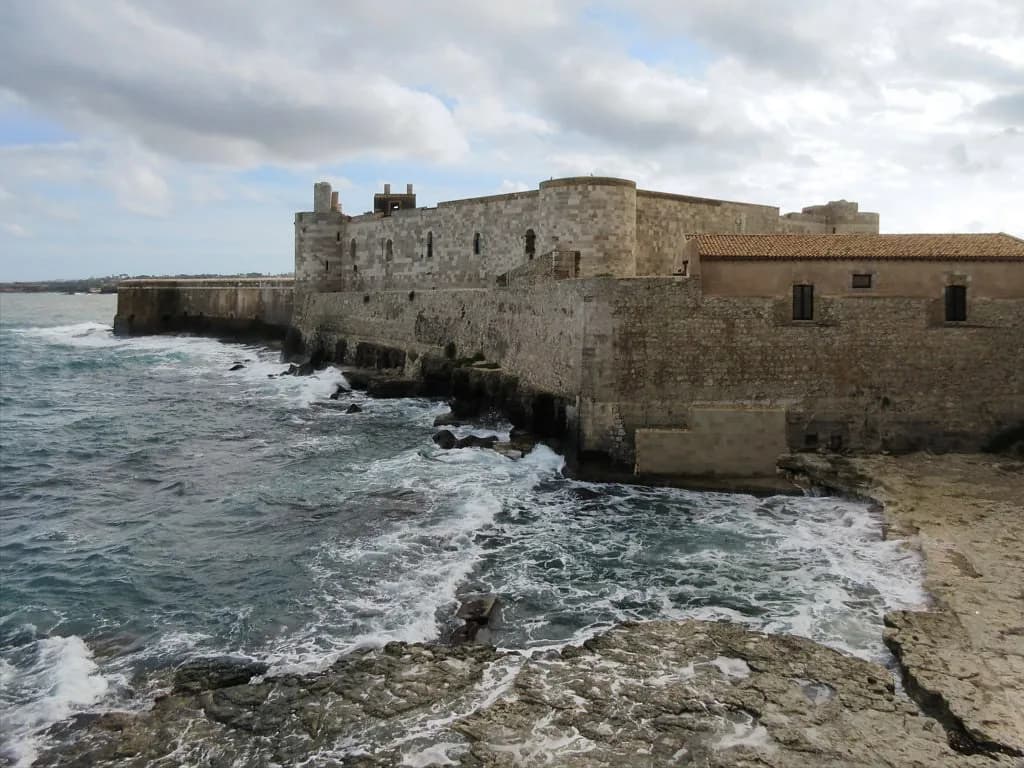
The plan is quadrangular, with massive limestone walls and four cylindrical corner towers, a shape designed to control access to the port. The most photographed detail is the entrance portal, framed by ogival arches and carved friezes that give the gateway a ceremonial weight. Look at the portal before you go in, while you still have daylight and a clear view.
Inside, the great hall was once covered by a cross vault that partially collapsed after an eighteenth-century explosion. The building blends Norman and Arab influences typical of Frederick's Sicilian projects, and the symmetry of the layout rewards a slow circuit rather than a quick pass through the gate. If you enjoy reading a building's engineering, this is where the visit earns its time.
What to See Inside
The interior is best approached as a series of spaces rather than a single highlight: the entrance sequence, the main hall with its damaged vaulting, and the vaulted chambers that open off the route. The castle also hosts occasional exhibitions, but no fixed programme is published in the sources available here, so ask at the ticket desk what is showing rather than planning around a specific display.
Budget your time by the ramparts, not the rooms. A suggested hour or so inside is realistic for most travellers, but it is a suggestion, not an official figure. Anyone with a strong interest in medieval military architecture will want longer; anyone mainly after sea views can move through the interior briskly and save their attention for the walls.
The Ramparts and Coastal Views
Surrounded on three sides by the sea, the fortress was built to command the approaches to Ortigia's harbour, and the battlements still deliver that perspective. From the walls you get the coastline, the open Mediterranean and a clear read on how the castle controlled the water. This, more than any single room, is the reason to come.
The location also explains the castle's relationship with the rest of the island: it is the point where the dense lanes of Ortigia give way to open horizon. Pair the ramparts with a slow walk back along the seafront promenade toward the Fountain of Arethusa in Ortigia, where the mood shifts from fortification to spring-fed pool and papyrus. It is a short connection that makes the southern end of the island feel coherent rather than scattered.
Practical Logistics: Hours and Admission
Confirm two things before you go: whether the castle is open that day, and what admission costs. The only detailed schedule in the sources here comes from a hotel blog listing weekday and weekend time bands, with a full price and a reduced rate for students and affiliated categories, and it flags that hours may vary and advises checking official channels. Because those figures are not stated as current on any official page, treat them as indicative only and verify on arrival or through Syracuse's tourist offices.
Nothing in the available sources confirms free-admission days, heritage-day waivers, online booking requirements or advance-ticket availability, so avoid building a plan around them. Ask at the entrance or contact the city's tourism services directly. If a reduced rate matters to you, bring whatever student or affiliation documentation you would normally use and confirm eligibility at the desk rather than assuming it.
Accessibility details, security rules and any lift or step-free routes at the castle are not documented in these sources. Travellers with mobility needs should contact the site or the city's tourist information before travelling rather than relying on general assumptions about historic fortresses. The same applies to group visits and guided tours: ask, do not assume.
Getting There on Foot
There are no verified bus numbers or journey times for reaching the castle in the sources used here, so the reliable option is the walk. From Piazza del Duomo, the approach takes around fifteen minutes on foot according to one guide, following the island south toward the sea. Add time for the inevitable pauses at the seafront.
Once on Ortigia, everything unfolds at walking pace, which makes the castle easy to fold into a day that includes the market, the Duomo and the waterfront. Wear shoes that handle uneven stone, and carry water in warm months, since the southern tip offers little shade on the approach.
Pairing the Castle With Nearby Ortigia Sights
Separate the ticketed castle from Ortigia's free outdoor sights, because one admission does not cover the island's monuments. The Temple of Apollo near the Ponte Umbertino is an open-air ruin viewable at no cost, and the Fountain of Arethusa is freely accessible from the promenade. The cathedral on Piazza Duomo is a working church with its own dress expectations, not part of the castle ticket.
If you have a single day, sequence the island from north to south: market and Temple of Apollo first, Piazza Duomo and the Fountain of Arethusa in the middle, castle last. This order keeps the light and the crowds on your side and ends at the sea. A structured plan helps if you are short on time, but the island is compact enough to improvise.
Travellers with extra time can look beyond the headline sights. Syracuse rewards wandering into quieter corners, so browse our hidden gems in Syracuse for stops that complement the fortress, and treat them as options rather than a checklist packed into one afternoon.
Seasons, Light and Timing Your Visit
Ortigia's seasons change the experience of the castle more than you might expect. Spring brings mild temperatures and good walking conditions, summer delivers long evenings but often exceeds 30°C in July and August, and autumn offers warm days with thinner crowds according to a seasonal overview. Winter is quiet and mild, though some establishments shorten their hours.
For photography, the ramparts are worth timing deliberately: evening light falls on the Baroque façades along the waterfront, while mornings give calmer seas on boat excursions. If heat is a concern, visit earlier in the day and treat the castle interior as your shade break between outdoor stretches.
Who Should Prioritise the Castle
Prioritise Castello Maniace if you care about medieval military architecture, sea views or the layered story of Sicily's rulers. The combination of Swabian engineering, later military use and a position that commands the water is hard to find elsewhere on the island. It also works well for travellers who prefer one substantial site to a rushed circuit of churches.
Treat it as optional if your trip is built around Baroque townscapes, food and beaches. The castle's appeal is atmospheric and historical rather than decorative, and the interior alone is modest. Families with small children should weigh the ramparts and open water carefully against the time it takes to walk out and back.
Plan Your Visit
Castello Maniace is a straightforward visit once you accept two rules: walk there rather than drive, and verify hours and admission close to your date. The reward is the position at the end of Ortigia, where the walls meet open sea and the whole shape of the island becomes legible.
Build the day around the southern tip: castle, ramparts, then a slow walk back past the Fountain of Arethusa and up to Piazza Duomo. Confirm details through the city's tourism pages or the ticket desk on arrival, and leave room for an unplanned stop, which is often the part of Syracuse people remember.
Frequently Asked Questions
Is Castello Maniace worth visiting?
It is worth it if you want medieval military architecture combined with sea views from the ramparts. The interior is relatively modest, so the position at the tip of Ortigia is the main draw. Travellers focused on Baroque churches and food can reasonably treat it as optional.
What are the opening hours of Maniace Castle in Syracuse?
Published schedules vary and no official timetable is confirmed here, so check directly with the site or Syracuse's tourist offices shortly before you go. A hotel blog summarising hours notes that they may change seasonally. Do not plan a tight itinerary around a schedule you found online weeks earlier.
What should I see inside Castello Maniace?
Look for the ogival entrance portal and carved friezes before entering, then the main hall with its partially collapsed cross vault and the vaulted chambers along the route. The battlements are the highlight, giving views along the coast and across the harbour approaches. Ask at the desk whether any temporary exhibition is running.
Can you walk from Syracuse to Castello Maniace on Ortigia?
Yes. Cross one of the two bridges onto Ortigia and walk south through the island to the fortress at the tip. From Piazza del Duomo the approach takes roughly fifteen minutes on foot according to one guide. Allow extra time for seafront pauses and uneven stone surfaces.
What not to miss in Ortigia besides the castle?
The cathedral on Piazza del Duomo, the Fountain of Arethusa with its papyrus, the Temple of Apollo near the Ponte Umbertino and the morning market are the core sights. Most of these are outdoor or free to view, while the castle interior is separately ticketed. Sequence them north to south and finish at the sea.
How long does a visit to Castello Maniace take?
As a rough suggestion rather than an official figure, allow about an hour inside plus the walk out and back. Keen architecture enthusiasts will want longer on the ramparts and in the vaulted chambers. If you are mainly after views, move through the interior quickly and linger on the walls.
Sources
Continue exploring
More guides you'll find useful