Neapolis Syracuse Guide: Archaeological District & Local Life
Plan a slow day in Syracuse's Neapolis district: the Greek Theatre, Roman Amphitheatre and latomias, plus how the park fits around a lived mainland neighbourhood.
On this page
Neapolis means "new city" in Greek, and it sits on the mainland north of the island of Ortygia, where Syracuse began. Today it is a working residential district of a city of roughly 125,000 people, and the Parco Archeologico della Neapolis is its anchor rather than its whole story. Visitors who treat the district as a single ticket gate miss the streets, the everyday rhythm and the second archaeological collection that sits nearby.
This guide explains what the park actually contains, how to read each monument without inflated expectations, and how to build the visit into a slower day. The park presents a chronological overview of the city's history, spanning from Sicilian times to the Roman Empire, so it rewards a little preparation. Entry charges, opening times and guided-tour availability change often, so confirm them on the official municipal site or with an operator before you travel. Further visitor details appear in Comune di Siracusa.
Getting Your Bearings: Neapolis, Ortygia and the Station
Syracuse spreads across two main parts. Ortygia is the historic island, reached by a short bridge, and Neapolis is the mainland district inland and north of it. The city's main railway station sits on the mainland side, which makes the Neapolis area a sensible base if the archaeological park is your priority. Staying here also means you can reach the park entrance early, before the middle of the day fills the paths.
The park occupies the northern part of the Neapolis district, with the church of San Nicolò ai Cordari above the Roman Pool serving as the visitor entrance. That entrance detail matters for planning: you are not entering from Ortygia but from the mainland street grid. The city publishes official notices and services on its municipal site, which is the place to confirm civic information such as traffic restrictions or temporary access changes. Further visitor details appear in Comune di Siracusa.
Bus lines and walking times are best checked on a mapping service on the day you travel. On a map the distances are short enough that many travellers walk between Ortygia and the Neapolis side, but confirm the route yourself. If you are arriving by train, plan your first afternoon around orientation rather than a full park visit.
What the Parco Archeologico della Neapolis Actually Contains
The park is not one monument but a cluster arranged along trails through a green site. It includes the Greek Theatre, the Roman Amphitheatre, the Altar of Hieron II, and the latomias, the ancient stone quarries. A travel account of a visit notes that the park genuinely feels like a park, with the caves and modern art coming first and the classical ruins appearing afterwards. That ordering is useful: expect landscape first and architecture second. Further visitor details appear in SICILY | Neapolis Archeological Park of Syracuse – Trip By Trip.
The same account mentions three colour-coded trails described in theory but not clearly signposted in practice. Treat that as a warning rather than a criticism: bring a rough plan of which monuments matter most to you, and accept that you may wander a little. The chronological span is wide, from Sicilian-era tombs to imperial Roman construction, so choosing two or three priorities keeps the visit focused. Further visitor details appear in SICILY | Neapolis Archeological Park of Syracuse – Trip By Trip.
Guided entries are sold by operators who meet visitors at the park gate and walk them through the principal Greek and Roman monuments. These are a reasonable option if you want interpretation of the theatre, the amphitheatre and the quarries in one go. Availability and meeting arrangements should be confirmed with the operator before booking, since the listing reflects a commercial product rather than the park's own opening schedule. Further visitor details appear in Entry tickets, Neapolis Archaeological Park of Syracuse.
The Greek Theatre: A Monument Still Used
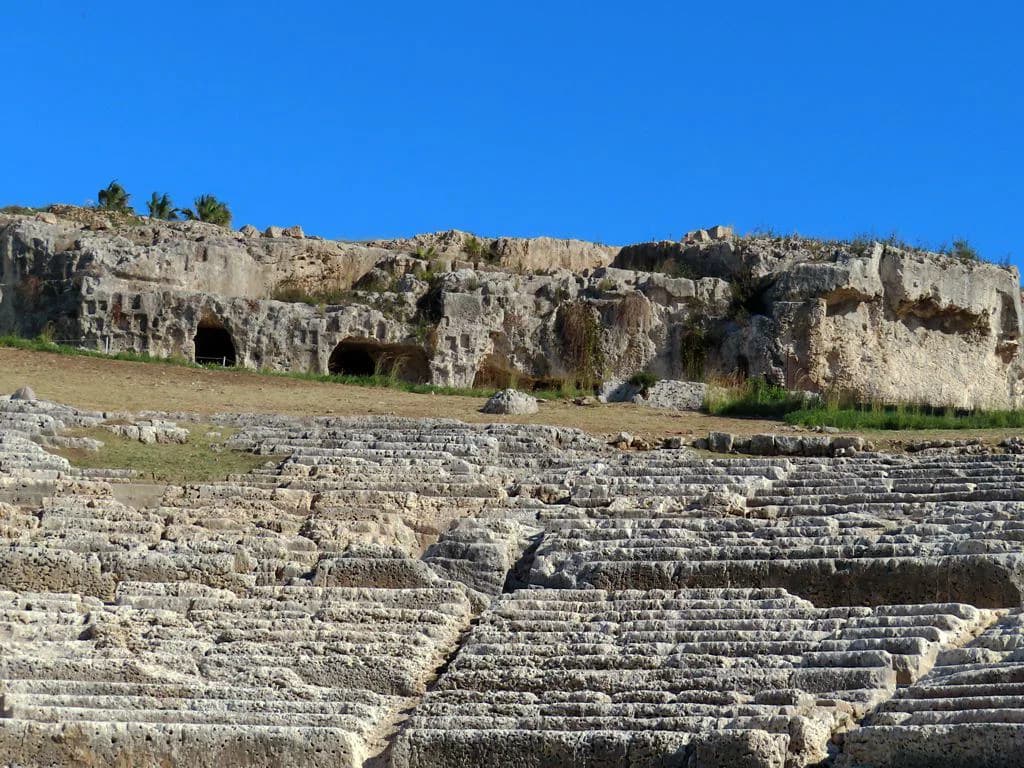
The Greek Theatre is the park's centrepiece and one of the largest in the Greek world, with a cavea diameter of nearly 139 metres. It was originally built in the fifth century BC and rebuilt in the third, and it hosted performances of Aeschylus during the rule of Hiero I. What you see today has been altered in Roman times and looted in the sixteenth century, so read it as a layered structure rather than a pristine Greek original. Further visitor details appear in SICILY | Neapolis Archeological Park of Syracuse – Trip By Trip.
Unlike many ancient theatres, this one has not been frozen in place. The travel account notes that it is still used for classical plays today, which is the single most interesting thing about it for many visitors. If a performance is scheduled during your stay, ask at the entrance or check local listings rather than assuming a seasonal programme. Seeing the seating from the top of the cavea is worth the climb for the view over the site and the city beyond.
The Roman Amphitheatre, the Altar of Hieron II and the Necropolis
The Roman Amphitheatre was carved into rock and dates to the early imperial period. It measured roughly 140 by 119 metres and had a central corridor, two main entrances and a covered passage used by gladiators and animals. A monumental triumphal arch once stood at its southern end and is now lost. Nearby are Hellenistic houses and Roman sarcophagi, which are easy to overlook if you are moving quickly between headline monuments. Further visitor details appear in SICILY | Neapolis Archeological Park of Syracuse – Trip By Trip.
The Altar of Hieron II is the monument most likely to disappoint visitors who expect a standing structure. Dedicated to Zeus Eleutherios, it was cut into Temenite Hill and survives only as a massive base about 198 metres long, because the upper structure was dismantled in the sixteenth century. Knowing this in advance turns a puzzling slab into one of the most striking measurements on the site.
At the park's edge, the Grotticelle Necropolis holds tombs from the Sicilian to Roman periods. Among them is the so-called Tomb of Archimedes, an imperial-era tomb containing cremation urns, which means it cannot be the mathematician's burial place. Cicero claimed to have found Archimedes' real tomb near the river Ciane, but its location remains unknown. Treat the label as tradition, not fact.
Reading the Latomias as Quarries, Not Caves
The latomias are the part of the park most often mistranslated into atmosphere. They were ancient stone quarries, later used as prisons, and Cicero described them as vast and impressive. In the Latomia del Paradiso, the largest, the rock walls are dense with vegetation and cut cavities. Seeing them as extraction sites first explains their sheer vertical faces and the scale of the labour behind the city's buildings.
The Ear of Dionysius is a tall, narrow cave within the Paradise quarry, named by Caravaggio and linked to the tyrant's supposed eavesdropping. That story is legend rather than documented acoustics, and knowing that makes the shape of the chamber more interesting than the myth. The Grotta dei Cordari, used by rope-makers until the twentieth century, and the Grotta del Salnitro, coloured by mineral deposits, sit within the same quarry system. Each name records a later use layered onto the ancient one.
Two more quarries complete the picture. The Latomia dell'Intagliatella features a slender rock pillar and connects to the Paradise quarry, while the Latomia di Santa Venera is known for its vegetation and a large ficus tree and contains hero cult shrines. Together they make the case for slow walking: the quarries reward looking at walls, plants and inscriptions rather than only photographing the famous cave.
Practical Planning: Tickets, Timings and Pacing
Ticket prices, opening hours and closure days for the park change and should come from the official source, so confirm current entry arrangements and any combined ticket offers before you go. If you want a guided visit, compare what the operator includes, since a guide may cover the principal monuments but not every corner of the site. Further visitor details appear in Comune di Siracusa. Further visitor details appear in Entry tickets, Neapolis Archaeological Park of Syracuse.
As a suggestion rather than an official duration, allow a half day for the park if you want to read the monuments and walk the quarries without hurrying. That leaves room to sit, backtrack to a missed corner and still have energy for the city later. Mornings tend to be cooler and quieter for walking in exposed areas, and the trails involve uneven ground, so wear shoes suited to stone paths.
Build a contingency into the day. If the park takes longer than expected, drop the second archaeological stop rather than rushing both. If it takes less, the surrounding Neapolis streets and the nearby museum make a natural continuation. The point is to let the district set the pace instead of treating Syracuse as a checklist.
The Wider UNESCO Context
Syracuse is recognised as a UNESCO World Heritage Site together with the nearby Necropolis of Pantalica. The listing frames the city as a major Mediterranean power of antiquity, which helps explain why the Neapolis monuments are so large: this was not a provincial town but a state that rivalled Athens in size by the fifth century BC. Reading the park in that light makes the theatre, the altar and the quarries pieces of one civic project. Further visitor details appear in SICILY | Neapolis Archeological Park of Syracuse – Trip By Trip.
The UNESCO framing is also a reminder to look beyond the park boundary. Syracuse holds extensive catacombs, second in size only to those in Rome, and the city's Greek and Roman layers continue under modern streets. A second collection, the Paolo Orsi Archaeological Museum, holds finds that give context to what you see outdoors. Pairing a museum visit with the park is the most efficient way to understand the region's long sequence of occupation.
Neapolis Beyond the Park Gates
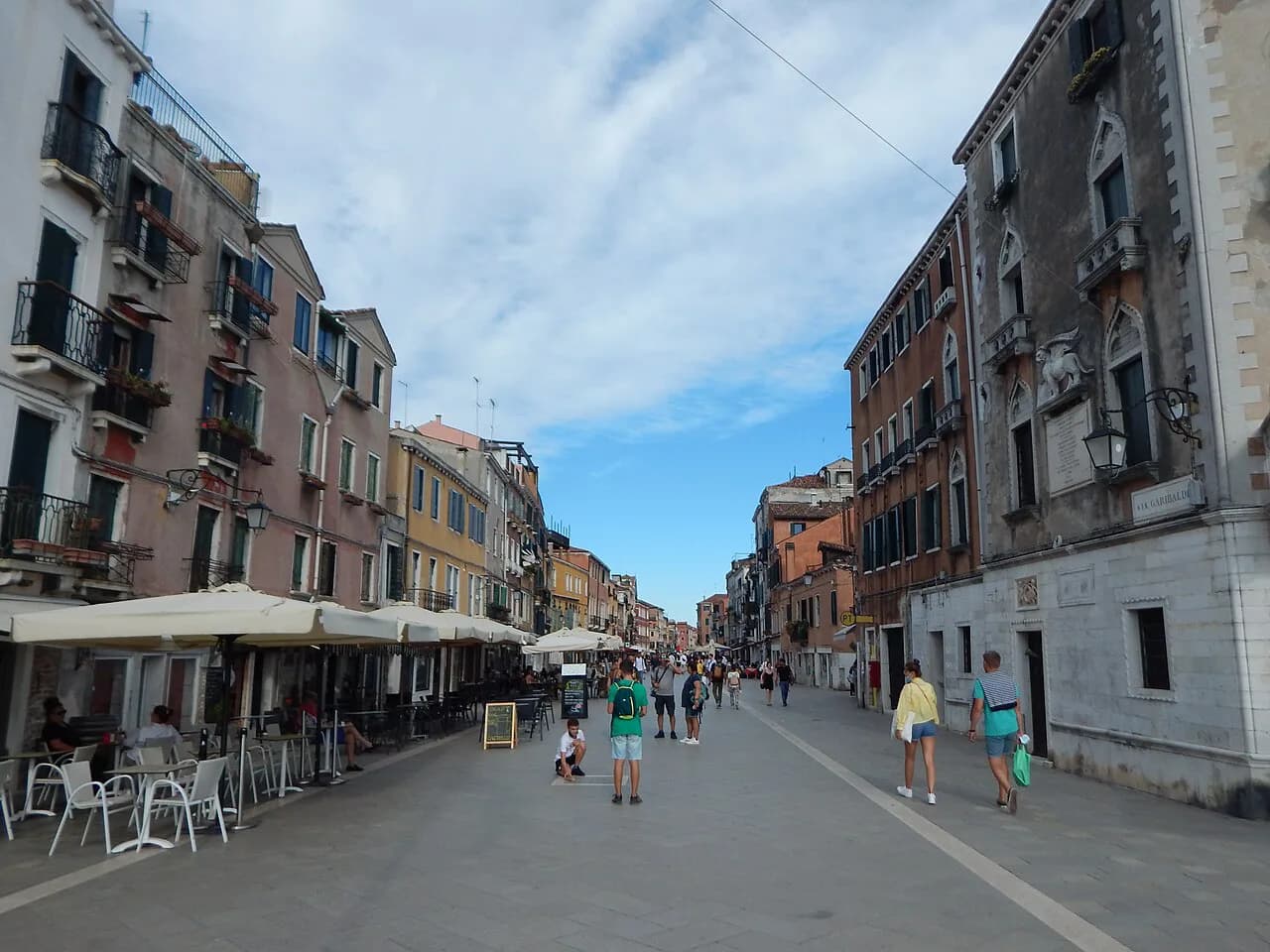
The district around the park is lived-in rather than museum-like. Local life here involves ordinary streets, schools, shops and civic services, and the city's own website is a reminder that Syracuse is an administration as well as a destination. Walking a few blocks in any direction gives you a sense of the mainland city that day-trippers heading straight to Ortygia never see. That contrast with Ortygia's polished lanes is the reason to spend time here rather than only passing through.
For a fuller picture of what to see across Syracuse, including corners that receive less attention than the park, browse a curated set of local picks before you plan. They help you decide whether to add a church interior, a market or a waterfront walk to the day. The city also maintains a tourism section on its municipal site, useful for checking official notices and seasonal information. For wider planning, see Hidden Gems in Syracuse, Sicily.
When the park is done, the obvious move is to cross to Ortygia for the cathedral, the fountain and the evening passeggiata. Doing it in that order means the ruins get your freshest attention. The island's piazza and lanes are a different experience entirely, more urban and more crowded, and they work best as a late-afternoon reward rather than a competing morning stop.
Common Mistakes to Avoid
The first mistake is assuming Neapolis is one ticketed site. The district contains the park, streets, churches and a separate museum, and not every monument shares one ticket. Check what each ticket covers before you buy, especially if you want a guided component. The second mistake is expecting a standing Altar of Hieron II or a complete Roman amphitheatre; both are partly lost, and knowing that prevents frustration.
The third mistake is skipping the quarries in favour of the theatre. The latomias are where the site's history as a working landscape becomes visible, and they are the reason the park feels like a park rather than a monument enclosure. The fourth is planning only Ortygia: Syracuse's mainland district holds the UNESCO-listed core and deserves at least a half day of its own.
Plan Your Visit
Neapolis rewards a traveller who arrives with a little knowledge and a flexible schedule. See the Greek Theatre and the quarries with attention, accept that the altar and the amphitheatre are partial survivals, and check current entry details on the official or operator pages rather than relying on older figures. Build the day around the park and let the district fill the rest.
If you are staying nearby, start early, carry water and wear proper shoes for stone paths. Then cross to Ortygia in the afternoon, when the light softens and the island's streets come alive. That simple sequence gives you both halves of Syracuse without rushing either.
Frequently Asked Questions
How much time should I allow for the Neapolis Archaeological Park?
As a suggested pacing rather than an official figure, allow about half a day if you want to read the monuments, walk the quarries and sit between stops. Visitors focused only on the Greek Theatre can move faster, but the site rewards a slower circuit through the latomias and the amphitheatre.
Are the Greek Theatre and Roman Amphitheatre on the same ticket?
They sit within the same archaeological park, but confirm current ticket scope at the entrance or on official park information, because entry arrangements change. Ask whether your ticket covers every monument you plan to see, and whether any guided component is included.
Can I walk to the Neapolis Archaeological Park from Ortygia?
Walking across the bridge and through the mainland streets is a realistic option for many travellers, and it is how the two halves of Syracuse connect. Confirm the route on a mapping service on the day, and note that the park sits inland in the northern part of the Neapolis district.
What is the Ear of Dionysius and why is it called that?
It is a tall, narrow cave inside the Latomia del Paradiso, one of the ancient quarries in the park. The name was given by Caravaggio and linked to the tyrant Dionysius's supposed eavesdropping, a story best treated as legend rather than documented acoustics.
Is Neapolis a good area to stay in Syracuse?
It can be, particularly if the archaeological park is your priority or you are arriving by train. The district is residential and practical, and staying here puts you close to the park entrance for an early start before crossing to Ortygia later in the day.
What else is there to see near the archaeological park?
The Paolo Orsi Archaeological Museum holds finds that give context to the park's monuments, and the surrounding Neapolis streets show the everyday mainland city. Ortygia's cathedral and waterfront are a short walk or ride away and make a natural second half of the day.
Sources
Continue exploring
More guides you'll find useful